
Honest verdict · Updated 2026 · No sponsorships
Is Costa Rica Worth Visiting? An Honest Verdict
“Yes – if you accept US-level prices for world-class wildlife on nature's schedule. Skip it if you want a cheap beach week.”
The short answer: Costa Rica earns the hype for one specific thing: it makes genuinely wild nature accessible without requiring expedition skills, and nowhere else in the hemisphere does it as well. The catch is that it now charges accordingly – a mid-range trip costs about what the same trip costs in the US, and the animals are not contractually obligated to appear. Go for the biology and the green, budget honestly, and you will leave a convert; go expecting a bargain tropical resort and you will spend the week annoyed.
More: When to visit Costa Rica · Costa Rica travel guide
Who Costa Rica is for — and who it is not
Worth it if you are
- Wildlife-first travelers: This is the payoff destination. A guided dawn walk in Corcovado can produce scarlet macaws, all four of the country's monkey species, and fresh tapir tracks in a single morning; a night hike near Monteverde adds poison dart frogs, tarantulas, and sleeping birds. Few countries deliver this density without an expedition.
- Families with kids old enough to hike: Tap water is drinkable in most of the country, clinics are good, flights from the US are short, and adventure that feels big (ziplines, hanging bridges, volcano hikes) is run to real safety standards. Costa Rica is the training-wheels rainforest, in the best sense.
- Surfers at any level: Consistent year-round Pacific swell, warm water, and a real range: gentle learner waves at Tamarindo and Samara, heavy beach break at Playa Hermosa near Jaco, and the long lefts at Pavones if you make the trek south. The Pacific surf economy is mature and easy to plug into.
- Birders and wildlife photographers: Roughly 900-plus recorded bird species in a country smaller than West Virginia. Resplendent quetzals in the San Gerardo de Dota highlands, near-daily toucan sightings around Sarapiqui lodges, and lodge infrastructure built specifically for people carrying long lenses.
- Green-season opportunists: Travelers flexible enough to go May, June, or November often get 20-40 percent off lodging, dramatically thinner crowds, and the landscape at its lushest – in exchange for afternoon rain that mostly follows a predictable schedule.
Think twice if you are
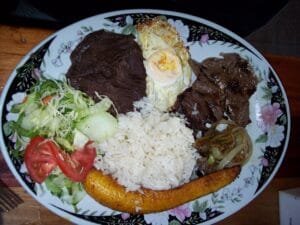
- Budget backpackers expecting Southeast Asia or even Nicaragua prices: A casado at a local soda is still the cheapest good meal in the country, but everything tourists actually come for – guided hikes, park entries, transfers, rental cars with mandatory insurance – is priced like the US. Nicaragua, Guatemala, and Colombia deliver similar landscapes for roughly half the money.
- Luxury travelers who measure trips in thread counts: There are exceptional lodges (the Osa Peninsula, the Papagayo resorts), but the country's baseline is eco-comfort, not polish: open-air rooms, geckos on the wall, bumpy transfers. If a rough road to dinner ruins the evening, this is the wrong country.
- Nightlife and city-culture seekers: San Jose's Barrio Escalante has a legitimately good restaurant scene, but it is one neighborhood, not a city break. Most towns go quiet by 10pm outside Jaco and Tamarindo, and there is no Medellin or Mexico City equivalent here – the culture is rural, outdoorsy, and early-rising.
- Anyone who needs guaranteed sightings: It is rainforest, not a safari park with radio-tracked animals. Plenty of visitors see sloths and monkeys daily; some spend four days and see mostly leaves and rain. If a no-show quetzal would sour the trip, book a zoo instead.
The reality check
What it costs
Genuinely not cheap – the eco premium is real, and the colon (the local currency) gained on the dollar in the mid-2020s, quietly raising prices for anyone spending dollars. Mid-range couples should plan on roughly US-comparable spending once you stack tours (often $50-90 per person each, more for Corcovado), park fees, and the automatic 13 percent tax plus 10 percent service on restaurant bills. Rental cars sting: mandatory liability insurance roughly doubles the quoted rate. Frugal travel on public buses and soda meals is possible but puts most guided wildlife out of reach, which defeats the point.
Crowds
Late December through Easter is the crush, concentrated in Manuel Antonio (online tickets sell out in high season, and the park is closed on Tuesdays), La Fortuna, and the Guanacaste beach strip; Semana Santa adds the entire country traveling at once. Monteverde stays busy but absorbs it. The Caribbean side and the Osa Peninsula are markedly quieter year-round, and green season roughly halves crowds everywhere.
Time needed
Seven days minimum to do two regions without racing – distances look tiny on the map but 100 km routinely takes three hours on winding two-lane roads. Ten to fourteen days is the sweet spot: volcano plus cloud forest plus one coast. With five days or fewer, commit to a single region and skip the itinerary Tetris.
When to go
February to April for near-certain Pacific sun, at peak prices – though by March, Guanacaste is brown, hot, and dusty rather than postcard-green. May-June and November are the smart-money windows: green-season rates, clear mornings, rain mostly confined to mid-afternoon. September-October is paradoxically the best time for the Caribbean coast around Puerto Viejo and Tortuguero, which runs opposite to the Pacific weather pattern – and it overlaps peak green-turtle nesting.
What actually justifies the trip
Corcovado National Park, Osa Peninsula
The most biologically intense accessible place in Central America – tapirs, scarlet macaws, all four monkey species, occasionally big-cat tracks on the trail. Guides are mandatory and day trips from Drake Bay or Puerto Jimenez run roughly $100 and up per person – and they are worth it, spotting in minutes what you would walk past all day.
Arenal volcano and La Fortuna hot springs
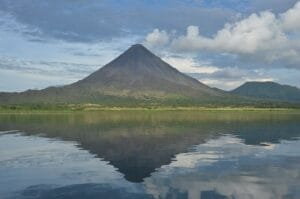
The classic first-timer base, and it earns it: hanging-bridge canopy walks, the La Fortuna waterfall swim, then a soak in volcanically heated river water. One expectation to correct: the volcano stopped producing lava around 2010, so the cone is scenery now, not a show. The free hot river near the Tabacon bridge is where locals soak.
Monteverde cloud forest at dawn
A different ecosystem entirely – moss, mist, and the best odds at a resplendent quetzal between February and April. The Santa Elena reserve next door gets a fraction of Monteverde's foot traffic for the same forest.
The Caribbean coast: Puerto Viejo and Cahuita
The two-coasts decision in miniature: Afro-Caribbean culture, coconut rice and beans and rondon instead of casados, sloths thick in Cahuita National Park (donation entry at the Kelly Creek gate), and a slower, scruffier, cheaper vibe the Pacific lost a decade ago.
Tortuguero's canals and turtle beaches
A car-free village reachable only by boat or small plane, with green sea turtles nesting roughly July through October. Watching a 300-pound turtle dig a nest at midnight under a guide's red flashlight is the kind of memory the entry price stops mattering for.
The honest downsides
- It costs about what a US trip costs. The 'cheap tropical getaway' era ended years ago: tours, transfers, park fees, and insured rental cars add up fast, and the automatic 23 percent tax-plus-service on restaurant bills surprises almost everyone.
- Getting around is slow and occasionally punishing. Plan on averaging 40-50 km/h on winding two-lane roads; the main road to Monteverde is finally paved, but the routes to Santa Teresa and Drake Bay are still rough gravel, and green season can demand a 4×4. 'Pura vida' applies to the pace of everything, including your transfer.
- Wildlife is probable, never promised. Marketing photos show sloths at arm's length; reality is a rainforest where animals appear when they appear. Skipping guides to save money is the most common way visitors end up seeing almost nothing.
- Petty theft is a genuine nuisance in beach towns – rental car break-ins and unattended-bag theft around Jaco, Tamarindo, and Manuel Antonio are common enough that leaving anything visible in a parked car is a mistake, though violent crime against tourists stays rare. The ocean deserves equal respect: rip currents are the most consistent hazard visitors face, most beaches have no lifeguards, and it is worth asking locally before swimming.
Is Costa Rica worth it? FAQ
Is Costa Rica expensive compared to the rest of Central America?
Yes, by a wide margin – it is the most expensive country in the region and roughly comparable to traveling in the US, a gap the strengthening colon has widened. Local food at sodas stays reasonable (a casado typically runs $6-9), but guided tours, park entries, lodging in tourist zones, and rental cars are priced at eco-premium rates. Nicaragua or Guatemala cost roughly half; part of what you are paying for is infrastructure, safety, and a national park system those fees actually fund.
Will I actually see sloths and monkeys?
Very probably, if you go where they are and hire eyes that know how to look. Sloths are close to reliable in Cahuita and Manuel Antonio; howler monkeys announce themselves at dawn almost everywhere on both coasts. But there are no guarantees – quetzals, tapirs, and anything on your bucket list may simply not show. Budgeting for at least one or two guided walks is the single highest-leverage spend of the trip.
Pacific coast or Caribbean coast?
Pacific for sunsets, surf variety, dry-season certainty, and the bulk of the tourism infrastructure (Guanacaste beaches, Manuel Antonio, the Osa). Caribbean for Afro-Caribbean culture and food, sloth-dense Cahuita, cheaper prices, and far fewer crowds – with the trade-off of a wetter, less predictable climate except in September-October, when it flips to the country's best weather. On a first 10-day trip, most people should pick one coast plus the Arenal-Monteverde interior, not both coasts.
Is the rainy season a bad time to visit?
No – May through November (locals call it green season) is arguably the smart time. Mornings are usually clear, rain tends to arrive mid-to-late afternoon in a predictable burst, prices drop noticeably, and the forest is at its most alive. The exceptions: September and October get genuinely soggy on the Pacific side (while being the best months on the Caribbean), and remote gravel roads can require a 4×4 or become impassable after storms.
Decided? Plan it properly
Start with the full Costa Rica travel guide, follow the Costa Rica itinerary, pick your month with the best time to visit, budget it with real cost data, browse things to do, eat well with the food guide, check safety. Before any trip: etiquette, ATM fees and what to wear.
You Might Also Love


Working out the money? Check whether your destination is a cash or card country, how much to bring, and how to dodge ATM fees and the DCC trap.
Weighing other trips? Is Mexico worth visiting? · Is Paris worth visiting? · Is Istanbul worth visiting? · Is Sri Lanka worth visiting?
