
March is the hinge of the Icelandic year. The month opens with ten hours of daylight and closes with thirteen, the natural ice caves close for the season, and the equinox on 20 March sits in the middle of what is statistically the strongest stretch of the aurora year. In 2027 it also carries Easter, which falls on 28 March and takes four days of the calendar with it.
Ten hours to thirteen, in thirty-one days
- 1 March 2027 – sunrise 08:39, sunset 18:45. 10 hours 6 minutes.
- 15 March – sunrise 07:49, sunset 19:27. 11 hours 38 minutes.
- 31 March – roughly thirteen hours.
Iceland gains daylight faster in March than in any other month, at about six to seven minutes a day. Practically, this is the first month where the Ring Road becomes arguable rather than reckless, and the first where a South Coast day trip does not feel like a race against the dark.
Iceland stays on UTC year-round. Britain and most of Europe move to summer time on 28 March 2027, so the time difference to London and the continent shifts by an hour that night while Iceland’s clocks stay exactly where they are. If you have flights or tours booked across that date, check the times twice.
The equinox aurora
March is the last strong aurora month before the nights get too short, and it has a genuine statistical edge: geomagnetic activity is measurably higher around the equinoxes than at the solstices. Combine that with still-long nights and clearing spring weather and March is, for many aurora chasers, the best month of the season.
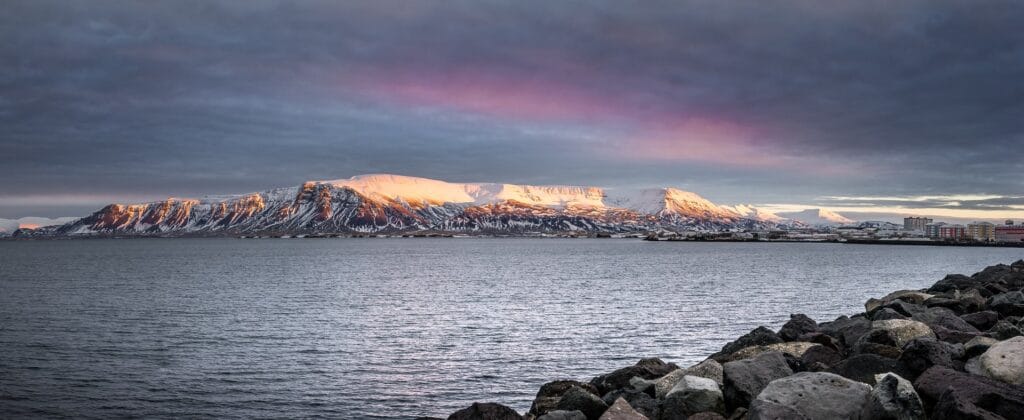
The method does not change. Use the Icelandic Met Office forecast at en.vedur.is for activity and cloud cover, chase the clear patch rather than the highest number, and give yourself at least three nights. By the last week of March the sky is noticeably less dark, and from April the season effectively ends.
The last month for ice caves
The natural ice caves under Vatnajokull run roughly November to March and March is the end of it. As temperatures climb, meltwater makes the caves unstable and operators close them for the season, usually somewhere between mid-March and early April depending on the winter.
If an ice cave is the reason for the trip, book early in the month rather than late, and check with the operator rather than assuming. The Katla ice cave on the south coast stays open year-round because volcanic ash insulates the ice, and manmade ice tunnels such as the one in Langjokull run all year too – they are a different experience but they do not close.
Easter, 25–29 March 2027
Iceland takes Easter seriously as a holiday period, and 2027 puts it at the very end of March:
- Thursday 25 March – Maundy Thursday, a public holiday.
- Friday 26 March – Good Friday, a public holiday, and the quietest day of the Icelandic year: almost everything closes.
- Sunday 28 March – Easter Sunday.
- Monday 29 March – Easter Monday, a public holiday.
Expect reduced shop and restaurant hours across those five days, especially on Good Friday, and expect Icelanders to be travelling domestically – the Easter break is a major skiing and summer-house week. Book accommodation and car hire for that window well ahead.
Weather and driving
Reykjavik averages a high near 3°C and a low near -1°C, with precipitation on about 14 days. March is still winter in Iceland in every way that matters: snow, ice, and the storms that close roads at short notice.
Check road.is, safetravel.is and vedur.is every morning before driving. Studded tyres remain legal to 15 April. Highland F-roads stay closed – they do not open until mid-June at the earliest.
The Ring Road is possible in March for confident winter drivers with a flexible itinerary and no tight flight connections. It is not a beginner’s drive, and the north and east can still be closed for a day at a time.
What opens up
March is when the shoulder season starts to arrive. Puffins have not returned, the highlands are shut and the lupine has not flowered, but whale-watching tours from Reykjavik and Husavik increase their sailings through the month, and the longer days make Snaefellsnes and even the north realistic again.
Volcanic activity
Eruptions on the Reykjanes peninsula in recent years have periodically affected the Grindavik area and the Blue Lagoon, and the situation changes constantly. Do not plan around any article’s description of the current state, including this one. Check safetravel.is and the Icelandic Met Office before and during your trip and follow the authorities on the ground.
Prices
March is low season until Easter, and the Easter week is not. The first three weeks offer winter pricing with spring daylight, which is arguably the best value combination in the Icelandic year. See how much a trip to Iceland costs.
The March 2027 calendar
- All month – daylight gaining six to seven minutes a day; studded tyres legal; F-roads closed.
- Through mid-March – the last of the natural ice cave season under Vatnajokull.
- Saturday 20 March – the equinox, in the statistically strongest stretch of the aurora year.
- Thursday 25 to Monday 29 March – the Easter holiday period; Good Friday closes almost everything.
- Sunday 28 March – Europe moves to summer time; Iceland does not, so the time difference shifts.
Read alongside
- Iceland in February – peak ice caves and low-season prices.
- Iceland in April – the aurora ending and the birds arriving.
- Best time to visit Iceland – all twelve months compared.
- How much a trip to Iceland costs – the numbers.
- Iceland Ring Road itinerary – and when it becomes sensible.
- What to pack for Iceland – the late-winter list.
- Things to know before visiting Iceland – driving and weather rules.
Frequently asked
How much daylight does Iceland get in March?
Ten hours at the start – sunrise 08:39, sunset 18:45 in Reykjavik on 1 March 2027 – rising to about thirteen by the 31st. It is the fastest-gaining month of the year at six to seven minutes a day.
Can you see the northern lights in March?
Yes, and March is one of the best months. Geomagnetic activity is statistically higher around the equinoxes, the nights are still long, and spring weather brings more clear spells. By the last week the sky is getting too light, and the season ends in April.
Are ice caves still open in March?
Early in the month, yes. The natural Vatnajokull caves run roughly November to March and close as meltwater makes them unstable, usually between mid-March and early April. Book early in the month and confirm with the operator. Katla and the manmade ice tunnels stay open year-round.
When is Easter in Iceland in 2027?
Maundy Thursday 25 March, Good Friday 26 March, Easter Sunday 28 March and Easter Monday 29 March are all holidays. Good Friday closes almost everything, and Icelanders travel domestically across the whole period.
Do the clocks change in Iceland in March?
No. Iceland stays on UTC all year. Europe moves to summer time on 28 March 2027, so the time difference between Iceland and the UK or the continent shifts that night without Iceland changing anything.
Can you drive the Ring Road in March?
It is possible for confident winter drivers with a flexible itinerary, which is a real change from January and February. It is still winter: check road.is, safetravel.is and vedur.is daily, and do not book tight connections.
How cold is Iceland in March?
Reykjavik averages about 3°C by day and -1°C at night with precipitation on roughly fourteen days. Storms and wind remain the main disruption.
Is March a good time to visit Iceland?
The first three weeks are among the best value of the year: winter prices, ten to twelve hours of daylight, the last ice caves and strong aurora odds. The Easter week at the end is busier and dearer.
You Might Also Love


Written by
John Morrison is the founder and lead travel writer at Packzup. Over the past decade he has explored destinations across Africa, the Americas, Asia, Europe, the Middle East, and Oceania — always self-funded, never on a press trip.
