
January is the darkest month in Iceland and, for one specific reason, one of the best. Reykjavik gets four and a half hours of daylight at the start of the month – sunrise 11:21, sunset 15:43 on 1 January – which means nineteen hours of darkness for the aurora, ice caves at their most stable, and the lowest prices of the year. What it also means is that you will see far less of the country than you think.
The daylight maths, stated properly
This is the number that should drive every decision about a January trip:
- 1 January 2027 – sunrise 11:21, sunset 15:43. 4 hours 22 minutes.
- 15 January – sunrise 10:57, sunset 16:19. 5 hours 21 minutes.
- 31 January – a little over seven hours, and climbing fast.
Iceland does not use daylight saving and stays on UTC all year, so the sun rises late by the clock even in summer. The practical consequence in January is that you have roughly one usable sightseeing block per day, and the light inside it is low, golden and genuinely beautiful – a permanent sunrise that turns into a permanent sunset. Photographers love January for exactly this. Anyone trying to drive the Ring Road in it does not.
Do not attempt the full Ring Road in January. With under five hours of light and winter road conditions, the honest itinerary is Reykjavik, the Golden Circle and the South Coast as far as Jokulsarlon, and that is enough.
Northern lights: the best odds of the year
The aurora season runs roughly September to April, and January sits in the middle of it with the longest nights. Three things have to line up: darkness, a clear sky, and solar activity. January reliably gives you the first; the other two are weather and luck.
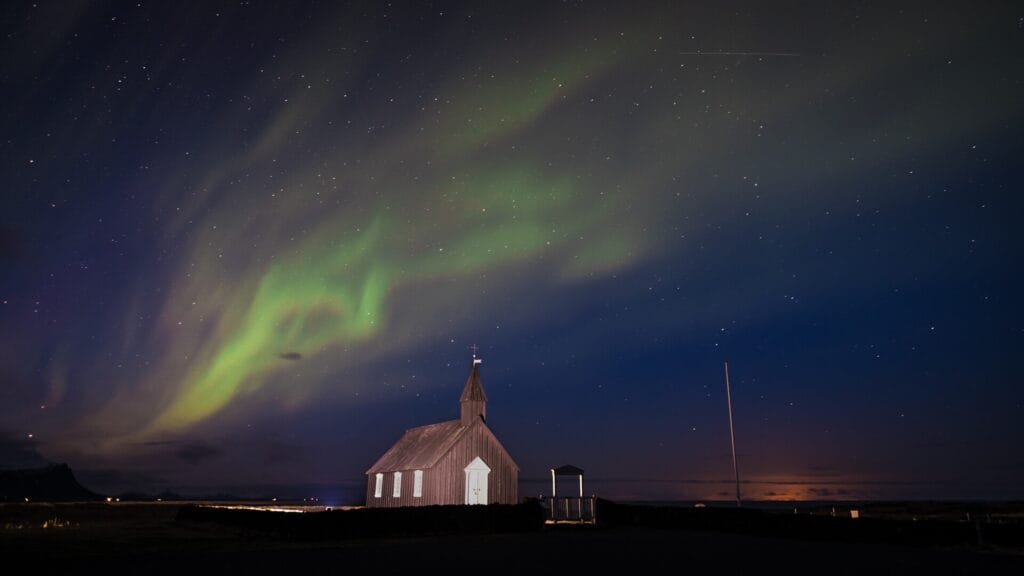
How to actually improve your odds:
- Use the Icelandic Met Office aurora forecast at en.vedur.is, which shows both the activity level and, more usefully, the cloud-cover map. Chasing a clear patch matters more than chasing high activity.
- Stay three nights minimum, ideally five. One night is a coin toss. Tour operators run again free if a trip is clouded out, which tells you how often it happens.
- Get away from Reykjavik’s light. Thingvellir, the Reykjanes peninsula and the south coast are all within easy reach.
- Do not expect what the photographs show. A long exposure collects colour your eye cannot. A real aurora often looks like a pale grey-green arc that moves.
Ice caves are a January thing
The natural ice caves under Vatnajokull are accessible roughly November to March, because they need sustained freezing temperatures to be stable, and they are re-surveyed every year – the caves are not the same caves from one winter to the next. January is squarely in the best window, with the deepest blue ice.
Two rules. Natural ice caves can only be visited on a guided tour, without exception; going alone is how people die. And the Katla ice cave on the south coast is the one that runs year-round, because volcanic ash insulates the ice – useful if your dates fall outside the natural-cave season.
Weather, and what it does to driving
Reykjavik in January averages a high near 2–3°C and a low near -2°C, with rain or snow on around 15 days and roughly 85 mm of precipitation. It is not as cold as people expect – the Gulf Stream sees to that – but it is wet, dark and violently windy.
Wind is the real story. Icelandic storms close roads at short notice and can tear a car door off its hinges; car-hire insurance in Iceland specifically excludes wind damage to doors for that reason. Before you drive anywhere:
- road.is / umferdin.is for live road status and closures.
- safetravel.is for alerts, and to leave a travel plan.
- vedur.is for the weather and wind-speed warnings.
Check all three every morning. A closed road in January is closed, and no amount of four-wheel drive changes that. Highland F-roads are shut for the winter and will not open until June.
Volcanic activity
Iceland has an active volcanic system on the Reykjanes peninsula, and eruptions there in recent years have periodically affected the area around Grindavik and, at times, the Blue Lagoon. Activity comes and goes and the situation changes month to month.
The honest advice is not to rely on any article, including this one, for the current position. Check safetravel.is and the Icelandic Met Office before and during your trip, and follow the instructions of the authorities on the ground. Flights and Reykjavik itself have generally been unaffected, but specific sites can close at no notice.
What January costs, and what it saves
January after the first week is the cheapest month of the Icelandic year: flights are low, hotels are at their floor, and tours have availability. The exception is New Year itself, which is one of the most expensive and most spectacular nights in Reykjavik – the city’s firework displays are famously unregulated and enormous.
Iceland is expensive in absolute terms whatever the month; see how much a trip to Iceland costs and is Iceland expensive for the real numbers.
Thorrablot: the midwinter feast
From late January into February Icelanders hold Thorrablot, a midwinter feast built around the old month of Thorri. The food is a deliberate exercise in tradition – fermented shark, singed sheep heads, soured ram’s testicles, rye bread and a great deal of brennivin – and the point is the gathering rather than the menu. Some Reykjavik restaurants run a Thorrablot platter for visitors during the season; it is worth trying once.
What to wear
Waterproof and windproof shell, insulating mid-layers, thermal base layers, and proper boots with grip – pavements in Reykjavik ice over and microspikes are sold in every outdoor shop for good reason. Gloves, hat, and a swimsuit, because the pools and lagoons are the best thing about an Icelandic winter and they are outdoors and geothermally heated. See what to pack for Iceland.
The January 2027 calendar
- Friday 1 January – New Year’s Day, a public holiday; 4h22m of daylight.
- Through January – aurora season at its darkest; natural ice caves open under Vatnajokull.
- Late January – Thorrablot season begins and runs into February.
- End of January – daylight back above seven hours and rising by about six minutes a day.
- All month – highland F-roads closed; Ring Road driving is a winter undertaking, not a scenic one.
Read alongside
- Iceland in February – more daylight, same aurora, same ice caves.
- Iceland in December – the shortest days of all, and Christmas in Reykjavik.
- Best time to visit Iceland – all twelve months compared.
- How much a trip to Iceland costs – the numbers.
- What to pack for Iceland – the winter list.
- Where to stay in Reykjavik – choosing a base.
- Things to know before visiting Iceland – driving, weather and the practical rules.
Frequently asked
How many hours of daylight does Iceland get in January?
About four and a half at the start of the month – sunrise 11:21 and sunset 15:43 in Reykjavik on 1 January 2027 – rising to a little over seven hours by the 31st. Iceland stays on UTC all year and does not use daylight saving.
Is January a good time to see the northern lights?
It has the longest nights of the aurora season, which runs roughly September to April, so the darkness is in your favour. Cloud is what actually costs you the aurora, so use the Icelandic Met Office cloud-cover and aurora forecast, and stay at least three nights.
Can you visit ice caves in January?
Yes – January is in the middle of the natural ice cave season under Vatnajokull, which runs roughly November to March. They must be visited on a guided tour, and the caves are re-surveyed every year. The Katla ice cave on the south coast is open year-round.
How cold is Iceland in January?
Milder than people expect: Reykjavik averages about 2–3°C by day and around -2°C at night. The problem is wind and precipitation on roughly fifteen days of the month, not the temperature.
Can you drive the Ring Road in January?
It is possible and it is not advisable for most visitors. With under five hours of daylight and winter conditions, the sensible January itinerary is Reykjavik, the Golden Circle and the South Coast. Check road.is, safetravel.is and vedur.is every single morning.
Are the highland F-roads open in January?
No. Highland F-roads are closed all winter and typically open between mid-June and early July, depending on the road and the snow.
Is January the cheapest month in Iceland?
After the first week, yes – flights, hotels and tours are at their annual low. New Year in Reykjavik is the exception and is expensive.
What is Thorrablot?
The midwinter feast held from late January into February, built on traditional preserved foods including fermented shark and singed sheep’s head. Some Reykjavik restaurants serve a Thorrablot platter during the season.
You Might Also Love

Written by
John Morrison is the founder and lead travel writer at Packzup. Over the past decade he has explored destinations across Africa, the Americas, Asia, Europe, the Middle East, and Oceania — always self-funded, never on a press trip.
