

March is when Lisbon dries out. Rainfall drops to about 55 mm from February’s 85, days reach 19°C, and the terraces start filling properly. In 2027 it also carries Easter on 28 March – the same day the clocks go forward – with Good Friday on the 26th a full national holiday.
The weather, precisely
The rainfall figure is the story: March is drier than February by a third, and it is the first month where you can reasonably plan outdoor days. Lisbon is the sunniest capital in Europe, and March is when that starts to show.
Clocks go forward on Sunday 28 March 2027, moving Portugal from UTC+0 to UTC+1 for the summer, and pushing sunset to nearly 20:00 overnight.
Easter, 26 to 29 March 2027
- Friday 26 March – Sexta-feira Santa (Good Friday), a national public holiday in Portugal. Banks, offices and many shops close; restaurants and monuments largely stay open.
- Sunday 28 March – Páscoa. A family lunch day – roast lamb or kid, folar bread and almonds. Restaurants book up; many close in the evening.
- Monday 29 March – not a public holiday in Portugal, unlike much of Europe. Normal working day.
Easter lifts hotel rates for the long weekend and brings the first real crowds of the year to Sintra and Belém. If Easter is not the point of the trip, the first three weeks of March are better value and nearly as dry.
The half marathon and the bridge
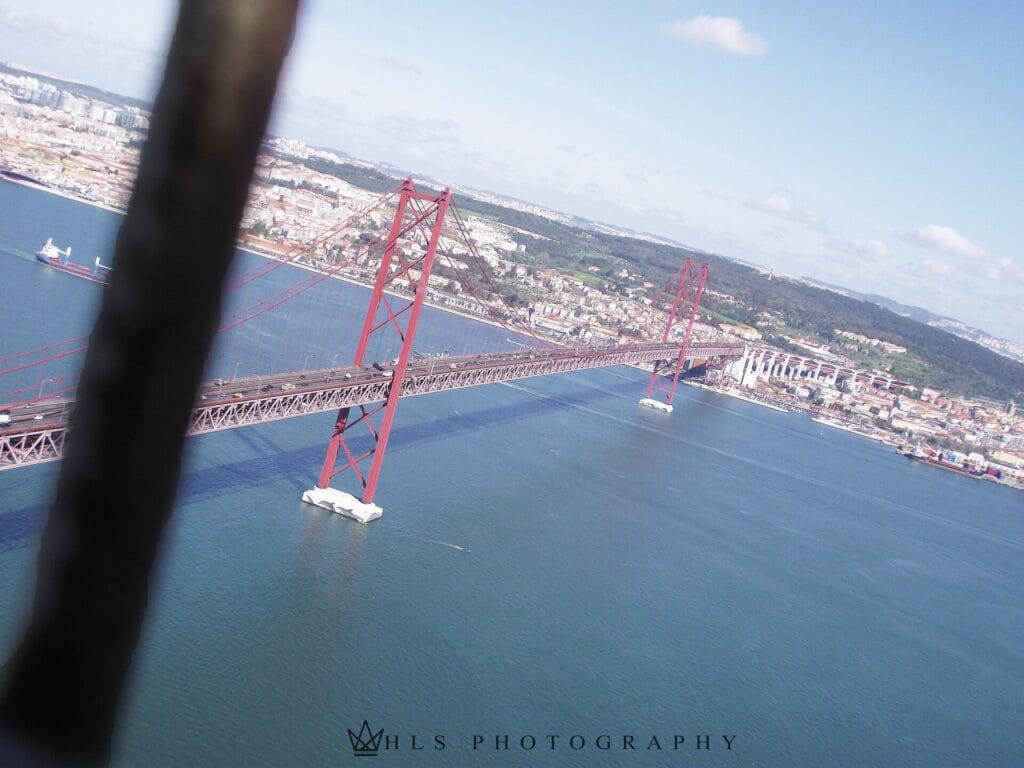
The Lisbon Half Marathon is normally run in March, and it matters even if you have no interest in running: the route crosses the 25 de Abril Bridge, and race morning is essentially the only time pedestrians are allowed on it. The bridge is closed to traffic for the event, which also means significant disruption on the south-bank approaches. Dates are announced annually.
What March is for
- The last easy month at the monuments. Jerónimos, Belém Tower and Sintra are still manageable in the first half; from Easter onwards the queues begin in earnest. Monuments close on Mondays.
- Walking the hills – Alfama, Graça, Mouraria, the miradouros – at a temperature that makes the gradients pleasant rather than punishing.
- Day trips to Sintra, Cascais and Setúbal, all comfortable now.
- Almond and cherry blossom further north in the Douro, and wildflowers across the Alentejo – March is the Alentejo’s best month, green before the summer burns it brown.
- Prices, still low season until Easter week.
The Atlantic
Still 15°C, still not for swimming, still excellent for surfing. The winter swell eases through March but Ericeira and the Costa da Caparica stay consistent. Wetsuits all year, without exception.
Prices and crowds
Low season for the first three weeks, then a sharp Easter spike. Late March after the holiday returns to reasonable. See what a trip to Portugal costs.
What to pack
Layers, a light waterproof, and shoes with grip – the cobbles are still a hazard whenever it rains. Sunglasses; the March sun is stronger than 19°C suggests. Something warm for the evening and for poorly heated interiors.
The March 2027 calendar
- Usually March – the Lisbon Half Marathon; the 25 de Abril Bridge closes to traffic and opens to runners. Dates announced annually.
- First three weeks – low-season prices with much drier weather; the best value window of the month.
- Friday 26 March – Good Friday, a national public holiday.
- Sunday 28 March – Easter Sunday, and clocks go forward; sunset moves to nearly 20:00.
- Monday 29 March – not a holiday in Portugal; a normal working day.
- Through March – rainfall down to about 55 mm; the Alentejo at its greenest.
Read alongside
- Lisbon in February – wetter, cheaper, quieter.
- Lisbon in April – Liberty Day and the best of spring.
- Lisbon in May – jacarandas and the first warm sea.
- Best time to visit Lisbon – all twelve months compared.
- Lisbon itinerary – how to structure the days.
- Lisbon travel guide – the neighbourhoods and how they differ.
- Trip to Portugal cost – shoulder-season numbers.
Frequently asked
How warm is Lisbon in March?
About 19°C by day and 11°C at night, with rainfall down to roughly 55 mm – a third less than February. It is the first month you can reasonably plan outdoor days.
Is Good Friday a holiday in Portugal?
Yes, Sexta-feira Santa is a national public holiday. Easter Monday, unlike in much of Europe, is not – it is a normal working day.
When do the clocks change in Portugal in 2027?
On the last Sunday of March – 28 March 2027, which is also Easter Sunday. Portugal moves from UTC+0 to UTC+1 and sunset jumps to nearly 20:00.
Can you walk across the 25 de Abril Bridge?
Only on Lisbon Half Marathon morning, normally in March, when the bridge closes to traffic for the race. It is the one day of the year pedestrians are allowed on it.
Is March a good time to visit Lisbon?
The first three weeks are one of the best value windows of the year – much drier than winter, still low season, and the monuments still manageable. Easter week is the exception.
Can you swim in Lisbon in March?
No – the Atlantic is 15°C. Surfing continues year round in wetsuits, with the winter swell easing through the month.
Is Sintra busy in March?
Not until Easter. The first half of the month is still comfortable; after the holiday the queues build for the rest of the year.
Is Lisbon cheap in March?
Until Easter week, yes – close to winter rates with much better weather. The holiday weekend spikes sharply, then it settles again.
You Might Also Love



Written by
John Morrison is the founder and lead travel writer at Packzup. Over the past decade he has explored destinations across Africa, the Americas, Asia, Europe, the Middle East, and Oceania — always self-funded, never on a press trip.
