
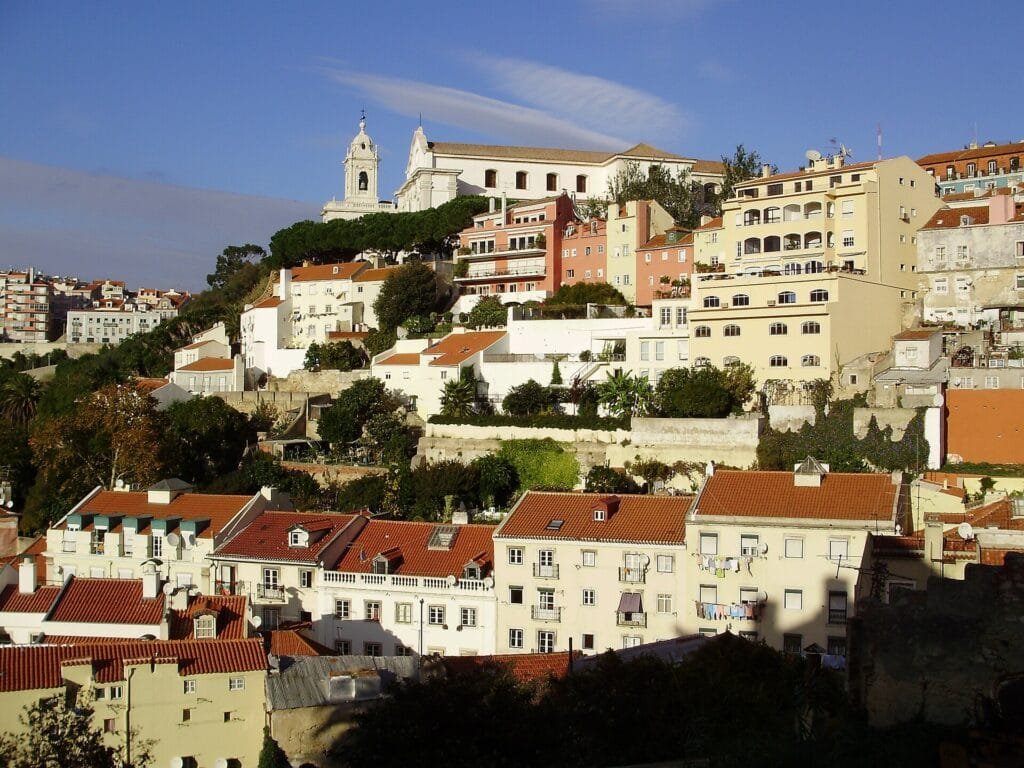
January is the mildest winter month of any major European capital, and Lisbon spends it at about 15°C – warmer by day than London or Paris manage in April. It is also one of the two wettest months, at around 100 mm. Get a dry week and it is the best-value city break in Europe; get a wet one and you will be in a lot of pastelarias.
The weather, precisely
Two things define a Lisbon January. The first is how mild it is: 15°C by day and 9°C at night, with the sun genuinely warm on a sheltered terrace at midday. The second is that this is the wet season – Lisbon gets most of its annual rain between October and March, and January is near the peak.
When it rains here it rains properly, unlike Amsterdam’s drizzle. It also clears fast, and the light afterwards is exceptional.
The hills and the rain
This is the one genuinely practical warning for winter Lisbon. The city is built on hills and paved almost everywhere in calçada portuguesa – polished limestone cobbles set in patterns. Wet, they are genuinely slippery, and the steep lanes of Alfama, Bica and Graça become hazardous.
Shoes with real grip matter more in Lisbon in January than a warm coat does. Smooth-soled boots are a bad idea.
The city’s funiculars and the Santa Justa lift exist precisely because of those gradients, and the trams are covered – use them rather than walking every hill in the wet.
What January is for
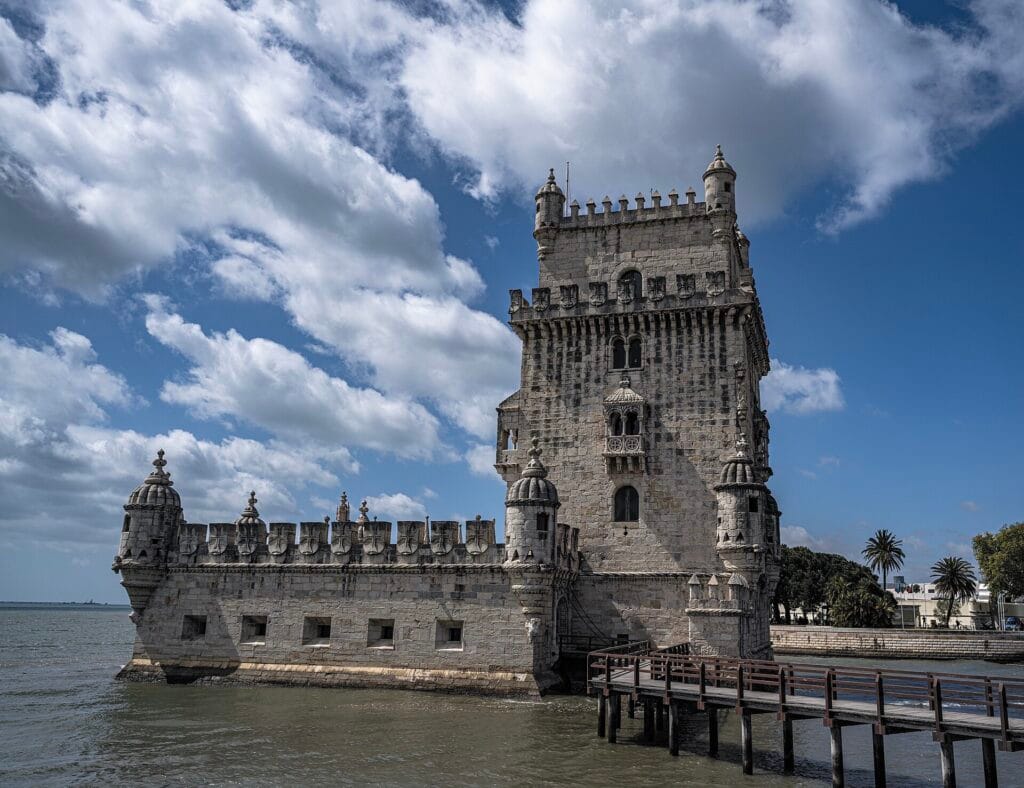
- The big sights without queues. The Jerónimos Monastery and Belém Tower, both UNESCO-listed, have summer queues that run well over an hour. In January you largely walk in. Note that many Lisbon museums and monuments close on Mondays, which matters more when you have fewer days of good weather to play with.
- Sintra, properly. The Pena Palace and Quinta da Regaleira are overwhelmed from spring to autumn. January is the one time you can move through them. Take a waterproof – Sintra sits in its own microclimate and is markedly wetter and mistier than Lisbon, which is exactly why the gardens look the way they do.
- Fado. The small Alfama and Mouraria houses are at their least touristy in winter, and a rainy January night is the right weather for it.
- Food. Winter is caldo verde, cozido and roast chestnut season, and January brings Bolo Rei – the crown-shaped candied-fruit cake eaten from Christmas through to Epiphany.
- Prices. January is the cheapest month of the Lisbon year.
The Atlantic, and why it matters
Worth understanding before you plan any coastal day. Lisbon is on the Atlantic, not the Mediterranean, and the sea sits between about 15°C and 19°C all year – barely warmer in August than in February. In January it is 15°C and the beaches at Cascais, Carcavelos and Costa da Caparica are for walking, not swimming.
Surfers are in the water year round in wetsuits, and the winter Atlantic swell is the serious season for it – Ericeira, an hour north, is a World Surfing Reserve.
Prices and crowds
Low season and the cheapest month. Flights and hotels are both at their floor, and the neighbourhoods that price themselves out of reach in summer – Chiado, Príncipe Real, Alfama – are affordable. See what a trip to Portugal costs.
What to pack
Shoes with grip, first and above everything else. A waterproof jacket, layers, and something warm for the evening – Portuguese buildings are poorly insulated and often have no central heating, so interiors can feel colder than the street. An umbrella is usable here, unlike in northern Europe, because Lisbon is much less windy.
The January 2027 calendar
- Friday 1 January – New Year’s Day, a national public holiday.
- Wednesday 6 January – Epiphany; Dia de Reis and the end of Bolo Rei season. Not a public holiday in Portugal.
- Through January – the wet season near its peak, about 100 mm; the cheapest rates of the year.
- Through January – Jerónimos, Belém and Sintra at their quietest; most monuments closed on Mondays.
- Through January – peak Atlantic surf season at Ericeira and along the Costa da Caparica.
Read alongside
- Lisbon in February – drier, and Carnival.
- Lisbon in March – the spring turn and Easter.
- Portugal in January – the country-wide view.
- Best time to visit Lisbon – all twelve months compared.
- Lisbon itinerary – how to structure the days.
- Lisbon travel guide – the neighbourhoods and how they differ.
- Trip to Portugal cost – low-season numbers.
Frequently asked
How cold is Lisbon in January?
About 15°C by day and 9°C at night – the mildest January of any major European capital. The problem is rain, not cold, and interiors that often lack central heating.
Does it rain a lot in Lisbon in January?
Yes – around 100 mm, near the peak of the wet season that runs October to March. It rains properly rather than drizzling, and it clears fast.
Is January a good time to visit Lisbon?
If you want Jerónimos, Belém Tower and Sintra without queues, and the lowest prices of the year, yes. If your trip depends on dry weather, it is a gamble.
Are Lisbon’s cobbles slippery in the rain?
Very. The polished limestone calçada is genuinely hazardous wet, especially on the steep lanes of Alfama and Bica. Shoes with grip matter more than a warm coat.
Can you swim in Lisbon in January?
No. The Atlantic is about 15°C – and it only reaches 19°C at the height of summer, because this is the ocean rather than the Mediterranean. Surfers use wetsuits year round.
Is Sintra worth visiting in January?
Yes, and it is the one time of year it is not overwhelmed. Take a waterproof: Sintra has its own microclimate and is noticeably wetter and mistier than Lisbon.
Are museums open in Lisbon in January?
Yes, but many Lisbon museums and monuments close on Mondays year round. Check before building a day around one.
What is Bolo Rei?
The crown-shaped Portuguese Christmas cake, studded with candied fruit and nuts, eaten from Christmas through to Epiphany on 6 January.
You Might Also Love



Written by
John Morrison is the founder and lead travel writer at Packzup. Over the past decade he has explored destinations across Africa, the Americas, Asia, Europe, the Middle East, and Oceania — always self-funded, never on a press trip.
