
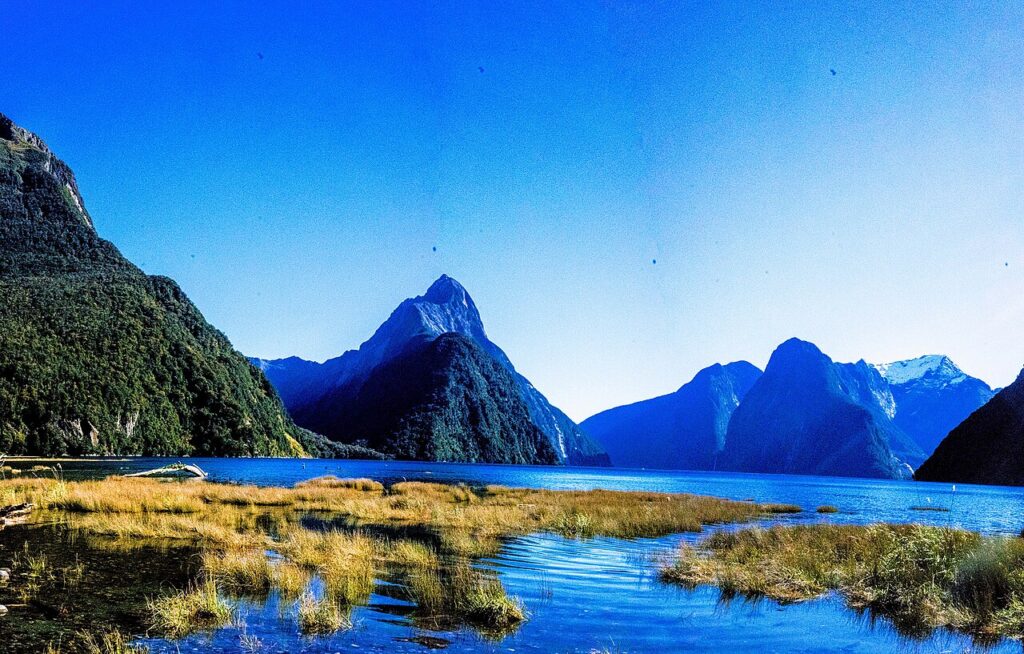
August is the quiet half of the New Zealand ski season. The snow base is usually at its deepest, the July school holidays are over, and Queenstown and Wanaka go back to being ordinary towns with a mountain attached. If you are coming for snow and you are not tied to a school calendar, this is the month to pick.
The numbers
Why August beats July on the mountain
Two things change once the school holidays end in mid-to-late July. Lift queues shorten, and accommodation in Queenstown and Wanaka stops being scarce. Meanwhile the snowpack has had two more months to build, so the fields are usually at their deepest base of the season.
- All fields still running – Coronet Peak, The Remarkables, Cardrona, Treble Cone, and the Mt Ruapehu fields.
- Deepest base, fewest people – the combination that makes August the enthusiast’s month.
- Days are lengthening – by the end of August Auckland is light until close to 5:45pm, which is a noticeable improvement on July.
- Still no ski-in, ski-out – you sleep in town and drive up, as you do all season here.
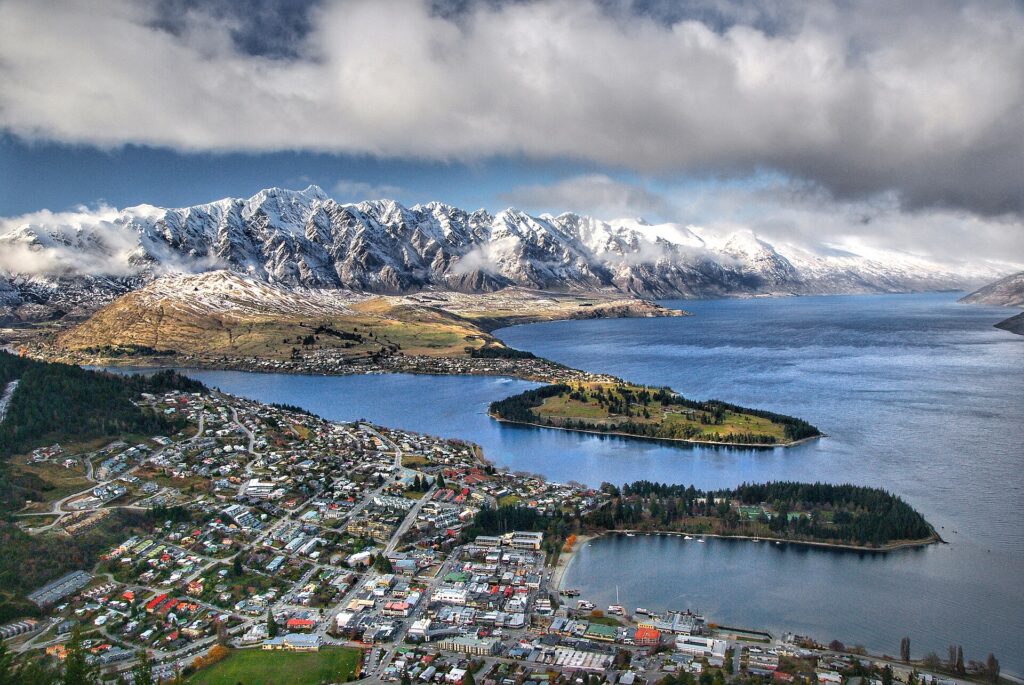
The first hints of spring
Late August is when the South Island starts turning. Lambs appear in the paddocks of Canterbury and Southland, the first blossom shows in Central Otago and Hawke’s Bay, and the light lengthens noticeably week to week. It is still winter – Queenstown nights sit around 1°C – but it no longer feels like the bottom of the year.
What else August is for
- Whale watching at Kaikoura. Sperm whales are resident year-round, and winter is also when humpbacks move through New Zealand waters on their northward migration.
- Hot pools. Hanmer Springs, Tekapo, Rotorua – still the best month for them.
- Stargazing in the Aoraki Mackenzie Dark Sky Reserve, with long, cold, clear nights and a chance of aurora australis in the deep south.
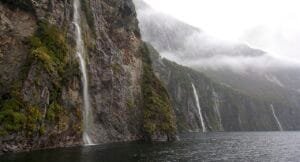
- Fiordland at its emptiest, and Milford Sound cruises run all year.
- North Island value. Rotorua, the Coromandel, Napier and Wellington are all low season and cheap while the ski towns fill.
What is still closed or restricted
- Great Walks are in winter status. The booking season does not resume until late October. Huts run unserviced, bridges and marker poles may be removed, and several routes carry avalanche risk. These are alpine expeditions in August, not walks.
- Alpine passes can close at short notice – the Crown Range, the Lindis, Arthur’s Pass, and the Milford Road, which has genuine avalanche risk and is sometimes convoy-controlled.
- Some seasonal North Island operators run reduced winter timetables.
Driving
Same rules as July, and they matter. Carry chains and learn to fit them before you need them. Watch for black ice on shaded Central Otago roads in the early morning. Check road conditions the morning you travel rather than the night before, and finish long drives in daylight – rural roads here are unlit, winding, and narrower than visitors expect.
Prices and crowds
Queenstown and Wanaka are still busy but nothing like the July holidays. Everywhere else in the country is genuinely low season. Flights and rental cars are cheap, and the North Island is at its best value of the year. See what travelling New Zealand costs.
What to pack
Winter layers, a waterproof shell, and warm indoor clothing – New Zealand houses are famously under-insulated and a winter rental can feel colder inside than out. Merino base layers, which are sold everywhere here. Serious sun protection: alpine UV plus snow reflection burns fast even at 10°C, and New Zealand’s UV is among the highest in the world. Chains if you are driving in the south.
The August 2027 calendar
- Through August – ski season continues at Queenstown, Wanaka and Mt Ruapehu, with the deepest base of the year and the school holidays over.
- Through August – Great Walks remain in winter status; the booking season does not resume until late October.
- Through August – whale watching at Kaikoura runs year-round; aurora australis season continues in the deep south.
- Late August – first lambs and first blossom in Canterbury, Southland, Central Otago and Hawke’s Bay.
- End of August – daylight in Auckland stretches to close to 5:45pm.
- No public holidays fall in August in New Zealand.
Where to go in August
- Queenstown and Wanaka – the enthusiast’s month. Deepest base of the season, the school holidays finished, and accommodation available again at sane prices.
- Mt Ruapehu, Ohakune and National Park – North Island snow at a fraction of the southern cost, and the Tongariro landscape at its most striking.
- Hanmer Springs and the Canterbury high country – thermal pools, snow on the hills, and an easy stop between Christchurch and the West Coast.
- Kaikoura – sperm whales are resident all year, and winter is also when humpbacks move through New Zealand waters heading north.
- Southland, the Catlins and Stewart Island – the best of the aurora australis season, with long dark nights and very little light pollution.
- Northland and the Bay of Islands – the mildest region in the country, close to empty, and the cheapest it will be all year.
Late in the month the South Island starts to turn: lambs appear across Canterbury and Southland, and the first blossom shows in Central Otago. It is still winter, but the direction of travel has changed.
Read alongside
- New Zealand in July – peak ski, peak crowds.
- New Zealand in September – spring skiing and the season winding down.
- New Zealand in October – the Great Walks reopen.
- Best time to visit New Zealand – all twelve months compared.
- New Zealand in 10 days – how the islands connect.
- New Zealand travel guide – North Island, South Island and Fiordland.
- Best things to do in New Zealand – the year-round list.
Frequently asked
Is August a good time to ski in New Zealand?
It is arguably the best. The snow base is usually at its deepest and the July school holidays are over, so lift queues and accommodation pressure both drop sharply.
How cold is New Zealand in August?
Auckland averages about 16°C by day and Queenstown about 10°C, with Queenstown nights around 1°C. The North Island is mild and wet rather than cold; altitude matters far more than latitude.
Are the Great Walks open in August?
Not in their normal form. They are in winter status until the booking season resumes in late October – huts are unserviced, some bridges and marker poles are removed, and several routes carry avalanche risk.
Can you visit Milford Sound in August?
Yes. Cruises run all year and winter is the least crowded time to go. The Milford Road is the variable – it can close or run under convoy control after snow.
Are there public holidays in New Zealand in August?
No. August has no national public holidays, which is part of why it stays quieter than July.
Is August too late for aurora australis?
No. The long dark nights of winter are still the best window, and Southland, Stewart Island and the Mackenzie country are the usual places to try.
Do I still need sunscreen in a New Zealand winter?
Yes, especially on the mountain. New Zealand’s UV is among the highest in the world, and snow reflection roughly doubles the exposure.
Is the North Island worth visiting in August?
Yes, and it is cheap. Expect grey and wet rather than cold, and make the most of the geothermal areas and hot pools, which are better in cold air.
New Zealand month by month
- January – peak summer and peak domestic crowds.
- February – the warmest, driest month.
- March – late summer without the crowds.
- April – autumn colour in Central Otago.
- May – the quiet month before the snow.
- June – Matariki and the ski season opening.
- July – peak ski season and school holidays.
- August – the deepest snow, the smallest queues (this page).
- September – blossom, spring snow, clocks forward.
- October – the Great Walks reopen.
- November – long days, lupins, no crowds yet.
- December – summer proper and the Christmas rush.
You Might Also Love

Written by
John Morrison is the founder and lead travel writer at Packzup. Over the past decade he has explored destinations across Africa, the Americas, Asia, Europe, the Middle East, and Oceania — always self-funded, never on a press trip.
