

July is New Zealand’s coldest month and its ski peak. Queenstown and Wanaka are full, the fields are running properly, and the New Zealand school holidays put the whole country on the mountain for two weeks. Auckland, meanwhile, sits at a mild and very wet 15°C – which is the thing most northern visitors get wrong about a New Zealand winter.
The numbers
A New Zealand winter is not a cold winter
Worth stating plainly, because the word “winter” misleads. Auckland in July averages about 15°C by day – warmer than London in April. The North Island does not really do freezing; it does grey, wet and windy. Snow at sea level is almost unknown outside the far south.
What New Zealand has instead is a very small country with an enormous vertical range. You can be in a 15°C subtropical Auckland morning and in sub-zero alpine conditions on Ruapehu the same afternoon. The temperature that matters is always altitude, not latitude.
The other North Island fact: July is Auckland’s wettest month, at roughly 145 mm. Houses are famously under-insulated and under-heated by northern European standards, so a winter rental can be colder inside than the street.
Peak ski
- All fields are open and running – Coronet Peak, The Remarkables, Cardrona, Treble Cone, and the Mt Ruapehu fields in the North Island.
- New Zealand school holidays run for about two weeks in early-to-mid July. This is the single busiest domestic travel window of the winter. Queenstown and Wanaka accommodation books out; lift queues are at their longest.
- You still sleep in town and drive up – access roads are steep gravel and chains are frequently required. Many rental agreements make them mandatory to carry.
- Night skiing runs on some fields, and Coronet Peak is the usual one.
What else July is for
- Hot pools in the cold. Hanmer Springs, Tekapo, Rotorua, the Polynesian Spa – midwinter is when these make sense.
- Stargazing at the Aoraki Mackenzie Dark Sky Reserve, with long clear cold nights.
- Whale watching at Kaikoura, which runs all year because the sperm whales are resident.
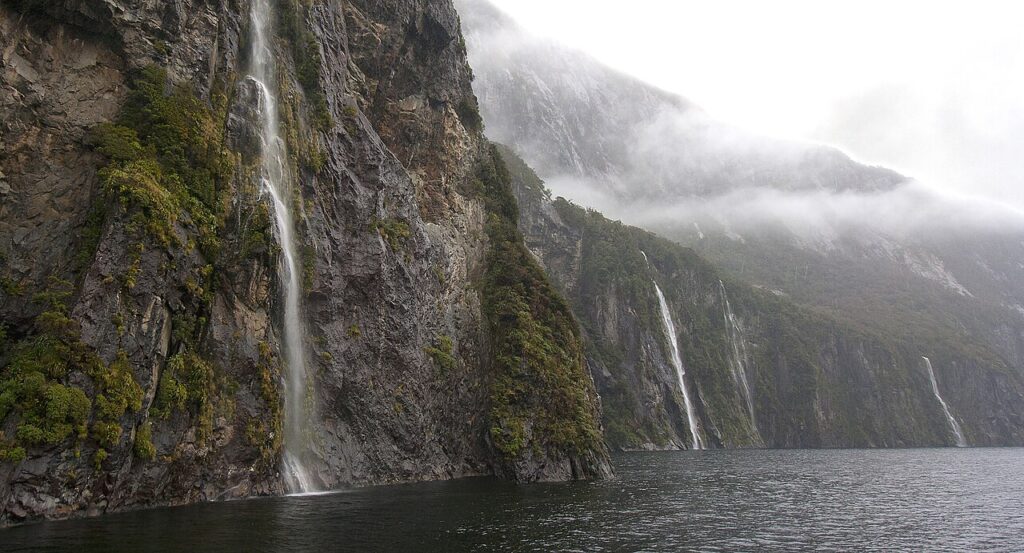
- Fiordland, at its most dramatic and least visited.
- Geothermal Rotorua, where cold air makes the steam far more visible.
- Cheap North Island travel – the entire North Island is low season while the South Island ski towns peak.
Driving in winter
The practical warning of the month. Alpine passes can close at short notice – the Crown Range (New Zealand’s highest sealed road), the Lindis, Arthur’s Pass, the Milford Road. The Milford Road in particular has genuine avalanche risk and is closed or convoy-controlled at times.
- Carry chains and know how to fit them before you need to.
- Check road conditions the morning you travel, not the night before.
- Daylight is short – dark by about 5:30pm. Plan drives to finish before then; rural roads are unlit and winding.
- Black ice on shaded Central Otago roads in the early morning is the commonest winter hazard.
Prices and crowds
Queenstown and Wanaka are at their winter peak, especially during school holidays. Everywhere else is low season and good value. The split is unusually sharp. See what travelling New Zealand costs.
What to pack
Proper winter layers and a waterproof shell. Warm indoor clothing – New Zealand houses are cold. Sun protection: alpine UV plus snow reflection burns fast even at 8°C. Merino base layers, sold everywhere here. Chains if driving in the south.
The July 2027 calendar
- Through July – peak ski season at Queenstown, Wanaka and Mt Ruapehu; all fields running.
- Early to mid July – New Zealand school holidays, about two weeks; the busiest domestic window of the winter.
- Through July – Auckland’s wettest month at roughly 145 mm; the North Island is low season.
- Through July – alpine passes can close at short notice; the Milford Road has avalanche risk.
- Through July – Dark Sky Reserve stargazing and aurora australis season continue.
- No public holidays fall in July in New Zealand.
Where to go in July
- Queenstown and Wanaka – every field running, night skiing at Coronet Peak, and the busiest two weeks of the domestic winter during the school holidays. Book early or come in August instead.
- Mt Ruapehu, Ohakune and National Park – the North Island alternative, considerably cheaper than the south and reachable from Auckland or Wellington in a day.
- Rotorua and Taupo – the best value in the country in July. Geothermal parks, the Polynesian Spa and the hot pools all work better in cold air.
- Hanmer Springs and Tekapo – thermal pools with snow on the surrounding hills, and an easy detour off the main South Island routes.
- Kaikoura – whale watching runs year-round, though winter seas mean a higher chance of a cancelled sailing.
- Northland and the Coromandel – low season, mild, wet, and very cheap. Not a beach trip, but a good one for coastal walks and empty towns.
If you are not skiing, July is the month to go north and spend the saving on somewhere with proper heating – which is the single most useful piece of advice for a New Zealand winter.
Read alongside
- New Zealand in June – Matariki and the season opening.
- New Zealand in August – the best snow, fewer people.
- New Zealand in October – spring and the Great Walks reopening.
- Best time to visit New Zealand – all twelve months compared.
- New Zealand in 10 days – how the islands connect.
- New Zealand travel guide – North Island, South Island and Fiordland.
- Cost of travelling New Zealand – winter numbers.
Frequently asked
How cold is New Zealand in July?
Milder than most people expect. Auckland averages about 15°C by day – warmer than London in April – while Queenstown sits at 8°C with freezing nights. Altitude matters far more than latitude here.
Is July the best month for skiing in New Zealand?
It is the peak in terms of everything being open, but it also has the school holidays and the longest lift queues. August often has better snow and fewer people.
When are New Zealand school holidays in winter?
About two weeks in early-to-mid July. It is the busiest domestic travel window of the season, and Queenstown and Wanaka book out.
Do I need snow chains in New Zealand?
For ski-field access roads, frequently – they are steep gravel. Many rental agreements require you to carry them. Learn to fit them before you need to.
Can alpine passes close in July?
Yes, at short notice – the Crown Range, the Lindis, Arthur’s Pass and the Milford Road, which also has avalanche risk and can be convoy-controlled. Check conditions the morning you travel.
Is the North Island worth visiting in July?
Yes, and it is cheap. It is mild and wet rather than cold, and geothermal Rotorua and the hot pools are better in cold air. Just expect grey weather and poorly heated accommodation.
Why are New Zealand houses so cold?
Historically low insulation standards and a reliance on portable heating. A winter rental can genuinely feel colder inside than out – pack indoor warm clothes.
Can you visit Milford Sound in July?
Yes – cruises run year-round and it is at its most dramatic. Watch the Milford Road, which is the part that closes.
New Zealand month by month
- January – peak summer and peak domestic crowds.
- February – the warmest, driest month.
- March – late summer without the crowds.
- April – autumn colour in Central Otago.
- May – the quiet month before the snow.
- June – Matariki and the ski season opening.
- July – peak ski season and school holidays (this page).
- August – the deepest snow, the smallest queues.
- September – blossom, spring snow, clocks forward.
- October – the Great Walks reopen.
- November – long days, lupins, no crowds yet.
- December – summer proper and the Christmas rush.
You Might Also Love

Written by
John Morrison is the founder and lead travel writer at Packzup. Over the past decade he has explored destinations across Africa, the Americas, Asia, Europe, the Middle East, and Oceania — always self-funded, never on a press trip.
