
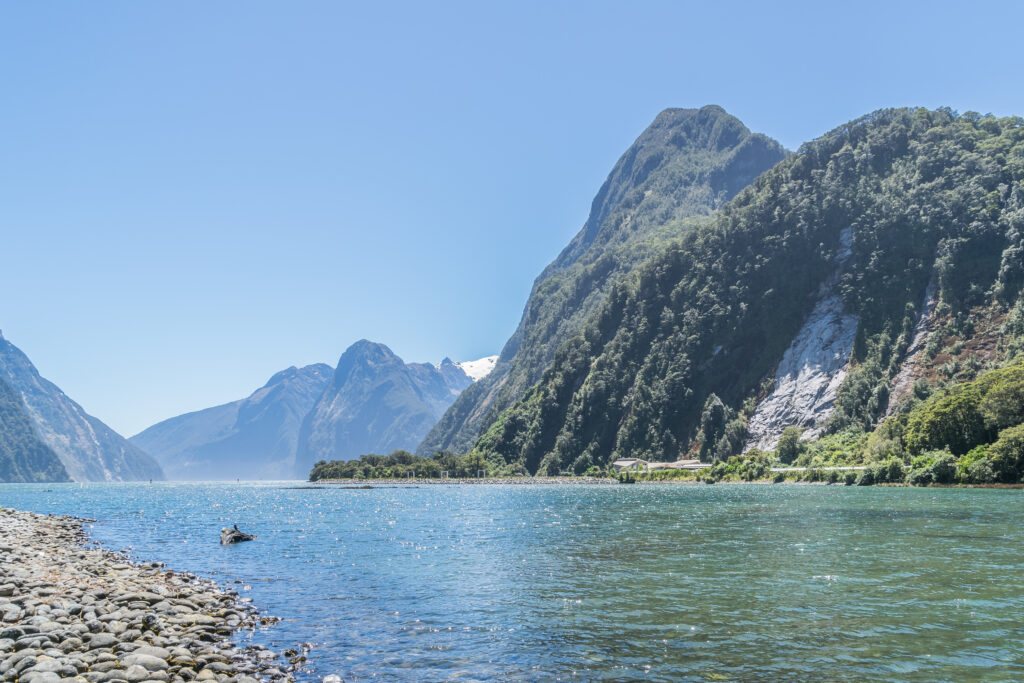
November is the month experienced New Zealand travellers quietly aim for. Everything is open, the days are long, the lupins are out in the Mackenzie – and the Christmas crowds are still six weeks away. Prices sit below summer rates and the Great Walks, which are impossible to book in January, sometimes still have space.
The numbers
Why November is the value month
- Everything is running. The Great Walks season is open, boat trips and coastal operators are on full summer timetables, and the alpine roads are clear.
- The days are long. With daylight saving in force, the South Island stays light until close to 9pm by late November.
- The crowds have not arrived. The domestic summer holidays do not start until mid-to-late December, and international arrivals peak after that.
- Prices are below peak. Accommodation, flights and rental cars all jump in mid-December – November is the last month before that.

The lupins
The Russell lupins along Lake Tekapo, Lake Pukaki and the Mackenzie roadsides flower from late November into December, and they are the reason a lot of photographers time a trip for exactly now. Worth knowing: they are an introduced species and a serious problem for braided-river birds, so admire them, and stay on formed tracks and off the riverbeds, which are nesting habitat for wrybill and black-fronted tern.
What November is good for
- Great Walks without the January scramble. The season is open and the high passes on the Routeburn and Kepler are usually clear by late in the month – though snow can linger. Book anyway; these sell out far ahead.
- Fiordland and Milford Sound before the summer coach traffic.
- The Abel Tasman and the Bay of Islands, warm enough to swim and empty compared with January.
- Wine country – Marlborough, Central Otago and Hawke’s Bay in the growing season, before harvest and before the crowds.
- Kaikoura, where whale watching runs all year and the seas are calmer than in winter.
- Stargazing is still good, though the nights are getting short.
The calendar to plan around
New Zealand has no national public holiday in November, but two dates matter locally:
- Guy Fawkes, 5 November. Not a holiday, but fireworks are sold for a few days around it and public displays are common.
- Canterbury Anniversary Day, mid-November. A regional public holiday centred on Christchurch, held during New Zealand Cup and Show Week. Christchurch accommodation tightens and some local businesses close that Friday.
Other regions have their own anniversary days scattered across the year, which is worth remembering generally – New Zealand’s provincial holidays are local, not national.
Weather, honestly
Late spring, not summer. Auckland averages 21°C and Queenstown 19°C by day, with Queenstown nights around 8°C. It is warm and pleasant most days, and then a southerly arrives and it is not. Snow on the high passes is unusual by late November but not unheard of. The sea is still cool for swimming in the south; the far north is comfortable.
- UV is now severe. New Zealand’s peak UV period runs from about November to February and is among the highest anywhere. Burn times in the middle of the day are short.
- Sandflies are fully active on the West Coast and in Fiordland.
- Wind is still a feature, particularly through Cook Strait and Wellington.
Prices and crowds
Shoulder rates for most of the month, climbing towards the end. The change is abrupt: from mid-December accommodation in the coastal and lake towns can double. See what travelling New Zealand costs.
What to pack
Summer clothes plus a warm layer and a waterproof shell – you will use all three. Serious sun protection: a broad-brimmed hat, high-factor sunscreen and sunglasses, because the UV here is genuinely different from what most visitors are used to. Insect repellent for the West Coast and Fiordland. Walking boots if you are on the tracks, which can still be wet from snowmelt. Togs, as New Zealanders call swimwear.
The November 2027 calendar
- 5 November – Guy Fawkes; fireworks displays around the country, not a public holiday.
- Mid-November – Canterbury Anniversary Day, a regional public holiday during New Zealand Cup and Show Week in Christchurch.
- Late November – Russell lupins flower through the Mackenzie country around Tekapo and Pukaki.
- Late November – the first pohutukawa flowers appear in the far north, ahead of their December peak.
- Through November – Great Walks season fully open; high passes usually clear late in the month.
- Through November – peak UV season begins and runs to February.
Where to go in November
- The Mackenzie country – Tekapo and Pukaki with the lupins in flower from late November. Stay on the formed tracks; the braided riverbeds are nesting habitat for threatened birds.
- Nelson and the Abel Tasman – warm enough to swim, long evenings, and a fraction of the January traffic on the coastal track.
- Marlborough, Hawke’s Bay and Central Otago – wine country in the growing season, well before harvest and well before the crowds, with cellar doors unhurried.
- Fiordland – Milford and Doubtful Sound before the summer coach traffic arrives, and the high passes on the Routeburn and Kepler usually clear by late in the month.
- Northland and the Bay of Islands – the first pohutukawa flowers appear in the far north, ahead of their December peak.
- Christchurch – New Zealand Cup and Show Week in mid-November, built around Canterbury Anniversary Day. The city is busy that week; everywhere else in the region is not.
The one thing to get right in November is sun protection. Peak UV season starts now and runs to February, and New Zealand’s levels are among the highest measured anywhere – the temperature gives you no useful warning.
Read alongside
- New Zealand in October – the Great Walks reopen.
- New Zealand in December – summer proper and the Christmas rush.
- New Zealand in January – the busiest month of the year.
- Best time to visit New Zealand – all twelve months compared.
- New Zealand in 10 days – how the islands connect.
- New Zealand travel guide – North Island, South Island and Fiordland.
- Best things to do in New Zealand – the year-round list.
Frequently asked
Is November a good time to visit New Zealand?
It is arguably the best value month of the year. Everything is open, the days are long, and the Christmas crowds and peak prices have not started. The trade-off is late-spring weather that can still turn.
How warm is New Zealand in November?
Auckland averages about 21°C by day and Queenstown about 19°C, with Queenstown nights near 8°C. Warm, but not reliably summer.
When do the lupins flower at Lake Tekapo?
From late November into December through the Mackenzie country. Stay on formed tracks – the braided riverbeds are nesting habitat for threatened birds.
Are the Great Walks open in November?
Yes, the season is open. Snow can still linger on the high passes of the Routeburn and Kepler early in the month. Book far ahead regardless; the popular walks sell out months in advance.
Are there public holidays in New Zealand in November?
No national ones. Canterbury Anniversary Day is a regional public holiday in mid-November, and Guy Fawkes on 5 November is observed with fireworks but is not a holiday.
Can you swim in New Zealand in November?
In the far north and the top of the South Island, comfortably enough. Further south the sea is still cold, and most people wear a wetsuit.
How bad is the sun in New Zealand in November?
Severe. Peak UV season runs from about November to February and New Zealand’s levels are among the highest in the world. Burn times at midday are short – treat sun protection as essential, not optional.
Is November cheaper than December in New Zealand?
Considerably. Rates hold at shoulder levels for most of November and then jump from mid-December, when the domestic summer holidays begin.
New Zealand month by month
- January – peak summer and peak domestic crowds.
- February – the warmest, driest month.
- March – late summer without the crowds.
- April – autumn colour in Central Otago.
- May – the quiet month before the snow.
- June – Matariki and the ski season opening.
- July – peak ski season and school holidays.
- August – the deepest snow, the smallest queues.
- September – blossom, spring snow, clocks forward.
- October – the Great Walks reopen.
- November – long days, lupins, no crowds yet (this page).
- December – summer proper and the Christmas rush.
You Might Also Love

Written by
John Morrison is the founder and lead travel writer at Packzup. Over the past decade he has explored destinations across Africa, the Americas, Asia, Europe, the Middle East, and Oceania — always self-funded, never on a press trip.
