
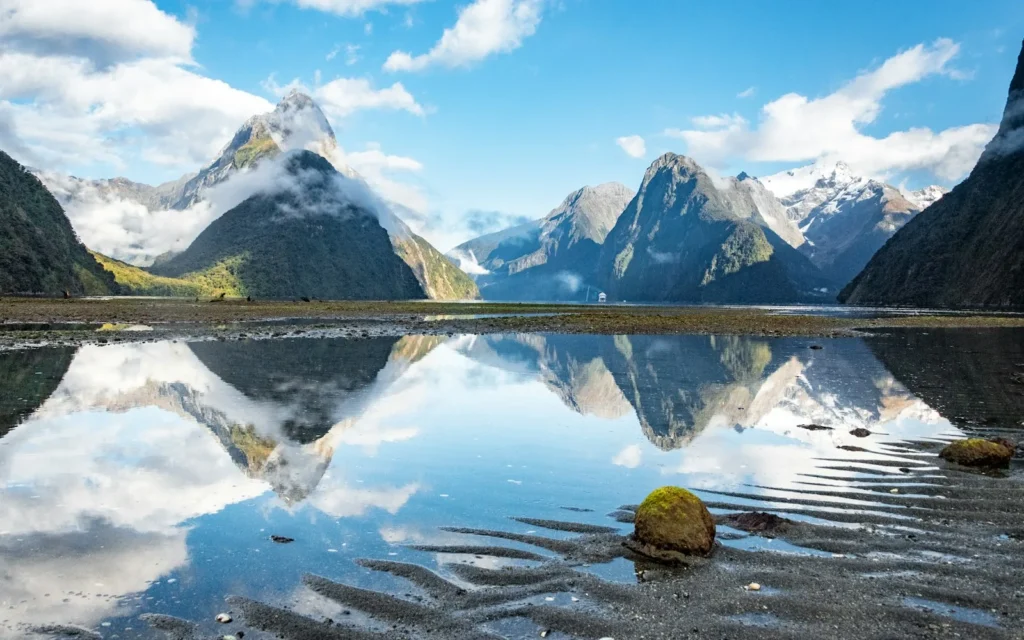
September is the handover month. The ski fields are still running but winding down, the blossom is out in Central Otago, the lambs are everywhere, and on the last Sunday of the month the clocks go forward and the evenings suddenly get long. It is also the cheapest month to be in New Zealand with decent weather – at the price of weather that changes its mind constantly.
The numbers
Daylight saving starts – on the opposite date to the north
New Zealand daylight saving begins on Sunday 26 September 2027, when clocks go forward one hour at 2am. Northern hemisphere visitors are used to the clocks going back in September, so the gap between New Zealand and home shifts by two hours across the following weeks once your own country changes too. Check any flight, tour or call time booked around that weekend.
The practical effect on the ground is large. Evenings lengthen immediately, and by early October the South Island is light well past 8pm.
Spring skiing
- Most fields close in late September or early October – Coronet Peak, The Remarkables, Treble Cone and Cardrona all wind up around then, with Cardrona and the Mt Ruapehu fields often the last running.
- Spring conditions mean soft afternoon snow, warm sun and long lunches on the deck – enjoyable, but not the season’s best snow.
- Prices drop as the season ends, and Queenstown and Wanaka empty out.
- Check closing dates before booking – they move year to year with the snow.
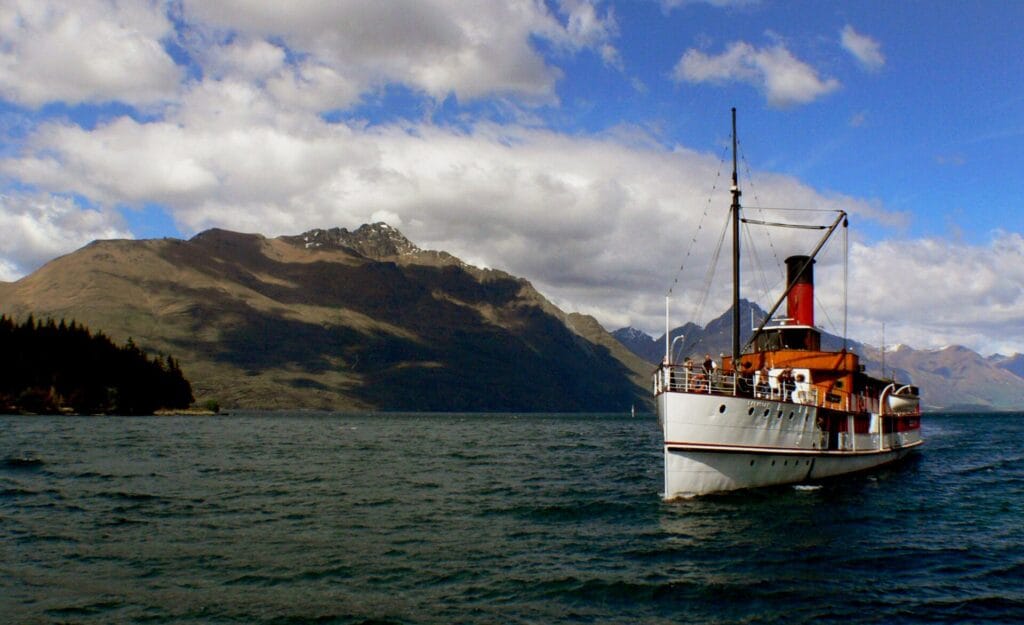
Spring on the ground
- Blossom in Central Otago. The orchards around Alexandra, Cromwell and Roxburgh come into flower through September, and Alexandra’s long-running blossom festival falls late in the month.
- Lambing. Canterbury, Southland and the Wairarapa are full of lambs. This is the most photographed month in rural New Zealand for a reason.
- Whitebait season opens on 1 September across most of the country and runs to the end of October – the West Coast river mouths are where you see it.
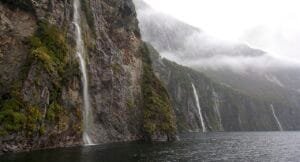
- Waterfalls are at full volume from snowmelt, which makes Fiordland and the West Coast particularly good.
- Whale watching at Kaikoura continues year-round.
Four seasons in one day
The New Zealand cliche is at its most literal in spring. A Queenstown day can start at 4°C, reach 14°C by afternoon, and deliver rain, hail and sun in between. Southerly fronts still bring snow to the passes. Pack as though you will get all of it, because you probably will.
- Alpine passes – the Crown Range, the Lindis, Arthur’s Pass and the Milford Road can still close after a spring snowfall.
- Rivers run high with snowmelt, which affects some tramping routes and fords.
- The Great Walks are still in winter status. The booking season does not resume until late October, so huts remain unserviced and some routes carry avalanche risk.
Prices and crowds
This is one of the best value months of the year. The ski towns empty as the season ends, the summer rush has not begun, and flights and rental cars are cheap. See what travelling New Zealand costs.
What to pack
Layers and a waterproof shell – spring weather here genuinely turns within an hour. Warm indoor clothing, because houses are still cold. Strong sun protection: New Zealand’s UV is among the highest in the world and it climbs quickly through spring. Proper footwear for wet tracks, and chains if you are driving alpine roads early in the month.
The September 2027 calendar
- 1 September – whitebait season opens across most of New Zealand, running to 30 October.
- Through September – blossom season in Central Otago; Alexandra’s blossom festival falls late in the month.
- Through September – lambing across Canterbury, Southland and the Wairarapa.
- Late September – most ski fields close; Cardrona and Mt Ruapehu often run longest.
- Sunday 26 September – New Zealand daylight saving begins; clocks go forward one hour at 2am.
- Through September – Great Walks remain in winter status until the booking season resumes in late October.
- No public holidays fall in September in New Zealand.
Where to go in September
- Central Otago – Alexandra, Cromwell and Roxburgh in blossom, with the orchards flowering through the month and Alexandra’s blossom festival late in it.
- Queenstown and Wanaka – spring skiing until the fields close in late September or early October, with soft afternoon snow and end-of-season pricing.
- Fiordland and the West Coast – snowmelt puts the waterfalls at full volume, which is when Milford Sound and the Coast look their best.
- Canterbury, Southland and the Wairarapa – lambing season, and the most photogenic month in rural New Zealand.
- The West Coast river mouths – whitebait season opens on 1 September and is a genuine local institution, with stands and stalls along the rivers.
- Northland and the Coromandel – warming up, still empty, and still at off-season rates.
September rewards flexibility more than any other month. The weather changes hour to hour, so keep one spare day and be willing to swap a mountain plan for a coastal one at short notice.
Read alongside
- New Zealand in August – the deepest snow of the season.
- New Zealand in October – the Great Walks reopen.
- New Zealand in November – late spring and long evenings.
- Best time to visit New Zealand – all twelve months compared.
- New Zealand in 10 days – how the islands connect.
- New Zealand travel guide – North Island, South Island and Fiordland.
- Best things to do in New Zealand – the year-round list.
Frequently asked
When does daylight saving start in New Zealand?
On the last Sunday of September – Sunday 26 September in 2027 – when clocks go forward one hour at 2am. It is the opposite direction to the northern hemisphere change.
Can you still ski in New Zealand in September?
Yes, through most of the month. Fields generally close in late September or early October, with Cardrona and the Mt Ruapehu fields often running longest. Expect soft spring snow rather than the season’s best.
Are the Great Walks open in September?
No, not in their normal form. They stay in winter status until the booking season resumes in late October, with unserviced huts and avalanche risk on several routes.
What is the weather like in New Zealand in September?
Changeable. Auckland averages about 17°C and Queenstown about 14°C by day, but a single day can bring sun, rain, hail and a cold southerly. Nights in the south still drop to about 4°C.
Is September a cheap time to visit New Zealand?
One of the cheapest with usable weather. The ski season ends, the summer rush has not started, and flights, cars and accommodation are all at shoulder rates.
When is blossom season in Central Otago?
Through September, around Alexandra, Cromwell and Roxburgh, with Alexandra’s blossom festival late in the month.
Are there public holidays in New Zealand in September?
No. September has no national public holidays.
Is September a good month for Milford Sound?
Yes – snowmelt means the waterfalls run hard and the crowds have not arrived. Watch the Milford Road, which can still close after a spring snowfall.
New Zealand month by month
- January – peak summer and peak domestic crowds.
- February – the warmest, driest month.
- March – late summer without the crowds.
- April – autumn colour in Central Otago.
- May – the quiet month before the snow.
- June – Matariki and the ski season opening.
- July – peak ski season and school holidays.
- August – the deepest snow, the smallest queues.
- September – blossom, spring snow, clocks forward (this page).
- October – the Great Walks reopen.
- November – long days, lupins, no crowds yet.
- December – summer proper and the Christmas rush.
You Might Also Love

Written by
John Morrison is the founder and lead travel writer at Packzup. Over the past decade he has explored destinations across Africa, the Americas, Asia, Europe, the Middle East, and Oceania — always self-funded, never on a press trip.
