
Last updated September 6, 2026 · Editorial policy
Things to Do in Kuala Lumpur: What Is Actually Worth Your Time
Quick answer: This is an honest look at Kuala Lumpur: which tower ticket to think twice about, and the free landmark that beats it on sheer scale.

The Petronas Twin Towers skybridge and observation deck is the ticket most visitors buy first. Foreign adult admission is several times the local rate, slots sell out, and the view is of a skyline that does not include the towers you are standing in.
Batu Caves, north of the centre on the Komuter line, charges nothing to enter the main temple complex. The 272-step painted staircase under the Murugan statue is the image people come for, and it costs a train fare. The separate guided Dark Cave conservation tour carries its own charge when it is running.
- Dress for a working temple at Batu Caves — knees and shoulders covered. Sarongs are available at the base if you arrive unprepared.
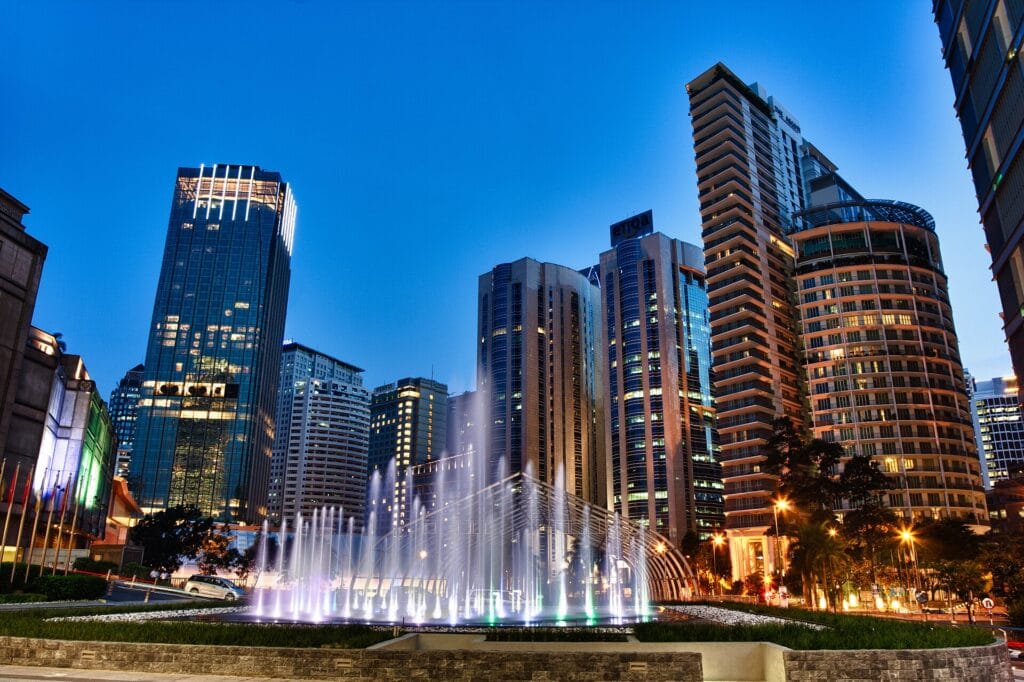
Petronas skybridge or KL Tower: which ticket to buy
The Petronas visit is a timed, escorted session rather than a walk-up attraction, and the official admission page says only that all tickets are subject to availability. Book on the operator’s own e-ticketing site, eticket2.petronastwintowers.com.my. The management states in writing that it cannot be held accountable for claims or refunds on tickets bought through unofficial vendors, and that tickets sold are not refundable or transferable. You must be at the entry point 15 minutes before your visiting time.
The tour takes in the skybridge that links the two towers and then the observation deck on the 86th floor. The operator gives the towers’ height as 452 m.
Admission listed on petronastwintowers.com.my as of 5 September 2026, weekday and weekend priced separately: non-Malaysian adult aged 13 to 60, RM127 weekday and RM137 weekend; child aged 2 to 12, RM65 and RM69; senior aged 61 and over, RM88 and RM96. MyKad adults pay RM42 and RM45, MyKad children and seniors RM20 and RM22, and infants under 2 go free. Prices move, so re-check before you book.
Opening is Tuesday to Sunday and public holidays, 9.00 am to 10.30 pm, last admission 9.30 pm. Mondays are the trap: the towers open only on the second, fourth and fifth Monday of a month, 9.00 am to 8.00 pm with last admission at 7.00 pm, and stay shut on the first and third.
KL Tower is the fallback if the Petronas slots have gone. It sells two tiers: an enclosed observation deck, and a dearer Sky Deck ticket that adds the higher open-air platform with its glass-floored Sky Box. No price is quoted here because the tower changed operator in 2025 and revised its tariff, and kltower.com.my blocks automated checking, so read the current rate off the official site rather than a reseller. The tower stands on the Bukit Nanas hill, which lifts both decks further above the city than the structure’s own height suggests.
How much of a day does Batu Caves take?
Budget three to four hours door to door, and go in the morning. Batu Caves is the northern terminus of the KTM Komuter Batu Caves to Pulau Sebang line, so you cannot overshoot it. KTMB’s own published cash fare table puts KL Sentral to Batu Caves at RM2.60 one way, and KTMB’s weekday timetable effective 1 January 2026 shows the run taking 29 minutes: the 9.25 am from KL Sentral reaches Batu Caves at 9.54 am.
The weekend timetable is the thing that catches people. On weekdays the first northbound train leaves KL Sentral at 6.47 am and arrives at 7.16 am. On Saturdays, Sundays and public holidays the first one does not leave until 8.12 am and does not reach Batu Caves until 8.41 am, and there are fewer trains all day, with gaps of an hour around the middle of it. Download the current PDF timetable from ktmb.com.my the night before.
The staircase is 272 steps and almost entirely unshaded, which is the real argument for arriving at opening. The gilded Murugan statue beside it is 42.7 m tall and was unveiled in January 2006. Entry to the main Temple Cave costs nothing; the Ramayana Cave and the conservation cave tour are ticketed separately.
What trips people up:
- The temple management asks visitors not to smoke, spit, run on the steps or bring pets.
- Long-tailed macaques live on the staircase all year. Keep food and drink out of your hands.
- Thaipusam, in late January or February, is worth seeing and is the worst possible day for a quick look round.
Five rail brands, three operators: reading the network correctly
The map makes this look like one system. It is not. Rapid Rail runs the LRT Kelana Jaya line, the LRT Ampang and Sri Petaling lines, the MRT Kajang and MRT Putrajaya lines and the KL Monorail, and those share an integrated fare: change between them inside the paid area and you pay one journey. KTM Komuter belongs to Keretapi Tanah Melayu and the airport lines to Express Rail Link; both price separately, so Batu Caves and the airport are always their own fare.
Interchanges that work without leaving the gates include Masjid Jamek, Pasar Seni, Titiwangsa, Hang Tuah, Chan Sow Lin, Maluri and Tun Razak Exchange.
Two pairs of stations are drawn as interchanges but are not. Bukit Nanas on the monorail and Dang Wangi on the LRT Kelana Jaya line sit a few hundred metres apart along Jalan Ampang: you tap out, walk it, and tap in again as a fresh journey. KL Sentral has the same quirk with the MRT Kajang line, which does not call at KL Sentral at all. Its nearest station is Muzium Negara, and MRT Corp describes the two as joined by a covered pedestrian walkway of 240 m.
What does work straight through is KL Sentral to KLCC. Both are on the LRT Kelana Jaya line, five stops apart by way of Pasar Seni, Masjid Jamek, Dang Wangi and Kampung Baru, with no change.
Buy a Touch ‘n Go card at any station: one card covers every line named here, plus the buses.
Afternoon storms, and eating around them
Kuala Lumpur sits in the Klang Valley and gets convective storms that build through the afternoon rather than all-day drizzle. They are heaviest in the two inter-monsoon transitions, roughly March to May and October to November. The nearest long-record station is Subang, WMO 48647, at Sultan Abdul Aziz Shah Airport about 15 km west of the centre, and its WMO 1991-2020 normals put the year at 2,847.1 mm over 167 days of rain. November is the wettest month at 355.8 mm across about 20 rainy days, April the second peak at 301.5 mm, and June the driest at 145.8 mm across about 10. A storm runs an hour or two, floods pavements, spikes e-hailing prices, then clears.
So front-load the day. Put the Batu Caves steps and KLCC Park before about 2 pm and keep museums, malls and the observation decks for the afternoon. Carry a thin waterproof; the squall wind turns umbrellas inside out.
The eating districts are separate places, each with its own hour. Jalan Alor runs off Bukit Bintang and is an evening street, busiest after 8 pm. Petaling Street and the lanes around Jalan Sultan, in Chinatown, work at lunch and again at night, beside Pasar Seni station. Brickfields, the Indian quarter, is five minutes on foot from KL Sentral and is best at lunch for banana-leaf rice. Masjid India, near Masjid Jamek, is a daytime market street. All four are kilometres apart, so use the rail rather than walking between them in the heat.
At a glance
| Site | Station and line | From KL Sentral | Cost, non-Malaysian adult | Best window |
|---|---|---|---|---|
| Petronas skybridge and level 86 | KLCC, LRT Kelana Jaya | Direct, five stops | RM127 weekday, RM137 weekend | Booked slot; shut 1st and 3rd Monday |
| KL Tower decks | Dang Wangi LRT or Bukit Nanas monorail | Direct, three stops, then uphill | Two tiers, deck or Sky Deck; check kltower.com.my | Any day; no timed slot |
| Batu Caves | Batu Caves, KTM Komuter terminus | Direct, 29 minutes | RM2.60 each way; Temple Cave free | At opening; first weekend train arrives 8.41 am |
| Jalan Alor | Bukit Bintang, MRT Kajang | Walk to Muzium Negara, three stops | Rail fare only | After 8 pm |
| Petaling Street | Pasar Seni, LRT or MRT | Direct, one stop | Rail fare only | Lunch or after dark |
Fares and admission confirmed against the operators’ own pages on 5 September 2026; operators revise them without notice.
Frequently asked questions
Do you need to book Petronas Twin Towers tickets in advance?
Yes, if you want a particular time. The official admission page states that all tickets are subject to availability and that tickets sold are not refundable or transferable, so book a slot on eticket2.petronastwintowers.com.my and be at the entry point 15 minutes before it. The towers are also shut on the first and third Monday of each month.
Does one ticket cover the LRT, MRT, monorail and KTM?
A Touch ‘n Go card works on all of them, but the fares are not pooled. The LRT, MRT and monorail share an integrated fare when you change inside the paid area. KTM Komuter and the airport lines charge their own.
How early does the first train to Batu Caves run?
On the KTMB timetable effective 1 January 2026, the first weekday service leaves KL Sentral at 6.47 am and reaches Batu Caves at 7.16 am. At weekends and on public holidays the first one leaves at 8.12 am and arrives at 8.41 am, which is late enough that the staircase is already in full sun.
What do you need to enter Malaysia?
A passport, and a Malaysia Digital Arrival Card registered on the Immigration Department’s own portal at imigresen-online.imi.gov.my/mdac/main. That portal is the only place the requirement, the exemptions and the submission window are stated authoritatively, and all three have been revised since the card was introduced. Malaysia also grants visa-free entry to many nationalities, but the list and the length of stay are set by Immigration, so check imi.gov.my against your own passport in the week before you fly.
More guides: Kuala Lumpur airport to city center
You Might Also Love



Written by
John Morrison is the founder and lead travel writer at Packzup. Over the past decade he has explored destinations across Africa, the Americas, Asia, Europe, the Middle East, and Oceania — always self-funded, never on a press trip.
