
Last updated August 21, 2026 · Editorial policy
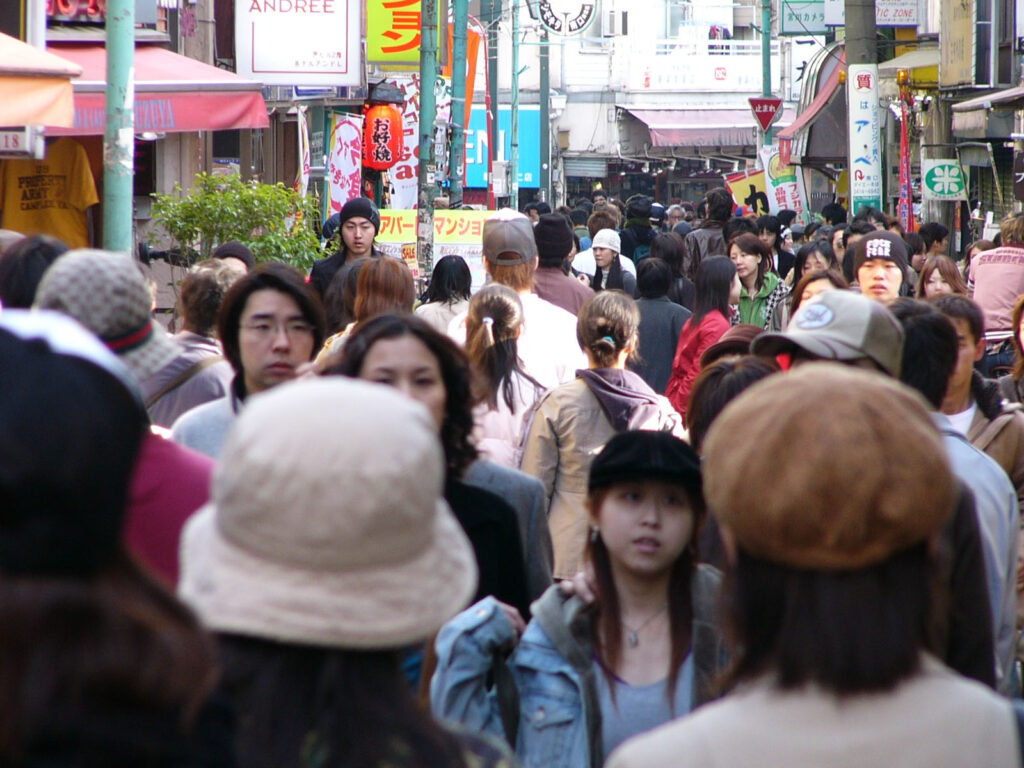
Quick answer: Shimokitazawa is Tokyo’s thrift-and-theatre quarter: a car-free maze of vintage shops, curry houses (the neighbourhood obsession), live-music basements and reborn railway land (Bonus Track, reload) full of indie cafes: scruffy, creative and completely addictive.
Vintage hunting
Dozens of second-hand shops within ten minutes’ walk: Americana, 90s Japanese brands, one-rack curators and by-the-kilo warehouses. Prices beat central Tokyo; the fun is the dig. Start on the south side and drift.
Curry town
Shimokita runs on curry: thick Japanese roux classics, spice-forward new wave and an autumn curry festival when the whole district competes. Queues move fast: join the longest one and trust it.
Live houses & theatre
Basement venues (the legendary Shelter among them) launched half of J-indie: tickets are cheap and the sound is sweaty-close. The Honda Gekijo theatre anchors a small-stage scene that gives the area its bohemian bones.
Bonus Track & reload
The old rail corridor reborn: low-rise lanes of record bars, craft beer, bookshops-with-snacks and patio coffee: new Shimokita doing gentrification the gentle way.
Cafe drift
Jazz kissaten, plant-filled roasteries and dessert counters: the neighbourhood’s real itinerary is cafe-to-cafe with vintage bags accumulating. Suzunari alley’s tiny bars close the night.
Getting there
Four minutes from Shibuya (Keio Inokashira line) or direct from Shinjuku (Odakyu): exit and walk in any direction: getting pleasantly lost is the method. Weekday afternoons browse easiest; weekends bring street musicians and the crowd that suits the place.
The actual shops and curry spots, with prices
Skip the vague “go thrift shopping” advice. Two stores are worth your time first. New York Joe Exchange, set in a former public bathhouse, runs from cheap streetwear up to Hermès scarves and rare Japanese labels, and everything is half price on the first Sunday of the month. Stick Out (2F, 2-14-16 Kitazawa, open 11:00–20:00 daily) prices every second-hand piece at a flat ¥700 plus tax, with stock that is mostly American imports, which makes it the best-value rummage in the neighborhood.
For the curry the area is obsessed with, go to Rojiura Curry SAMURAI, where Hokkaido-style soup curry is loaded with vegetables, you pick a spice level from 0 to 10, and lunch lands around ¥1,000–2,000. It runs lunch 11:00–15:30 and dinner from 17:30, and the lunch line moves faster.
- New York Joe Exchange: half price first Sunday monthly.
- Stick Out: flat ¥700 + tax, second floor.
- Rojiura Curry SAMURAI: soup curry, spice 0–10, ~¥1,000–2,000.
Come on a weekday afternoon. Weekends the narrow lanes jam up and the shops get picked over early.
Getting there (and why the layout matters)
Shimokitazawa is one of the easiest Tokyo neighbourhoods to slot into a day of hopping around, because two lines cross right underneath it and both drop you into the action in single-digit minutes.
- From Shibuya: the Keio Inokashira Line gets you here in about 3–5 minutes for roughly 130 yen (about $0.90), with trains every 7 minutes or so. This is the overland line, so you actually see daylight on the way.
- From Shinjuku: the Odakyu Odawara Line runs it in about 7 minutes for 160 yen (roughly $1.10), or 154 yen if you tap a Suica or Pasmo IC card. Trains come every few minutes.
One practical thing worth knowing: the Odakyu line was buried underground a few years back, and the old surface tracks became the Shimokita Senrogai promenade and the reload/Bonus Track developments. That means the neighbourhood no longer has a level crossing splitting it in two. Come out of the station, pick a direction, and wander. The whole browsing zone, north exit and south, sits inside a 10–15 minute walking radius of narrow lanes with almost no through-traffic. Leave the map in your pocket. Getting mildly lost between the thrift racks is the entire point here, and you are never more than a few minutes from a train home.
Dig for vinyl: Shimokita’s record shops
Shimokitazawa is one of Tokyo’s great record-hunting districts, with dozens of shops crammed into these lanes. If you flip through crates anywhere in the world, budget a couple of hours. A few worth building your route around:
- Flash Disc Ranch is the local institution. It hides on the second floor of a scruffy building on the south side, the entrance wedged between the two halves of a game centre. Inside are wall-to-wall boxes, including big bins of 300-yen (about $2) records where the 70s and 80s cover art alone earns the price.
- Jet Set, the Kyoto chain’s Tokyo outpost open here since 2002, is a compact second-floor shop dealing in new analog pressings only across hip-hop, house, techno, jazz, soul, reggae, indie pop and breakbeats.
- Disk Union Shimokitazawa is the local branch of the famous chain. Smaller than the Shibuya or Shinjuku megastores, but a genuinely good used-vinyl hunt for jazz, rock, soul and even anime soundtracks, with rare domestic pressings turning up.
- City Country City is a record shop and cafe opened in 2007 by former DJ Hirata and musician Keiichi Sokabe (of Sunny Day Service). Browse crates that run from Loft/Garage dance classics to musician-friendly rock over a plate of the house pasta.
Bring cash and patience. The best finds are always three boxes deeper than you expected.
Drink where the actors do: Suzunari Yokocho
Shimokitazawa’s nightlife is not about big clubs. It is about tiny bars, and the most atmospheric cluster of them is Suzunari Yokocho, a huddle of drinking dens tucked beneath one of the neighbourhood’s landmark theatres.
- The alley sits under The Suzunari, an independent theatre founded in 1981 by actor Kazuo Honda and still wrapped in Bubble-era neon. It is the oldest venue of the Honda theatre group, and Theater 711 stands right alongside it.
- The former closet-sized rehearsal rooms on the ground floor were converted into a run of roughly 10–15 mini bars and snack spots — the kind where a handful of stools is the entire seating plan.
- The whole strip keeps its Showa-era character: worn signage, warm light, and a crowd that mixes theatre people fresh off a performance with regulars and the occasional curious traveller.
The move is to walk the alley slowly, read the doorways, and duck into whichever one feels right rather than researching a specific bar in advance. Order a highball or a beer, ask what the house does well, and you will usually end up talking to whoever is next to you. It is unpretentious, cheap, and a completely different Tokyo to the polished Shibuya a few train-minutes away. This is the neighbourhood’s after-dark heart, and it works best when you let it.
You Might Also Love
More things to do in Japan



Written by
John Morrison is the founder and lead travel writer at Packzup. Over the past decade he has explored destinations across Africa, the Americas, Asia, Europe, the Middle East, and Oceania — always self-funded, never on a press trip.
