
Last updated September 4, 2026 · Editorial policy
- Where to stay in Chiang Mai: best areas
- Old City: temples at your door
- Nimmanhaemin: cafes and laptops
- Riverside: the romantic row
- Santitham & beyond: local value
- Quick picks by traveler type
- Which Chiang Mai neighbourhood suits which traveller?
- How the areas connect, and how long it takes to cross them
- Booking mistakes and what to check before you pick an area
- Picking Your Base by Traveler Type (and the One Strip to Skip)
- FAQ
Quick answer: The Old City moat-square suits first-time temple-hopping: Nimman is the cafe-and-coworking quarter for longer stays: the riverside holds the romantic boutique hotels. All three sit minutes apart by songthaew or Grab.
Where to stay in Chiang Mai: best areas
| Area | Best for | The vibe |
|---|---|---|
| Old City | First-timers, temples | Walkable, historic |
| Nimmanhaemin | Hip & cafés | Trendy, nomad-friendly |
| Riverside | Calm & upscale | Scenic, relaxed |
| Night Bazaar area | Shopping & central | Lively |
Old City: temples at your door
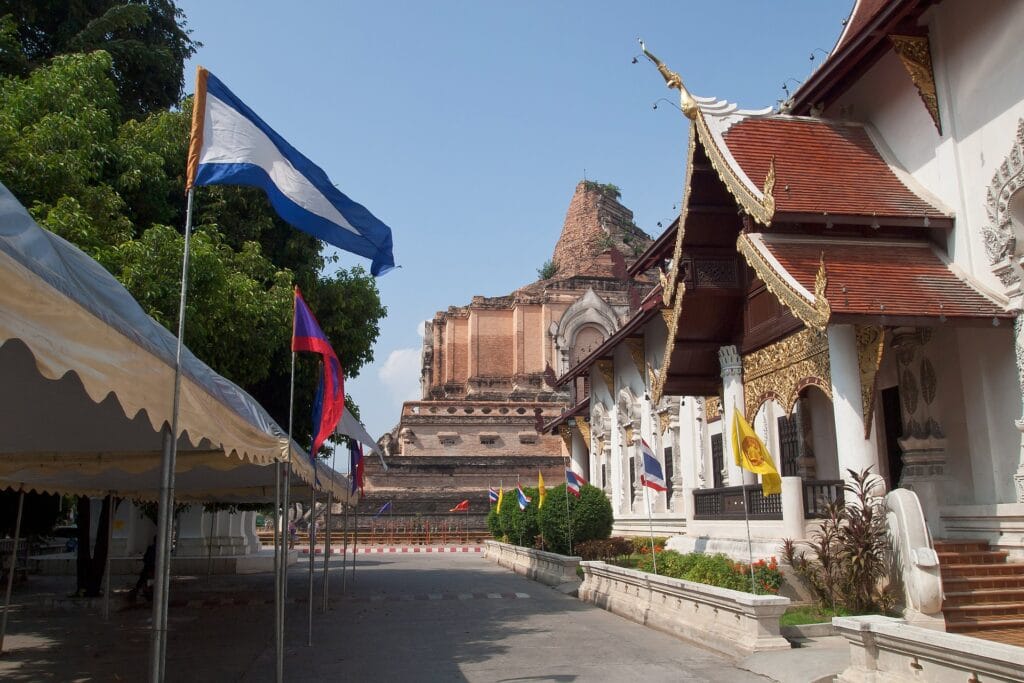
Inside the moat, 30+ wats, massage schools and night markets are all walkable: guesthouses from THB 500, boutique conversions THB 1,500–4,000. Sunday Walking Street takes over Ratchadamnoen: book that weekend early.
Nimmanhaemin: cafes and laptops
The modern quarter by the university: specialty roasters, coworking, malls and brunch: the digital-nomad heartland with condos and design hotels. Less charm, more convenience: One Nimman’s lanes soften it.
Riverside: the romantic row
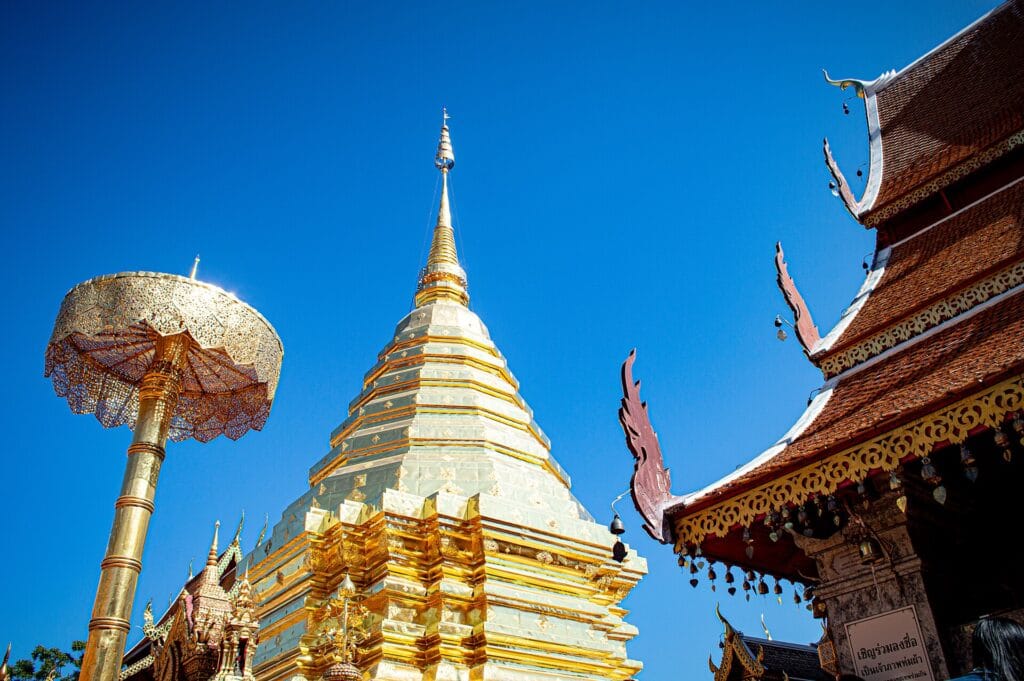
Teak-house boutiques and resort calm along the Ping with terrace dinners: a Grab from the action, which is exactly the point. The honeymoon-and-anniversary pick.
Santitham & beyond: local value
Between Old City and Nimman, Santitham serves real-neighbourhood eating at local prices: long-stayers spread to Hang Dong and canal-side houses for garden months.
Quick picks by traveler type
First visit: Old City. Remote work: Nimman. Couples: Riverside. Budget months: Santitham. Festivals (Yi Peng/Songkran): anywhere booked VERY early.
Which Chiang Mai neighbourhood suits which traveller?
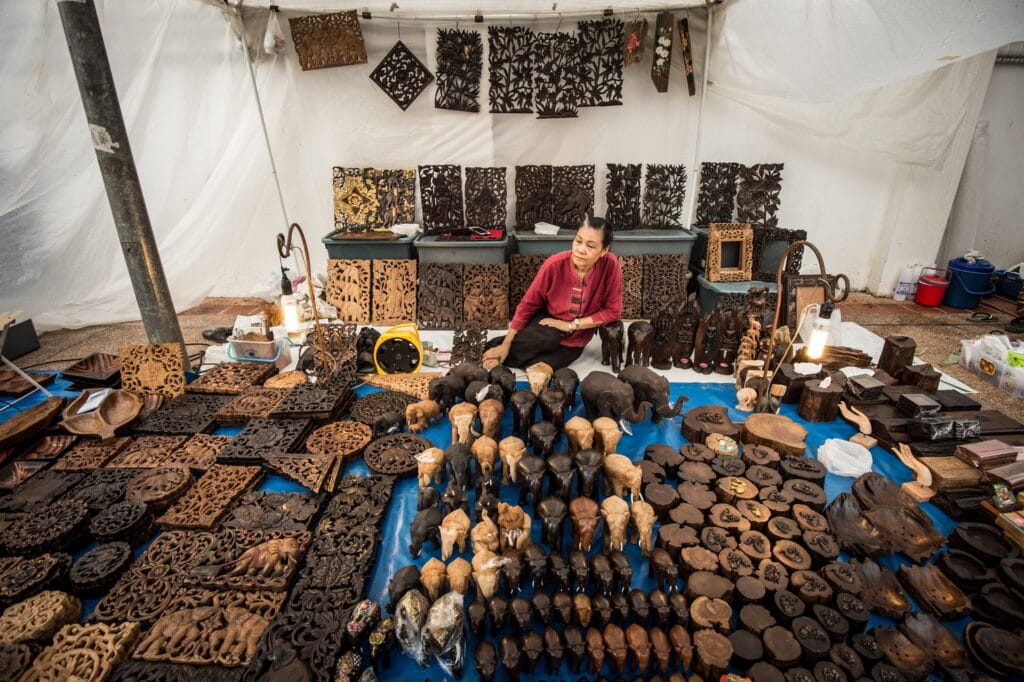
Pick the Old City for a short first visit, because the moated square runs roughly 1.6 km along each side and puts most of the historic temples inside one walkable grid rather than a series of separate rides.
Past that default, the areas separate along fairly clear lines:
- Old City – stays of two or three nights, walkers, and anyone who wants the Sunday market on Ratchadamnoen a few steps from the door.
- Nimmanhaemin – remote workers and repeat visitors who rate cafes, malls and reliable wifi above temple access, and who accept a higher nightly rate for it.
- Riverside – couples and slower trips along the Ping, where the setting counts for more than walking distance to sights.
- Santitham – stays of a week or longer on a budget. It fills the northwest quadrant between the north moat and Nimmanhaemin, and prices at local rather than visitor rates.
- Wualai and the southern moat edge – travellers who want the Saturday craft market on the doorstep and the Old City a short walk north.
- Chang Phuak, north of the moat – drivers and families, with more room and easier parking than anything inside the walls.
Families with young children generally do better outside the walls, where rooms are larger and the pavements are wider than the Old City lanes allow. Anyone travelling specifically for Yi Peng and Loi Krathong in late November should weight river access above everything else, since the krathong floating happens on the Ping itself.
How the areas connect, and how long it takes to cross them
Nimmanhaemin sits about a 20 to 25 minute walk from Tha Phae Gate, which sets the scale for the whole city: the four main areas all sit within a couple of kilometres of each other.
Working outward from the moat:
- Old City to Nimmanhaemin – roughly 2 km west of Tha Phae Gate, 20 to 25 minutes on foot and mostly flat, or about 10 minutes in a shared red songthaew.
- Old City to the Ping River – about 1 km east of Tha Phae Gate, a 12 to 15 minute walk that ends near Warorot Market.
- Santitham to Nimmanhaemin – the two share a boundary, so this is a walk rather than a ride.
- Airport to the Old City – the terminal sits around 3 to 4 km southwest of the moat, so a transfer runs about 15 minutes outside the rush.
Red songthaews work as a hail-anywhere network rather than a fixed-route bus. Flag one down and state the destination; short hops inside the ring road run around 30 to 40 baht per person, and the driver may pick up others going the same way. Grab covers the same ground for roughly 60 to 90 baht and removes the negotiation. Distances are short enough that walking wins in the early evening once the heat drops. From February to April the calculation flips, and paying for a short ride in air conditioning becomes the sensible default.
Booking mistakes and what to check before you pick an area
The costliest mistake is booking on nightly price alone between February and April, when agricultural burning across northern Thailand loads the valley air and a sealed, filtered room matters more than the address.
Checks worth making before confirming anything:
- Which side of the moat the room faces. The inner and outer moat roads carry steady traffic, so a water view can be loud in a way the listing photographs do not show. One lane back into the grid is usually quiet.
- Market nights. Ratchadamnoen closes to traffic on Sundays and Wualai Road on Saturdays. Both are good reasons to stay nearby and poor reasons to take a street-facing ground-floor room on those blocks.
- Songthaew access. A guesthouse set deep down a long soi may be peaceful, but red trucks do not run every lane, so each outing starts with a walk to a main road.
- Festival dates. Yi Peng and Loi Krathong follow the full moon of the twelfth lunar month and land in November, falling on 23 to 25 November in 2026. Riverside and Old City rooms sell out months ahead around those nights, and Songkran in mid-April does the same.
- Late-night noise. A quiet-sounding address can back onto a bar block, so check the street name against a map rather than trusting the description.
For a stay of a week or more, Santitham returns better value than Nimmanhaemin at the same room standard, at the cost of a short ride to most evening plans.
Picking Your Base by Traveler Type (and the One Strip to Skip)
The cleanest way to choose is to match the area to how you want your evenings to go, because Chiang Mai’s after-dark zones sit only a few blocks apart but feel nothing alike. First-timers do best inside the Old City moat: every wat, massage school, and Sunday Walking Street is on foot, and a simple guesthouse room runs around 500 baht. The northeast corner where Rajvithi and Moon Muang roads meet is the backpacker drinking pocket, with open-air bars and a beer near 60-80 baht.
For a different crowd, here is how the rest splits:
- Nightlife with a younger, polished crowd: Nimmanhaemin, fed by Chiang Mai University, with rooftop bars and drinks closer to 100-150 baht; dorm beds sit around 280-300 baht and a boutique room like U Nimman starts near 2,600 baht.
- Families and couples who want quiet: the Riverside stretch along the Ping, where Lanna-style resorts trade walkability for garden calm.
The one area to steer most travelers away from is Loi Kroh Road. It is walkable from the Old City and the Night Bazaar, but it is the city’s go-go and red-light strip, so a room there means late noise and a scene that suits very few visitors.
FAQ
Old City or Nimman?
When is burning season?
How cheap is Chiang Mai?
How many nights?
Best time to visit Chiang Mai (real climate data)
Best months: January, October, November, December.
Chiang Mai’s warmest month is April (avg 35°C / 95°F), the coolest is January (low 17°C / 62°F). The wettest is August (223 mm) and the driest is February.
Source: Open-Meteo / WMO climate normals (WMO 1991–2020, or ERA5 2019–2023 where unavailable). See the full month-by-month weather →
You Might Also Love



Written by
John Morrison is the founder and lead travel writer at Packzup. Over the past decade he has explored destinations across Africa, the Americas, Asia, Europe, the Middle East, and Oceania — always self-funded, never on a press trip.
