
Last updated August 24, 2026 · Editorial policy
- The honest geography
- When to come, and the lie about rainy season
- Where to actually stay
- What to actually do
- The food question
- What will surprise you
- What will disappoint you if you let it
- Practical, briefly
- A final thought
- Seasonal questions
- Bali like a local: where to base, the plan & when to go
- Bali Travel Guide FAQ
- More from Packzup
- More Travel Guides You’ll Love
- Frequently Asked Questions
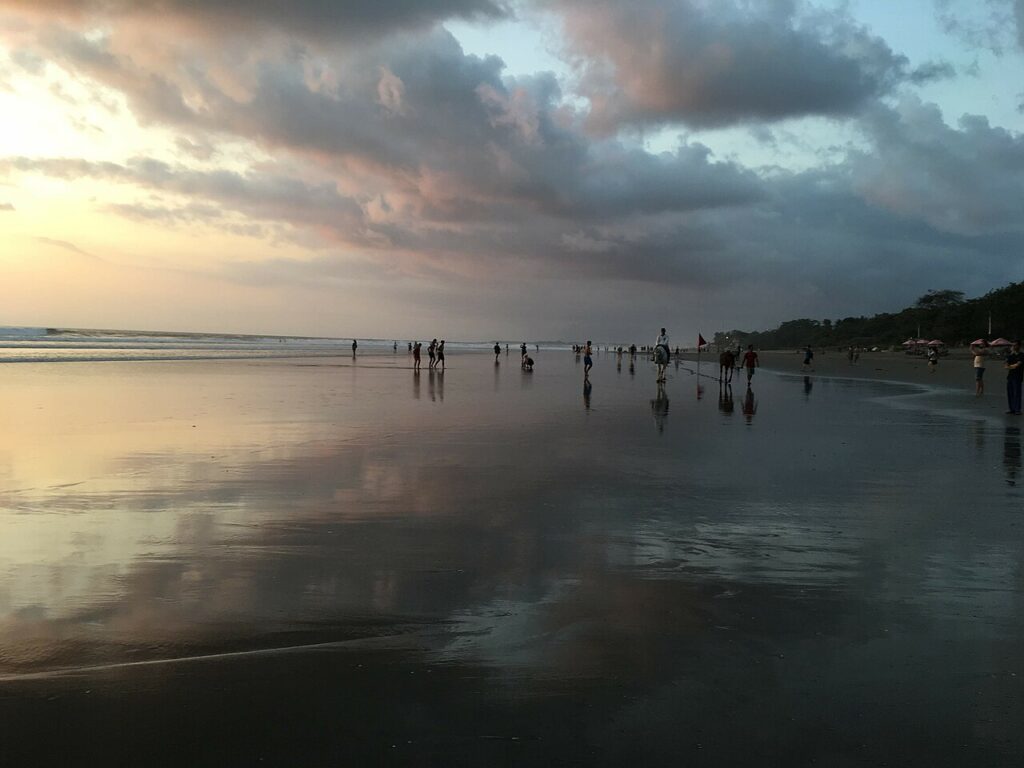
There is a stretch of road in Canggu where, on a Thursday at half past five in the evening, the traffic does not so much move as breathe. Three thousand scooters, a few hundred white Hilux pickups, a sprinkling of Range Rovers driven by a particular kind of new tenant, and a Balinese woman with two baskets of flowers balanced on her head crossing the road between them on a faith that the scooters appear to share. This is the part of Bali that the algorithm has eaten. It is also, depending on how you look at it, the most honest part of the island, because it shows you what happens to a place when several million people a year decide, more or less at the same time, that this is where they want to live their best life.
Most of what is written about Bali is either marketing or grief. I want to do neither here. The island is still extraordinary. It is also under more pressure than at any point in its modern history, and the question of where to go on it has become the question that determines whether your trip will feel like a holiday or a delivery queue.
| Best month to visit | July — 27°C, 18 wet days |
|---|---|
| Warmest month | December, 29.6°C average high |
| Wettest month | January, 28 wet days |
| Plugs & power | Type C,F · 230 V · 50 Hz |
| Driving side | Left |
Climate: normals (WMO 1991–2020, or ERA5 2019–2023 where unavailable) via Open-Meteo. Open data.
The honest geography
Think of Bali as four distinct islands stitched together. The south, the centre, the north and east, and the small islands off the coast. They are unrelated experiences.
The south, Seminyak, Canggu, Uluwatu, Jimbaran, Sanur — is the Bali the internet sells. Cafés serving forty-thousand-rupiah flat whites, surf lessons by the dozen, a digital nomad density that has changed Canggu’s price ceiling permanently, and traffic that has now reached genuine Bangkok hours. It is a good time if you are twenty-eight and your real goal is a particular kind of café-and-surf rhythm. It is a difficult place to spend two weeks if you came for the photographs of empty rice terraces.
The centre means Ubud and the villages stitched around it: Tegalalang, Penestanan, Sayan. Ubud has been a tourist town for forty years; it is not a discovery. What it remains, on a good morning, is a place where you can walk through a village still doing two ceremonies a week, eat better Indonesian food than you’ll find on the coast, and stay in a hotel cantilevered over a green ravine. The trick is to stay out of the central traffic ring around the Royal Palace and Jalan Hanoman, and into a quieter village ten minutes away. Sayan, Kedewatan, and Penestanan all qualify.
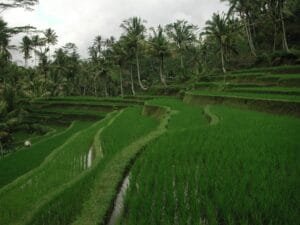
The north and east. Sidemen, Munduk, Amed, Lovina, the Kintamani caldera, is the Bali people travel to once they’ve already been to the south and want to come back. The pace drops by about half. The traffic disappears almost completely. The accommodation is cheaper and frequently better. You give up beach access in exchange for rice terraces that you do not have to share with a coachload.
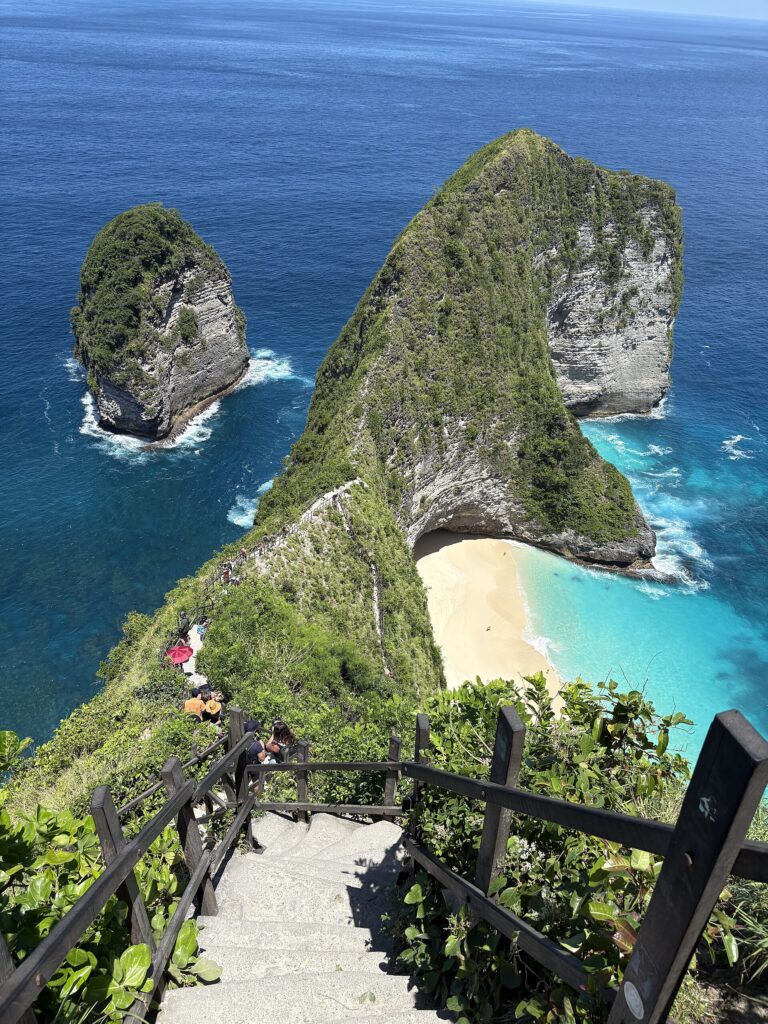
And then the three small islands off the east coast — Nusa Lembongan, Nusa Ceningan, and Nusa Penida. Lembongan is now developed in a calmer Canggu sort of way. Ceningan is quiet, with one very good beach. Penida is the dramatic one, with the cliffs that have become Bali’s second-most-photographed landscape after Tegalalang. It is also rougher, more crowded at the famous viewpoints than people admit, and worth a careful overnight rather than a day trip.
When to come, and the lie about rainy season
The dry season runs roughly April through October. The wet season, November through March. The common wisdom is that you must come in dry season, and the common wisdom is half right.
April, May, and June are the best months on the island. Dry, warm, the south not yet fully swollen with the July-August peak. September is the second-best window. Quieter than August, the rice paddies still green from the late wet, the surf reliable on the Bukit. July and August are the hottest, the most crowded, and the loudest; do not come then unless your dates are not flexible.
The lie about rainy season is that it rains all day. It doesn’t. In a typical wet-season month, say, January — you’ll get a tropical afternoon downpour for an hour, very heavy, then it stops, and the rest of the day is clear and humid. Mornings are usually sunny. Hotel prices in shoulder-wet (November, March) can be forty percent below high-season rates, and the rice terraces are at their most green. If your trip is about Ubud, Sidemen, Munduk and the temples, and not about lying on a beach: wet season can be genuinely beautiful.
The exception is the surf calendar. The Bukit peninsula. Uluwatu, Padang Padang, Bingin, gets its best swells from May to September. Medewi and the north coast pick up in the wet. Match your dates to your wave.
Where to actually stay
The single decision that shapes the rest of your trip is where you base yourself. I’d argue against trying to stay in one place for two weeks. Move twice. A short southern stretch, then a longer interior or northern one.
Stay out of the central traffic ring in Ubud, out of the heart of Canggu in the south, and the island opens back up in a way the first-time visitor often misses.
For a first trip: three nights in Canggu or Uluwatu (pick one, not both — Canggu if you want the café and surf life; Uluwatu if you want the cliffs and the Bukit’s better waves). Then four nights in a quiet village near Ubud: Sayan and Penestanan are the steady recommendations. Then three or four nights in Sidemen or Munduk for the genuine countryside Bali, or on Nusa Lembongan if you want one stretch with a small-island feel.
On the hotels themselves: the spread is wider here than almost anywhere else in Asia. The genuine luxury places. Como Shambhala, Bambu Indah, Capella Ubud, Amankila, are top and priced accordingly. The honest mid-tier is enormous and well-served by independent boutiques rather than chains; Mu Bungalows in Uluwatu, Sandat Glamping Tents in Sidemen, Sanak Retreat in Munduk are the ones I’ve come back to. And below that, Bali still has the kind of small family-run losmen at thirty to fifty dollars a night that delivers eighty percent of the experience for fifteen percent of the price, if you’re willing to read the Google reviews carefully.
What to actually do
Three categories of thing are worth your real time on this island. The water, the culture, and the walking. Skip everything else if you must.
The water
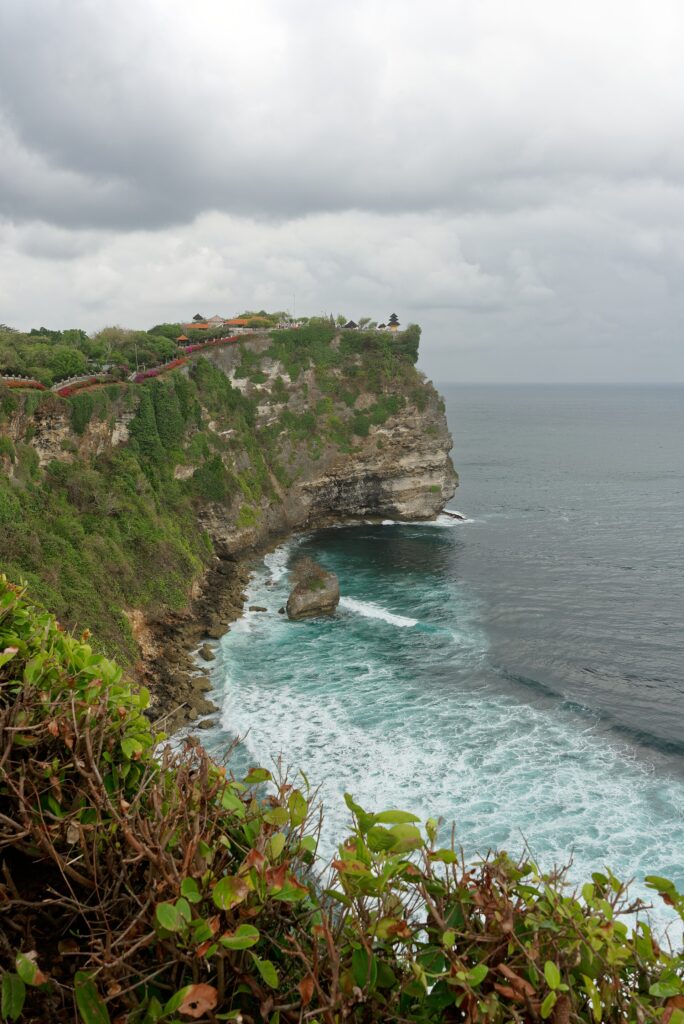
The south coast is for surfing. If you’ve never surfed, take a one-day lesson at Old Man’s or Batu Bolong in Canggu, both are forgiving white-water breaks. If you’ve surfed before, the Bukit is the assignment; Uluwatu on a small day, Padang Padang or Bingin if conditions are wrong for Ulu. Don’t paddle out at Uluwatu on a six-foot day if your habit is the European Atlantic, the wave is fast, the reef is shallow, and the line-up is full of people who live here.
For snorkelling and diving, the north and east are the answer, not the south. Amed and Tulamben have wreck dives accessible from shore (the USAT Liberty at Tulamben is a five-metre wade from the beach). Menjangan, off the northwest, is the cleanest reef anywhere on the island. The waters off Nusa Penida have manta rays from May to October.
The culture
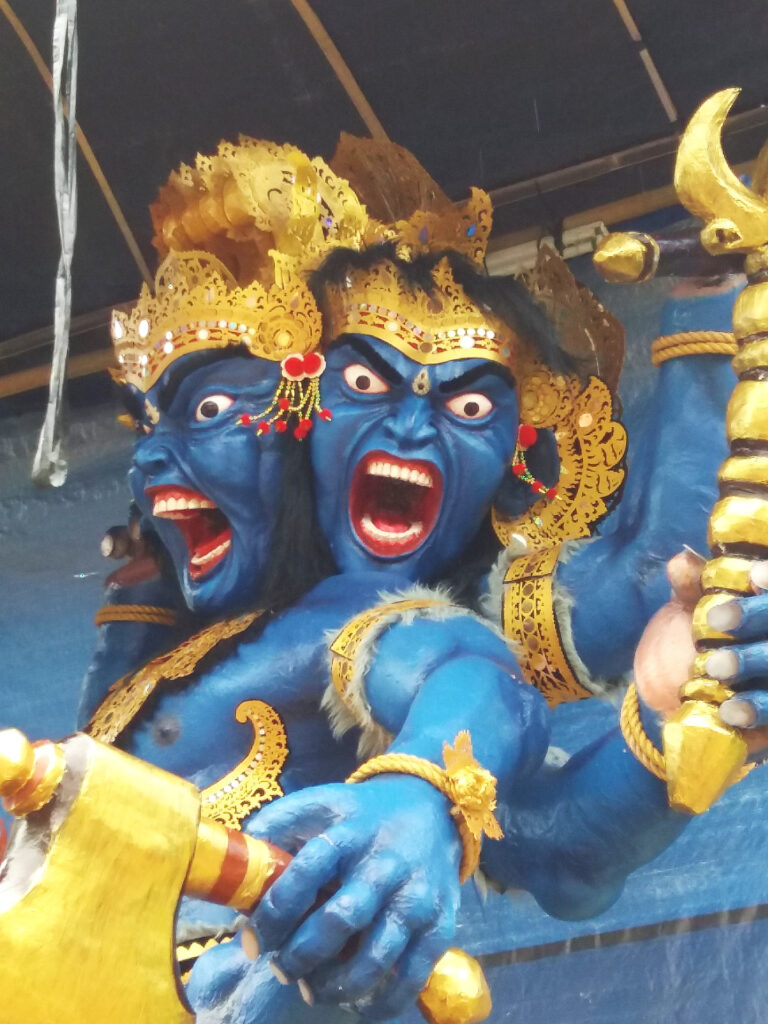
Balinese Hinduism is not in a museum. It is in the small offerings on every doorstep, in the temple ceremonies that block roads on no particular schedule, in the cremations that take a week to prepare and an afternoon to perform. The right way to engage is to ask politely and to dress for it (a sarong, available everywhere, plus shoulders covered). Tirta Empul, the water-temple at Tampaksiring, is the one I’d send a careful first-time visitor to; the ritual cleansing pools are open to non-Hindus and the place still operates as a working temple. Go at seven in the morning, before the coaches.
The dance performances — Kecak at Uluwatu temple at sunset, Legong in Ubud: are theatre, but the good ones are still rooted in the religion. The Uluwatu Kecak is worth seeing once; the touristed bus-group performances in central Ubud less so. Ask your hotel which company is performing this week.
The walking
This is the part of Bali most travellers miss. The Campuhan Ridge Walk in Ubud is short, easy, and astonishingly photogenic in the first hour of light. Jatiluwih rice terraces. Not Tegalalang, is where you go for the rice walks; the Tegalalang terraces are dramatic and twenty metres across the road from a coach park, while Jatiluwih is a UNESCO site you can walk through for two hours seeing five other people. Mount Batur sunrise hike is the famous dawn climb; doable, popular, and now sadly riddled with mandatory guides who charge more than they should — go with a reputable agency and accept that you’ll be one of fifty on the summit at six.
The food question
Bali has, in the last six or seven years, developed one of the best café cultures in Asia. It has also developed a kind of café cuisine that travels. Pastries, smoothie bowls, sourdough sandwiches, that is broadly good and broadly the same across thirty cafés in the south. Eat it if you want; it is not the food worth flying for.
The food worth flying for is the warung food. A warung is a small family restaurant, usually open-fronted, often with five plastic chairs and a glass case of dishes cooked at six in the morning and held warm under a single bulb. You point at what you want. The auntie scoops rice with a wooden paddle onto a small banana-leaf plate; the dishes go on top in heaps; nothing is plated. You pay twenty-five to forty thousand rupiah and walk away full. The genre that punches hardest is the Padang style, West Sumatran rather than Balinese — where rendang, ayam pop, jengkol, and a dozen small dishes come out on saucers to share. Eat with your right hand, in the Indonesian way, even as a foreigner; the rice clumps better that way, and the auntie smiles. Warung Nikmat in Kuta is the famous one; the better ones are on residential streets you don’t find on the way to anything, where the menu is on a chalkboard in Indonesian only.
For Balinese specifically, the dish to find is babi guling: suckling pig, and the dish to recognise is bebek betutu, a duck slow-roasted in banana leaf for hours. Babi Guling Ibu Oka in Ubud is the famous version; Warung Babi Guling Pak Malen near Seminyak is the version locals defend. Both are worth a meal.
What will surprise you
The traffic, by far the most. Allow twice the time Google Maps gives you in the southern triangle. The fact that the surf in the south is genuinely difficult; not the gentle thing the brochures imply. How often the temples are doing real ceremonies that you are welcome to watch from the edge if you ask. How clean the air gets the moment you cross into the centre or the north. Canggu air quality is now a real conversation, and the highlands are forty minutes away. The price of a flat white now matching a London café. The kindness, which still arrives unannounced and undeserved at the small warungs, the hotel receptions, the offering-makers on the temple steps.
What will disappoint you if you let it
The crowding at the famous viewpoints, especially Kelingking Beach on Nusa Penida, Tegalalang, the Lempuyang “gates of heaven”, all real, all photographable, all so heavily processed in the marketing that the reality, with two hundred people queuing for a photo, can feel like a small loss. The rising prices in the south. The persistent feeling, in Canggu in particular, that you are inside a global expat bubble rather than an island. The scooter accidents, which are by far the highest cause of trip-disruption for foreigners; if you have not ridden a scooter before, do not learn here.
Practical, briefly
Visa on arrival is thirty days for most nationalities, extendable to sixty in country. Cash is still widely useful, the smaller warungs and family losmen do not always take cards. Grab and Gojek are the local app rides; in some Ubud and Uluwatu areas, the local taxi mafia enforces no-app-pickup zones and you may need to walk a few hundred metres. The water is not drinkable; bring a filter bottle or buy refills at the Bali-wide refill stations (much cheaper and far less plastic). Ngurah Rai (DPS) is the only airport; the south is twenty minutes by car, Ubud is ninety, Sidemen and Munduk are two and a half hours.
A final thought
The Bali in the photographs is real, but it is not where most of the photographs were taken, or rather, it is, but at five in the morning before the queue arrived. The Bali that holds up over a longer stay is the quieter one: an Ubud village a kilometre from the centre, a Sidemen rice valley with one homestay, an Amed beach where the dive boats leave at six and the village is asleep by nine. Most travellers come once, do the south, and decide the island has been ruined. The ones who come back twice find the other three Balis. Plan, this time, for the second visit.
Seasonal questions
When is the best time to visit Bali?
April-May or September-October. Dry, warm (28-31 C), surf is good, and prices sit 20-30% below the July-August and December peaks. June-August is the busy dry-season window; November-March is the wet season, cheaper but with daily afternoon downpours.
How many days do you need in Bali?
10-14 days for a single-island trip covering Ubud, the south coast (Canggu or Uluwatu), and a 2-3-day detour to the Gilis or Nusa Penida. Five days is enough only if you base in one area. The island is bigger than it looks: Canggu to Amed is a 4-hour drive.
Is Bali safe to travel to?
Yes. The main risks are scooter accidents (do not ride unless you have ridden before) and stomach trouble (drink bottled water, eat at busy warungs). Petty theft from beach bags is common in Kuta and Canggu. Solo female travelers report Bali as one of the easier destinations in Southeast Asia.
Where should you stay in Bali for the first time?
Ubud for 3-4 nights (the cultural and rice-field side), then Canggu or Uluwatu for 4-5 nights (beaches, surf, sunset bars). Skip Kuta unless you are chasing nightlife. The Gilis or Nusa Penida is a 2-3-day add-on if you want clearer water.
How much does a Bali trip cost?
A solid mid-range trip runs 90-140 euros per day per person, including a decent villa, two meals out, and a daily scooter or driver. Budget can drop to 40 euros per day at warungs and basic guesthouses; luxury easily hits 300-plus per day. Flights from Europe run 700-1100 euros round-trip; from the US, 1100-1700.
Bali like a local: where to base, the plan & when to go
Where to base (split your stay)
Ubud for culture, rice terraces and jungle villas; Seminyak/Canggu for beach clubs, surf and the digital-nomad scene; Uluwatu for clifftop luxury; Sanur/Nusa Dua for calm, family beaches.
The must-dos
The Tegallalang rice terraces, the Sacred Monkey Forest and water temples (Tirta Empul) around Ubud; Uluwatu temple and the Kecak fire dance at sunset; a Nusa Penida day trip (Kelingking Beach).
Getting around & eating
Hire a private driver for day trips (~$45/day) — far easier than driving. Eat at warungs (local, cheap) and Bali’s huge healthy-cafe scene. Carry rupiah cash.
When to go
The dry season (April–October) is best. Seven to ten days lets you combine Ubud, the beaches and an island trip without rushing.
Bali Travel Guide FAQ
How many days do you need in Bali?
Seven to ten — split between Ubud and a beach area, plus an island day trip.
How do you get around Bali?
A private driver for day trips is easiest (~$45/day); scooters only if confident.
More from Packzup
Frequently Asked Questions
Is Bali worth visiting?
Yes. Bali rewards travelers who are willing to look beyond the surface. From local food to cultural sites, there is plenty to discover for every type of traveler.
How many days should I spend in Bali?
Plan for at least 3-4 days to cover the main highlights. A week allows for day trips and a more relaxed pace that lets you experience the destination more deeply.
What is the best way to get to Bali?
Options typically include flights to the nearest international airport, followed by local transport. Check for direct flight routes from your departure city for the most convenient travel.
Do I need travel insurance for Bali?
Travel insurance is strongly recommended for any international trip. It covers medical emergencies, trip cancellations, and lost luggage — risks that are expensive to handle out of pocket.
Stay connected: skip expensive roaming — see our guide to the best travel eSIMs for cheap mobile data the moment you land.
Sorting your trip? See our Bali visa requirements guide — Visa on Arrival, e-VOA and the B211 explained.
Honeymooning? See our Bali honeymoon guide — where to stay and the most romantic things to do.
Related: Bali Budget Guide 2026.
Related: Solo Travel in Bali.
Still deciding on Bali?
Related guides: Best beaches in Asia · Best meditation retreats in the world
More guides: What to pack for Bali · Bali vs Maldives · Hawaii vs Bali
Best time to visit Bali (real climate data)
Best months: July, May, June.
Bali’s warmest month is December (avg 30°C / 85°F), the coolest is August (low 23°C / 73°F). The wettest is January (292 mm) and the driest is August.
Source: Open-Meteo / WMO climate normals (WMO 1991–2020, or ERA5 2019–2023 where unavailable). See the full month-by-month weather →
You Might Also Love


Written by
Founder of Packzup. Independent travel writer covering offbeat destinations across six continents since 2018. Every guide is independently researched and self-funded — no press trips, never sponsored.
Before you go: see whether they speak English in Bali and what to wear, check the tap water, sort your mobile data, and find out if it is a cash or card destination, and brush up on local etiquette.
Still deciding? Read our honest take: Is Bali worth visiting? The honest verdict
Wellness on Bali
The island is the world capital of this:
