
Last updated September 1, 2026 · Editorial policy
- 3-Day Athens Itinerary: A Day-by-Day Travel Plan
- Athens Itinerary at a Glance
- Day-by-Day Itinerary
- Where to Stay in Athens
- Budget Breakdown (3 Days)
- What to Pack
- Tips for a 3-Day Athens Trip
- Routing Mistakes to Avoid: Cluster the Core, Time the Day Trips
- Frequently Asked Questions
- Related Athens Travel Guides
Athens itineraries by trip length
Still deciding? Compare: Athens vs Santorini · Athens vs Rome
3-Day Athens Itinerary: A Day-by-Day Travel Plan
Quick answer: This 3-day Athens itinerary covers the must-see highlights without rushing, with detailed day-by-day plans, restaurant recommendations, and budget guidance.
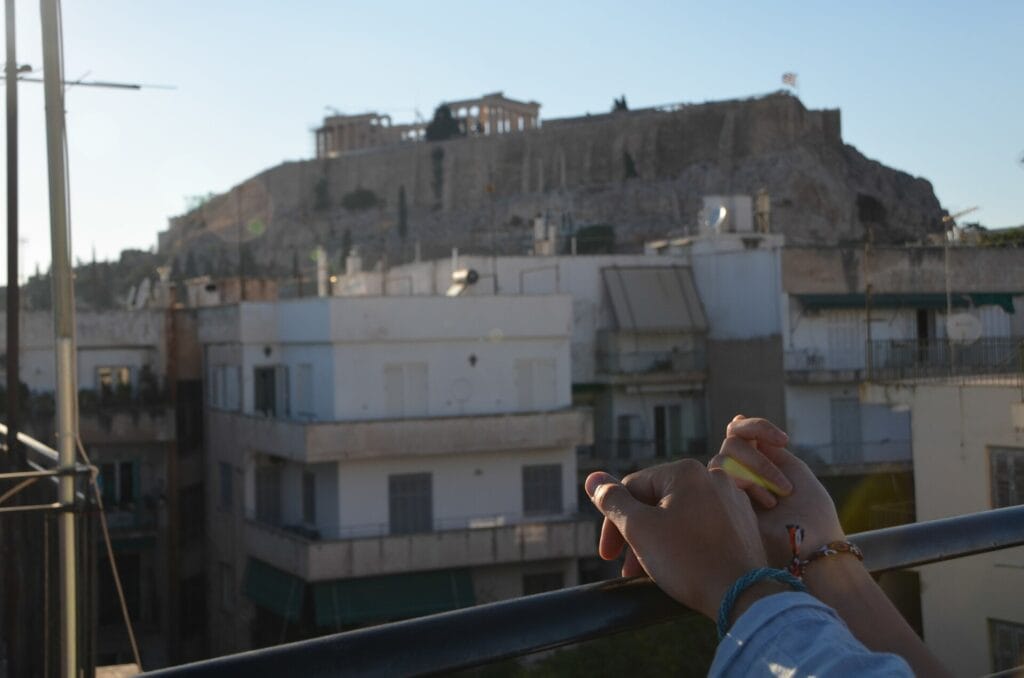
Best for: first-timers who want the ancient headline sights at a steady pace, with time left for neighborhood food, rooftop sunsets, and a half-day Cape Sounion escape.
Planning a 3-day trip to Athens? This itinerary is built from a first-time-visitor perspective: hit the icons, eat the best food, and finish with one or two memorable experiences locals would recommend. Each day mixes a major sight, food stops, and downtime — no death marches, no missing highlights.
Athens Itinerary at a Glance
| Day | Focus |
|---|---|
| Day 1 | Acropolis & Ancient Core |
| Day 2 | Museum & Old Athens |
| Day 3 | Coast to Cape Sounion |
Day-by-Day Itinerary
Day 1 — Acropolis & Ancient Core
Beat the heat and the crowds by booking your Acropolis ticket online (about €30 / roughly $32) and arriving for the 8am opening — the marble glare and midday queues are punishing by 11am. Climb through the Propylaea to the Parthenon, then look down over the city from the ridge. Descend the south slope to the Theatre of Dionysus and the working Odeon of Herodes Atticus. Refuel in Plaka, the tangle of lanes below, then wander uphill into Anafiotika, a pocket of whitewashed Cycladic-style houses built by island masons. Afternoon: the Acropolis Museum (about €20 / roughly $21), whose glass floor reveals excavations underfoot and whose top gallery frames the Parthenon itself. Planning note: order a plate of saganaki (pan-fried cheese) and a Greek salad at a Plaka taverna, and skip the touristy spots with photo menus out front.
Day 2 — Museum & Old Athens
Start in Monastiraki, where the Sunday flea market spills across the square and the Ancient Agora — the civic heart of classical Athens, crowned by the astonishingly intact Temple of Hephaestus. The old €30 combined multi-site ticket was discontinued in April 2025 — the Ancient Agora, Roman Agora and Hadrian’s Library now each need their own ticket (a few euros each), so pick the two that interest you most. Take the metro two stops north to Victoria for the National Archaeological Museum (about €20 / roughly $21), home to the golden Mask of Agamemnon and the Antikythera Mechanism; give it two unhurried hours. Late afternoon, ride up Lycabettus Hill by the funicular from Kolonaki (about €10 / roughly $11 return) for the widest sunset view in the city, the Acropolis glowing below. Planning note: if it is a Sunday, catch the ceremonial Grand Changing of the Guard by the kilted Evzones outside Parliament on Syntagma Square at 11am — it is free and far more elaborate than the hourly version.
Day 3 — Coast to Cape Sounion
Trade the ruins for the sea. Catch the orange KTEL Attikis coastal bus from the Mavromateon terminal near Pedion tou Areos park (about €6.50 / roughly $7 each way, cash only, buy on board) for the roughly two-hour ride south along the Athenian Riviera to Cape Sounion and the fifth-century-BC Temple of Poseidon (entry about €20 / roughly $22 in summer; about half that November–March), perched on a headland over the Aegean. Sit on the right for the coastal views. Legend has it Byron carved his name into a column here — unproven, but guides will happily point it out. On the way back, break at the beach suburb of Glyfada or Vouliagmeni for a swim and fresh grilled fish. Planning note: sunset from the temple is legendary, but the last public bus leaves before dusk — if you want the golden-hour photo, book an organized afternoon tour (roughly €30–40 / about $32–43) instead of relying on KTEL.
Where to Stay in Athens
Choose a central neighborhood within walking distance of major sights — you’ll save hours of commute time over 3 days. Book 6-12 weeks ahead for best rates.
Budget Breakdown (3 Days)
Greece is rated Moderate in our Travel Cost Index 2026. Figures are country-level daily ranges per person and exclude international flights.
| Travel style | Per day | Total 3 days |
|---|---|---|
| Budget | $30-55 | $90-165 |
| Mid-range | $100-180 | $300-540 |
| Luxury | $300-500 | $900-1,500 |
Source: Packzup Travel Cost Index 2026 — country-level averages; city and peak-season prices run higher. Excludes international flights.
What to Pack
- Clothing: Light, breathable fabrics and serious sun protection – summer heat is fierce and shade is scarce on the Acropolis. Shoes with grip for the slick, polished marble paths, covered shoulders for Orthodox churches, and swimwear for the Riviera swim stop.
- Tech: Greece uses type C and F plugs at 230V, so pack a Europlug adapter. Download FreeNow for taxis and Google Maps; Uber works but sends licensed taxis.
- Documents: Greece is in the Schengen Area – US, UK, Canadian, and Australian visitors enter visa-free for short stays, though the EU’s ETIAS authorization is being phased in, so check current rules for your nationality. Passports generally need three months’ validity beyond departure; keep Acropolis e-tickets handy.
- Money: Greece uses the euro. Cards are accepted almost everywhere in Athens, but keep some cash for kiosks, small tavernas, and the Cape Sounion bus, which is cash-only on board. Tipping is modest – rounding up or around 5-10% at tavernas is plenty.
- Day bag: A refillable bottle (Athens tap water is safe), sunscreen and a hat for shadeless ruins, grippy soles for slick Acropolis marble, and a scarf for churches.
Tips for a 3-Day Athens Trip
- Book the Acropolis ahead: timed-entry caps mean summer morning slots can sell out days in advance on the official e-ticket site; the Acropolis Museum rarely needs more than a day.
- Athens rewards early starts: the Acropolis can close on extreme-heat summer afternoons, so front-load sightseeing into mornings. On Day 3, the Cape Sounion bus runs to a fixed timetable and the last public bus back typically leaves before sunset.
- Eat like a local: Skip Plaka menus with photos; locals grab hand-held souvlaki in Psyrri or lunch at the tavernas ringing Varvakios Central Market on Athinas Street.
- Travel insurance: $40-100 for 3 days. Covers medical, theft, cancellations.
- Get connected: EU SIMs roam free; others can buy a Cosmote or Vodafone tourist SIM in town (around 15 euros) or load an Airalo eSIM before landing, airport kiosks charge more.
Routing Mistakes to Avoid: Cluster the Core, Time the Day Trips
The biggest waste of a three-day trip is treating Athens as if its sights are scattered. They are not. Plaka sits directly on the northeastern slopes of the Acropolis, with Monastiraki a 10 to 15 minute walk away, so the Acropolis, the Acropolis Museum, the Ancient Agora, Plaka and Monastiraki form one walkable cluster. Do them as a single loop and you avoid crossing the city twice.
Two scheduling traps catch people out. The Acropolis opens at 8am in summer and can close in the 1pm to 5pm window during extreme heat above 40C, so start at opening rather than mid-morning when cruise crowds and sun both peak. Separately, the National Archaeological Museum opens only at 1pm on Tuesdays, so slot it as an afternoon stop that day and you wont arrive to a locked door.
For day three, resist over-reaching:
- Skip a same-day Delphi run if you want a relaxed pace; it is roughly three hours each way and swallows the whole day on the road.
- Add Cape Sounion instead (about 70km, around 90 minutes by the coastal road), or take a fast ferry to Hydra from Piraeus in about 1 hour 5 minutes.
- From the airport, the blue Line 3 metro reaches Syntagma in about 38 minutes with no line change, so dont prepay for a private transfer.
Frequently Asked Questions
Is 3 days enough for Athens?
For first-time visitors, 3 days in Athens covers the main highlights without rushing. If you want to add day trips, slower pace, or hidden gems, plan 2-3 more days. 3 days is the minimum to feel you’ve truly seen Athens — anything less is a sampler.
How much will a 3-day Athens trip cost?
Using the Budget Breakdown table above, drawn from our Travel Cost Index 2026: Budget $30-55/day ($90-165 for 3 days), Mid-range $100-180/day ($300-540 for 3 days), Luxury $300-500/day ($900-1,500 for 3 days). Country-level averages, excluding international flights.
What’s the best time to do a 3-day Athens itinerary?
Shoulder seasons (just before/after peak) offer the best balance of weather, crowds, and price for Athens. Check the destination’s specific best-time guide for exact months. Avoid major local holidays which spike prices and crowd attractions.
How do I get around Athens?
Athens Metro covers most sights: three lines, with Line 3 running direct to the airport and Line 1 out to Piraeus for ferries. Buy a paper ATH.ENA ticket, a 90-minute fare covers metro, tram, trolleybus and bus transfers. For taxis use the FreeNow app; Uber exists but dispatches regular licensed taxis. The Plaka-Monastiraki-Acropolis core is easily walkable.
What should I pack for 3 days in Athens?
Summer means relentless sun and 35C heat, so bring breathable layers, a hat, and serious sunscreen; winters are mild but can be wet. Wear grippy, broken-in shoes, ancient marble paths are polished and slick. Add a light cover-up for shoulders if you plan to step inside Orthodox churches or monasteries.
Should I book hotels or use Airbnb in Athens?
For 3-day trips, hotels are usually better: easier check-in, daily housekeeping, no laundry expectations, included breakfast often. Airbnb/apartments make sense for stays of 5+ nights, families, or kitchen-focused travelers. Book central locations to save commute time.
Related Athens Travel Guides
- Best Things to Do in Athens
- Where to Stay in Athens
- Best Food in Athens
- Best Time to Visit Athens
- Athens Trip Cost Breakdown
Related guide: Getting from Athens Airport to the city centre — metro, bus, taxi and transfer options with times and costs.
Best time to visit Athens (real climate data)
Best months: April, May, June, September, October, November.
Athens’s warmest month is July (avg 34°C / 92°F), the coolest is January (low 5°C / 42°F). The wettest is December (110 mm) and the driest is July.
Source: Open-Meteo / WMO climate normals (WMO 1991–2020, or ERA5 2019–2023 where unavailable). See the full month-by-month weather →
You Might Also Love



Written by
John Morrison is the founder and lead travel writer at Packzup. Over the past decade he has explored destinations across Africa, the Americas, Asia, Europe, the Middle East, and Oceania — always self-funded, never on a press trip.
Trip prep: before you travel, plan what to wear, check the tap water, sort your mobile data, and see if it is a cash or card country, and skim local etiquette.
