Last updated August 27, 2026 · Editorial policy
I’ve tested every major eSIM provider across 12 countries since 2022. Two are genuinely great. Three are overrated. Here’s the honest ranking.
The TL;DR
For most travelers: Airalo. Best coverage, easiest setup, fair pricing. Get $3 off with code “JOHN” or similar referral codes.
For unlimited data over 7+ days: Holafly. More expensive but unlimited. Worth it for digital nomads who need to stream/Zoom.
For data-only short trips (1-3 days): Local airport SIM (yes, sometimes still cheaper than eSIMs).
What’s an eSIM and why use one
An eSIM is a digital SIM card. Instead of buying a physical SIM at the airport, you scan a QR code, install a profile, and you have local data in 5 minutes. No swapping cards. No losing your home SIM in a hostel.
For Americans, the math is overwhelming:
- T-Mobile/AT&T/Verizon international roaming: $10-15/day, slow speeds (often capped at 128 kbps after a tiny daily quota)
- Airport SIM at Bangkok: $15-25 for 7 days, 10GB
- Airalo eSIM for Thailand: $9 for 7 days, 5GB OR $16 for 30 days, 10GB
If you’re not yet using eSIMs and you travel internationally, you’re paying 3-5x more than you should.
Phone compatibility check (do this first)
eSIMs work on iPhone XS or newer (2018+) and most Android phones from 2020+. To check:
- iPhone: Settings > Cellular > Add Cellular Plan. If you see the QR code scanner option, you’re good.
- Pixel: Settings > Network & Internet > Mobile Network > Add carrier. Look for eSIM option.
- Samsung Galaxy S20+/Note20+: Settings > Connections > SIM Manager > Add eSIM.
If your phone doesn’t support eSIM, you’ll need either a physical SIM or international roaming.
The 5 eSIM providers compared
1. Airalo — Best overall
Price example (Thailand): $9 / 5GB / 7 days, $16 / 10GB / 30 days, $26 / 20GB / 30 days
Coverage: 200+ countries
Setup time: 5 minutes
Best feature: Regional plans (e.g., “Asialink” for all of Asia) that save money on multi-country trips
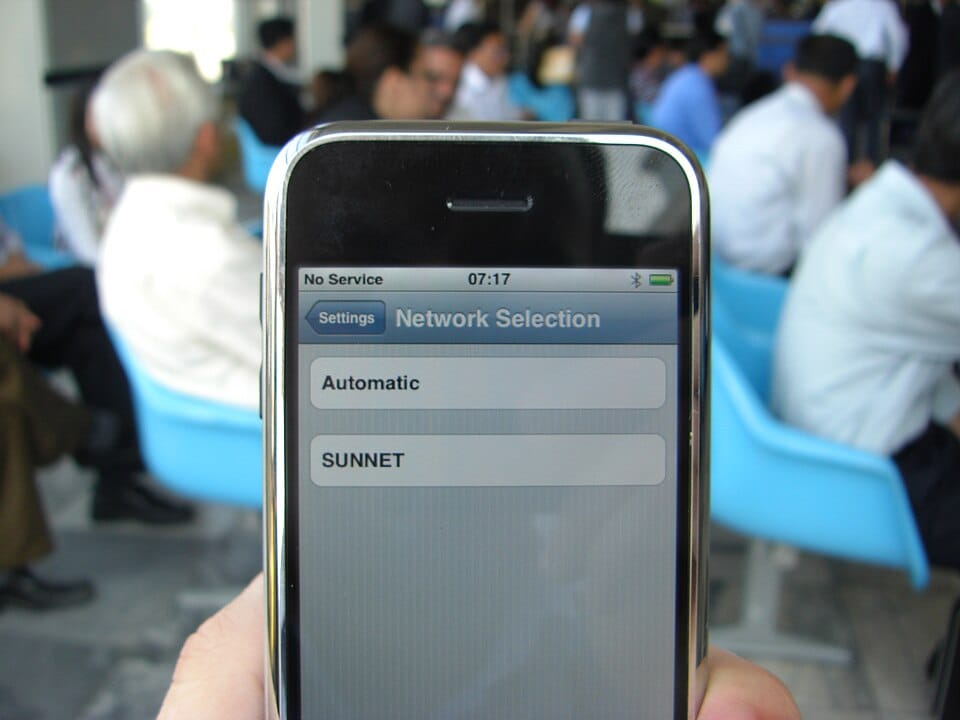
This is what I use 90% of the time. The app is clean, the QR code activation is bulletproof, and prices are competitive. The regional plans are killer for multi-country trips — one Asia-wide plan for $30 instead of buying a separate plan in each country.
Speeds tested:
- Thailand: 30-40 Mbps (AIS network)
- Japan: 50-100 Mbps (NTT Docomo)
- Vietnam: 15-25 Mbps (Mobifone)
- Italy: 30-60 Mbps (TIM)
- Mexico: 20-40 Mbps (Movistar)
Weaknesses: Data-only (no calls or SMS — but most travelers use WhatsApp anyway). Tethering is allowed but counts against your data quota.
2. Holafly — Best for unlimited data
Price example (Europe): $19 for 5 days unlimited, $47 for 15 days, $69 for 30 days
Coverage: 170+ countries
Setup time: 10 minutes (slower than Airalo)
The only major eSIM provider offering truly unlimited data plans. Worth it if you’re:
- Working remotely (Zoom calls eat 1-2GB/hour)
- Streaming video (Netflix HD eats 3GB/hour)
- Heavy social media + photo upload usage
For 5+ day trips with heavy data needs, Holafly’s flat fee often beats Airalo’s gigabyte top-ups. For a 2-week trip to Italy using 2GB/day (heavy), Airalo would cost $50+ in top-ups. Holafly’s 15-day Europe plan is $47.
Weaknesses: Higher base price. Some plans throttle after a daily “fair use” cap (usually 1-2GB/day at full speed). Limited tethering on some plans.
3. Nomad eSIM — Best for digital nomads
Price example (Vietnam): $4 / 1GB / 7 days, $9 / 3GB / 30 days
Coverage: 200+ countries
Generally the cheapest per-GB of the major providers. The app is solid. The setup is slightly more annoying than Airalo (more steps, less intuitive QR code flow).
Best for: Cost-conscious travelers who want the cheapest per-gigabyte rate and don’t mind a slightly clunkier app experience.
4. Saily — Newer entrant, surprisingly good
Price example (Spain): $4 / 1GB / 7 days, $14 / 5GB / 30 days
Coverage: 150+ countries
Note: Owned by NordVPN (same parent company), includes “Web Protection” features
Saily is the budget challenger. Prices are 10-20% lower than Airalo, the app is clean, and the included threat protection actually works (blocks malicious sites at the network level). The coverage list is shorter than Airalo but covers all major destinations.
Weaknesses: Newer service so less long-term reliability data. Customer support is slower (24-48 hours vs Airalo’s 2-6 hours).
5. GigSky — The veteran, now overpriced
Price example: $30 / 1GB for various countries
Coverage: 190+ countries
GigSky was the original eSIM service from 2016. It’s now overpriced compared to Airalo and Nomad. Skip it unless you’ve already got their app installed from a previous trip.
How to actually buy and install an eSIM
Step 1: Buy at home, before you leave
All major eSIMs let you purchase and install BEFORE you arrive. Don’t wait until you land — many require WiFi for initial activation, and airport WiFi is often spotty.
Step 2: Don’t activate until you arrive
Most eSIM plans start counting when activated, not when purchased. Install the profile at home but DON’T enable it until you land. Your home SIM stays active throughout the flight.
Step 3: Disable your home SIM data abroad
Otherwise your iPhone will roam on the international network of your US carrier and you’ll be hit with $10-15/day charges. Settings > Cellular > Cellular Data > pick your eSIM. Disable data on the US line.
Step 4: Keep your home number for SMS
Two-factor authentication codes (SMS from your bank, etc.) require your home number to receive. With dual-SIM, you can keep your US number active for SMS while using the eSIM for data.
How much data do you actually need?
| Usage Profile | Daily Data Use | Recommended Plan (per week) |
|---|---|---|
| Light traveler (maps, messaging only) | 200-500 MB | 3-5 GB |
| Average tourist (social media, photo uploads) | 1-2 GB | 10 GB |
| Digital nomad (work from cafes) | 2-5 GB | 20 GB or unlimited (Holafly) |
| Heavy user (streaming, video calls) | 5-10 GB | Unlimited (Holafly) |
Common mistakes
- Buying at the airport. Airport SIM kiosks charge 2-4x the rate of eSIMs. The only exception is multi-month stays where physical SIMs with local plans can win on price.
- Not testing before you leave. Install the profile before traveling and verify your phone shows both lines. The Apple eSIM transfer screen looks confusing until you’ve done it.
- Forgetting to disable your home SIM. Your phone will silently roam on your US line for SMS or background activity and rack up $50-100 in charges before you notice.
- Underestimating data needs. Apple Maps with offline maps disabled, Instagram, and WhatsApp video calls eat data faster than expected. 5 GB / week is the realistic minimum for tourists.
- Buying single-country plans for multi-country trips. Airalo’s regional plans (Asialink, Eurolink, Latam-link) save 30-50% vs separate plans per country.
The honest verdict
For 90% of American travelers: Airalo. Best balance of price, coverage, ease, and reliability.
For digital nomads or heavy data users: Holafly‘s unlimited plans pay for themselves on trips longer than 5 days with heavy usage.
For absolute budget travelers: Nomad or Saily are 10-20% cheaper per gigabyte than Airalo with similar coverage.
Skip airport SIMs unless you’re staying 3+ months in one country and want a local number.
FAQs
Will an eSIM work on my iPhone?
Yes if you have an iPhone XS (2018) or newer. Check Settings > Cellular > Add Cellular Plan. If you see the option, you’re good.
Can I use an eSIM and my regular SIM at the same time?
Yes. iPhone XS and newer support dual-SIM (one physical, one eSIM, or two eSIMs on iPhone 13+). Keep your US line active for SMS and use the eSIM for data abroad.
How much does an eSIM cost?
Typical pricing: $4-15 for 7 days with 3-10GB. $15-40 for 30 days with 10-20GB. Unlimited plans (Holafly): $19-69 for 5-30 days.
Will my US phone number still work with an eSIM installed?
Yes. You can receive SMS on your US number for free (incoming texts are usually free even abroad). To send SMS from your US number, you’ll need international roaming activated (charges apply).
What if my eSIM doesn’t work after activation?
1. Restart your phone. 2. Verify the eSIM is selected for cellular data in Settings. 3. Toggle airplane mode off and on. 4. Contact the provider’s chat support (Airalo: 24/7, Holafly: 24/7, Nomad: business hours).
Frequently Asked Questions
What’s the best eSIM for international travel?
Airalo is the best overall for most travelers, offering the best balance of price ($9 for 5GB/7 days in most countries), coverage (200+ countries), and ease of use. For unlimited data needs, Holafly is the better choice. Both work on iPhone XS or newer and most Android phones from 2020+.
Do eSIMs work on iPhones?
Yes, on iPhone XS (2018) or newer. Check by going to Settings > Cellular > Add Cellular Plan. If you see the QR code scanner option, your iPhone supports eSIMs. You can use an eSIM alongside your physical SIM as dual-SIM.
How much data do I need for international travel?
Light usage (maps, messaging): 3-5GB per week. Average tourist (social media): 10GB per week. Digital nomad (working remotely): 20GB+ per week. Heavy streaming/video calls: unlimited plans (Holafly) make sense.
Is an eSIM cheaper than airport SIM cards?
Almost always yes. eSIMs typically cost 50-70% less than airport SIM kiosks for the same data allowance. A 7-day, 5GB plan costs $9 on Airalo vs $20-25 at airport kiosks in Asia. The only exception is multi-month stays where local physical SIMs can win on price.
Can I use both my US phone number and an eSIM?
Yes. iPhone XS and newer support dual-SIM functionality. Keep your US line active for SMS (two-factor authentication codes) while using the eSIM for all data needs abroad. Just disable cellular data on the US line to avoid roaming charges.
You Might Also Love




Written by
John Morrison is the founder and lead travel writer at Packzup. Over the past decade he has explored destinations across Africa, the Americas, Asia, Europe, the Middle East, and Oceania — always self-funded, never on a press trip.