
Last updated September 3, 2026 · Editorial policy
Best time to visit Maui: at a glance
Short answer: April–May and September–November for great weather and better value.
| Season | Months | What to expect |
|---|---|---|
| Peak | Dec–Mar, Jun–Aug | Holidays & summer (whales Dec–Apr); busiest |
| Shoulder (best value) | Apr–May, Sep | Warm, dry, fewer crowds |
| Low | — | No true low season; shoulder is the sweet spot |
Best Time to Visit Maui: Month-by-Month Guide
Quick take: Maui — But timing matters more than most guides admit. Here’s the real breakdown by month, based on weather data, crowd patterns, and local festivals.
Knowing the best time to visit Maui can transform your trip — saving you hundreds on flights and hotels while putting you in better weather with fewer crowds. This guide breaks down each season, key events, and what to expect month by month so you can pick the right travel dates.
Festivals & Events in Maui
The one window that truly demands early booking is Maui Whale Festival week in February, when World Whale Day lands inside peak humpback season. South Maui lodging and the better whale-watch boats out of Maalaea and Kihei typically fill months out, so lock both together.
- Maui Whale Festival (Feb)
- Maui County Fair (early Oct)
When to Visit by Travel Goal
- Fewest crowds: September is the quietest month, once mainland schools go back but before whale season and the winter holidays start. Late April into May runs a close second, and the first half of October is usually still uncrowded.
- Festivals & culture: The Maui Whale Festival takes over Kihei in February, peaking with the World Whale Day parade on South Kihei Road around mid-month. The Maui County Fair follows in early October at the War Memorial complex in Wailuku, four days of local food, rides and island music.
- Budget travelers: The cheapest stretch is typically late April into May, then September into early October, when lodging often runs roughly 20 to 30 percent under peak while the leeward Kihei and West Maui coasts stay warm and dry. Avoid Christmas to New Year entirely.
What to Avoid
- Major holidays: Mainland US breaks move Maui’s crowds, not local festivals. Christmas through New Year is the hardest week to book, followed by mid-March spring break, Thanksgiving week, and the Presidents Day and Easter stretches. Golden Week traffic from Japan typically matters far less here than on Oahu.
- Closures: Little shuts for a season here, since Maui runs year-round. The real seasonal risk is weather: winter Kona storms and heavy rain can close stretches of the Hana Highway for landslides, high surf shuts north-shore beaches like Hookipa, and the Haleakala summit road can close in high wind.
Booking Tips
- Maui has two peaks, so book accordingly. For Christmas, New Year and the January to March whale weeks, aim roughly five to seven months out; for the mid-June to August school-holiday rush, four to six months. Shoulder trips in late April, May or September often price well six to ten weeks ahead.
- Maui’s shoulder weeks run late April through May and September into early October. They trade the peak-season draws, February’s dense whale sightings and the July to August heat, for warm dry leeward weather, calm water and noticeably softer rates. September keeps summer sea temperatures without the family crowds.
- The school calendars that matter are mainland American ones, especially the West Coast feeder markets of California, Washington and Oregon: their mid-June to August summer break and March spring break typically set Maui’s busiest weeks. Canadian winter breaks add to the January to March whale-season load.
- Maui’s real insurance case is the Central Pacific hurricane season, roughly June through November, when a tropical system can ground flights on a long overwater route with few alternatives. Cover trip interruption and medical evacuation too, since surf injuries and Haleakala hikes sit far from major hospitals.
The Shoulder-Season Sweet Spot, and the One Trade-Off Worth Making
The genuine value window is late April into May, then September into early October. Both ride Maui’s drier stretch, the leeward Lahaina and Kihei coasts sit warm around the low-to-mid 80s Fahrenheit, and lodging tends to run roughly 20 to 30 percent below peak rates. September is the quiet standout: summer-warm water and calm seas, but without the July-August family crowds.
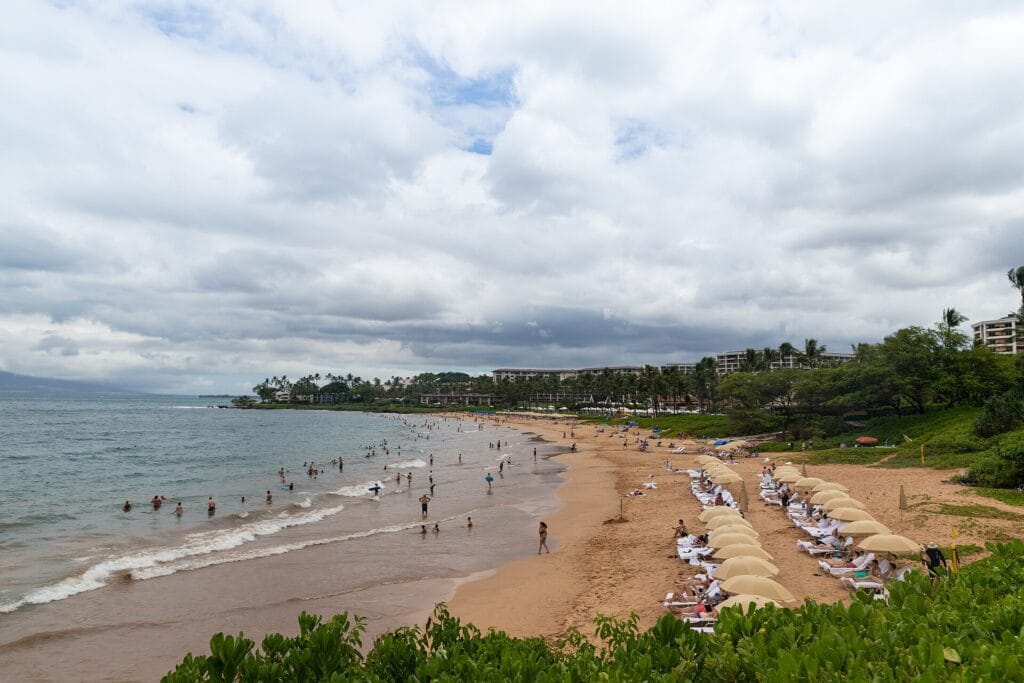
The two peaks pull for different reasons. Mid-June through August is the hot, busy school-holiday rush, with August the warmest month near an average high around 85F. The other peak, mid-December through March, is when humpback whales fill the channel between Maui and Lanai. Whale season runs roughly late November through April and concentrates from January to March, with February the densest, so most boat tours score sightings in those weeks. That alone justifies a winter trip despite the crowds and the higher holiday pricing.
The period to be wary of is the wet stretch from mid-November through late March, when December is typically the wettest month on the leeward side. Time it wrong:
- Christmas and New Year stack peak prices onto the wettest, busiest window at once.
Frequently Asked Questions
Are there major festivals in Maui?
Yes — Maui hosts notable events including: Maui Whale Festival (Feb), Maui County Fair (early Oct). Major festivals can spike hotel prices 50-200% — book 3-6 months ahead if attending.
What should I pack for Maui?
Pack for the season you’re visiting and the climate zone. Summer in Maui: lightweight breathable clothes, sunscreen, hat, comfortable walking shoes. Check the 10-day forecast 1-2 weeks before departure and adjust.
Related Maui Travel Guides
- Best Things to Do in Maui
- Where to Stay in Maui
- Best Food in Maui
- How Much Does a Trip to Maui Cost?
- Maui Itinerary Guide
Torn between destinations? See our honest, first-hand comparisons: Maui vs Oahu, Big Island vs Maui, Maui vs Kauai, Bali vs Maui.
Maui weather & climate by month
Best months to visit: June, July, August, September, October, November. Maui’s warmest month is July (avg 27°C / 80°F), the coolest is February (low 15°C / 59°F). The wettest is February (201 mm) and the driest is July.
| Month | Avg high | Avg low | Rainfall | Rainy days |
|---|---|---|---|---|
| January | 22°C / 72°F | 16°C / 60°F | 118 mm | 16 |
| February | 21°C / 70°F | 15°C / 59°F | 201 mm | 20 |
| March | 22°C / 72°F | 16°C / 60°F | 123 mm | 17 |
| April | 23°C / 73°F | 16°C / 61°F | 131 mm | 13 |
| May | 24°C / 75°F | 17°C / 63°F | 78 mm | 13 |
| June | 25°C / 78°F | 18°C / 65°F | 50 mm | 10 |
| July | 27°C / 80°F | 19°C / 67°F | 42 mm | 8 |
| August | 27°C / 80°F | 19°C / 67°F | 63 mm | 8 |
| September | 27°C / 80°F | 19°C / 67°F | 51 mm | 9 |
| October | 26°C / 78°F | 19°C / 66°F | 83 mm | 11 |
| November | 25°C / 76°F | 18°C / 64°F | 70 mm | 12 |
| December | 23°C / 74°F | 17°C / 62°F | 137 mm | 14 |
Climate source: Open-Meteo ERA5 reanalysis (2019–2023). Compare destinations in the Best Time to Visit Index.
You Might Also Love



Written by
Drew Treasury is a contributing travel writer at Packzup, specialising in city culture, food markets, street art, and neighbourhood-level travel.
