
Last updated August 13, 2026 · Editorial policy
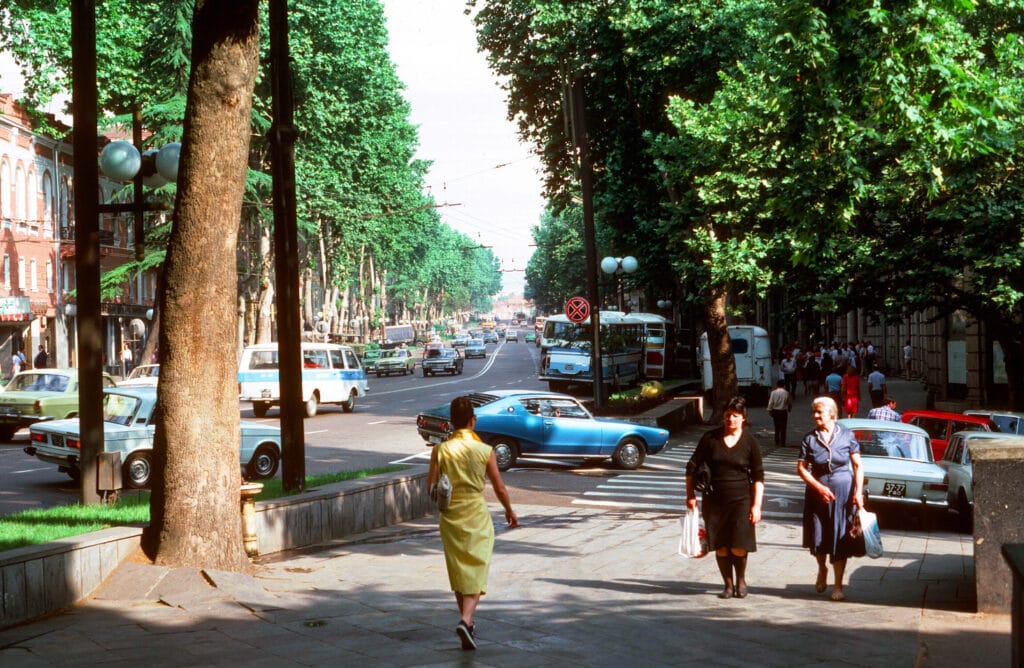
Tbilisi is a surprisingly easy city to navigate — the old town is compact and walkable, the Metro has two useful lines, and taxis are extraordinarily cheap. The city stretches along the Kura River valley with the old town, Rustaveli Avenue, and the modern city all connected by a logical transport network. For exploring beyond Tbilisi — the wine region of Kakheti, the mountain towns of Kazbegi and Svaneti, and the cave cities — marshrutkas (minibuses), shared taxis, and hired drivers are the way to go. Georgia’s roads are improving but mountain routes require confidence.
Transport Options:
1. Walking in the Old Town
Tbilisi’s old town is compact and packed with interest — from the sulphur baths of Abanotubani to the Peace Bridge, Narikala Fortress, and Shardeni Street, everything is within a 20-minute walk. The Rustaveli Avenue (Tbilisi’s main boulevard) to the old town is another 15 minutes. The walk through the old town’s narrow lanes, past balconied houses, churches, and cafes, is the essential Tbilisi experience. The city is hilly in parts — the climb to Narikala Fortress is steep but the cable car from Rike Park provides an alternative.
2. Metro
Two lines — Akhmeteli-Varketili (Line 1, red) and Saburtalo (Line 2, blue) — cross at Station Square (Sadguris Moedani). Single ride: 1 GEL (about 0.35 USD) with a Metromoney card. Trains run every 3-7 minutes from 6 AM to midnight. Key stations: Liberty Square (Tavisuplebis Moedani, old town access), Rustaveli (main avenue), Station Square (train station). The Metro is Soviet-era but functional, clean, and cheap. Buy a Metromoney card (2 GEL) at any station — it works on Metro, buses, and cable cars.
3. Taxis (Bolt and Yandex)
Incredibly cheap — a cross-city ride costs 5-10 GEL (1.70-3.50 USD). Airport to the city centre: 25-40 GEL. Bolt and Yandex Go are the dominant ride-hailing apps with transparent pricing. Street taxis exist but many don’t use meters — always use an app. The apps are reliable and cars arrive in minutes. Tbilisi taxi prices are among the cheapest of any capital city. Cash or card payment. Perfect for late-night trips and reaching areas not on the Metro.
4. Marshrutkas (Minibuses)
Yellow (city) and white (intercity) minibuses are Georgia’s primary public transport. City marshrutkas cost 0.50 GEL and run fixed routes (displayed on the windshield in Georgian). Intercity marshrutkas depart from Didube bus station and Station Square to Mtskheta (30 minutes, 1 GEL), Kazbegi (3 hours, 10 GEL), Kutaisi (4 hours, 10 GEL), and other destinations. They depart when full. Ask locals for help — routes are not intuitive for visitors. Cheap and frequent on major routes.
5. Cable Cars and Funicular
The Rike Park cable car crosses to Narikala Fortress with stunning old town views (2.50 GEL with Metromoney). The funicular from Chonkadze Street ascends to Mtatsminda Park with panoramic city views (5 GEL return). Both save steep climbs and provide aerial perspectives. The cable car is the most scenic 2 minutes in Tbilisi. The funicular runs until 11 PM and the restaurant at the top is popular for sunset views. Both accept the Metromoney card.
6. Day Trip Transport
Mtskheta (Georgia’s spiritual capital, 30 minutes) is reachable by marshrutka from Didube station (1 GEL). Kazbegi/Stepantsminda (mountain scenery, Gergeti Trinity Church) is a 3-hour marshrutka ride (10 GEL). For wine tours in Kakheti, hire a driver (120-180 GEL for the day) — wine tasting and driving don’t mix. The David Gareja monastery complex requires a car or tour (80-120 GEL per person). Organised tours from Tbilisi cover most day trips at reasonable prices (50-100 GEL per person).
Transport Tips for Tbilisi
Get a Metromoney card (2 GEL) at any Metro station — it works on Metro, buses, cable cars, and the funicular. Bolt and Yandex Go are essential — download both. Tbilisi taxis are absurdly cheap. The airport bus 37 runs to Liberty Square (0.50 GEL) but Bolt to the city costs only 20-30 GEL. Marshrutkas from Didube station serve most day trip destinations. Wine tours in Kakheti should include a driver — never drink and drive. The Tbilisi to Kazbegi road via the Georgian Military Highway is one of the world’s great drives. Georgian script is unique — screenshot your destinations in Georgian for marshrutka drivers.
What is the best way to get around Tbilisi?
The most practical options are Walking in the Old Town and Metro. Tbilisi’s old town is compact and packed with interest — from the sulphur baths of Abanotubani to th…
Do I need a car in Tbilisi?
It depends on your itinerary. For the main areas, public transport and ride-hailing are sufficient. A car is useful for exploring rural or remote areas.
Is public transport safe in Tbilisi?
Yes, public transport is generally safe and widely used by locals and tourists alike. Take normal precautions with your belongings, especially in crowded areas.
Related Articles
Frequently Asked Questions
You Might Also Love


Written by
John Morrison is the founder and lead travel writer at Packzup. Over the past decade he has explored destinations across Africa, the Americas, Asia, Europe, the Middle East, and Oceania — always self-funded, never on a press trip.
