

Last updated September 11, 2026 · Editorial policy
Quick answer: Beyond Santorini’s crowds, Greece hides its best self: Folegandros’ cliff-top Chora, Monemvasia’s walled rock, the Zagori’s stone bridges, Pelion’s forest beaches and the Peloponnese: the country Greeks keep for themselves.
More: When to visit Greece · Greece travel guide
1. Folegandros
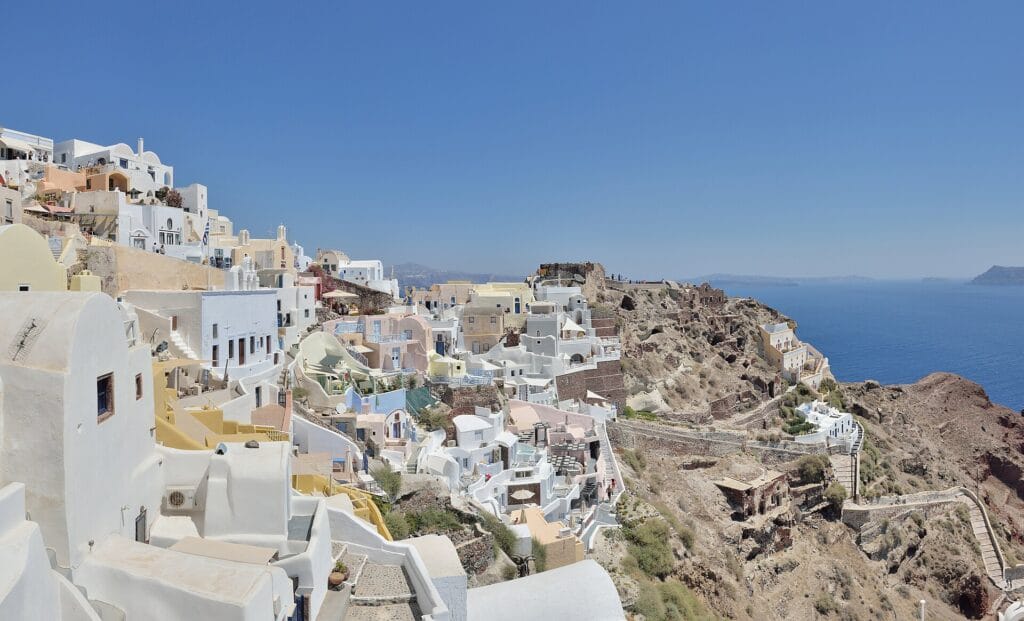
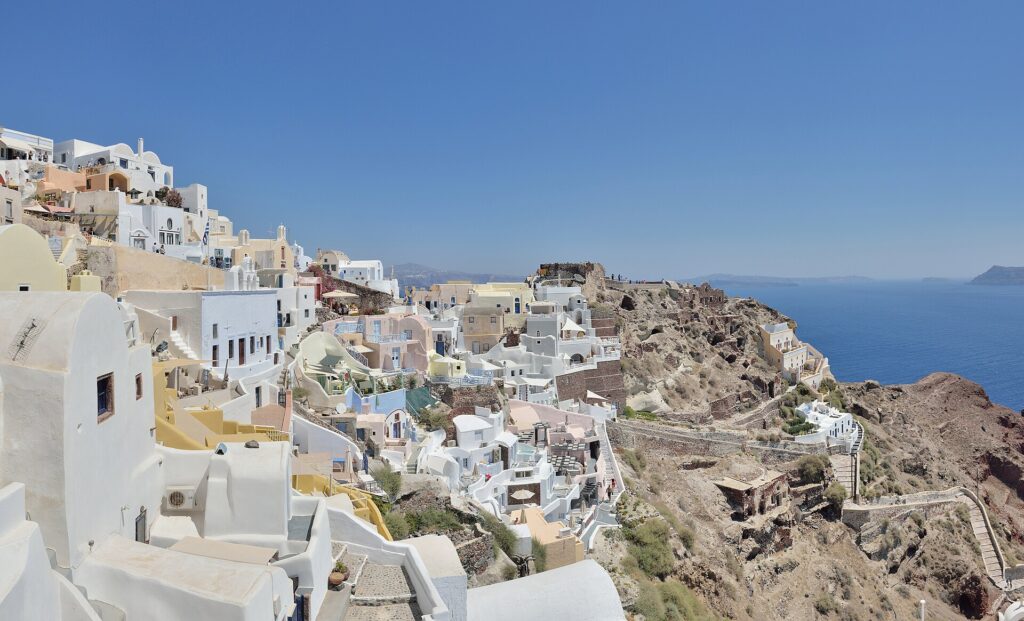
Santorini’s cliffs without Santorini’s circus: a marble-laned Chora hanging 200m above the sea, sunset at the Panagia church and beaches reached by boat or footpath. Two ferry hours and fifty years from Oia.
2. Monemvasia
A Byzantine town sealed inside a rock off the Peloponnese: enter the single gate and find lamplit lanes, vaulted houses turned guesthouses and rampart views over a wine-dark sea. Sleep inside the walls: day-trippers leave by six.
3. The Zagori
Continue planning your Greece trip
Stone villages, arched Ottoman bridges and the Vikos Gorge (among the world’s deepest): northern Greece’s mountain secret, glorious in spring and fall, with hearty pites (pies) as hiking fuel.
4. Pelion
The centaurs’ peninsula: chestnut forests dropping to twin-sided beaches (Aegean surf, Pagasetic calm), villages of slate roofs and apple orchards: Greece’s greenest summer, with skiing in winter, improbably.
5. Kythira
Between the Ionian and Aegean, belonging to neither crowd: waterfalls at Mylopotamos, ghost-village Paleochora and beaches you will share with goats. The ferry schedule is the gatekeeper: let it be.
6. Sifnos
The food island: chickpea stew from wood ovens, pottery villages and trail-linked monasteries: gastronomy and quiet in Cycladic white.
7. Nafplio & the Argolid
Greece’s prettiest small city (Venetian, bougainvillea-draped) under the Palamidi fortress: with Epidaurus’ theatre and Mycenae’s lions a short drive away: the classical world without coach-tour pacing.
Finding your own Greece
Pick one famous stop, then go one ferry or one mountain pass further: book island rooms direct (owners reward it), travel May-June or September, and let lunch decide the afternoon. The hidden Greece is hiding in plain sight: just past the cruise port.
What Each Pick Is Really For: Why-Go, Best Season & Real Costs
These five aren’t interchangeable. Each rewards a different traveler, season, and budget. Here’s how I’d frame them after spending real time on the ground.
- Folegandros — Go for the cliff-edge Chora and pebble coves like Katergo without the Santorini crowds. Best season: late May to mid-June or September (July–August fills the tiny Chora). Cost: a cave-front room runs roughly $90–160/night in shoulder season. Planning note: take the Stella Express III boat to Katergo from Karavostasis (first run 11:15am, ~$15 round-trip) and book the late-afternoon return so you swim after the day-trippers leave.
- Monemvasia — A car-free Byzantine fortress town carved into a sea-rock. Best season: May, June, or October — the stone bakes in midsummer. Cost: a room inside the walls is a splurge at $140–220/night. Planning note: climb to the ruined Upper Town and the Agia Sofia church at dawn before the tour buses arrive from Athens.
- The Zagori — UNESCO-listed stone villages and the Vikos Gorge. Best season: late April–early October; September is the sweet spot. Cost: a guesthouse runs $80–150/night. Planning note: walk the 10-minute path to the Oxya viewpoint for the deepest stretch of the gorge.
- Pelion — Mountain villages meeting hidden beaches. Best season: June or September. Planning note: ride the 60cm-gauge trenaki train (Ano Lechonia–Milies, ~90 min).
- Kythira — The wildest, least-touristed of the five. Best season: June or September. Planning note: swim under the 20m Neraida (Fonissa) waterfall at Mylopotamos.
How to Choose Between Them
Don’t try to do all five in one trip — they pull in opposite directions geographically and in mood. Pick by the experience you actually want.
- Want the classic island fantasy without the mob? Go to Folegandros. It delivers the whitewashed-cliff-town daydream — the Panagia church on its rock plateau, sunset in the Kastro quarter — at a fraction of Santorini’s intensity.
- Want history you can walk inside? Monemvasia is unmatched: a 13th-century walled town with no cars, where you sleep between medieval stone walls. Pair it easily with a Peloponnese road trip.
- Want to hike and breathe mountain air? The Zagori wins outright. The 12km Monodendri–Vikos gorge trek (6–8 hours) and the stone arch bridges around Kipi are mainland Greece at its most dramatic — no beach, all altitude.
- Want mountains AND sea in one base? Pelion is the hybrid: drive 20 minutes from a plane-tree village square in Tsagarada down to the Mamma Mia! cove at Damouchari.
- Want true off-grid solitude? Kythira. It’s large, empty, and deeply local — Venetian castles at Chora and Mylopotamos, 100+ km of marked trails, and beaches you’ll often have to yourself.
My rule of thumb: islands (Folegandros, Kythira) for a slow week; mainland clusters (Zagori, Pelion) for a road trip; Monemvasia as a 1–2 night Peloponnese centerpiece.
Getting There: Practical Logistics From Athens
Greece’s hidden gems hide partly because they’re a hassle to reach. Here’s exactly how each one connects, with real travel times.
- Folegandros — Ferry from Piraeus. High-speed boats (Seajets) take roughly 3h 45m–4h; conventional ferries run 7–8+ hours but cost far less. One-way fares typically run ~$50–90 in season. Sailings are near-daily June–September, thinner the rest of the year — book ahead.
- Monemvasia — Drive it. About 3.5–4 hours south from Athens via the Corinth–Tripoli–Sparta motorway (tolls ~$18–22 round-trip), with the last hour on smaller Laconian roads. KTEL buses from Kifissos station also run a few times daily (~5.5 hours via Sparti) but a car is far more flexible.
- The Zagori — Fly. Aegean flies Athens–Ioannina in about 1 hour; the villages are only ~64km (about a 1-hour drive) from Ioannina. Rent a car in Ioannina — the villages are scattered and have minimal public transport. Driving from Athens is ~476km (6+ hours).
- Pelion — Base in Volos, a ~3.5–4 hour drive (~320km) north of Athens. There’s no direct Athens–Volos train, and a car is essentially mandatory for the winding village roads.
- Kythira — Fastest is a 45-minute flight from Athens (Aegean/Olympic, Sky Express). By sea, the shortest crossing is from Neapoli (~1h 15m), reached by a 4–4.5 hour drive; the direct Piraeus ferry takes ~6.5 hours. There’s no port public transport — pre-book a rental car.
You Might Also Love


Written by
John Morrison is the founder and lead travel writer at Packzup. Over the past decade he has explored destinations across Africa, the Americas, Asia, Europe, the Middle East, and Oceania — always self-funded, never on a press trip.
