
Last updated September 2, 2026 · Editorial policy
| At a glance | Malta | Cyprus |
|---|---|---|
| Beaches | Rocky coves, a few small sandy bays | Long sandy beaches, shallow turquoise water |
| Swimming season | Roughly June to October | Roughly May to early November |
| Getting around | No car needed, buses reach everything | Car essentially required |
| Variety and day trips | Gozo and Comino | Mountains, wine villages, two coastlines |
Malta and Cyprus get lumped together constantly, and I get why. Both are Mediterranean islands with a British colonial past — English everywhere, driving on the left, even the same three-pin plugs — both use the euro, and both bake in reliable sunshine from May through October. On paper they are the same holiday. In person they are not even close, and picking wrong means spending your week wishing you were on the other island.
Here is the short version, which the rest of this post defends: Malta is a history trip with swimming attached, and Cyprus is a beach trip with history attached. Malta is tiny, dense, and genuinely doable without a car in three or four days. Cyprus is almost thirty times bigger, really wants you to rent a car, and rewards a full week or more. Which one you should book depends on which of those sentences made you nod. Like our Croatia vs Portugal matchup, this pair has different right answers for different travelers, so let’s get specific.
| Category | Malta | Cyprus | Winner |
|---|---|---|---|
| Beaches | Rocky coves, a few small sandy bays | Long sandy beaches, shallow turquoise water | Cyprus |
| History & old towns | Valletta, Mdina, temples older than the pyramids | Paphos mosaics, Kourion, divided Nicosia | Malta |
| Food | Pastizzi, rabbit stew, strong Italian influence | Meze culture, halloumi, village tavernas | Cyprus |
| Nightlife | Paceville bar-hopping, casual and free | Ayia Napa mega-clubs, Limassol bars | Depends |
| Getting around | No car needed, buses reach everything | Car essentially required | Malta |
| Variety & day trips | Gozo and Comino, then you’re done | Mountains, wine villages, two coastlines, the North | Cyprus |
| Swimming season | Roughly June to October | Roughly May to early November | Cyprus |
| Value for money | Cheap flights, mid-range prices on the ground | Cheaper food and hotels, but add car costs | Cyprus, narrowly |
Cost comparison
Neither island is a bargain destination anymore, but neither will hurt you the way high-season Italy or France can. In Malta, a budget traveler sharing hostel dorms or cheap guesthouses, snacking on pastizzi and riding buses, gets by on roughly $70–100 a day. A comfortable mid-range trip — a decent hotel in Sliema or Valletta, restaurant dinners, a boat trip or two — runs more like $130–190 per person per day, and Valletta hotels in particular charge more than the rooms justify in high summer.
Cyprus comes in slightly under that on the ground: roughly $60–95 a day at the budget end and $110–170 mid-range, with noticeably more generous portions for your restaurant money. A full meze spread that defeats two hungry adults costs around $20–28 a head at a village taverna. The catch is the car. You will want one, and after rental and fuel you are adding something like $30–45 a day, which erases part of the savings.
Where Malta claws money back is the flight. It is a shorter hop from most of western Europe with heavy low-cost competition, so airfare is often meaningfully cheaper than to Larnaca or Paphos. For a short trip, Malta frequently wins on total door-to-door cost; for a week or more, Cyprus usually works out cheaper per day.
Beaches and swimming
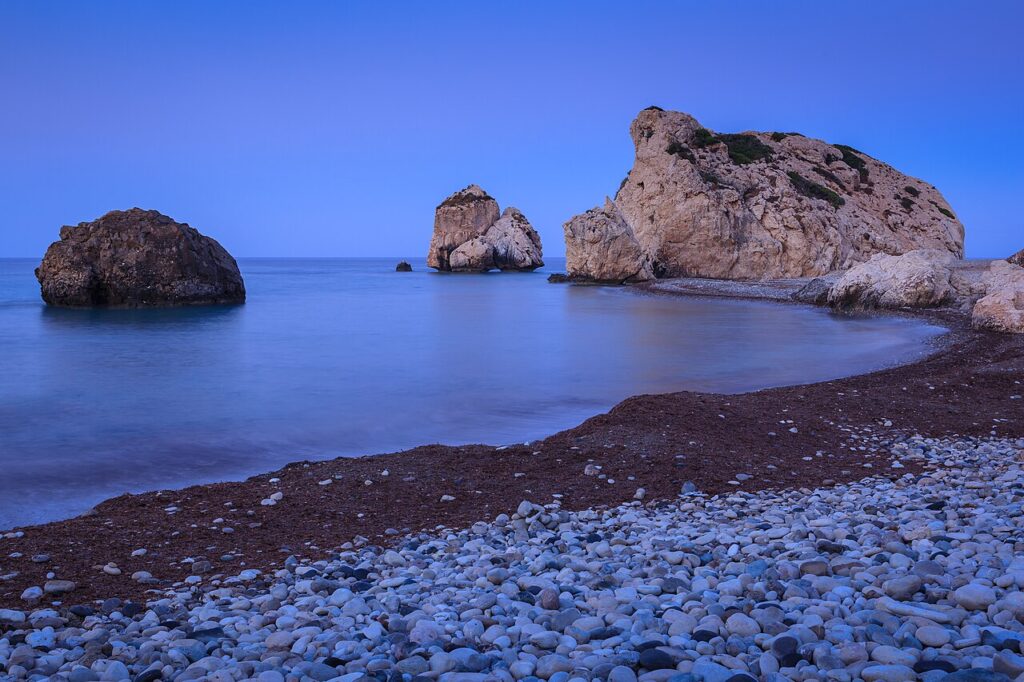
This is the least close category. Cyprus has proper sandy beaches — the kind you picture when someone says Mediterranean island. Nissi Beach on the Ayia Napa strip, Fig Tree Bay at Protaras, Coral Bay near Paphos: long stretches of pale sand shelving into shallow, absurdly clear turquoise water. Families are happy, the water warms early in the season, and you can choose between organized sunbed scenes and quieter coves out west on the Akamas peninsula.
Malta’s coast is mostly rock. That is not automatically bad — swimming off flat rocks into deep, glassy blue water at spots like St. Peter’s Pool is a genuine pleasure, and the snorkeling is excellent — but true sandy beaches are few, small, and rammed in summer. Golden Bay and Mellieha Bay are pleasant and busy; Ramla Bay on Gozo, with its reddish sand, is the prettiest of the lot. The famous Blue Lagoon on Comino really is that color, and by mid-morning in July it is shoulder-to-shoulder boats. Go at 8am or come in June. If your holiday lives or dies on lying on sand, Cyprus wins without breaking a sweat.
History and old towns
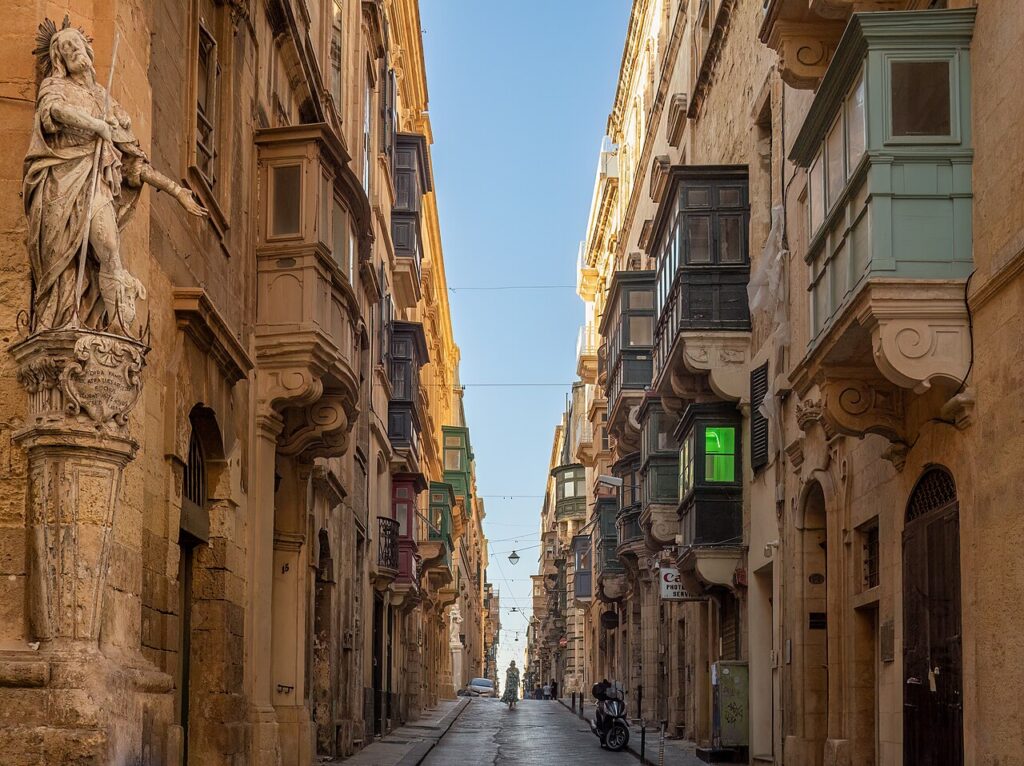
Now the reverse. Malta might be the densest concentration of history in the Mediterranean, which is saying something. Valletta is an entire fortified baroque capital built by the Knights of St John, small enough to walk end to end in twenty minutes and packed with palaces, churches, and harbor views the whole way. Mdina, the silent hilltop former capital, feels like a film set at dusk once the day-trippers leave. And the megalithic temples — Hagar Qim and Mnajdra on Malta, Ggantija on Gozo — are older than the Egyptian pyramids, which never stops being a strange thing to stand in front of. Add the World War II story woven through the Grand Harbour fortifications and you could fill a week with sightseeing alone. If ancient sites are the entire reason you travel, that same itch drives our Morocco vs Egypt comparison too.
Cyprus is no slouch: the Roman mosaics at Paphos are world class, Kourion’s clifftop amphitheatre still stages performances, and walking across the Green Line in Nicosia — Europe’s last divided capital — is one of the most quietly fascinating things you can do on either island. But its history is spread across a big island, while Malta’s version is stacked in one walkable place.
Food and drink
Cyprus edges this one, and it comes down to the taverna. Cypriot meze — a slow parade of halloumi, village salad, grilled meats, kleftiko lamb, dips, and whatever the kitchen felt like making — is one of the great value meals in Europe, especially in the Troodos foothill villages where tourists thin out. The local wine scene is old and underrated, including Commandaria, a sweet wine made here for many centuries.
Malta eats well too, in a different register. The Italian influence is strong — Sicily is visible on a clear day — so pizza and pasta are genuinely good, and pastizzi, the flaky ricotta or pea pastries sold for about a dollar, are the best cheap snack on either island. Rabbit stew is the national dish and worth ordering once, and the Sunday fish market at Marsaxlokk is a proper event. The weakness is the tourist-strip restaurant scene in Sliema and St Julian’s, which can be mediocre at real-restaurant prices. If eating is the whole point of your trip, you should honestly be reading our Italy vs Spain comparison instead — but between these two, Cyprus feeds you better for less.
Nightlife
These are two very different parties. Ayia Napa is the famous one: big clubs, international DJ bookings in peak season, organized bar crawls, and a strip that does not really start until midnight. It is a destination in itself, it is seasonal — much of it hibernates in winter — and it prices accordingly. Limassol offers a more grown-up bar and restaurant scene that runs year-round.
Malta’s Paceville, in St Julian’s, is the opposite model: a compact tangle of bars and small clubs with mostly free entry, so you can wander through a dozen venues in a night without committing to anything. It skews young — the summer language-school crowd gives it a distinctly under-25 energy — and it is cheerfully scruffy. For a blowout clubbing week, Ayia Napa wins. For casual, low-cost, stumble-home-in-fifteen-minutes nights attached to a normal holiday, Malta is more fun. Calling this anything but a tie would be dishonest.
Variety and day trips
Cyprus’s size, the very thing that makes it need a car, is also its best feature. In one week you can swim at Nissi Beach, drive up into the Troodos mountains for painted Byzantine churches and wine villages where the air is ten degrees cooler, look for sea turtles near Lara Bay on the wild Akamas coast, and cross into the Turkish-controlled north — bring your passport — for a completely different atmosphere in north Nicosia or Famagusta. It feels like several trips in one.
Malta’s variety is smaller-scale but charming: the short ferry to Gozo delivers a slower, greener, quieter island that plenty of visitors end up preferring to Malta itself, and Comino’s Blue Lagoon fills the boat-trip slot. The honest catch is that after four or five full days you will have seen most of the headline sights. That is not a flaw if you have four or five days. It is if you have ten.
Weather and when to go
Both islands deliver the same basic promise: hot, dry, reliable summers and mild winters. July and August are fierce on both — mid-90s Fahrenheit in Malta, hotter inland in Cyprus, where Nicosia can push past 100°F. The sea is the payoff, staying warm well into October on both islands and into early November in Cyprus, which enjoys the longer swimming season by a few weeks on each end.
The sweet spots for both are May–June and September–October: hot enough to swim, cheaper than peak season, and lighter on crowds. Winter splits them. Malta stays mild but turns windy and sleepy outside Valletta, while Cyprus keeps more going in Limassol and Paphos — and, in a fact that sounds invented but is not, you can sometimes ski in the Troodos mountains in January and February while the coast sits in shirtsleeve weather. If you are weighing shoulder-season sun across the Med more broadly, our Greece vs Portugal comparison covers that same calculus.
Getting there and around
Malta is easier to reach from western Europe: around three hours from the UK or Germany into a single compact airport, with intense budget-airline competition keeping fares down. Cyprus sits another hour and a half beyond it — roughly four and a half to five hours from London into Larnaca or Paphos. From North America there are no meaningful nonstop options to either, so you will connect through a European hub, which makes the extra distance to Cyprus matter less.
On the ground, they flip. Malta needs no car: public buses reach essentially every sight for a couple of euros, ferries handle Gozo and the harbor crossings, and distances are so short that nothing is much more than an hour away. The buses get hot and crowded in August, but they work. Cyprus without a car means depending on decent-but-limited intercity buses and pricey taxis, and missing the mountains and Akamas almost entirely. Rent the car. Both islands drive on the left, a colonial leftover that catches continental European drivers out far more than it will catch Brits or Aussies.
Malta or Cyprus: the honest verdict
If you love history and old towns: Malta, and it is not close. Valletta, Mdina, and temples older than the pyramids packed into one tiny island is a cheat code for sightseers.
If you are a beach traveler: Cyprus, equally not close. Real sand, warm shallow water, and a longer season beat Malta’s rocky, if beautiful, coastline for anyone whose trip is built around swimming and lounging.
If you are on a budget: slight edge to Cyprus for a week or longer, thanks to cheaper food and rooms. For a three-or-four-day trip, Malta’s cheaper flights and car-free logistics usually make it the cheaper total ticket.
If you are a foodie: Cyprus. The meze-and-village-taverna culture runs deeper than Malta’s restaurant scene, and it costs less too.
If it is your first Mediterranean island trip and you only have a long weekend: Malta. It is the rare destination where three well-planned days genuinely feel complete rather than rushed.
And if you still cannot decide, match the island to your trip length. Under five days, book Malta. A week or more, book Cyprus. I would sign my name under that rule.
FAQ
Is Malta or Cyprus cheaper?
Which has better beaches, Malta or Cyprus?
How many days do you need in Malta vs Cyprus?
Do they speak English in Malta and Cyprus?
Planning the trip? Go deeper with best time to visit Malta and best time to visit Cyprus.
You Might Also Love


Written by
John Morrison is the founder and lead travel writer at Packzup. Over the past decade he has explored destinations across Africa, the Americas, Asia, Europe, the Middle East, and Oceania — always self-funded, never on a press trip.
