
Last updated August 13, 2026 · Editorial policy
Rio’s food culture is as diverse and vibrant as the city itself. Brazilian cuisine draws from Portuguese, African, and indigenous traditions, and Rio adds its own beach-culture twist. From feijoada served in Lapa on Saturday afternoons to fresh acai bowls on the Copacabana boardwalk, eating in Rio is a communal, leisurely affair. The city’s churrascarias are legendary, the street food is abundant, and the juice bars serve fruits that exist nowhere else. Portions are enormous and sharing is expected.
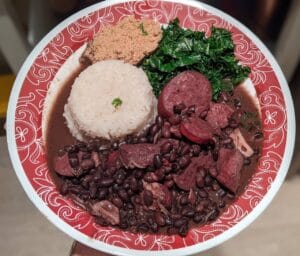
Feijoada
Brazil’s national dish — a rich, slow-cooked stew of black beans with pork cuts (ribs, sausage, bacon, ears, trotters), served with rice, collard greens (couve), farofa (toasted cassava flour), and orange slices. Saturday feijoada lunch is a Rio institution. Casa da Feijoada in Ipanema serves it daily. About R$50-80 per person and utterly massive.
Acai Bowl
Frozen acai berry puree blended thick and topped with granola, banana, and honey. Born in the Amazon but perfected on Rio’s beaches. The best bowls come from small stands in Ipanema and Leblon — Bibi Sucos and Polis Sucos are reliably excellent. About R$15-25 for a generous portion. The perfect post-beach recovery meal.

Coxinha
Brazil’s most beloved street snack — a tear-drop shaped croquette of shredded chicken wrapped in dough, breaded, and deep-fried. The best ones have a crispy exterior and a creamy, well-seasoned filling. Available at every bakery (padaria) and snack bar for about R$5-8 each.
Picanha (Grilled Top Sirloin)
The queen of Brazilian beef cuts — a fat-capped sirloin grilled on skewers over charcoal, sliced tableside, and served with farofa, rice, and vinaigrette. Churrascarias (barbecue restaurants) are the best place to try it. Fogo de Chao and Porcão are famous all-you-can-eat rodízio options at R$100-180 per person, but small neighbourhood churrascarias charge much less.

Pastel
Large, thin, crispy deep-fried pastries filled with cheese, meat, shrimp, or heart of palm. Best eaten at feira (street market) stalls with sugarcane juice. Feira de São Cristovão in the north zone is the ultimate pastel destination. About R$8-15 each. The combination of hot, crispy pastel and cold, fresh caldo de cana is perfect.
Pao de Queijo (Cheese Bread)
Small, round, chewy bread rolls made with cassava starch and Minas cheese — gluten-free and impossible to eat just one. Served warm at every bakery, coffee shop, and breakfast table in Rio. About R$3-5 each or R$15-25 for a bag. Best straight from the oven when the cheese is still stretchy.

Moqueca
A Bahian-inspired seafood stew cooked in coconut milk, dende (palm) oil, tomatoes, and peppers. The version served in Rio is lighter than the Bahian original but still rich and fragrant. Served in a clay pot with rice and pirao (fish-broth porridge). About R$60-90 at good restaurants. Zazá Bistrô in Ipanema does an excellent version.
Caipirinha
Not food, but inseparable from the Rio eating experience. Cachaca (sugarcane spirit), muddled lime, sugar, and ice — the national cocktail. Every bar and restaurant serves them, and the best use top-shelf cachaca. About R$15-25 each. Try variations with passion fruit (maracuja), kiwi, or strawberry.
Eating Tips for Rio de Janeiro
Padarias (bakeries) are the backbone of Rio eating — open early for breakfast and serving affordable hot food all day. Per-kilo (por quilo) buffet restaurants are incredible value at lunch — load a plate with Brazilian home cooking and pay by weight (R$50-70 per kg). Saturday is feijoada day everywhere. Copacabana beach vendors sell legitimate food (grilled cheese on a stick, corn, mate tea) at fair prices. Ipanema and Leblon are pricier; Botafogo and Flamengo have better value neighbourhood restaurants.
Frequently Asked Questions
What is the must-try food in Rio de Janeiro?
The absolute must-try is Feijoada. Beyond that, Acai Bowl and Coxinha are essential for understanding Rio de Janeiro’s food culture.
Is street food safe in Rio de Janeiro?
Yes, street food in Rio de Janeiro is generally safe. Look for stalls with high turnover (long queues mean fresh food), eat where locals eat, and choose stalls where food is cooked to order. Stay hydrated and ease into spicier dishes gradually.
How much should I budget for food in Rio de Janeiro?
Budget travelers can eat well for $10-20 per day at street stalls and local restaurants. Mid-range budgets of $30-50 allow a mix of street food and sit-down meals. Fine dining starts around $50-100 per person.
You Might Also Love



Written by
John Morrison is the founder and lead travel writer at Packzup. Over the past decade he has explored destinations across Africa, the Americas, Asia, Europe, the Middle East, and Oceania — always self-funded, never on a press trip.