
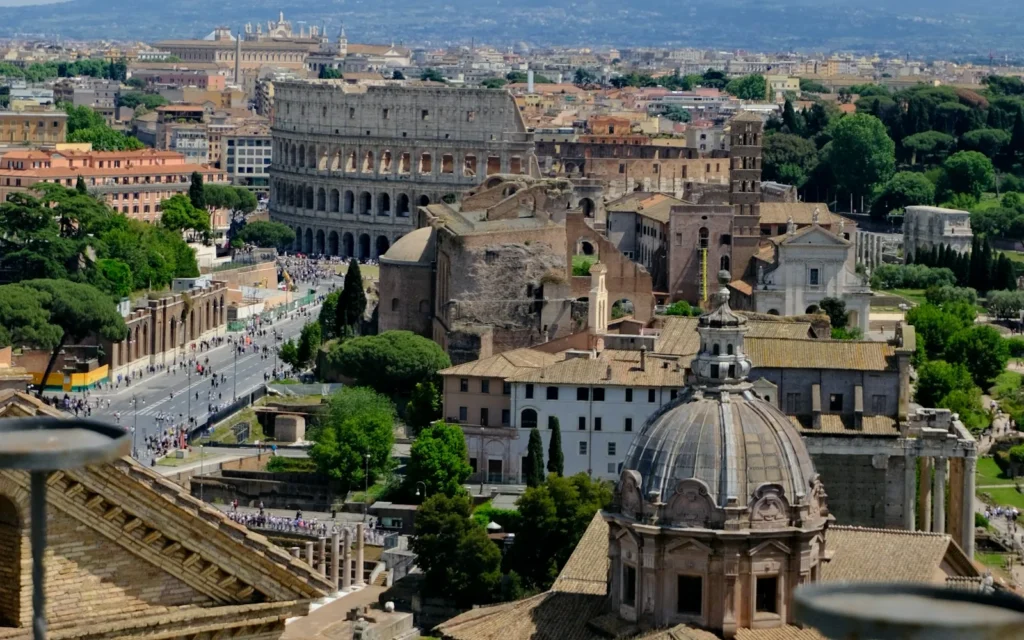
July is Rome at maximum heat and maximum visitors at the same time, which is a genuinely difficult combination. About 32°C by day, the driest month of the year at roughly 19 mm of rain, and almost no shade at the three sites everyone comes for. It is entirely doable – but only on a schedule built around the sun, not around a checklist.
The weather, precisely
The average understates it. July regularly delivers 35°C and above, and Rome’s stone and asphalt hold the heat so the city cools slowly after dark. Italy issues a daily heat-risk rating for major cities in summer – worth glancing at, because on the worst days the sensible plan is genuinely to do nothing between noon and five.
The compensation is that it essentially does not rain, and the evenings are long, warm and excellent.
The three unshaded sites
This is the practical core of July in Rome. The Roman Forum, the Palatine Hill and the Appian Way have almost no shade and no shelter. At 32°C in open sun on stone, a two-hour Forum visit at midday is a serious physical undertaking, and people do get into trouble.
- Book the first entry slot of the day for the Colosseum, Forum and Palatine. Opening time is the only comfortable hour.
- Carry water and refill it – the nasoni street fountains run cold drinkable water and there are several inside the Forum itself.
- Hat, sunscreen, and a real break at midday.
- The Vatican Museums are indoors but not air-conditioned throughout, and the Sistine Chapel in July is hot and extremely crowded. An early slot matters there too.
What July does better than any other month
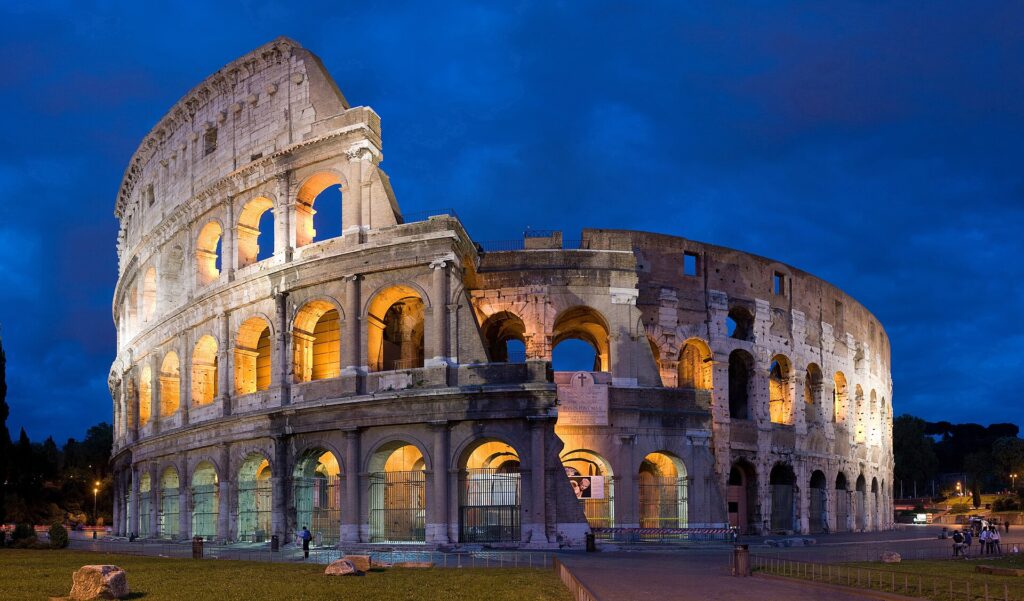
- Night openings. Several Roman sites run extended or after-dark summer hours, and seeing the Forum or the Baths of Caracalla lit at night is better than seeing them at noon. Check the current season’s programme.
- Estate Romana at full stretch – open-air cinema, concerts, and the Lungo il Tevere bars and stalls along the embankment every evening.
- Opera at the Baths of Caracalla, in the middle of its season.
- The summer saldi – Italy’s regulated summer sales start in early July and run for weeks.
- Festa de’ Noantri – Trastevere’s own neighbourhood festival, traditionally from mid-July, with a procession of the Madonna del Carmine, street food and music. It is local, free and the best week to be in Trastevere.
Prices and crowds
Peak visitor numbers. Every timed-entry site needs booking weeks ahead, restaurants in the centre need reserving, and hotel rates are high. Some Roman restaurants begin closing for their own summer break late in the month, which accelerates sharply in August. See what a trip to Italy costs.
What to pack
Light, loose clothing, a proper hat, high-factor sunscreen, sunglasses and comfortable shoes. A refillable bottle, which is close to essential. Modest clothing for St Peter’s and the Vatican Museums – shoulders and knees covered, enforced at the door, so carry a scarf or light shirt rather than hoping. Electrolyte sachets are not excessive in a Roman July.
The July 2027 calendar
- Sunday 4 July – free entry to state museums and sites, including the Colosseum and Forum. In July this is a difficult day: free plus peak season plus heat.
- Early July – the summer saldi sales begin.
- Through July – Estate Romana at full stretch; Lungo il Tevere every evening; opera at the Baths of Caracalla.
- From mid-July – Festa de’ Noantri in Trastevere; procession, street food and music.
- Through July – night openings at several archaeological sites; check the season’s programme.
- Late July – the first Roman restaurants close for their summer break.
- No public holidays fall in July in Italy.
Read alongside
- Rome in June – four degrees cooler, same long evenings.
- Rome in August – hotter, emptier of Romans, and half-closed.
- Rome in September – the month to go instead.
- Italy in July – the country-wide view.
- Rome itinerary – how to structure the days.
- Day trips from Rome – the coast and the lakes in summer.
- Trip to Italy cost – peak-season numbers.
Frequently asked
How hot is Rome in July?
About 32°C by day and 18°C at night on average, with 35°C and above common. The stone city holds heat, so it cools slowly after dark.
Is July too hot for Rome?
Not if you restructure the day: unshaded sites at opening, indoors or resting at midday, and the city from six onwards. A midday Forum visit in July is the mistake to avoid.
Which Rome sites have no shade?
The Roman Forum, the Palatine Hill and the Appian Way, essentially none. Book the first entry slot, carry water, and refill at the nasoni fountains, several of which are inside the Forum.
Does it rain in Rome in July?
Barely – about 19 mm, the driest month of the year. Occasional short thunderstorms break the heat.
Are Rome museums open late in summer?
Several archaeological sites run extended or after-dark summer openings, which is the best way to see the Forum or the Baths of Caracalla in July. Check the current season’s programme.
What is Festa de’ Noantri?
Trastevere’s neighbourhood festival, traditionally from mid-July, with a procession of the Madonna del Carmine, street food and music. It is local, free, and the best week to be in that quarter.
Is Rome crowded in July?
It is at peak visitor numbers. Book every timed-entry site weeks ahead and reserve central restaurants.
Are restaurants closed in Rome in July?
Some begin their summer break late in the month, but the wholesale closures belong to August. In July most things are still open.
You Might Also Love


Written by
John Morrison is the founder and lead travel writer at Packzup. Over the past decade he has explored destinations across Africa, the Americas, Asia, Europe, the Middle East, and Oceania — always self-funded, never on a press trip.
