
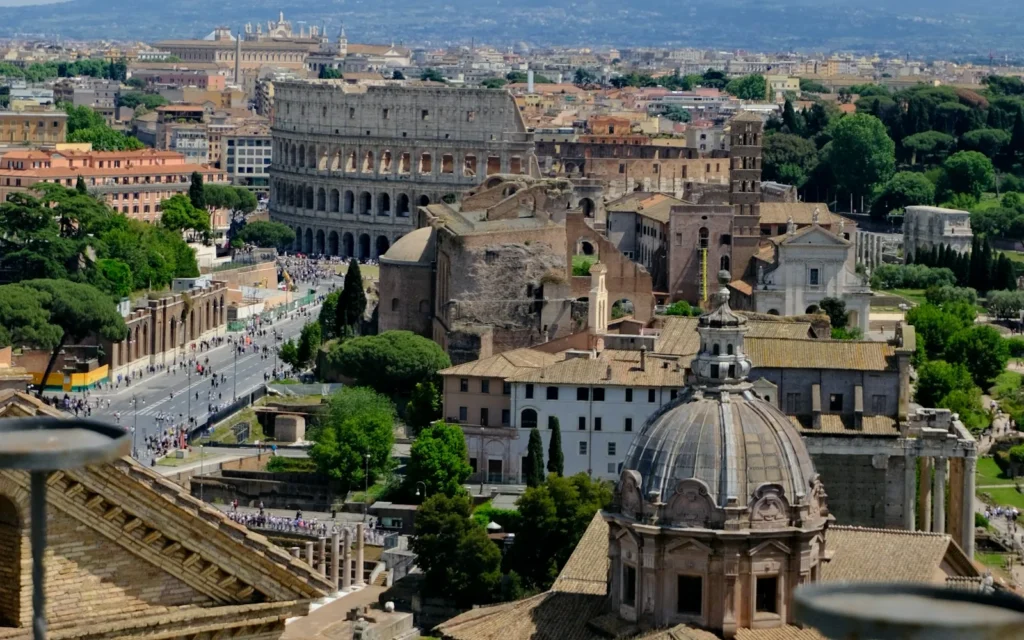
March 2027 is the most consequential month in the Roman year, because Easter falls on 28 March – early, and inside the month. Until about the 20th this is a quiet, mild, drying spring city at low-season prices. From Palm Sunday onwards it becomes the single busiest week Rome has, and the clocks go forward on Easter Sunday itself.
The weather, precisely
March is the month Rome dries out: about 58 mm of rain, down from February’s 73, and the first reliably pleasant afternoons. Mornings and evenings stay cold – 5°C overnight – so it is still a coat month, but you will want to be outdoors in the middle of the day for the first time since autumn.
Clocks go forward on Sunday 28 March 2027, the last Sunday of the month, which in 2027 is also Easter Sunday. Evening light jumps to nearly 19:30 overnight.
Holy Week and Easter, 22 to 29 March 2027
This is the practical heart of the page. Rome at Easter is extraordinary and extremely difficult, in equal measure.
- Palm Sunday, 21 March – Mass in St Peter’s Square; the week begins.
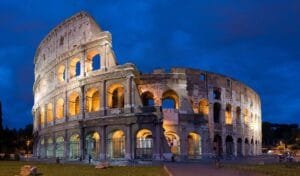
- Good Friday, 26 March – the Via Crucis, the Way of the Cross, at the Colosseum after dark, led by the Pope. It is free, it is one of the most striking things you can see in Rome, and the surrounding streets close. Arrive hours early or watch from the edges.
- Easter Sunday, 28 March – Papal Mass in St Peter’s Square followed by the Urbi et Orbi blessing at midday. Free tickets are needed for seating and are requested in advance through the Prefecture of the Papal Household; the square itself fills from very early.
- Easter Monday – Pasquetta, 29 March – a public holiday. Romans traditionally leave the city for a picnic; museums are open but the city is oddly quiet.
What it means if you are not here for Easter: hotel rates across the centre reach their annual peak for that week, the Vatican Museums and St Peter’s are at their most crowded of the year, and restaurants need booking weeks ahead. If Easter is not the point of the trip, come in the first fortnight of March instead – same weather, a third of the price.
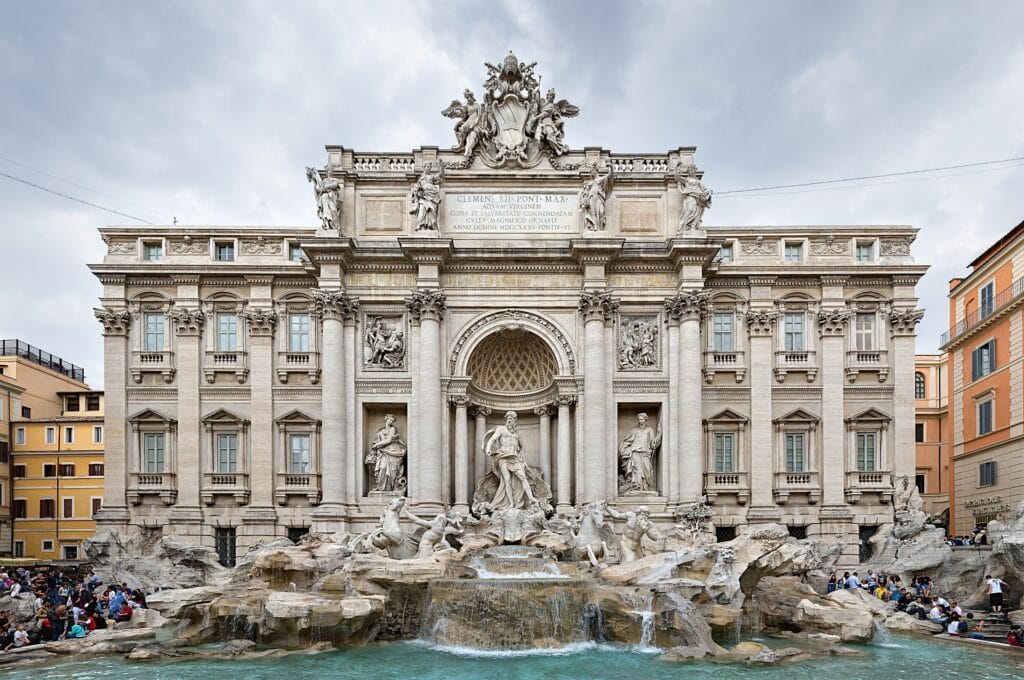
The first three weeks
Genuinely one of the best windows of the year, and it is short:
- Sites are still quiet – the Vatican, the Colosseum and the Borghese all bookable at short notice.
- The weather is usable – mild days, drying, with the wisteria and orange blossom still a few weeks off.
- Prices are still low season until roughly the 20th.
- Artichoke season is at its peak.
Other March dates
- 8 March – Festa della Donna, International Women’s Day, when sprigs of mimosa are given and sold all over the city. Not a public holiday, but very visible.
- The Rome Marathon – the Maratona di Roma normally runs in March, starting and finishing by the Colosseum. Central road closures are extensive on race morning. Dates are announced annually.
- Free museum Sunday on the first Sunday of the month.
Prices and crowds
A month of two halves in 2027: low season until around 20 March, then the annual peak for Holy Week. There is no gentler way to put it – the difference between a hotel booked for 10 March and the same room for 27 March is dramatic. See what a trip to Italy costs.
What to pack
A warm coat you can remove, layers, and shoes with grip for wet cobbles. Sunglasses. Modest clothing matters more in March than in any other month – shoulders and knees must be covered in St Peter’s and the Vatican Museums, and Holy Week is when the dress code is enforced most strictly. If you are attending a papal event, expect airport-style security and long standing.
The March 2027 calendar
- Sunday 7 March – free entry to state museums and sites, including the Colosseum and Forum.
- Monday 8 March – Festa della Donna; mimosa everywhere.
- Usually March – the Rome Marathon; extensive central road closures on race morning.
- Sunday 21 March – Palm Sunday; Holy Week begins and rates climb.
- Friday 26 March – the Via Crucis at the Colosseum after dark, led by the Pope; street closures around the site.
- Sunday 28 March – Easter Sunday; Papal Mass and the Urbi et Orbi blessing. Clocks also go forward one hour.
- Monday 29 March – Pasquetta, a public holiday; Romans leave the city.
- Through March – peak Roman artichoke season.
Read alongside
- Rome in February – quieter, wetter, cheaper.
- Rome in April – wisteria, Rome’s birthday and peak spring.
- Italy in March – the country-wide view.
- Rome itinerary – how to structure the days.
- Things to do in Rome – the full list.
- Day trips from Rome – where Romans go at Pasquetta.
- Trip to Italy cost – what Holy Week does to the numbers.
Frequently asked
When is Easter in Rome in 2027?
Easter Sunday is 28 March 2027 – early. Holy Week runs from Palm Sunday on 21 March, with the Via Crucis at the Colosseum on Good Friday 26 March and Pasquetta on Monday 29 March.
Is Rome busy at Easter?
It is the busiest week of the Roman year. The Vatican Museums and St Peter’s are at their most crowded, hotel rates hit their annual peak, and restaurants need booking weeks ahead.
Can you attend the Papal Easter Mass?
Yes. Mass in St Peter’s Square on Easter Sunday is followed by the Urbi et Orbi blessing at midday. Free tickets are needed for seating and are requested in advance through the Prefecture of the Papal Household; the square fills very early regardless.
What is the Via Crucis at the Colosseum?
The Way of the Cross, held after dark on Good Friday and led by the Pope, with torches around the Colosseum. It is free to attend, the surrounding streets close, and you need to arrive hours ahead for a view.
How warm is Rome in March?
About 16°C by day and 5°C at night, with around 58 mm of rain – drier than February. Middle-of-the-day sightseeing becomes pleasant for the first time since autumn.
When do the clocks change in Italy in 2027?
On the last Sunday of March – 28 March 2027 – which is also Easter Sunday. Evening light extends to nearly 19:30.
Is early March a good time to visit Rome?
It is one of the best short windows of the year: mild, drying, still at low-season prices, and with the major sites still at winter crowd levels. That ends at Palm Sunday.
What is Pasquetta?
Easter Monday, 29 March in 2027, and an Italian public holiday. Romans traditionally leave the city for a picnic, so the centre is quieter than you would expect.
You Might Also Love


Written by
John Morrison is the founder and lead travel writer at Packzup. Over the past decade he has explored destinations across Africa, the Americas, Asia, Europe, the Middle East, and Oceania — always self-funded, never on a press trip.
