
August is peak summer: every pass open, every hut open, the lakes at their warmest, and the whole of Europe on holiday at the same time. It also carries the Swiss National Day on 1 August, which is the one evening a year the entire country lights bonfires and fireworks.
The numbers
Swiss National Day, 1 August
In 2027 it falls on a Sunday. It marks the founding pact of 1291 and is the only public holiday observed in every canton on the same terms.
- Bonfires on the hilltops on the evening of 31 July and 1 August, plus fireworks in most towns and villages.
- The Rutli meadow above Lake Lucerne, where the pact is traditionally said to have been sworn, holds the symbolic ceremony. Boats from Lucerne and Brunnen fill.
- Most shops close, and public transport runs a Sunday timetable.
- Book anything lakeside for that night well ahead; the Lake Lucerne and Lake Geneva fireworks draw large crowds.
The busiest month, and how to work around it
- European school holidays overlap across the whole month, so trains, cable cars and the famous viewpoints are at their fullest.
- Start early. First cable cars are quiet; the 10am to 2pm window at Jungfraujoch, the Matterhorn Glacier Paradise and Pilatus is not.
- Reserve seats on the Glacier Express and Bernina Express – in August they sell out.
- Go one valley across. The Val d’Anniviers, the Lotschental, the Val Bregaglia, the Diemtigtal and the Toggenburg are a fraction as busy as the headline destinations and no less beautiful.
- Mountain huts need booking in advance in August; turning up is not a plan.
Water, and the warnings that go with it
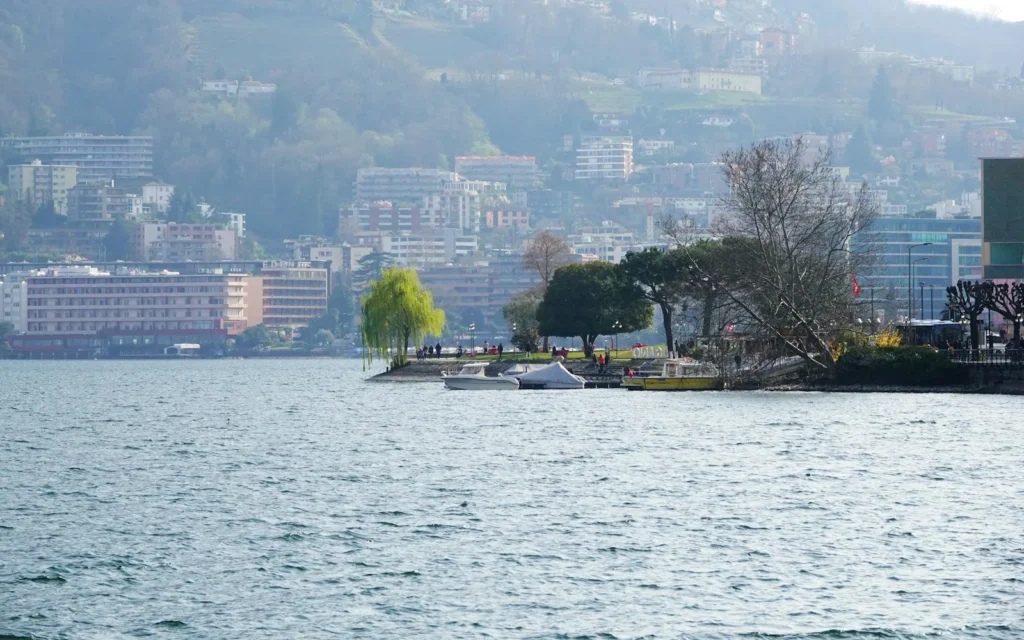
August is when Switzerland swims. Every city has a Badi – a public lake or river bathing area – and lake temperatures peak now.
- Lake swimming is excellent in Zurich, Lucerne, Geneva, Thun, Brienz and above all in Ticino.
- River swimming in the Aare at Bern and Thun is a local institution, but the current is strong and you must know where to get out. Follow local practice.
- Alpine rivers and gorges are dangerous. Glacier-fed water stays very cold, levels can rise fast after an upstream thunderstorm, and rock is slippery. The Verzasca and Maggia valleys in Ticino are beautiful and have a genuine drowning record.
- Afternoon thunderstorms build over the Alps most summer days. Plan high ridges for the morning and be down before they arrive.
Where to go in August
- Ticino – Lugano, Locarno and Ascona, warmest in the country, with the Locarno Film Festival and its open-air screenings on the Piazza Grande in early August.
- The Engadine – high, dry and a few degrees cooler than the lowlands, with the best air of the summer.
- The Valais side valleys – Anniviers, Herens, Lotschental – for full alpine hiking without the queues.
- Lake Lucerne and Lake Thun for steamers, swimming and easy mountain access.
- Zurich in August, which hosts the Street Parade, one of the largest electronic music events in the world, on a Saturday in the middle of the month.
Prices and crowds
Peak on both. Rates in the mountain resorts are at their annual high alongside February, and availability in the headline towns is tight. The cities are marginally cheaper than the resorts in August, which reverses the winter pattern. See what travelling Switzerland costs.
What to pack
Summer clothes plus a fleece and a waterproof – a 23°C morning in Interlaken is close to freezing at 3,500 m, and cable cars take you there in half an hour. Proper walking boots. Strong sunscreen and sunglasses; UV at altitude is severe. Swimwear. A refillable bottle, since Swiss fountains are drinkable almost everywhere. Note that many Swiss hotels have no air conditioning.
The August 2027 calendar
- Sunday 1 August – Swiss National Day; bonfires and fireworks nationwide, ceremony at the Rutli meadow, most shops closed.
- Early August – the Locarno Film Festival, with open-air screenings on the Piazza Grande.
- Mid-August – the Zurich Street Parade, held on a Saturday.
- Through August – all alpine passes and mountain huts open; full hiking season.
- Through August – lake temperatures at their annual peak.
- Daily – afternoon thunderstorms over the Alps; plan high ground for the morning.
Read alongside
- Switzerland in July – peak summer and the festival season.
- Switzerland in September – the best hiking month.
- Switzerland in October – autumn colour and clear air.
- Best time to visit Switzerland – all twelve months compared.
- Switzerland travel guide – regions, trains and how it fits together.
- Switzerland in 10 days – the longer route.
- Best things to do in Switzerland – the year-round list.
- What a trip to Switzerland costs – peak-season numbers.
Frequently asked
When is Swiss National Day?
1 August, which in 2027 falls on a Sunday. It is marked with hilltop bonfires on the evenings of 31 July and 1 August, fireworks in most towns, and a ceremony at the Rutli meadow above Lake Lucerne. Most shops close.
Is August too crowded in Switzerland?
It is the busiest month, but manageable. Start early, reserve scenic train seats, book huts ahead, and pick a side valley rather than the headline destination.
How hot does Switzerland get in August?
Zurich averages about 23°C by day and Lugano about 26°C, with heatwaves pushing well above that. Many Swiss hotels have no air conditioning, so a room with shade matters.
Can you swim in Swiss lakes in August?
Yes, this is the warmest water of the year. Every city has a public bathing area, and Ticino has the warmest lakes in the country.
Is it safe to swim in Swiss rivers?
The Aare at Bern is a local institution but has a strong current and you must know your exit point. Alpine rivers and gorges are a different matter – very cold, fast-rising after upstream storms, and with a real accident record. Follow local signage.
Are all the Swiss mountain passes open in August?
Yes. August is the one month you can rely on every pass, hut and high trail being open.
Do I need to book mountain huts in August?
Yes. Swiss Alpine Club huts fill in high summer and turning up without a reservation is not a plan.
What about thunderstorms in the Alps?
They build most summer afternoons. Do exposed ridges and passes in the morning and aim to be off high ground by early afternoon.
Switzerland month by month
- January – deep winter, peak ski, and fog on the plateau.
- February – the coldest weeks, carnival, and half-term crowds.
- March – spring skiing and the first valleys thawing.
- April – snowmelt, closed passes, and a country in two seasons.
- May – waterfalls at full volume and the passes reopening.
- June – alpine flowers and the first full hiking month.
- July – peak summer, festivals and long days in the mountains.
- August – warm lakes, National Day and the busiest trails (this page).
- September – the best hiking month and the cattle coming down.
- October – autumn colour, clear air and the passes closing.
- November – the quietest and cheapest month of the year.
- December – Christmas markets and the season opening.
You Might Also Love



Written by
John Morrison is the founder and lead travel writer at Packzup. Over the past decade he has explored destinations across Africa, the Americas, Asia, Europe, the Middle East, and Oceania — always self-funded, never on a press trip.
