
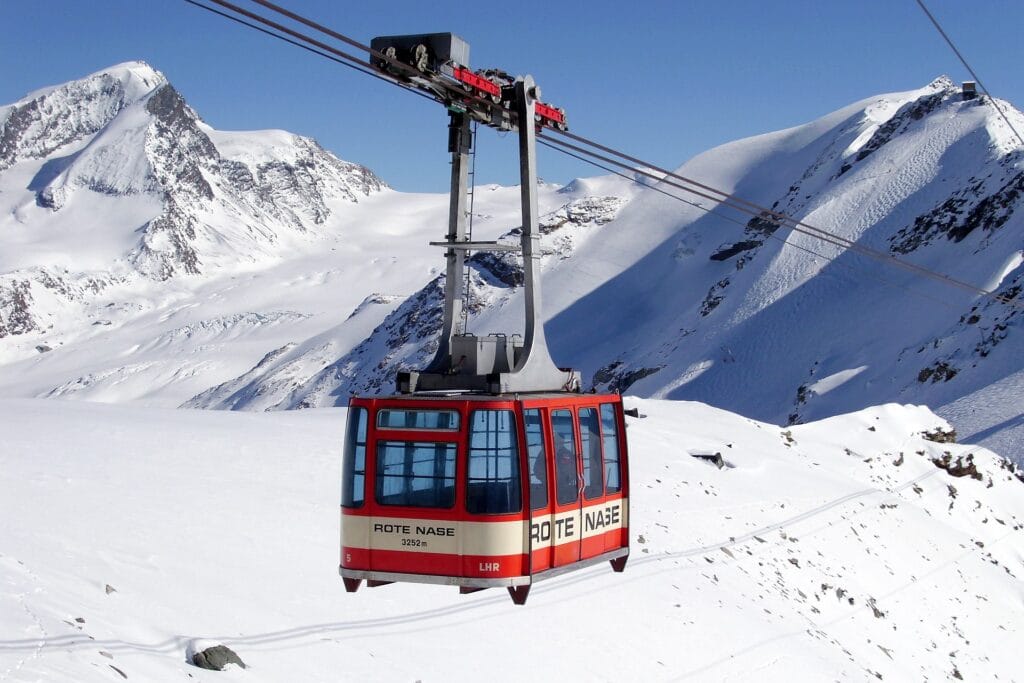
February is the busiest month on the Swiss mountain. The cantonal school sports holidays are staggered across it, British and German half-terms land in the middle, and the snow is still cold and deep. It is also carnival month, which is the one time of year the orderly Swiss stereotype collapses completely.
The numbers
Fasnacht – the carnival most visitors do not expect
Swiss carnival is organised around Ash Wednesday, which in 2027 falls on 10 February.
- Lucerne starts first, on Schmutziger Donnerstag – Thursday 11 February 2027 – with a dawn explosion in the old town and several days of masked Guuggenmusik brass bands playing deliberately out of tune.
- Basel is the big one, and it starts on the Monday after Ash Wednesday: Monday 15 February 2027. At exactly 4am the city lights go out for Morgestraich and the procession moves through darkness behind painted lanterns. It runs for three days and is inscribed on the UNESCO list of intangible cultural heritage.
- Book Basel accommodation months ahead for that week, and expect a different city from the one in the guidebooks.
The busiest weeks of the ski year
- Swiss school sports holidays are staggered by canton across February, so there is no single quiet week; the whole month runs full.
- Snow is usually at its deepest and still cold enough to hold quality, with noticeably more daylight and sun than January.
- Prices are at or near their annual peak, and popular resorts sell out.
- Weekends are worse than weekdays – Swiss day-trippers drive up on Saturday and Sunday, and the access roads and lift queues show it.
- The SLF avalanche bulletin from Davos remains the daily reference for anything off-piste.

What else February is for
- White Turf at St Moritz – horse racing on the frozen lake, run on February Sundays, and one of the strangest sporting spectacles in Europe.
- Thermal baths at Leukerbad, Vals, Scuol and Bad Ragaz, which are at their best now.
- Sledging and winter walking, both far cheaper than a lift pass and both widely signposted.
- Ticino, where Lugano and Locarno run several degrees milder and sunnier than the north.
- Above-the-fog viewpoints – the plateau inversion continues, so Rigi, Pilatus, Stanserhorn and the Schilthorn still pay off on a grey lowland day.
Where to go in February
- Basel and Lucerne for carnival – the single most distinctive thing happening in Switzerland this month.
- Zermatt, Verbier, Davos, St Moritz and the Jungfrau region for the big lift networks, if you have booked ahead.
- Smaller resorts – Grimentz, Bellwald, Elm, Braunwald – if you want snow without the February prices.
- Leukerbad, Vals and Scuol for thermal water and no lift pass.
- Lugano and Locarno for the mildest corner of the country.
Prices and crowds
This is the peak of the winter season on both. Book accommodation and any rail passes well ahead, and if you are flexible, look at the last week of February and the first of March, when the sports holidays are winding down. See what travelling Switzerland costs.
What to pack
Full winter kit: insulated jacket, hat, gloves, waterproof boots with grip. Sunglasses and high-factor sunscreen for the mountain – altitude and snow reflection burn even below freezing. Layers for the gap between a foggy plateau and a sunny 2,500 m ridge. Something you do not mind getting confetti in, if you are going to Fasnacht.
The February 2027 calendar
- Wednesday 10 February – Ash Wednesday, the anchor for the carnival dates.
- Thursday 11 February – Lucerne Fasnacht begins on Schmutziger Donnerstag.
- Monday 15 February, 4am – Morgestraich opens Basler Fasnacht; three days of processions follow.
- Through February – Swiss cantonal school sports holidays, staggered, plus British and German half-terms mid-month.
- February Sundays – White Turf horse racing on the frozen lake at St Moritz.
- No national public holidays fall in February in Switzerland.
Read alongside
- Switzerland in January – peak ski and the sea of fog.
- Switzerland in March – spring skiing and thawing valleys.
- Switzerland in April – a country in two seasons at once.
- Best time to visit Switzerland – all twelve months compared.
- Switzerland travel guide – regions, trains and how it fits together.
- Switzerland in 7 days – a first-visit route.
- Best things to do in Switzerland – the year-round list.
- Switzerland vs Austria – which Alps to pick.
Frequently asked
When is carnival in Switzerland in 2027?
Lucerne Fasnacht begins on Thursday 11 February and Basler Fasnacht opens with Morgestraich at 4am on Monday 15 February, running for three days. Both are anchored to Ash Wednesday, which falls on 10 February 2027.
Is February the busiest ski month in Switzerland?
Yes. Swiss cantonal sports holidays are staggered across the whole month and British and German half-terms land mid-month, so there is no quiet week.
How cold is Switzerland in February?
Zurich averages about 5°C by day and −1°C overnight, with Lugano milder at about 9°C. The mountains are far colder – roughly 0.6°C less for every 100 m of altitude.
Is there better snow in February than January?
Usually deeper, and with more daylight and sun. January is colder and quieter; February has the better all-round conditions and the worse crowds.
Are there public holidays in Switzerland in February?
No national ones. Carnival days are not official public holidays, though in Basel and Lucerne much of the city effectively stops anyway.
How do I ski Switzerland in February without the crowds?
Go midweek rather than at weekends, pick a smaller resort such as Grimentz, Bellwald, Elm or Braunwald, and aim for the last week of the month as the sports holidays wind down.
Is Basel carnival worth planning a trip around?
If you want to see something genuinely unlike the rest of Switzerland, yes. It is UNESCO-listed, it starts in complete darkness at 4am, and it books out months in advance.
Is it still foggy in the Swiss lowlands in February?
Often, yes. The winter inversion persists, so a grey day in Zurich or Bern is usually answered by taking a cable car above the cloud.
Switzerland month by month
- January – deep winter, peak ski, and fog on the plateau.
- February – the coldest weeks, carnival, and half-term crowds (this page).
- March – spring skiing and the first valleys thawing.
- April – snowmelt, closed passes, and a country in two seasons.
- May – waterfalls at full volume and the passes reopening.
- June – alpine flowers and the first full hiking month.
- July – peak summer, festivals and long days in the mountains.
- August – warm lakes, National Day and the busiest trails.
- September – the best hiking month and the cattle coming down.
- October – autumn colour, clear air and the passes closing.
- November – the quietest and cheapest month of the year.
- December – Christmas markets and the season opening.
You Might Also Love



Written by
John Morrison is the founder and lead travel writer at Packzup. Over the past decade he has explored destinations across Africa, the Americas, Asia, Europe, the Middle East, and Oceania — always self-funded, never on a press trip.
