
Last updated September 8, 2026 · Editorial policy
- Things to Do in Santiago: What Is Actually Worth Your Time
- How do you pay for the Metro in Santiago, and what does a ride cost?
- When is the Cerro San Cristóbal funicular closed, and what do the rides cost?
- What happens in Santiago during a declared winter air quality episode?
- Can you ski from Santiago in a day, and what are the rules on the road up?
- Which wine valleys are within a day of Santiago, and what is the drink-driving limit?
- How do you book a national park day trip out of Santiago?
- At a glance
- Frequently asked questions
More: When to visit Chile
Things to Do in Santiago: What Is Actually Worth Your Time
Quick answer: This is an honest look at Santiago: which popular attraction to think twice about, what to do with that time instead, and the spot most visitors never reach. It also covers the transit and money moves that save the most hassle.

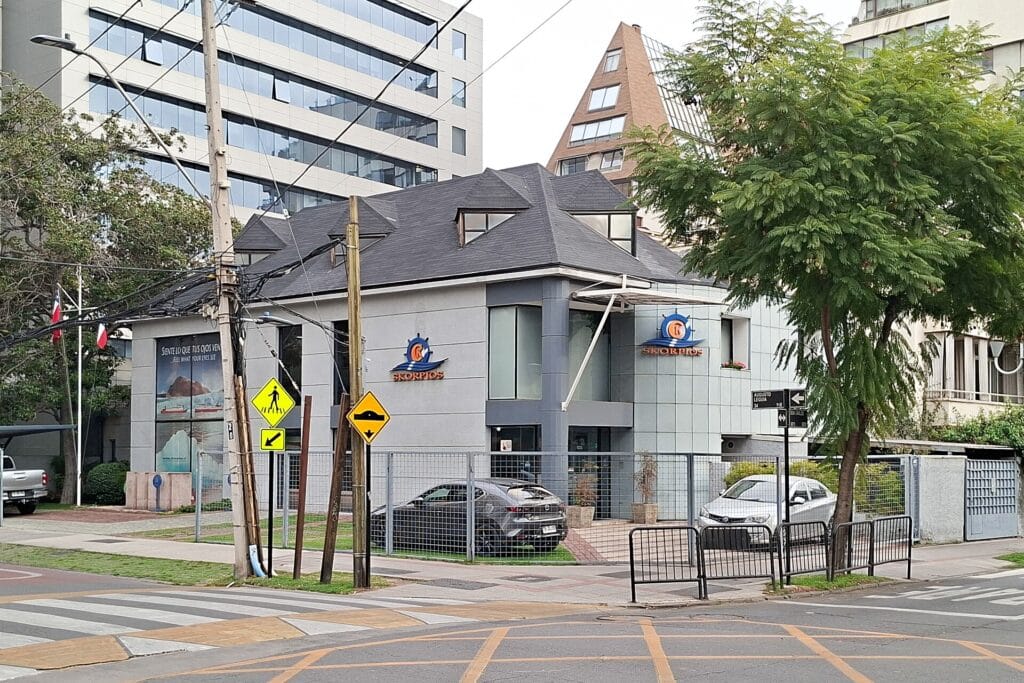
Skip the long lunch at Mercado Central. The 1872 fish hall still draws crowds, but the restaurants inside run an old hustle: hawkers wave you in, then steer you off the cheap blackboard special toward pricier plates once you sit. For the same seafood with locals actually eating beside you, walk ten minutes north over the river to La Vega Central, where the second-floor cocinerias serve a proper plate for a fraction of the price.
The pick most visitors walk past is Cerro Santa Lucia, the landscaped hill right downtown. Entry is free (you just sign the guest book), the climb to the Torre Mirador rewards you with Andes views, and the old cannon still fires at noon. It beats queuing for a paid lookout.
Two smart moves to save money:
- For the view, the free summit of Cerro San Cristobal rivals the paid deck at Sky Costanera (around 300 metres up the Gran Torre) on a clear day.
- Museo de la Memoria y los Derechos Humanos is free and sobering, but it closes Mondays, so plan Tuesday through Sunday.
How do you pay for the Metro in Santiago, and what does a ride cost?
You pay with a tarjeta bip!, a stored-value card that works on the Metro, the Red buses and the MetroTren Nos suburban train. Buy it at a Metro station before your first journey.
The Directorio de Transporte Público Metropolitano (DTPM) lists the fares in force from 22 February 2026. Metro costs 895 pesos in the peak band (punta), 815 pesos in the middle band (valle) and 735 pesos in the low band (baja). A Red bus is a flat 795 pesos at any hour. Peak runs 07:00 to 08:59 and 18:00 to 19:59 on weekdays; the low band covers 06:00 to 06:59 and 20:45 to 23:00; everything else on a weekday is valle, and the valle fare applies all day on Saturdays, Sundays and public holidays.
The card itself is not free and is not included in the fare. DTPM prices a bip! card at 1,550 pesos at Metro stations and sales points, rising to 2,800 pesos at a customer service office, before you load any travel credit. Budget for one per traveller.
The detail visitors miss is the transfer window. One fare buys up to two transfers within 120 minutes of the first validation, across buses, Metro and MetroTren Nos, with at most one Metro or train leg and no repeat of the same bus service. A bus, then Metro, then bus chain across the city costs one fare rather than three, which changes how far it is worth walking to reach a station.
It is not quite free, though, and this is the part the fare table buries. Combining a bus with the Metro or the train adds 100 pesos in the peak band and 20 pesos in the valle band on top of the fare. You also have to validate, to hacer bip!, on every single boarding: miss one and you lose the integrated fare for the whole chain.
Reduced fares exist but are tied to Chilean documentation. DTPM gives the student fare as 260 pesos and the senior bip! fare as 390 pesos across all modes, both on a personalised card issued against local paperwork. A short-stay visitor pays the adult fare.
Seven Metro services are in operation, numbered 1, 2, 3, 4, 4A, 5 and 6. Line 7, running 26 km and 19 stations between Renca and Vitacura, was around 40 per cent built at the start of 2026 with an opening projected for late 2028, so do not plan around it.
When is the Cerro San Cristóbal funicular closed, and what do the rides cost?
The funicular is closed on the first Monday of every month for maintenance, and on other Mondays it does not start until 13:00. Tuesday to Sunday it runs from 10:00, with the last descent at 18:45. That first-Monday rule is the commonest way a trip to the summit goes wrong, because the hill itself stays open and only the mechanical part is shut.
Access to Parque Metropolitano de Santiago, the park that covers the hill, is free. ChileAtiende, the government service portal, gives park opening as 06:00 to 19:00, Monday to Sunday including public holidays. Walking or cycling up costs nothing, and on a smog-episode day that is the option to reconsider rather than the funicular.
Two separate mechanical routes go up, from opposite sides of the hill, and they are ticketed separately. The funicular climbs from Pío Nono at the Bellavista end. The cable car runs Oasis to Tupahue to Cumbre from the Providencia side. Getting this wrong means a long walk back around the base.
The cable car is shut every Monday, all day, for maintenance. Its own ticketing site gives its hours as Tuesday to Sunday, 10:00 to 18:45. Combine that with the funicular’s Monday start of 13:00 and its first-Monday closure and a Monday arrival can find both machines out of service until the afternoon, or neither running at all.
On the official ticketing channels as of Sunday 6 September 2026, a funicular single from Pío Nono to Cumbre starts at 800 pesos, a return starts at 1,150 pesos, a Pío Nono to Pedro de Valdivia single starts at 2,840 pesos, and an all-day Vive el Parque pass starts at 8,000 pesos, with combined funicular and cable car tickets from 1,590 to 3,780 pesos. On the cable car the same day, a return from Oasis was listed from 4,050 pesos and a one-way Oasis to Cumbre from 3,150 pesos, at the same price for adults, children and older adults; the ticketing site counts a child as 2 to 11 inclusive.
Treat every one of those figures as a starting price and re-check it before you go. Every one is quoted as a desde, a from-price, and the amount actually charged moves with the day you travel, which is why a weekend figure and a weekday figure for the same ride can differ by hundreds of pesos. The park operator’s own site, parquemet.cl, refused connections to automated requests on 6 September 2026, so these come from the official ticketing site for each ride.
One more thing if you were planning to ride up. On weekends and public holidays, cyclists are restricted from continuing towards the summit from the Tupahue sector from 13:30, so an afternoon start on a Saturday will not get you to the top on a bike.
What happens in Santiago during a declared winter air quality episode?
The regional authority declares the episode for the following day and a set of legally binding restrictions switches on: on cars, on wood heaters and on industry. This is not advisory. It is written into the Plan de Prevención y Descontaminación Atmosférica for the Región Metropolitana and enforced.
The declaration season is fixed. The Gestión de Episodios Críticos, or GEC, runs from 1 May to 31 August each year. Episodes come in three levels: Alerta, Preemergencia and Emergencia.
Through the whole GEC period, regardless of any declaration, a permanent vehicle restriction applies to older green-seal vehicles registered up to and including 2011, and motorcycles up to 2010, in Santiago province plus San Bernardo and Puente Alto, on a rotating calendar of number-plate digits between 07:30 and 21:00. In 2026 that calendar opened on Monday 4 May with digits 8 and 9, then ran 0 and 1, 2 and 3, 4 and 5, and 6 and 7 on the following weekdays. Wood heaters are permanently banned across those same communes for the whole period, pellet systems excepted.
When an Alerta is declared, that wood heater ban extends across the whole region, still with pellet systems excepted. When a Preemergencia is declared, all wood heaters are prohibited region-wide including pellets, extra digits are added to the vehicle restriction, and large industrial sources that have missed their annual reduction targets have to stop.
The frequency is the useful number. The Superintendencia del Medio Ambiente recorded 21 critical episodes in the 2026 season: 18 alertas and 3 preemergencias for PM2.5, and 282 hours in critical conditions. It described that as the third best winter for air quality since the decontamination plan began in 1997, behind only 2020 and 2023. So on a two-week May-to-August visit, an episode day is likely rather than exceptional, and a preemergencia is not.
What to do about it as a visitor. First, if you have hired a car, check whether its plate falls under the day’s restricted digits before you drive, because the fine falls on the driver. Second, move the exertion, not the sightseeing: a hill walk on Cerro San Cristóbal or a run in the precordillera is the thing worth swapping for a museum. Third, take the declaration from the source. It is published by the environment authority for the Región Metropolitana at airerm.mma.gob.cl the evening before it takes effect.
Can you ski from Santiago in a day, and what are the rules on the road up?
Yes, in the southern winter, but the road is the constraint, not the snow. The ski areas above the city are reached on Ruta G-21, the mountain road out of Lo Barnechea, and that road carries a seasonal traffic regime that decides when you can go up and when you must come down.
For the 2026 season the regional transport authority set measures running 1 June to 30 September 2026. Over that period, buses and minibuses longer than 8 metres are prohibited on the G-21 in the commune of Lo Barnechea. Standard cars, minivans and four-wheel-drive vehicles are what the road takes. If you are buying a seat on a transfer, that length limit is the reason the vehicle will be a van rather than a coach.
The second measure is the one that shapes the day, and for 2026 it got stricter. The road runs one way at a time: uphill only from 08:00 to 13:00, downhill only from 15:00 to 20:00. In the 2025 notice those windows applied every day from 20 June to 7 July and then only on weekends and public holidays until 30 September, with two-way running on weekdays in between. From 24 July 2026 they apply Monday to Sunday, every day, until the winter season closes. Announcing it, the transport ministry acted with the public works ministry, the Municipalidad de Lo Barnechea, the tourism undersecretariat and Carabineros de Chile.
Read that carefully if you were counting on a weekday being easier. Under the 2026 regime there is no two-way weekday: if you are on the mountain at 13:30 you are staying until 15:00, whatever day it is.
Chains are the third. The June 2026 notice said Carabineros would assess the use of chains according to conditions on the route; the July 2026 announcement made carrying and using them a requirement for safe passage. Carabineros de Chile and the Municipalidad de Lo Barnechea enforce it at the control point, and the 2025 notice put the Farellones to Valle Nevado section on Ruta G-251 first in line for the requirement. Season dates, days and hours are set fresh each year, so read the current notice at transporteinforma.cl before you set off.
Put together, a ski day out of Santiago is bounded by the road windows rather than by lift opening hours. You need to be on the way up before 13:00 and off the mountain before 20:00, and a car that cannot legally descend until 15:00 makes a half day impossible.
Which wine valleys are within a day of Santiago, and what is the drink-driving limit?
The Maipo Valley is inside the Metropolitan Region itself, so the vineyards start at the city edge, and Chile’s legal blood alcohol limit of 0.3 grams per litre is what decides how you get there.
The zoning is a legal instrument, not a marketing region. Decreto N° 464 of 1994, published by the agriculture ministry and administered by the Servicio Agrícola y Ganadero, sets Chile’s viticultural zoning and denominations of origin. The decree was signed on 14 December 1994 and published in the Diario Oficial on 26 May 1995. Article 1 places the Maipo Valley as a subregion of the Valle Central region and defines it as all the provinces of the Metropolitan Region of Santiago, then names thirteen areas inside it including Santiago, Pirque, Puente Alto, Buin, Isla de Maipo, Talagante and Melipilla. The definitions are by commune and they are not the obvious ones: the decree’s Santiago area is bounded by the communes of Peñalolén and La Florida, Puente Alto takes in La Pintana, and Buin takes in Paine and San Bernardo.
The Casablanca Valley is a different wine region altogether. It is a subregion of the Aconcagua region, in the V Region of Valparaíso, and the decree defines it as the commune of the same name. Wines from it may carry the additional term Costa on the label where at least 85 per cent by volume of the wine comes from that subregion and has been declared as such to the Service. Article 3 sets the general rule: for any denomination of origin to be used on a label, at least 75 per cent of the wine must be produced with grapes from the named geographical place.
Knowing the decree is useful for a practical reason: it tells you which communes count as the valley, so you can judge how far you are actually going. Pirque and Buin are Maipo Valley areas on the southern edge of the metropolitan area. Casablanca is not in the Metropolitan Region at all.
Now the rule that governs the day. Chile’s Ley 20.580, in force since March 2012 and generally called the Ley de Tolerancia Cero, sets two thresholds. Between 0.3 and 0.8 g/L a driver is bajo la influencia del alcohol. At 0.8 g/L or above the driver is in estado de ebriedad, which is a criminal offence rather than an infringement. In the lower band, with no injury or damage, the licence is suspended for six months. In the upper band, article 196 of the Ley de Tránsito sets a ladder that the Supreme Court has repeatedly applied: two years’ suspension on a first offence even with no injury or damage, five years on a second and cancellation of the licence on a third. Professional drivers, meaning goods, passenger and school transport, are reported to be held to 0.0 g/L with no tolerance at all.
Two glasses at a tasting will not keep you under 0.3 g/L with any certainty, and the penalty is a suspension rather than a fixed penalty notice. Plan a valley day on the basis that whoever drives does not taste. The Metro network reaches Puente Alto on the southern edge of the Maipo Valley, which makes a rail leg plus a short local transfer a realistic alternative to driving from the centre.
How do you book a national park day trip out of Santiago?
Through pasesparques.cl, in advance and for a dated, timed slot, because that is the only channel CONAF uses to sell entry to the protected areas it manages.
Parque Nacional Río Clarillo, in the Cordillera province southeast of the city, is the closest of them to Santiago. It was created by Decreto Supremo 19 of the agriculture ministry, published in the Diario Oficial on 5 March 1982, and CONAF now classifies it as a national park. CONAF’s own page for it sends all visit planning to Pases Parques and states in terms that official information about Río Clarillo is available only from CONAF and from Pases Parques. Treat anything else, including third-party pages carrying tariff tables, as unverified. Trails there also close for reasons that have nothing to do with the season, and three were shut by river flooding when the page was checked on 6 September 2026, so read the trail status as well as the tariff before you commit to a route.
Do not take a park entry price from a secondary source. CONAF tariffs differ by nationality, age band and individual park, and are revised; Torres del Paine, for example, moved to a new tariff system on 1 May 2026. Read the fee on the booking page for your chosen date, at the moment you book.
The practical consequence of a timed-slot system is that a walk-up is not a plan. On a summer weekend the daily allocation for a park inside easy reach of a capital city is the binding constraint, so decide the date first and buy the slot, then arrange the transport around it.
At a glance
| What you are buying | Price in Chilean pesos | When it applies | Source checked |
|---|---|---|---|
| Metro fare, peak (punta) | 895 | Weekdays 07:00 to 08:59 and 18:00 to 19:59 | DTPM, in force from 22 February 2026 |
| Metro fare, middle (valle) | 815 | Weekdays 09:00 to 17:59 and 20:00 to 20:44; all day at weekends and on holidays | DTPM, in force from 22 February 2026 |
| Metro fare, low (baja) | 735 | 06:00 to 06:59 and 20:45 to 23:00 | DTPM, in force from 22 February 2026 |
| Red bus fare | 795 | Flat, all hours | DTPM, in force from 22 February 2026 |
| Student fare | 260 | All modes, personalised card only | DTPM |
| Senior bip! fare | 390 | All modes, personalised card only | DTPM |
| tarjeta bip! card | 1,550 at stations; 2,800 at a customer service office | One-off, excludes travel credit | DTPM and tarjetabip.cl |
| Funicular single, Pío Nono to Cumbre | from 800 | Tue to Sun 10:00, Mon from 13:00, last descent 18:45 | Official funicular ticketing site, 6 September 2026 |
| Funicular return | from 1,150 | Same hours; closed first Monday of each month | Official funicular ticketing site, 6 September 2026 |
| All-day unlimited pass | from 8,000 | One calendar day | Official funicular ticketing site, 6 September 2026 |
| Cable car return from Oasis | from 4,050 | Tuesday to Sunday 10:00 to 18:45; closed all day Monday | Official cable car ticketing site, Sunday 6 September 2026 |
| Cable car single, Oasis to Cumbre | from 3,150 | Same hours; same price for adults, children and older adults | Official cable car ticketing site, Sunday 6 September 2026 |
| Bus plus Metro or train transfer supplement | 100 peak, 20 valle | Added on top of the fare when combining a bus with Metro or MetroTren Nos | DTPM and tarjetabip.cl |
| Entry to Parque Metropolitano de Santiago | Free | 06:00 to 19:00 daily including holidays | ChileAtiende ficha 60851 |
Frequently asked questions
Do I need a tarjeta bip! for a short visit to Santiago?
Yes, if you intend to use the Metro or the Red buses at all. The card is the payment method for the network and it costs 1,550 pesos at a Metro station or sales point, or 2,800 pesos at a customer service office, on top of whatever credit you load. The reduced student and senior fares run on personalised cards issued against Chilean documentation, so a visitor pays the adult fare of 735 to 895 pesos on the Metro depending on the hour, or 795 pesos on a bus. One fare covers up to two transfers inside 120 minutes, which is worth planning around, though combining a bus with the Metro or the train adds 100 pesos at peak and 20 pesos in the valle band, and you must validate on every boarding to get the integrated fare at all.
Is Santiago’s winter smog bad enough to change my plans?
It is frequent enough to plan around, and the restrictions are legally binding rather than advisory. The critical episode season runs 1 May to 31 August. In 2026 the Superintendencia del Medio Ambiente logged 21 critical episodes, 18 alertas and 3 preemergencias, with 282 hours in critical conditions, and called it the third best winter since 1997. The practical effect on a visitor is that a hire car may fall under the day’s number-plate restriction and that strenuous outdoor activity is the item to move. Check the declaration at airerm.mma.gob.cl the evening before.
What time do I have to leave the ski area to get back to Santiago?
Before 20:00, and you cannot start down before 15:00. Ruta G-21 runs one way at a time: uphill only from 08:00 to 13:00 and downhill only from 15:00 to 20:00. From 24 July 2026 the transport ministry applied those windows Monday to Sunday, every day, until the winter season closes, so unlike the 2025 season there is no two-way weekday to fall back on. Chains are required and Carabineros de Chile and the Municipalidad de Lo Barnechea enforce the regime at the control point. Separately, from 1 June to 30 September 2026 buses and minibuses over 8 metres long are barred from the G-21 in Lo Barnechea. The regime is reset each year, so take the current dates and hours from transporteinforma.cl rather than assuming last year’s.
Can I visit the Maipo Valley without hiring a car?
Yes, and there is a good legal reason to. Decreto 464 of 1994, published in the Diario Oficial on 26 May 1995, defines the Maipo Valley as all the provinces of the Metropolitan Region and names areas including Santiago, Pirque, Puente Alto and Buin, so the valley begins where the city ends and the Metro network reaches its edge at Puente Alto. Chile’s limit for driving is 0.3 g/L, above which the offence is driving under the influence and the licence is suspended for six months even with no injury or damage. At 0.8 g/L it becomes estado de ebriedad, and article 196 of the Ley de Transito suspends the licence for two years on a first offence even where nobody is hurt. Anyone tasting should not be the one at the wheel.
Do I have to book a national park near Santiago in advance?
Yes. CONAF sells entry to the protected areas it manages only through pasesparques.cl, and slots are dated and timed. Its own page for Parque Nacional Río Clarillo directs all planning there and states that official information about the park comes only from CONAF and Pases Parques. Take the entry fee from the booking page on the day you book: tariffs differ by nationality, age band and park and are revised, as Torres del Paine’s move to a new tariff system on 1 May 2026 shows.
You Might Also Love


Written by
John Morrison is the founder and lead travel writer at Packzup. Over the past decade he has explored destinations across Africa, the Americas, Asia, Europe, the Middle East, and Oceania — always self-funded, never on a press trip.
