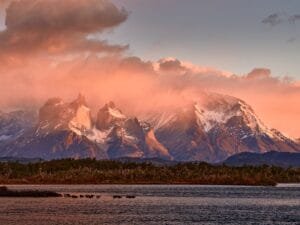
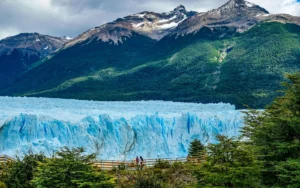
Quick verdict: They share Patagonia and the Andes; that’s where similarity ends. Argentina is the steak-and-tango, European-Latin hybrid with Buenos Aires nightlife and wine country. Chile is the geographic anomaly — desert north, lakes middle, glaciers south, with a quieter, more outdoorsy temperament. Here’s the breakdown.
Argentina
Best time: Oct-Apr (Patagonia summer) Daily cost: $60-130/day
Chile
Best time: Oct-Apr (Patagonia summer) Daily cost: $90-160/day
When to go: Argentina vs Chile
Measured, not guessed — five years of climate normals (WMO 1991–2020, or ERA5 2019–2023 where unavailable). Months are ranked by how close the average high sits to 25°C, penalised by wet days.
Argentina
Best month
November
Then expect
25°C · 7 wet days
Next best
February, March
Wettest month
January (10 wet days)
J28°January: average high 28.3 degrees Celsius, 10 wet daysF27°February: average high 27.1 degrees Celsius, 6 wet daysM25°March: average high 25.1 degrees Celsius, 9 wet daysA21°April: average high 21.4 degrees Celsius, 7 wet daysM18°May: average high 17.6 degrees Celsius, 5 wet daysJ15°June: average high 14.8 degrees Celsius, 7 wet daysJ14°July: average high 14.1 degrees Celsius, 7 wet daysA16°August: average high 15.7 degrees Celsius, 4 wet daysS18°September: average high 17.7 degrees Celsius, 6 wet daysO21°October: average high 20.9 degrees Celsius, 8 wet daysN25°November: average high 25 degrees Celsius, 7 wet daysD27°December: average high 27.1 degrees Celsius, 8 wet days
Chile
Best month
November
Then expect
26.4°C · 1 wet days
Next best
April, March
Wettest month
June (8 wet days)
J30°January: average high 29.7 degrees Celsius, 1 wet daysF30°February: average high 29.6 degrees Celsius, 1 wet daysM28°March: average high 28.1 degrees Celsius, 1 wet daysA24°April: average high 23.8 degrees Celsius, 2 wet daysM20°May: average high 19.5 degrees Celsius, 3 wet daysJ15°June: average high 15.4 degrees Celsius, 8 wet daysJ15°July: average high 15.1 degrees Celsius, 5 wet daysA17°August: average high 16.8 degrees Celsius, 5 wet daysS19°September: average high 18.5 degrees Celsius, 7 wet daysO23°October: average high 22.6 degrees Celsius, 3 wet daysN26°November: average high 26.4 degrees Celsius, 1 wet daysD30°December: average high 29.5 degrees Celsius, 0 wet days
Same window — both Argentina and Chile are at their best in November.
Chile is the drier bet at its peak — 1 wet days vs 7.
Biggest split is March — Chile is 3°C warmer that month.
Source: climate normals (WMO 1991–2020, or ERA5 2019–2023 where unavailable) via Open-Meteo, CC BY 4.0 — Packzup Travel Climate Dataset (open data).
Argentina vs Chile at a glance
Argentina
Chile
Best for
Steak, tango, Patagonia, wine
Diverse landscapes, Atacama to Patagonia
Vibe
Passionate, European-ish
Long, varied, orderly
Daily budget (mid-range)
$40–80
$50–90
Best time
Nov–Mar (Patagonia summer)
Nov–Mar; Atacama year-round
Don’t miss
Buenos Aires, Iguazú, Patagonia, Mendoza
Atacama, Torres del Paine, Santiago
The catch
Economic volatility
Pricier; a very long country
How Argentina and Chile compare on what matters
Patagonia
ArgentinaEl Calafate (Perito Moreno), El Chaltén (Fitz Roy hiking) — accessible mountain side.
ChileTorres del Paine, Carretera Austral — arguably the more iconic Patagonia.
Edge: Chile
Capital
ArgentinaBuenos Aires is one of Latin America most cosmopolitan cities — nightlife, food, tango, cafes.
ChileSantiago is functional and pleasant but smaller-scale; not a destination on its own.
Edge: Argentina
Wine
ArgentinaMendoza — world-class Malbec country; one of best wine regions on Earth.
ChileCasablanca, Maipo, Colchagua — top-tier wine country, especially Carmenere.
ChileSeafood, completos hot dogs, pisco sour — leaner cuisine, big on Pacific seafood.
Edge: Argentina
Argentina or Chile: the honest verdict
Argentina for Buenos Aires culture, wine country, beef-heavy food, Iguazú Falls, more budget value. Chile for geographic variety, Atacama Desert, Torres del Paine, calmer pace. Many travelers do both — Buenos Aires → Mendoza → Patagonia → cross to Chile → Atacama or Easter Island. 3-week ideal.
Ready to book? Compare tours and tickets for both.
Choose Argentina if you want steak, tango, wine country, and Iguazu Falls wrapped in big-city culture. Choose Chile if you want raw landscape extremes from desert to glaciers. The deciding factor in 2025 and 2026 is no longer price: Argentina has lost its bargain reputation, so pick on experience instead.
The cost reset. Argentina’s old blue-dollar discount is gone after the peso devaluation, inflation was still running near 33 percent in May 2026, and many travelers now find Buenos Aires priced like Western Europe. A good Mendoza Malbec still runs about $15 a bottle in the capital, which remains a genuine bright spot.
Chile’s signature. San Pedro de Atacama delivers 300-plus clear nights a year for world-class stargazing, then the country drops you into Torres del Paine, where high-season park entry is around $35.
Argentina’s signature. Iguazu Falls and Buenos Aires nightlife have no Chilean equal.
Culture, food, and city life? Argentina. Desert-to-Patagonia scenery? Chile.
Frequently asked questions
Can I do both Argentina and Chile?
Yes — they share Patagonia. Many travelers fly Buenos Aires → Mendoza → cross Andes by bus to Santiago, or fly El Calafate → Punta Arenas for the Torres del Paine extension. 3 weeks minimum for both done well.
Which has better Patagonia?
Subjective — both are world-class. Chile’s Torres del Paine is more iconic for hiking (the W trek). Argentina’s El Chaltén area (Fitz Roy) is arguably equally stunning and cheaper. Perito Moreno Glacier (Argentina side) is the more dramatic glacier viewing.
Is Argentina cheaper?
Often yes — Argentine peso volatility means dollars stretch far in good years. Chile’s economy is more stable; prices are higher and steadier. Argentina averages $60-130/day vs Chile $90-160/day.
Which has better wine?
Both are world-class. Argentina is the king of Malbec (Mendoza is the headline region). Chile leads on Carmenere and offers easier multi-valley wine tours from Santiago (Casablanca + Maipo + Colchagua doable in 3 days).
Which is safer?
Both rank well by Latin American standards. Chile is generally rated safer overall. Buenos Aires has petty crime issues in tourist zones; Santiago is calmer. Patagonia in both countries is extremely safe.
Some links on Packzup are affiliate links. We may earn a small commission at no extra cost to you. We only recommend partners we trust.
John Morrison is the founder and lead travel writer at Packzup. Over the past decade he has explored destinations across Africa, the Americas, Asia, Europe, the Middle East, and Oceania — always self-funded, never on a press trip.