
Indonesia travel guide
Indonesia travel guide: Bali, the islands, and the wider archipelago
Indonesia is the world's largest island nation - 17,000 islands across three time zones. We cover Bali in depth; the rest of the archipelago (Java, Sumatra, Komodo, Flores, Sulawesi) deserves your second trip.
Destinations we cover in Indonesia
Country overview
Indonesia is tropical-monsoon. Bali's dry season May-October is the sweet spot. Visa on arrival (~$35) or 60-day pre-arranged visa. New tourist tax (150,000 IDR / $10) on Bali arrival.
- Language
- Bahasa Indonesia + 700+ local languages. English common in Bali tourist areas; less elsewhere.
- Currency
- Indonesian Rupiah (IDR). ATMs widely available; small denominations useful.
- Best time to visit
- May-October for Bali dry season. April and November are sweet shoulder months. Wet season (Nov-March) has lower prices and afternoon-only rain.
- Trip highlights
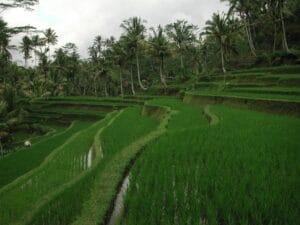
- Bali's Ubud rice terraces + Uluwatu cliffs + Canggu surf + traditional Hindu culture + tropical island week-long stay.
Indonesia beyond Bali: regions, routes & costs
Indonesia is vast — 17,000 islands — and Bali is just the start. The highlights for most trips:
- Bali & the Gilis: beaches, culture, the easy on-ramp.
- Java: the temples of Borobudur and Prambanan, Yogyakarta, and volcano hikes (Bromo, Ijen).
- Lombok: quieter beaches and Mount Rinjani.
- Komodo: dragons, pink beaches and world-class diving from Labuan Bajo.
- Sumatra: jungle and orangutans (Bukit Lawang), off the beaten path.
When & costs
Dry season is April-October. Indonesia is budget-friendly — $25-50/day backpacker, more in Bali's resort areas. Domestic flights link the islands cheaply.
Most travelers get a 30-day Visa on Arrival. See Bali guide and the cost index.
How to structure a first trip across Indonesia
Pick two islands rather than five. Every extra island on the plan adds a flight, an airport transfer, a change of hotel and a half day that disappears into logistics instead of sightseeing.
A two-week first trip works well as Java plus Bali, or Bali plus one island to the east. Java first means landing in Jakarta, flying on to Yogyakarta in about an hour and ten minutes, and giving Yogyakarta four or five days. Borobudur sits roughly 40 km northwest of the city, close enough for a morning run out by road, with Prambanan on the opposite side. From there the route continues east towards Bali rather than doubling back to Jakarta.
The alternative treats Bali as a hub rather than the destination. Denpasar has the widest domestic network in the eastern half of the country, and Labuan Bajo in Flores is about an hour and ten minutes away by air, Lombok about 50 minutes. Komodo National Park then needs two or three days based in Labuan Bajo, because the park islands are one to two hours out by speedboat and around two and a half hours by local ferry.
Sumatra suits a second or third trip. Jakarta to Medan is roughly two hours by air, and the ground legs beyond it are long: about four hours by road to Bukit Lawang and four to six hours to Lake Toba. Anyone with under two weeks should leave it off the map.
Getting around: flights, fast boats and the Java rail line
Domestic flights do most of the work and ferries fill only the short gaps. The distances between the main islands are large enough that surface travel between them is a choice about the experience rather than a practical shortcut.
Air is the default for anything crossing open sea. Jakarta to Yogyakarta runs about one hour ten. Jakarta to Labuan Bajo is around two and a half hours direct, or closer to four routed through Denpasar. Denpasar to Lombok is about 50 minutes and Denpasar to Labuan Bajo about an hour and ten. Domestic legs are usually sold as separate tickets, so a missed connection is not protected and a 90-minute layover is too tight.
Fast boats cover the Bali to Lombok and Gili corridor in anything from about 90 minutes to four hours or more depending on the departure port, with Padangbai the shortest crossing and the Serangan and Sanur departures considerably longer. These sailings are weather-dependent and cancellations cluster in the wet months, so a fast boat on the day before an international departure is a bad bet.
Java has a real intercity rail network, which no other island matches. Jakarta to Yogyakarta by train takes around six hours, competitive with flying once airport time is counted. Elsewhere the road is the only option and average speeds are low, so overland legs in Sumatra and Flores should be read in hours rather than kilometres.
| Route | Mode | Typical journey time |
|---|---|---|
| Jakarta to Yogyakarta (Java) | Flight or intercity train | About 1h 10m by air; about 6h by rail |
| Jakarta to Medan (Sumatra) | Flight | About 2h |
| Bali to Lombok | Flight from Denpasar, or fast boat from an east or south coast port | About 50m by air; about 1.5h by boat from Padangbai, 4h or more from Sanur |
| Denpasar to Labuan Bajo (Flores) | Flight | About 1h 10m |
| Labuan Bajo to Komodo park islands | Speedboat or local ferry | About 1-2h; about 2.5h by ferry |
Indonesia Travel Guide FAQ
Is Indonesia just Bali?
Far from it — Java's temples, Komodo's dragons and Sumatra's jungles are all highlights.
How much does Indonesia cost?
Budget-friendly — roughly $25-50/day, higher in Bali's resort zones.
Compare Indonesia with other destinations
Still deciding where to go? See how Indonesia stacks up head-to-head:
Torn between destinations? See our honest comparisons: Philippines vs Indonesia, Indonesia vs Malaysia, Thailand vs Indonesia, Vietnam vs Indonesia.
Plan the practical side: IS Indonesia Safe to Visit.
How far does your money go? Read our Global Travel Affordability Report 2026 — 200 countries ranked by cost, with the cheapest regions and countries to travel.
Best time to visit Indonesia (real climate data)
Best months: August, September, July.
Indonesia’s warmest month is September (avg 33°C / 91°F), the coolest is July (low 23°C / 74°F). The wettest is February (381 mm) and the driest is August.
Source: Open-Meteo / WMO climate normals (WMO 1991–2020, or ERA5 2019–2023 where unavailable). See the full month-by-month weather →
You Might Also Love

Before you go: see whether they speak English in Indonesia and what to wear, check the tap water, sort your mobile data, and find out if it is a cash or card destination, and brush up on local etiquette.
