
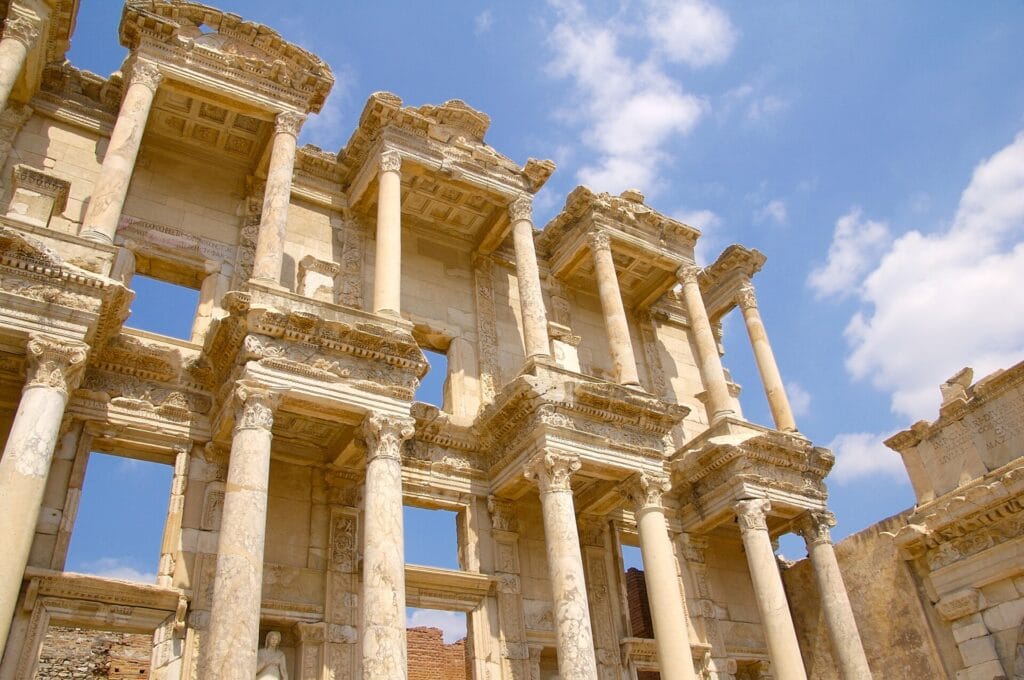
July is peak summer in Turkey. Istanbul reaches about 29°C and is almost rainless, the Mediterranean coast runs in the mid-thirties, the sea is at 26°C, and both Turkish and European holidays are in full flow. The classical sites become genuinely hard work in the middle of the day, the coast is at capacity – and the compensation is the warmest sea of the year and the long Turkish summer evening.
The heat, and how to work with it
Turkey’s great sites are unshaded stone. Ephesus, Pamukkale, Aphrodisias and the Cappadocian valleys at 35°C in the early afternoon are an endurance exercise rather than a pleasure.
The structure that works:
- Sites at opening. Ephesus at 08:00 is a different place from Ephesus at 13:00, both in temperature and in coach traffic.
- Middle of the day at the coast, in a hammam, or indoors. Istanbul’s covered bazaars, museums and the Basilica Cistern all work.
- Evenings late. Turkey eats late in summer and the coastal towns come alive after nine.
- Balloons stay excellent – Cappadocia’s dawn flights are cool and reliability is high.
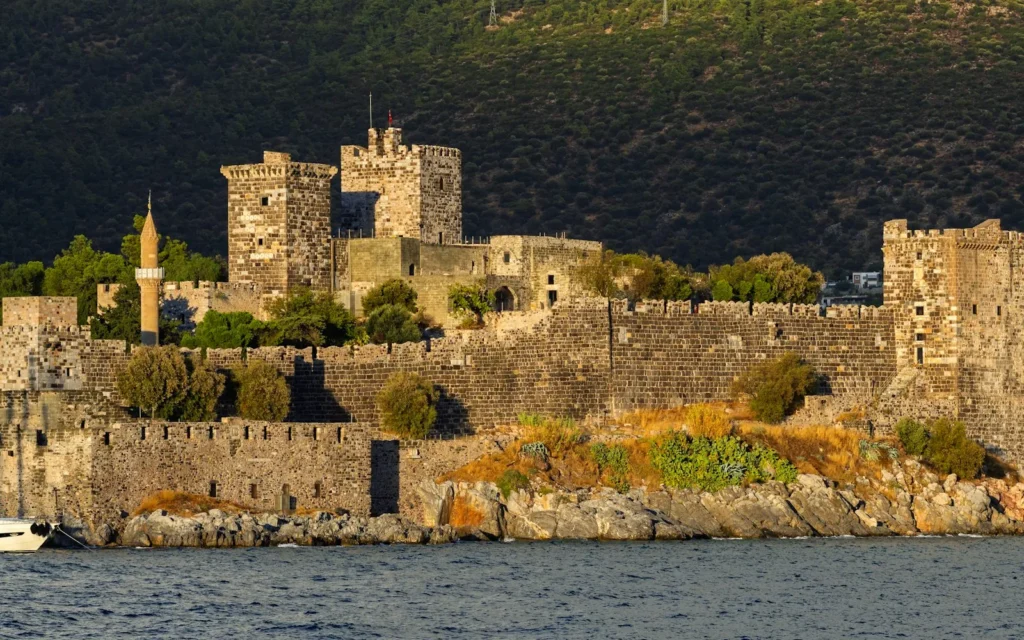
Weather by region
- Istanbul – about 29°C by day and 21°C at night, with roughly 22 mm of rain. Humid, but the Bosphorus breeze helps and the evenings are long.
- Cappadocia – hot and very dry at around 29°C by day but only 14°C at night, with almost no rain. The altitude means genuinely cool mornings.
- The Mediterranean coast – Antalya, Kas and Fethiye in the mid-thirties, often higher inland, with the sea at about 26°C.
- The Aegean – Bodrum, Cesme and Kusadasi in the low thirties, with the meltem blowing hard most afternoons. It keeps the coast liveable and makes Cesme and Alacati two of the best windsurfing spots in Europe.
- Eastern Anatolia – hot by day, cool at night, and the best season for Lake Van, Mount Nemrut and the high routes.
Democracy and National Unity Day, 15 July
Continue planning your Turkey trip
Thursday 15 July 2027 is a national public holiday commemorating the failed coup attempt of 2016. Expect commemorations, flags across the cities, and closures of government offices and banks. Bridges and public buildings are illuminated, and there are ceremonies at the Bosphorus bridge in Istanbul. Tourist sites operate normally.
Where to go in July
- The Aegean over the Mediterranean. The meltem makes Bodrum, Cesme and Datca several degrees more comfortable than Antalya.
- Cappadocia mornings – cool at 14°C at dawn, and the hiking in the Rose and Ihlara valleys works before ten.
- The Black Sea coast – the contrarian answer. Trabzon, Rize and the Kackar mountains are green, cooler and wetter, with the yayla highland pastures at their best. It is the one part of Turkey that is not dry in summer.
- Eastern Anatolia, where altitude does the work.
Prices and crowds
At or near the annual peak. Turkish and European school holidays overlap, coastal resorts run at capacity, and Cappadocia cave hotels and balloon slots book weeks ahead. Istanbul is the relative exception – many residents leave, and city hotel rates are lower than in May or September.
See how much a trip to Turkey costs.
What to pack
The lightest clothing you have, a wide hat, strong sunscreen, sunglasses and a refillable bottle. Add a light layer for Cappadocia dawns and the meltem, water shoes for pebble coves, and modest clothing for mosques. See what to do in Turkey.
The July 2027 calendar
- Through July – peak season on both coasts; resorts at capacity.
- Late June or early July – Kirkpinar oil wrestling at Edirne.
- Thursday 15 July – Democracy and National Unity Day, a national public holiday.
- Through July – the meltem blows on the Aegean; peak windsurfing at Alacati.
- Through July – Cappadocia balloons reliable, and dawn is the only cool part of the day.
- Through July – the sea reaches about 26°C on the Mediterranean.
- Through July – the Black Sea highlands and eastern Anatolia at their best.
Read alongside
- Turkey in June – the best month, and the best fortnight of it.
- Turkey in August – the hottest weeks and the busiest coast.
- Best time to visit Turkey – all twelve months compared.
- Cappadocia in July – the region in detail this month.
- How much a trip to Turkey costs – peak-season numbers.
- Best time to visit Istanbul – and why summer is cheaper there.
- Turkey travel guide – regions and how to combine them.
Frequently asked
How hot is Turkey in July?
Istanbul averages about 29°C by day and 21°C at night, Cappadocia around 29°C with cool 14°C nights, and the Mediterranean coast sits in the mid-thirties with the sea at about 26°C.
Is July a good time to visit Turkey?
For the beaches and the warmest sea, yes. For Ephesus, Pamukkale and the inland ruins it is the hardest month – they are unshaded and exhausting after mid-morning. Go at opening and use the middle of the day for the coast or indoors.
What is the meltem?
The strong northerly wind that blows down the Aegean most summer afternoons. It makes Bodrum, Cesme and Datca noticeably more comfortable than the Mediterranean coast, and it is why Alacati is one of Europe’s best windsurfing spots.
Is Istanbul cheaper in July?
Often yes. Many residents leave for the coast and city hotel rates fall below their May and September levels, even though the coastal resorts are at their most expensive.
Do balloons fly in Cappadocia in July?
Yes, and reliably. Dawn temperatures are around 14°C so the flight itself is comfortable, and cancellation rates are far lower than in winter. Slots book weeks ahead in high season.
What is 15 July in Turkey?
Democracy and National Unity Day, a national public holiday commemorating the failed coup attempt of 2016. Government offices and banks close; tourist sites stay open.
Where is cooler in Turkey in July?
The Black Sea coast and the Kackar mountains – green, wetter and several degrees cooler, and the only part of Turkey that is not dry in summer. Eastern Anatolia and Cappadocian mornings also work.
How warm is the sea in Turkey in July?
About 26°C on the Mediterranean and slightly cooler on the Aegean, where the meltem stirs the water. It keeps warming into September.
You Might Also Love


Written by
John Morrison is the founder and lead travel writer at Packzup. Over the past decade he has explored destinations across Africa, the Americas, Asia, Europe, the Middle East, and Oceania — always self-funded, never on a press trip.
