
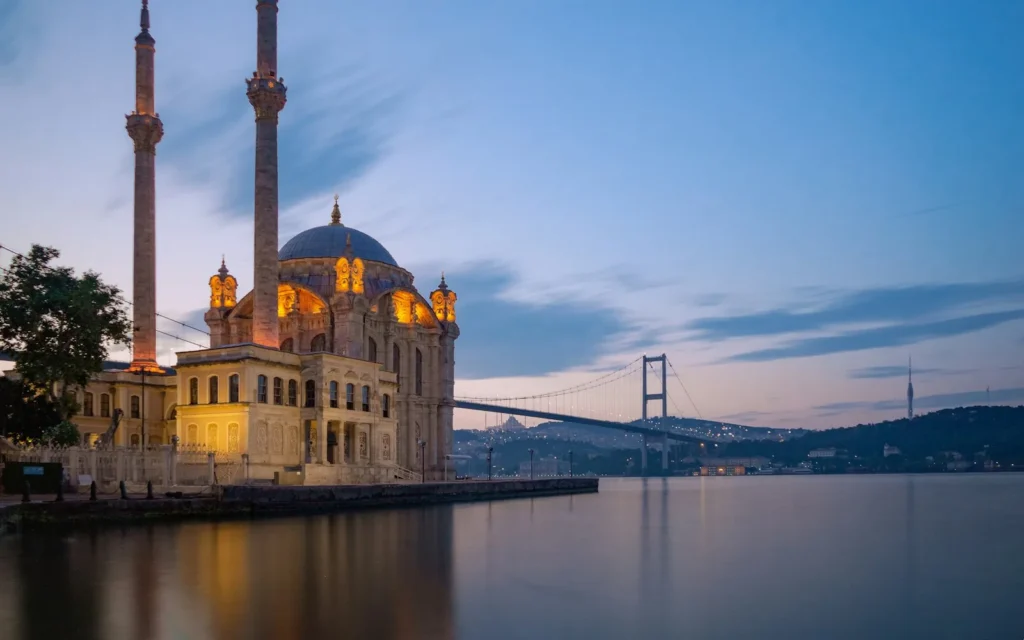
March is the turn of the Turkish year. Ramadan ends and Ramazan Bayrami runs from Tuesday 9 to Thursday 11 March 2027, the ski season winds down, Istanbul starts to dry out at around 12°C, and the almond and Judas trees come into flower along the Bosphorus. It is still low season and still cheap, with the first genuinely pleasant days of the year at the end of the month.
Ramazan Bayrami, 9–11 March 2027
Also called Seker Bayrami, the sugar feast. The eve (arefe) is Monday 8 March, with the official holiday running Tuesday 9 to Thursday 11 March 2027 – roughly three and a half days, and governments frequently extend it to bridge to the weekend.
What it means for a visitor:
- Domestic travel is at one of its two annual peaks. Intercity buses, trains and flights sell out well in advance, and the roads out of Istanbul are heavy on the arefe.
- Many shops and offices close, though restaurants, hotels and major sights in tourist areas keep running.
- Coastal and Cappadocia hotels fill with Turkish families, and rates rise for the period.
- It is a warm occasion – families visit elders, children go door to door for sweets, and cologne and Turkish delight are offered to visitors everywhere.
Book any internal transport around those dates weeks ahead, or plan to stay put.
Weather by region
- Istanbul – about 12°C by day and 5°C at night, with roughly 70 mm of rain. Still changeable, but the light returns and the Bosphorus ferries become pleasant again.
- Cappadocia – around 9°C by day and near freezing at night, with snow possible into the month and the valleys greening at the end.
- The Mediterranean coast – Antalya reaches the high teens to low twenties; the sea is still cold but the walking is excellent.
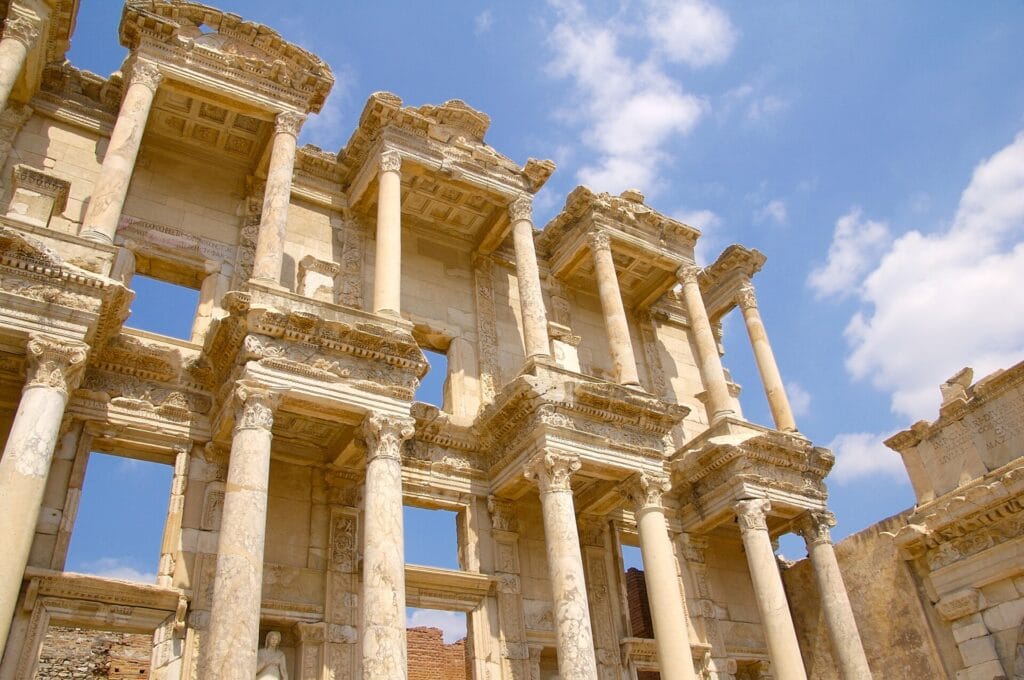
- The Aegean – Izmir, Ephesus and Pamukkale are green, mild and empty. This is one of the best months for the classical sites.
- Eastern Anatolia – still winter; high passes stay closed and Erzurum keeps skiing into April.
The Lycian Way and the classical sites
Continue planning your Turkey trip
March is the best hiking month in southern Turkey. The Lycian Way, the 500-kilometre waymarked route along the Mediterranean coast from Fethiye towards Antalya, is at its finest now: wildflowers, green hillsides, cool walking temperatures and no crowds. By July the same route is punishing.
The same applies to Ephesus, Pamukkale, Aphrodisias and Priene. These are unshaded sites that become exhausting in summer, and in March they are green, cool and near-empty – before the Kusadasi cruise season fills Ephesus from April.
Nevruz, 21 March
The spring equinox is celebrated as Nevruz across eastern and south-eastern Turkey and among Kurdish communities, with bonfires, jumping over the flames, music and large public gatherings. It is a significant cultural occasion in the east and marked more quietly elsewhere.
What March is good for
- The classical sites – Ephesus, Pamukkale and the Aegean coast at their best.
- Hiking – the Lycian Way and the Cappadocian valleys.
- Istanbul, drying out, cheap and with the Judas trees starting along the Bosphorus.
- Value, in the three weeks outside the bayram.
- Spring skiing at Palandoken and Erciyes, which run into April.
Prices and crowds
Low, apart from the 8–11 March bayram window, which is one of the two busiest domestic travel periods of the year. Outside it, March is among the cheapest months, and from late March the coast begins to reopen ahead of April.
See how much a trip to Turkey costs.
What to pack
Layers and a waterproof – March is changeable everywhere and still cold in Cappadocia and the east. Add proper walking shoes for the Lycian Way and the ruins, and modest clothing for mosques. Sunglasses matter more than you would think; the light is strong between fronts. See what to do in Turkey.
The March 2027 calendar
- Around Monday 8 March – arefe, the eve of the bayram; roads out of Istanbul are heavy.
- Tuesday 9 – Thursday 11 March – Ramazan Bayrami; domestic transport sells out and coastal hotels fill.
- Sunday 21 March – Nevruz; bonfires and gatherings across eastern and south-eastern Turkey.
- Through March – the best month for Ephesus, Pamukkale and the Lycian Way.
- Late March – Judas trees and tulips begin in Istanbul; the coast starts reopening.
- Late March – the clocks go forward; Turkey remains on UTC+3 year-round, so daylight simply lengthens.
- Through March – spring skiing continues at Palandoken and Erciyes.
Read alongside
- Turkey in February – Ramadan and the best snow.
- Turkey in April – the tulip season and the start of the coast.
- Best time to visit Turkey – all twelve months compared.
- Cappadocia in March – the region in detail this month.
- Turkey 10-day itinerary – a route that suits spring.
- How much a trip to Turkey costs – shoulder-season numbers.
- Turkey travel guide – regions and how to combine them.
Frequently asked
When is Ramazan Bayrami in 2027?
The eve is Monday 8 March and the official holiday runs Tuesday 9 to Thursday 11 March 2027. Governments often extend it to bridge to the weekend, so check the announced dates before booking internal travel.
Should I avoid Turkey during the bayram?
Not avoid, but plan. It is one of the two busiest domestic travel periods of the year: intercity buses, trains and flights sell out, roads are heavy, and coastal and Cappadocia hotels fill. Book weeks ahead or stay in one place.
Is March a good time to visit Turkey?
For the classical sites and hiking, it is one of the best months – Ephesus, Pamukkale and the Lycian Way are green, cool and empty. It is still low season outside the bayram, and Istanbul is drying out.
How warm is Turkey in March?
Istanbul averages about 12°C by day and 5°C at night with roughly 70 mm of rain. Cappadocia is near 9°C with cold nights, and the Mediterranean coast reaches the high teens to low twenties.
Can you swim in Turkey in March?
No. Both the Aegean and Mediterranean are at or near their annual low, and the sea does not become comfortable until late May or June.
What is Nevruz?
The spring equinox festival on 21 March, celebrated with bonfires, music and large gatherings across eastern and south-eastern Turkey and among Kurdish communities. It is a major occasion in the east and quieter elsewhere.
Is the Lycian Way good in March?
It is arguably its best month – wildflowers, green hills, cool walking temperatures and no crowds. The same route in July is genuinely punishing.
Does Turkey change its clocks?
No. Turkey moved to permanent UTC+3 in 2016 and no longer adjusts for summer time, so daylight simply lengthens through the spring.
You Might Also Love




Written by
John Morrison is the founder and lead travel writer at Packzup. Over the past decade he has explored destinations across Africa, the Americas, Asia, Europe, the Middle East, and Oceania — always self-funded, never on a press trip.
