Frequently asked questions
Bangkok at a glance: best around Dec–Feb (22–32°C days, mostly dry) · Plugs A,B,C,O (230 V) · drives left · ERA5 climate data
More: When to visit Bangkok · Bangkok travel guide
More: When to visit Bangkok · Bangkok travel guide
Bangkok travel FAQ: everything first-time visitors ask
Bangkok is one of the world's most-visited cities and one of its most confusing first-time experiences. Here are honest answers to the questions that come up most often.
Is Bangkok safe for travelers?
Yes — Bangkok is broadly safe for travelers, including solo women. Violent crime against tourists is rare. The real risks are scams (gem-shop scams near the Grand Palace, tuk-tuk drivers offering 'special deals,' fake monks asking for donations) and traffic safety when crossing streets or riding scooters. Petty pickpocketing happens at Khao San Road and crowded markets. Drug laws are very strict.
How much does a trip to Bangkok cost?
Bangkok remains a high-value destination. Budget travelers manage on $30-50/day with hostels and street food. Mid-range travelers spend $80-150/day with comfortable Sukhumvit or Silom hotels, taxis, mid-range restaurants, and one nice rooftop bar. Luxury travelers spend $300+/day at Mandarin Oriental, Peninsula, or Banyan Tree. See our Bangkok travel budget.
What's the best time to visit Bangkok?
November to February (cool, dry season) is the unambiguous sweet spot — comfortable temperatures (25-32C), low humidity, blue skies. March to May brings extreme heat (38-40C+). June to October is monsoon season with afternoon storms but lower prices. See our month-by-month Bangkok guide.
How many days do I need in Bangkok?
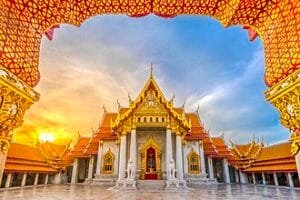
Three to four days covers the essentials — Grand Palace and Wat Pho, Wat Arun at sunset, a Chinatown street-food crawl, one rooftop bar, and one neighborhood exploration day. Five days lets you add a day-trip to Ayutthaya or the Damnoen Saduak floating market without rushing.
Do I need a visa to visit Bangkok?
Travelers from most Western countries (US, UK, EU, Australia, Canada) get 30-60 days visa-free on arrival. From mid-2025, Thailand requires TDAC (Thailand Digital Arrival Card) online before flight — it's free, takes 3 minutes, and replaces the old paper form. Confirm at the official Thai e-visa site before booking.
Can you drink the tap water in Bangkok?
No — Bangkok tap water is not safe to drink. Bottled water is everywhere for 10-15 baht ($0.35). Ice in restaurants and bars is generally safe (it's made from purified water), but ask if you're unsure.
What language is spoken in Bangkok and is English common?
Thai is the official language. English is common in tourist areas (Sukhumvit, Silom, Khao San) and at major hotels and restaurants. Outside tourist zones, English is limited — learn a few words (sawadee for hello, khob khun for thank you) and use Google Translate. Taxi drivers often don't read English, so have your destination written in Thai or shown on the Grab app.
What's the food culture like in Bangkok?
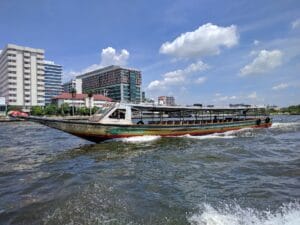
Bangkok is one of the world's great food cities — from $1 street food at Yaowarat to Michelin-starred Thai (Sorn, Le Du). Don't miss: pad krapow (basil minced pork over rice), khao soi (northern curry noodles), boat noodles, mango sticky rice, and street satay. Even simple food courts (in Terminal 21, EmQuartier) are excellent.
Is Bangkok a good destination for first-time international travelers?
Yes — with caveats. The food, culture, and accommodation are exceptional, and English is widely spoken in tourist areas. But the traffic, scale, and street-scam awareness needed make it more intense than Bali or Tokyo. First-time international travelers should base in Sukhumvit or Silom for easy BTS Skytrain access.
What should I avoid doing in Bangkok?
Don't believe anyone outside the Grand Palace who says it's 'closed for a ceremony' (always a scam). Don't ride a tuk-tuk without confirming the meter price first. Don't disrespect images of the King or Buddha. Don't take drugs. Don't eat from street stalls that look unrefrigerated. Don't haggle aggressively — Thai culture values politeness.
Keep planning — more from Packzup: How to Get From Suvarnabhumi Airport to Bangkok: All Options Compared