
Last updated September 8, 2026 · Editorial policy
Quick take: Norway has a clear sweet spot — But the ‘wrong’ months aren’t always wrong. It depends on what you’re after. Norway has two seasons: fjord summer (May-Sep) for waterfalls, hiking, midnight sun; and aurora winter (Nov-Feb) for Northern Lights and skiing in the dark.
Planning a trip to Norway? Here is the honest, current view on when to go — and when to avoid. We have travelled there at least twice across different seasons and these notes reflect what actually worked.
Best time to visit Norway: at a glance
Short answer: June to August for the fjords; September to March for the Northern Lights.
| Season | Months | What to expect |
|---|---|---|
| Peak | Jun–Aug | Midnight sun, hiking, fjord cruises; busiest |
| Shoulder (best value) | May, Sep | Fewer crowds, autumn colour |
| Low | Oct–Apr | Cold and dark — but prime aurora season |
Best months to visit Norway
Norway has two seasons: fjord summer (May-Sep) for waterfalls, hiking, midnight sun; and aurora winter (Nov-Feb) for Northern Lights and skiing in the dark.
Month-by-month overview
When to avoid Norway
October and April are awkward shoulder months — too late for autumn, too early for aurora; many mountain roads closed.
Key events and festivals
- Midnight sun in Lofoten (Late May to mid-July): Sun does not set above the Arctic Circle.
- Bergen International Festival (Late May to early June): Two weeks of music, dance, and theatre.
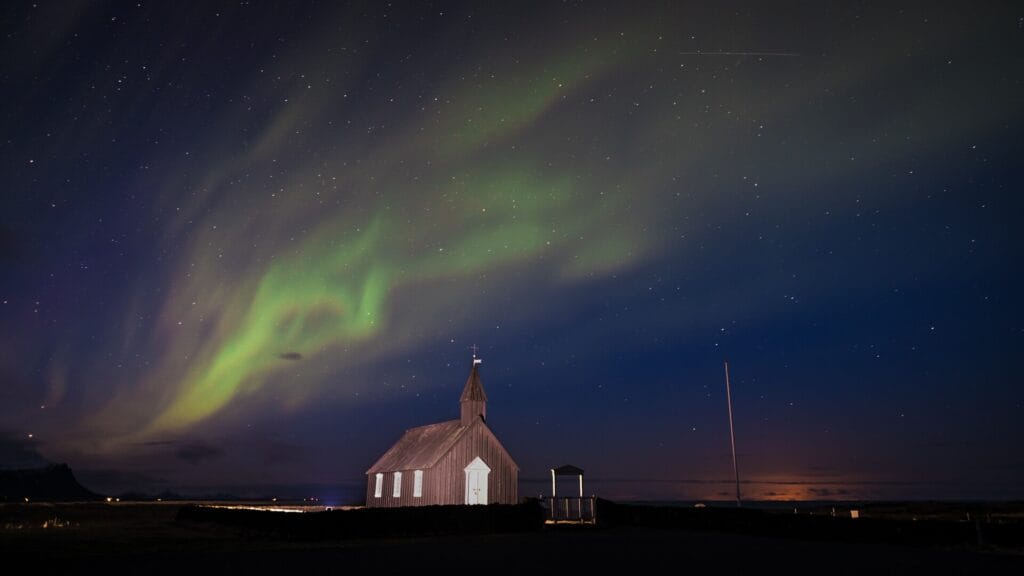
- Aurora season (October to March): Best in Tromsø, Alta, Senja, and Lofoten.
- Constitution Day (May 17): Parades and national dress; book Oslo hotels well ahead.
Why September Beats May as Norway’s Shoulder-Season Pick
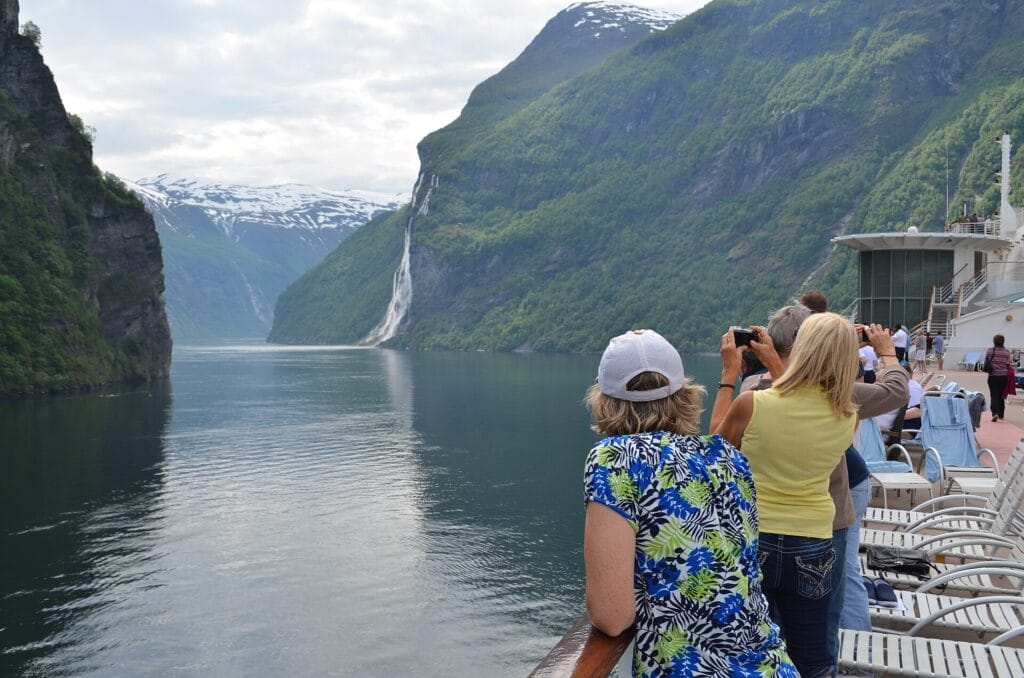
Both shoulder months get lumped together, but they are not equal, and September wins the tie-breaker. It is the only quieter month that delivers two payoffs at once: the aurora has returned to the north (Tromso and Lofoten see their first displays from late August) while the whole country is still hikeable, with daytime highs roughly around 10-18C and stable, clear stretches. May cannot match that. The midnight sun above the Arctic Circle from late May to mid-July erases the darkness aurora needs, and high mountain trails stay locked under snow above roughly 1,300-1,500m well into the month. May suits low fjord walks and full-volume snowmelt waterfalls; September suits almost everything.

Where each season lands:
- June-August: warmest, longest light, but peak prices and the worst crush. Geiranger village (population around 250) absorbs up to five cruise ships and roughly 8,000 visitors in a single day.
- May and September: thinner crowds and lower rates, with September adding early aurora and autumn colour.
Avoid mid-November onward for a fjord road trip: scenic passes such as Trollstigen and the Sognefjellet (Rv55) shut for winter and do not reopen until spring. Also sidestep 17 May, Constitution Day, the busiest domestic travel day, when transport fills and towns shut for parades.
Frequently asked questions
When is the cheapest time to visit Norway?
October and April are the cheapest non-aurora months — flights and hotels can drop 40% below July peak. Stick to cities though; many mountain routes close.
When are Northern Lights visible in Norway?
September through March, with best chances November-February in Tromsø, Alta, and the Lofoten Islands. Stay at least 4 nights and 70km away from city lights.
Is Norway expensive in summer?
Yes — accommodation in Bergen, Geiranger, or Lofoten doubles in July. Self-cater (supermarkets are reasonable), camp where allowed under the “right to roam,” and book trains 90 days ahead for discounts.
Can you hike fjords year-round?
No — most popular hikes (Trolltunga, Preikestolen) are safely accessible only June to September. May and October are risky; winter requires guides.
When can I see midnight sun in Norway?
Late May to mid-July above the Arctic Circle (Tromsø, Lofoten, Nordkapp). The further north you go, the longer the period.
Plan your Norway trip
Norway weather & climate by month
Best months to visit: June, July, August. Norway’s warmest month is June (avg 22°C / 72°F), the coolest is December (low -4°C / 25°F). The wettest is August (103 mm) and the driest is March.
| Month | Avg high | Avg low | Rainfall | Rainy days |
|---|---|---|---|---|
| January | 1°C / 34°F | -4°C / 25°F | 58 mm | 10 |
| February | 3°C / 37°F | -3°C / 27°F | 46 mm | 8 |
| March | 6°C / 42°F | -2°C / 28°F | 41 mm | 7 |
| April | 11°C / 53°F | 2°C / 35°F | 48 mm | 8 |
| May | 15°C / 60°F | 6°C / 43°F | 60 mm | 9 |
| June | 22°C / 72°F | 13°C / 55°F | 80 mm | 10 |
| July | 21°C / 70°F | 14°C / 56°F | 87 mm | 11 |
| August | 21°C / 70°F | 13°C / 56°F | 103 mm | 11 |
| September | 17°C / 62°F | 10°C / 50°F | 82 mm | 9 |
| October | 10°C / 50°F | 5°C / 42°F | 93 mm | 11 |
| November | 5°C / 40°F | 1°C / 34°F | 85 mm | 11 |
| December | 0°C / 32°F | -4°C / 25°F | 54 mm | 10 |
Climate source: Open-Meteo / WMO climate normals (WMO 1991–2020, or ERA5 2019–2023 where unavailable). Compare destinations in the Best Time to Visit Index.
You Might Also Love



Written by
John Morrison is the founder and lead travel writer at Packzup. Over the past decade he has explored destinations across Africa, the Americas, Asia, Europe, the Middle East, and Oceania — always self-funded, never on a press trip.
