Honest verdict · Updated 2026 · No sponsorships
Is Bangkok Worth Visiting? An Honest Verdict
“Yes – go hungry. Bangkok serves the world's best cheap food, but give it 3-4 days and get out before the heat and traffic grind you down.”
The short answer: Bangkok is worth visiting, and for eaters it may be the best-value city anywhere: a genuinely great meal costs 50-80 baht (roughly 1.50-2.50 USD) and there are thousands of places serving one. Go if you want energy, temples, night markets, and cheap comfort; skip it if you came to Southeast Asia to unwind, because Bangkok is loud, hot, and gridlocked, and there is no beach. The honest caveat is that 3-4 days is the sweet spot – most people who book a full week wish they had left for Chiang Mai or the islands sooner. Time it for November to February if you can; from March to May the city sits at 35C and above, and sightseeing turns into an endurance exercise.
More: When to visit Bangkok · Bangkok travel guide
Who Bangkok is for — and who it is not
Worth it if you are
- A first-time solo traveler in Asia: The BTS Skytrain and MRT are clean and easy, English is common in tourist areas, hostels and guesthouses are everywhere, and the city forgives mistakes cheaply – a wrong turn costs you a 60-baht Grab ride, not a crisis.
- A food-first traveler: Street stalls in Yaowarat and Bang Rak serve meals for 50-80 baht that beat most 30 USD restaurant plates back home, and several stalls hold Michelin recognition. You can eat five times a day and stay under 15 USD.
- A budget traveler who still wants comfort: 60-100 USD a day buys a well-reviewed mid-range hotel with a pool, all your food, and transit. Backpackers can do it on 30-40 USD without suffering.
- A night owl: The city genuinely runs late: Yaowarat street food peaks after dark, Jodd Fairs Ratchada night market runs from late afternoon to around midnight, and rooftop bars stay open past most bedtimes. Mornings are optional here.
- Someone with a 2-3 day stopover between long-haul flights: Suvarnabhumi is a major hub, the Airport Rail Link gets you downtown in about 30 minutes, and Bangkok compresses well – temples, Chinatown, and a river sunset fit into 48 hours.
Think twice if you are
- Anyone who wilts in heat and humidity: There is no cool season in the way most visitors mean it. Even November to February hits 32-33C by late morning, and March to May pushes past 35C with heavy humidity. Shade and air-con dictate your whole itinerary.
- A traveler expecting a beach vacation: Bangkok has no beach. The nearest decent sand (Hua Hin, Koh Samet) is 2.5-4 hours away by road, and the good islands are a flight or a long bus-and-ferry combination.
- Someone with limited mobility: Sidewalks are broken, cluttered with vendors, and often simply end. Crossing big roads means stairs up to footbridges, and not every BTS station has a working elevator at every exit.
- A traveler with asthma or real air-quality sensitivity: PM2.5 pollution spikes in the dry months, typically December through March, sometimes badly enough that schools close. Check AQI forecasts before booking those exact weeks.
The reality check
What it costs
60-100 USD per person per day covers a solid mid-range trip: a 40-60 USD hotel room, street food plus a couple of restaurant meals, and transit – BTS fares run under 2 USD, short Grab rides 2-3 USD, though a cross-town ride in rush hour can hit 5-8 USD. What pushes it up: rooftop bars (cocktails run 300-500 baht), hotel brunches, and taxis stuck in traffic on the meter. Backpackers manage on 30-40 USD.
Crowds
The Grand Palace is a tour-group crush by 9:30am almost year-round – go at the 8:30am opening or accept it. Chatuchak Weekend Market is shoulder-to-shoulder on Saturday and Sunday afternoons; go before 11am. December and January are peak season everywhere, and Songkran (April 13-15) packs the city with water-fight crowds.
Time needed
3-4 days. That covers the Grand Palace and Wat Pho, a night in Chinatown, a market, the river, and one day trip such as Ayutthaya. Bangkok is intense rather than deep for most visitors – by day five the heat and traffic outweigh the novelty, and your money goes further in Chiang Mai or on the islands.
When to go
November through February: the driest stretch and the closest Bangkok gets to comfortable, with highs around 31-33C. Avoid March through May, the brutal hot season at 35C and above, unless you are specifically coming for Songkran in mid-April. September and October are the wettest months, with afternoon downpours and occasional street flooding.
What actually justifies the trip
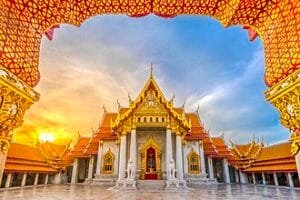
Wat Pho and the Reclining Buddha
A 46-meter gold-leafed Buddha you walk alongside in slight disbelief. Calmer and cheaper than the Grand Palace next door, and the on-site massage school does excellent, legitimate Thai massage.
Yaowarat (Chinatown) after dark
The single best street-food strip in the city: charcoal-grilled seafood, kuay jab pepper soup, mango sticky rice, all eaten standing between neon signs. Come hungry, budget maybe 300 baht, leave full.
Chatuchak Weekend Market
Roughly 15,000 stalls across everything from vintage denim to houseplants, Saturday and Sunday only. Chaotic, sweaty, and genuinely fun if you arrive before the midday heat.
Wat Arun at sunset from across the Chao Phraya
Take the cross-river ferry for a few baht and watch the porcelain-encrusted spire catch the last light from a riverside bar on the opposite bank. The cheapest world-class view in the city.
Bang Krachao bike loop
A jungle-covered river bend nicknamed the city's green lung, reached by a two-minute longtail boat. Rent a bike cheaply and ride raised concrete paths through palms – the fastest possible escape from the traffic.
The honest downsides
- The scam gauntlet around the Grand Palace is real: friendly strangers tell you it is closed for a ceremony, or that your shorts mean you cannot enter, and steer you toward a gem shop or a 20-baht tuk-tuk tour that ends in commission stops. The palace is open daily 8:30am to 3:30pm, tickets (500 baht) are sold only at the West Gate on Na Phra Lan Road, and the dress code – covered shoulders and knees, long trousers here – is solved by cheap cover-ups from vendors outside, not by a tout's detour. Skip the third-party 'skip-the-line' ticket sites too; they are unofficial and marked up.
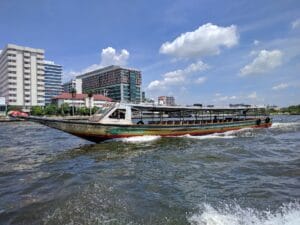
- Traffic is genuinely bad, not travel-blog bad. Sukhumvit and Silom lock up from roughly 4pm to 8pm, and a 5-kilometer taxi ride can take 45 minutes. Build your days around the BTS, MRT, and Chao Phraya Express boats instead of road transport.
- The heat is relentless and shapes everything. March to May regularly exceeds 35C with punishing humidity, and even in the cool season you will be sweating through your shirt by 11am. Temple-heavy mornings and air-conditioned afternoons is the only sane schedule.
- Air quality drops noticeably in the dry season, typically December through March, when PM2.5 haze can blur the skyline for days at a time and has closed Bangkok schools in bad years. If you are visiting in those months, check the AQI and be flexible about outdoor plans.
Is Bangkok worth it? FAQ
Is Bangkok expensive?
No. A comfortable mid-range trip runs 60-100 USD per person per day, and street-food meals cost 1.50-2.50 USD. Rooftop bars, imported alcohol, and international hotel chains are what inflate budgets, not daily life.
How many days do you need in Bangkok?
3-4 days covers the major temples, Chinatown, a market, and the river without rushing. Add a day if you want the Ayutthaya ruins as a day trip. Most travelers pair Bangkok with Chiang Mai or the islands rather than staying longer.
Is Bangkok safe for tourists?
Yes, by big-city standards – violent crime against tourists is rare. The real risks are scams (gem shops, rigged tuk-tuk tours, the 'Grand Palace is closed' line) and traffic, which is the most dangerous thing you will encounter. Do not rent a scooter unless you already ride at home.
What should I wear to visit temples in Bangkok?
Covered shoulders and covered knees at every major temple – no sleeveless tops, no shorts – and the Grand Palace enforces it strictly, expecting long trousers or a long skirt. Vendors near the entrances sell cheap cover-ups if you get it wrong. Shoes come off inside temple buildings, so wear something you can slip off.
Decided? Plan it properly
Start with the full Bangkok travel guide, follow the Bangkok itinerary, pick your month with the best time to visit, budget it with real cost data, browse things to do, eat well with the food guide. Before any trip: etiquette, ATM fees and what to wear.
You Might Also Love
Wondering about safety? Read the honest answer: Is Bangkok safe in 2026?
Weighing other trips? Is Rome worth visiting? · Is Dubai worth visiting? · Is Iceland worth visiting? · Is Bali worth visiting?