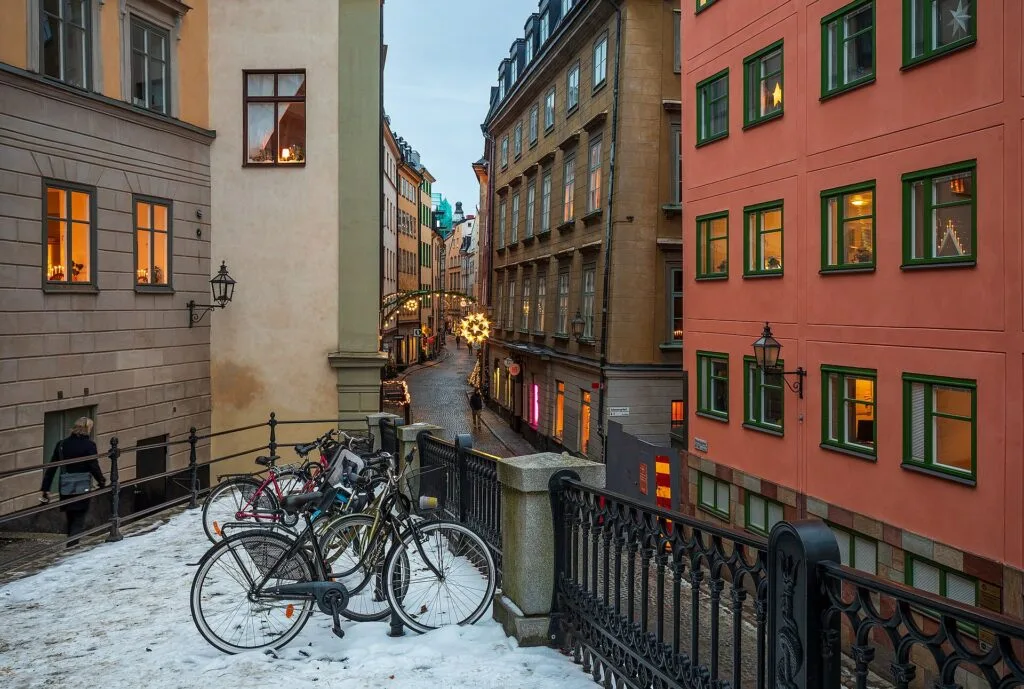
September is the best-value good-weather month in Stockholm. Summer prices go, the crowds go, daylight is still around twelve and three-quarter hours at mid-month, and the city turns properly autumnal – which in a place built among forests and water is the point. It is also the peak of Swedish mushroom season, and you are legally allowed to join in.
Allemansrätten and the mushroom season
Sweden’s allemansrätten – the right of public access – lets anyone walk, swim, camp for a night and pick berries, mushrooms and wildflowers on most uncultivated land, including private forest, without asking permission. It is a genuine legal right, not a custom, and it comes with obligations: do not disturb, do not destroy, stay clear of homes and gardens, and take everything out with you.
September is peak mushroom month, above all for chanterelles, and Stockholmers take it seriously. The forests are reachable on a normal commuter ticket – Tyresta and Nacka nature reserves are both within an hour.
The safety rule is absolute: never eat anything you have not had identified by someone competent. Sweden has lethally toxic species that resemble edible ones. Go on a guided foraging walk for a first outing rather than working from an app.
Autumn colour
Colour usually turns from the middle of September and peaks late in the month into early October. The best of it is not really in the centre: Djurgården, the Haga park, and the nature reserves are where it works, and the archipelago in low autumn light is the version most visitors never see.
Weather
- Temperature – about 16°C by day and 9°C at night, falling steadily through the month. Early September can still feel like summer; late September does not.
- Rain – still on the wet side, easing from August.
- Sea temperature – around 15°C. Swimming is possible early in the month for the hardy, and the outdoor bathhouses and saunas take over from there.
- Frost – possible in the last week, particularly outside the city.
- Daylight – about 12h 45m mid-month; the autumn equinox falls on 23 September, after which Stockholm loses light faster than almost anywhere in Europe – roughly four minutes a day.
The archipelago winds down
Seasonal ferry timetables end in early September and services drop to a reduced autumn schedule. Vaxholm and Fjäderholmarna remain easy; the outer islands become harder as the month goes on. If the archipelago is a priority, go in the first two weeks and check the timetable for your route before committing to a day.
Prices and crowds
Hotel rates settle back from the summer peak and the visitor crowds have gone, but business travel is back – so midweek city hotels can be firmer than weekends, the reverse of July. Museums, restaurants and ferries are all easy. For value against weather, September is the strongest month of the year.
What to pack
Layers, a waterproof, and proper shoes if you intend to go into the forests – it will be wet underfoot. A warm layer for the evenings, which get cold quickly from mid-month. See the Sweden itinerary.
The September 2027 calendar
- Early September – seasonal archipelago timetables end; reduced autumn service begins.
- Through September – peak mushroom season; chanterelles in the reserves around the city.
- Mid-September – about 12h 45m of daylight; autumn colour begins to turn.
- Thursday 23 September – the autumn equinox; daylight now falling by roughly four minutes a day.
- Late September – peak autumn colour in Djurgården and the Haga park; first frosts possible.
- No public holidays fall in September in Sweden.
Read alongside
- Stockholm in August – crayfish season and the warmest water.
- Stockholm in October – the between-seasons month.
- Stockholm in May – the other great shoulder month.
- Stockholm itinerary – how to structure the days.
- Is Stockholm expensive? – what things actually cost.
- Things to do in Stockholm – indoor and out.
- Sweden in 10 days – going beyond the capital.
Frequently asked
Is September a good time to visit Stockholm?
It is the best value of the year against the weather you get – about 16°C, nearly 13 hours of daylight mid-month, autumn colour from mid-September, and summer prices and crowds both gone.
How warm is Stockholm in September?
About 16°C by day and 9°C at night, falling through the month. Early September can still feel like summer; the last week can bring the first frost.
What is allemansrätten?
The Swedish right of public access. It lets anyone walk, swim, camp for a night and pick berries, mushrooms and wildflowers on most uncultivated land, including private forest – provided you do not disturb or destroy, stay away from homes, and take your rubbish with you.
Can you pick mushrooms near Stockholm?
Yes, and September is the peak. Tyresta and Nacka nature reserves are within an hour on a normal commuter ticket. Never eat anything you have not had identified by someone competent – Sweden has lethally toxic lookalikes.
When is autumn colour in Stockholm?
It usually turns from mid-September and peaks in the last week of September into early October. Djurgården, the Haga park and the nature reserves are where it shows best.
Are the archipelago ferries running in September?
On a reduced autumn timetable from early September. Vaxholm and Fjäderholmarna stay easy; the outer islands get harder through the month. Go in the first fortnight if it matters.
Can you swim in Stockholm in September?
Early in the month, if you are hardy – the Baltic is around 15°C. After that the outdoor bathhouses and saunas are the sensible answer.
How fast does Stockholm lose daylight in September?
Quickly. After the equinox on 23 September the city loses roughly four minutes of daylight a day, one of the fastest rates in Europe, because of how far north it sits.
You Might Also Love


Written by
John Morrison is the founder and lead travel writer at Packzup. Over the past decade he has explored destinations across Africa, the Americas, Asia, Europe, the Middle East, and Oceania — always self-funded, never on a press trip.