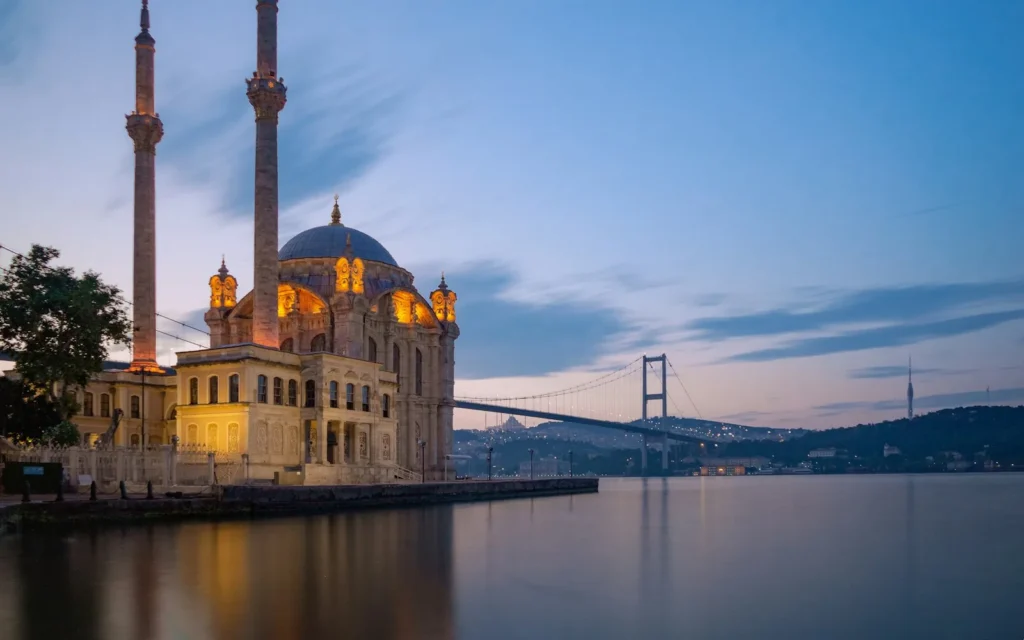
January is the cheapest month to visit Turkey and the one where the country splits hardest in two. Istanbul sits at about 10°C, grey and wet, with roughly 100 mm of rain and the occasional snowfall that shuts the city down; Cappadocia is well below freezing at night and frequently under snow; and the Mediterranean coast is mild but closed. What you get in exchange is Istanbul’s great monuments without a queue, balloons over snow, and a genuine ski season.
Istanbul in winter
This is the strongest argument for a January trip. Hagia Sophia, the Blue Mosque, Topkapý and the Basilica Cistern are among the most congested sights in Europe from April to October, and in January the queues largely disappear. The Grand Bazaar and the Spice Bazaar are covered, the hammams make complete sense at 10°C, and the meyhane culture of long winter dinners with raký and meze is at its best.
Two practical notes. Hagia Sophia functions as a working mosque, with separate visitor arrangements and prayer-time closures – check the current ticketing and timings before you go, as they have changed more than once in recent years. And Istanbul snow, while not frequent, does happen and can disrupt flights and the ferries for a day or two.
Weather by region
- Istanbul – about 10°C by day and 4°C at night, with roughly 100 mm of rain. Grey, damp and windy off the Bosphorus; the lodos and poyraz winds make it feel colder.
- Cappadocia – continental and cold: around 5°C by day and −3°C at night, with snow on the fairy chimneys several times a month. Spectacular and genuinely cold.
- The Mediterranean coast – Antalya and the Turquoise Coast are the mildest part of Turkey at around 15°C, sunny between fronts, but most resort infrastructure is shut until spring.
- The Aegean – Izmir, Ephesus and Bodrum are mild and wet; Ephesus in January is empty, which is a considerable advantage.
- Eastern Anatolia – severe winter. Erzurum and Kars are deep-freeze cold, and the Kars–Erzurum Dogu Ekspresi train through the snow is a trip in itself.
Cappadocia balloons in winter
Continue planning your Turkey trip
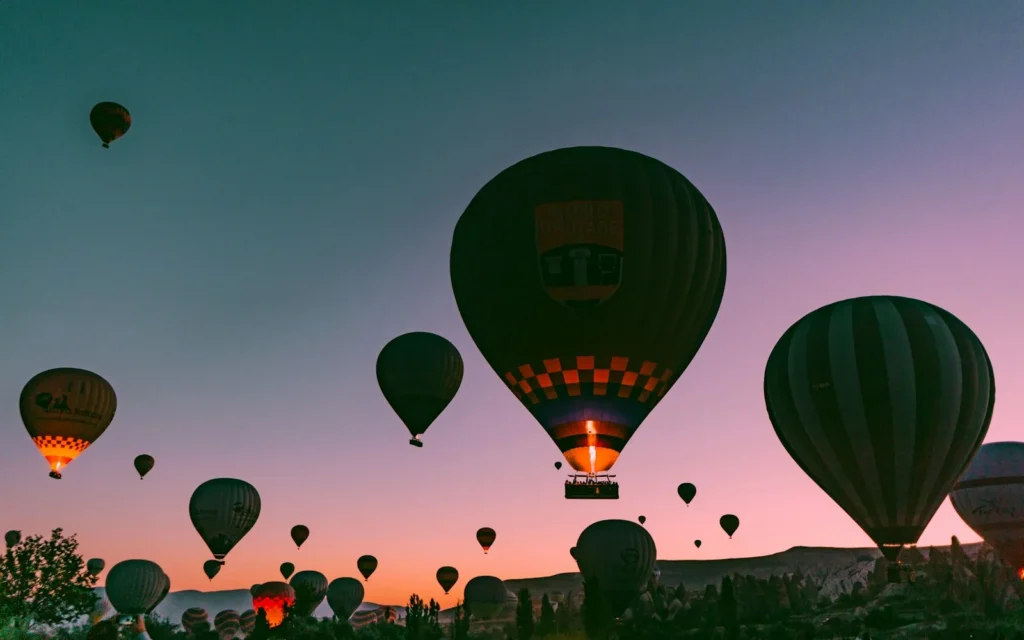
Balloon flights run year-round and snow-covered valleys at dawn are the single best image Turkey produces. But be realistic: flights are cancelled for wind, and winter has the highest cancellation rate of the year. Operators fly only when conditions allow, which is exactly as it should be.
The fix is time. Book your flight for the first morning of a three-night stay, not the last, so there are two more chances if the first is scrubbed. And expect a pre-dawn pickup at around −5°C, which needs proper clothing rather than optimism.
Skiing in Turkey
Turkey has a real ski season that few foreign visitors know about. Palandoken above Erzurum has the longest runs and the most reliable snow; Erciyes near Kayseri is modern, well-equipped and a short drive from Cappadocia, which makes a ski-and-fairy-chimneys week genuinely possible; and Uludag above Bursa is the closest to Istanbul and the busiest with domestic visitors.
Camel wrestling
An Aegean winter tradition that runs from roughly December to March. Bull camels wrestle each other in a village arena while the crowd grills sausages and drinks; the animals are decorated, the contests are short, and a bout ends when one camel retreats. The largest is the Selçuk-Efes festival, traditionally on the third Sunday of January, near Ephesus.
It is a genuine local occasion rather than a tourist show. Some visitors are uncomfortable with animal contests of any kind, which is a fair position to take – it is worth knowing what it is before deciding to go.
Prices and crowds
The annual low. Istanbul hotel rates are at their cheapest, Cappadocia cave hotels discount heavily outside the New Year week, and flights are inexpensive. The exceptions are the ski resorts and the first days of January.
See how much a trip to Turkey costs.
What to pack
A genuinely warm waterproof coat, layers, gloves and a hat – Cappadocia mornings are below freezing and Istanbul’s wind cuts. Add shoes with grip for wet cobbles and snow, and modest clothing for mosques: covered shoulders and knees for everyone, and a headscarf for women, though most major mosques lend one. See what to do in Turkey.
The January 2027 calendar
- Friday 1 January – New Year’s Day, a public holiday; the one Turkish holiday in the month.
- From about 3 January – the cheapest weeks of the Turkish year.
- Third Sunday of January – the Selçuk-Efes camel wrestling festival near Ephesus.
- Through January – ski season at Palandoken, Erciyes and Uludag.
- Through January – Cappadocia balloon flights run but cancel often; allow three mornings.
- Through January – Istanbul’s major monuments at their quietest of the year.
- Around 8 February – Ramadan is expected to begin, so January is entirely outside it.
Read alongside
- Turkey in February – the coldest month and the start of Ramadan.
- Best time to visit Turkey – all twelve months compared.
- Cappadocia in January – the region in detail this month.
- Best time to visit Istanbul – the city-level view.
- How much a trip to Turkey costs – low-season numbers.
- Cappadocia balloon ride cost – and the cancellation policy question.
- Turkey travel guide – regions and how to combine them.
Frequently asked
Is January a good time to visit Turkey?
For Istanbul, skiing and snowy Cappadocia, yes – it is the cheapest month and the great monuments have no queues. For the Mediterranean coast it is the wrong month; most of that closes until spring.
How cold is Turkey in January?
Istanbul averages about 10°C by day and 4°C at night with roughly 100 mm of rain. Cappadocia is around 5°C by day and −3°C at night with regular snow, and eastern Anatolia is severely cold.
Do Cappadocia balloons fly in January?
Yes, but with the highest cancellation rate of the year, because flights are grounded for wind. Book the first morning of a three-night stay so you have two more chances, and dress for a pre-dawn pickup below freezing.
Does it snow in Istanbul?
Occasionally, and when it does it can disrupt flights and ferries for a day or two. It is not frequent enough to plan around, but it is worth knowing it can happen.
Can you ski in Turkey?
Yes. Palandoken above Erzurum has the most reliable snow and longest runs, Erciyes near Kayseri is modern and close enough to combine with Cappadocia, and Uludag above Bursa is the nearest to Istanbul.
What is camel wrestling?
An Aegean winter tradition running roughly December to March, in which bull camels push against each other in a village arena until one retreats. The largest is the Selçuk-Efes festival near Ephesus, traditionally on the third Sunday of January.
Is Turkey cheap in January?
It is the cheapest month of the year for flights, Istanbul hotels and Cappadocia cave hotels. Ski resorts and the New Year week are the exceptions.
Can you visit Hagia Sophia in January?
Yes, and with far shorter queues than in summer. It functions as a working mosque with separate visitor arrangements and prayer-time closures, and the ticketing has changed more than once recently – check the current rules before you go.
You Might Also Love


Written by
John Morrison is the founder and lead travel writer at Packzup. Over the past decade he has explored destinations across Africa, the Americas, Asia, Europe, the Middle East, and Oceania — always self-funded, never on a press trip.