
Last updated September 11, 2026 · Editorial policy
More: When to visit Greece · Greece travel guide
What to Pack for Greece 2026: Complete Packing List
Greece packing prioritizes lightweight + sun protection + reef shoes for island beaches. Modest options needed for monasteries + churches; comfortable walking shoes for ancient sites.
Greece Packing List by Category
Essentials
- EU Type C/F plug adapter
- Passport + photocopies
- €100-150 cash for island ferries + tavernas
- Crossbody bag
- Reusable water bottle (refill at hotel)
- Strong SPF 50+ sunscreen
- Wide-brim hat + UV sunglasses
Clothing (Summer May-Oct)
- Linen + cotton — Athens + islands 30-38°C July-August
- Sundresses + maxi skirts (modest enough for some churches)
- Swimsuits — bring 2 (one always drying)
- Beach cover-up + sarong
- Comfortable walking sandals (ancient sites have uneven stone)
- Reef shoes for rocky beaches + sea urchins
- Light cardigan for evening ferry rides
Clothing (Off-Season Nov-Apr)
- Layers — Athens 8-15°C winter, occasional rain
- Light waterproof jacket
- Closed shoes (sandals not enough)
- Many islands close November-April; check tavernas open
For Monasteries (Meteora, Mt Athos)
- Long pants/skirts (knee-length minimum)
- Shoulders covered (bring a wrap)
- No bright colors at Mt Athos
What NOT to Pack
- White clothing for islands — sand + olive oil + iron-rich water stain quickly
- Heels (ancient sites + Cycladic island stairs impossible)
- Hair dryer (all hotels provide)
- More than 2 swimsuits + 1 cover-up
Greece Packing FAQ
What To Pack for Greece’s Monasteries and Churches (Strict Dress Code)
This is the single most common packing mistake I see travelers make, and it can get you turned away at the door. Greece’s active religious sites enforce a strict dress code, and it is not negotiable. If your itinerary includes the cliff-top monasteries of Meteora, the Byzantine churches of Athens, or any working monastery, pack accordingly.

- Women: A long skirt that covers the knee is required at Meteora’s six monasteries. Trousers, leggings, and shorts are not accepted, so pack at least one calf-length skirt you can throw on over other clothes.
- Men: Long trousers only. Shorts are refused regardless of length, even in 38C August heat, so pack a pair of lightweight chinos or linen trousers.
- Everyone: Shoulders must be covered, with sleeves of at least cap length. Sleeveless tops and tank tops are forbidden for both men and women.
Meteora’s monasteries do keep wrap-around skirts and scarves at the entrance for borrowing, but they are well-worn communal items and not always available when busy. I always pack a large lightweight scarf or sarong, which doubles as a shoulder cover, a beach throw, and a ferry-deck blanket. Note: Mount Athos is closed to women entirely and requires a special permit (diamonitirion) for men.
Season-by-Season: What To Actually Pack (and What To Leave Home)
Greece is not one climate, and packing the same bag for July as for April is how people end up cold, soaked, or hauling useless gear. Here is what each season genuinely demands.
- Peak summer (July-August): Athens routinely hits 35-42C and the islands sit at 28-32C. Pack almost exclusively lightweight, breathable clothing, and leave the rain jacket at home for the Aegean. The catch is the meltemi, a strong northerly wind that blows across the Cyclades from mid-June through September, peaking in July-August when it commonly reaches force 7-8 (roughly 50-60 km/h) and occasionally far higher. It keeps you cool but wrecks ferry schedules, so pack a light windbreaker and motion-sickness tablets.
- Shoulder season (May, late September, October): Layers are essential. Mornings and evenings drop to 15-18C while afternoons warm to 22-28C, so pack a cardigan or denim jacket alongside your daytime clothes. Still bring a swimsuit for October, the Aegean stays warm well after summer.
- Spring (April): Genuinely unpredictable. Pack a packable wind-and-waterproof jacket, but skip the swimsuit unless you are cold-tolerant, the sea is still too chilly for most.
The thing most people overpack: heavy clothing and multiple pairs of shoes. The thing they forget: a sun hat and proper layers for windy evenings.
The Practical Gear Greece Travelers Get Wrong
A few items separate a smooth trip from a frustrating one, and they almost never make it onto generic packing lists.
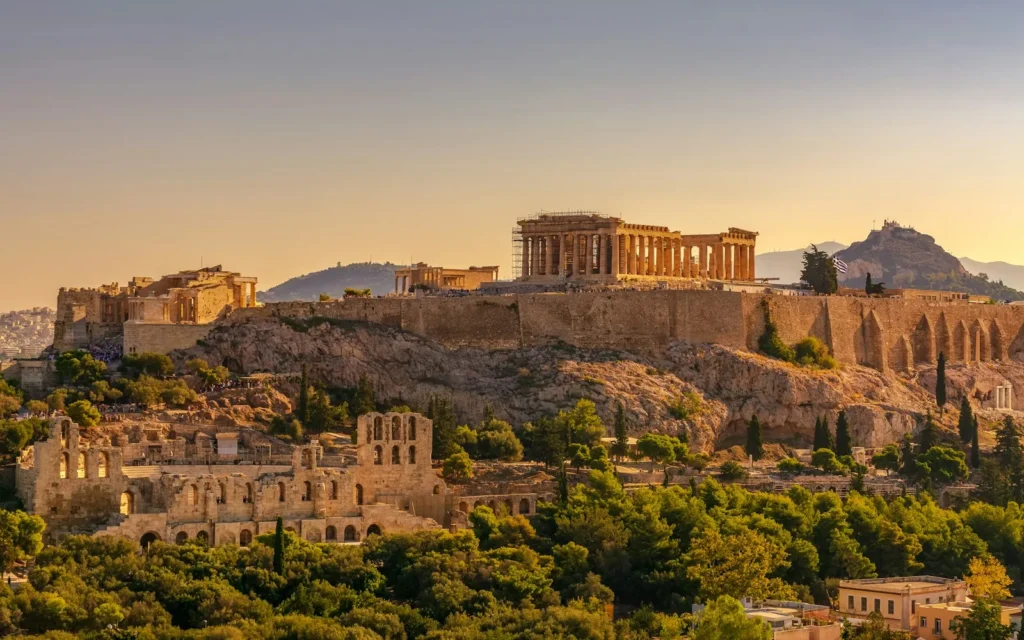
- Water shoes: Many of the prettiest beaches, including most of Santorini’s, are pebble, rock, or grit rather than sand, and sea urchins lurk near rocky shorelines. A cheap pair of water shoes protects against urchin spines and hot pebbles. You can buy them locally for around 8-10 euro at supermarkets, but bring your own if you want a proper fit that stays on while swimming.
- Plug adapter: Greece uses Type C and Type F sockets at 230V/50Hz. Travelers from the US, UK, or anywhere outside continental Europe need a Type C/F adapter. Phone and laptop chargers are dual-voltage (100-240V) and need only the adapter, but leave US hair dryers and flat irons at home, they will not run on 230V without a converter.
- Medications: Pack enough prescription medicine for the whole trip in its original labeled packaging. Be aware Greece classifies codeine as a controlled substance requiring a prescription, even though it is sold freely elsewhere in the EU, so carry a doctor’s note for any opioid painkillers.
- Sunscreen: Bring high-SPF sunscreen from home. In Greece it is expensive, with a 200ml SPF 50 bottle running around 16 euro, and high factors get scarce late in the season.
Gear that earns its place: best universal travel adapters · best one-bag travel backpacks.
You Might Also Love




Written by
John Morrison is the founder and lead travel writer at Packzup. Over the past decade he has explored destinations across Africa, the Americas, Asia, Europe, the Middle East, and Oceania — always self-funded, never on a press trip.
