Quick Answer
The best cities in Latin America include Rio de Janeiro for its setting, Buenos Aires for European grandeur, Mexico City for food and museums, Cartagena for Caribbean colonial charm, and Havana, Cusco, Medellin and Lima. Here are 10 of the best, with what each is known for.
Latin America’s cities are among the most characterful anywhere — colonial old towns, world-class food scenes and settings that range from Caribbean shore to high Andean valley. These 10 are the ones worth building a trip around, each with what defines it and the best time to go.
10 of the Best Cities in Latin America
1. Rio de Janeiro, Brazil
Best months: Jun–Aug · 18–25°C days · dry (climate data)
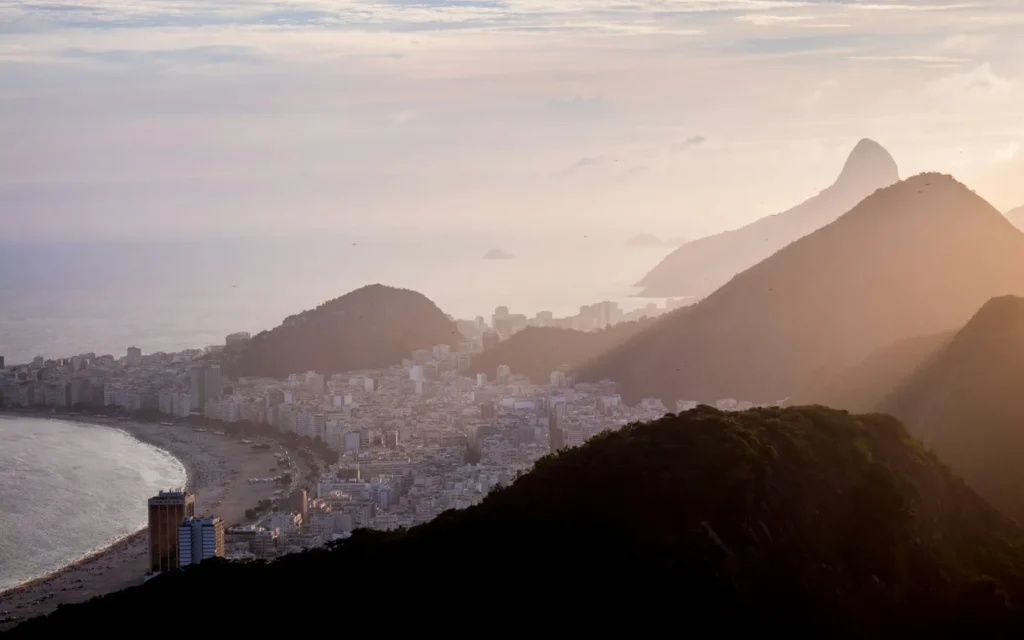
Beaches wrapped around granite peaks, Christ the Redeemer above and Carnival every February — the most dramatic city setting in the Americas.
2. Buenos Aires, Argentina
Best months: Sep–Nov · 13–21°C days · some rain (climate data)
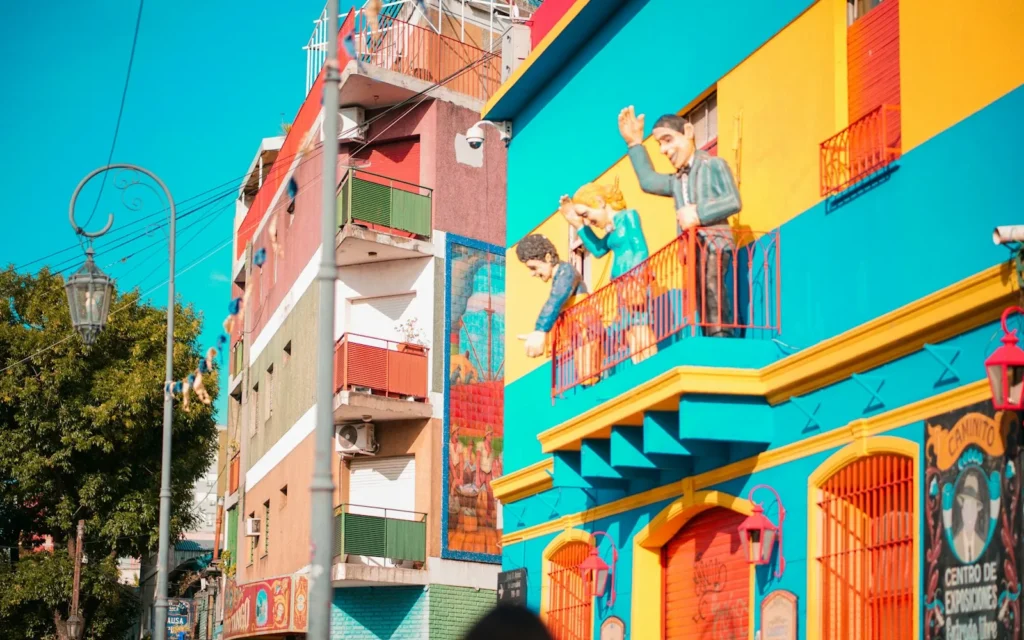
Europe transplanted to the South Atlantic: grand boulevards, steak and malbec, tango in San Telmo and the painted houses of Caminito.
3. Mexico City
Best months: Dec–Feb · 7–23°C days · dry (climate data)
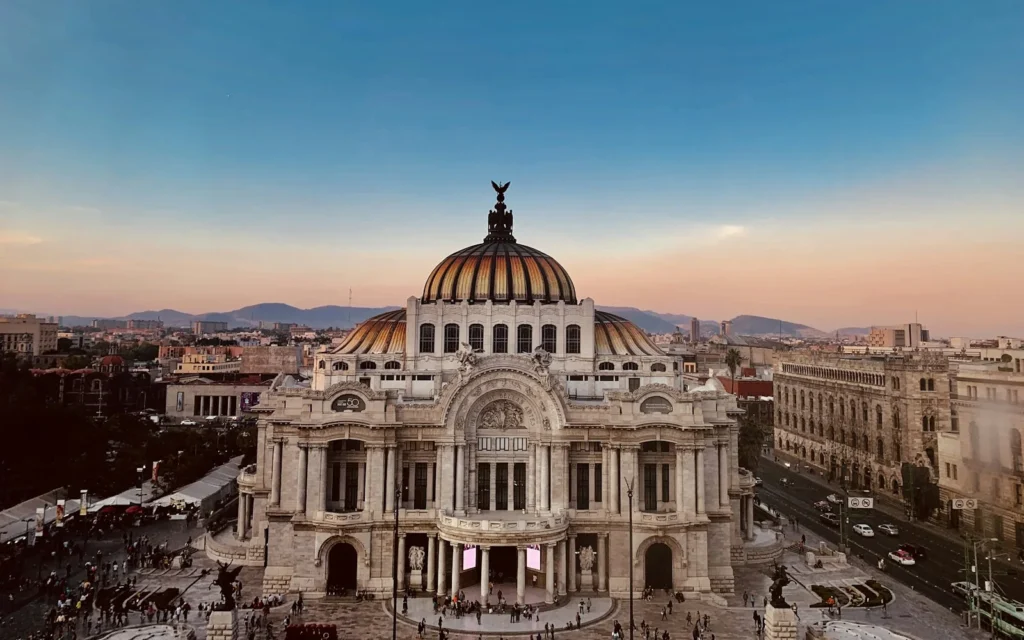
One of the world’s great food cities, built on an Aztec capital — world-class museums, leafy Roma and Condesa, and Teotihuacan an hour away.
4. Cartagena, Colombia
Best months: Dec–Feb · 15–26°C days · some rain (climate data)
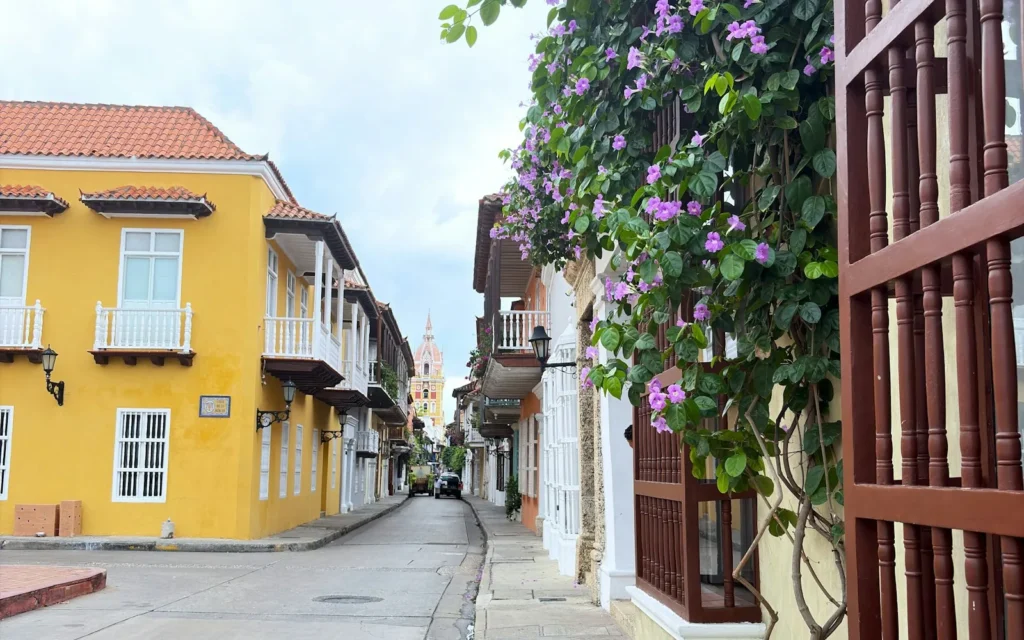
A walled Caribbean old town of bougainvillea-draped balconies and colonial squares, with island beaches offshore.
5. Havana, Cuba
Best months: Jan–Mar · 20–29°C days · some rain (climate data)
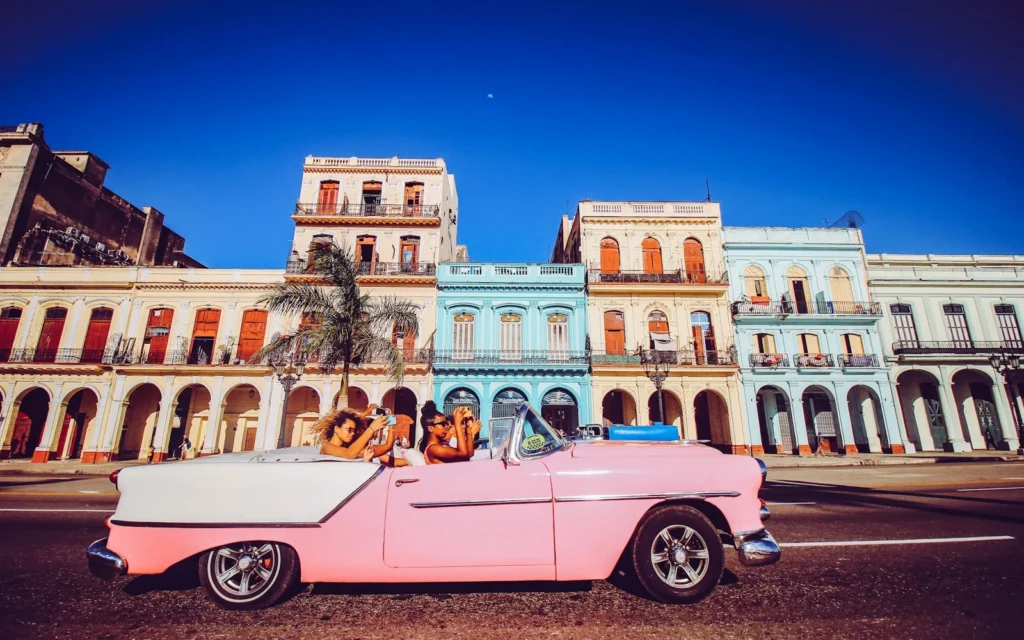
Classic cars, faded grandeur and live son in every doorway — a city that genuinely feels like nowhere else on earth.
6. Cusco, Peru
Best months: Jun–Aug · 5–18°C days · dry (climate data)
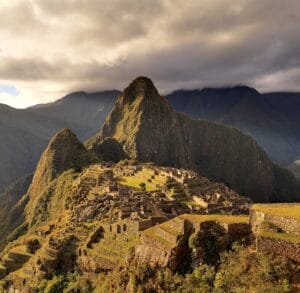
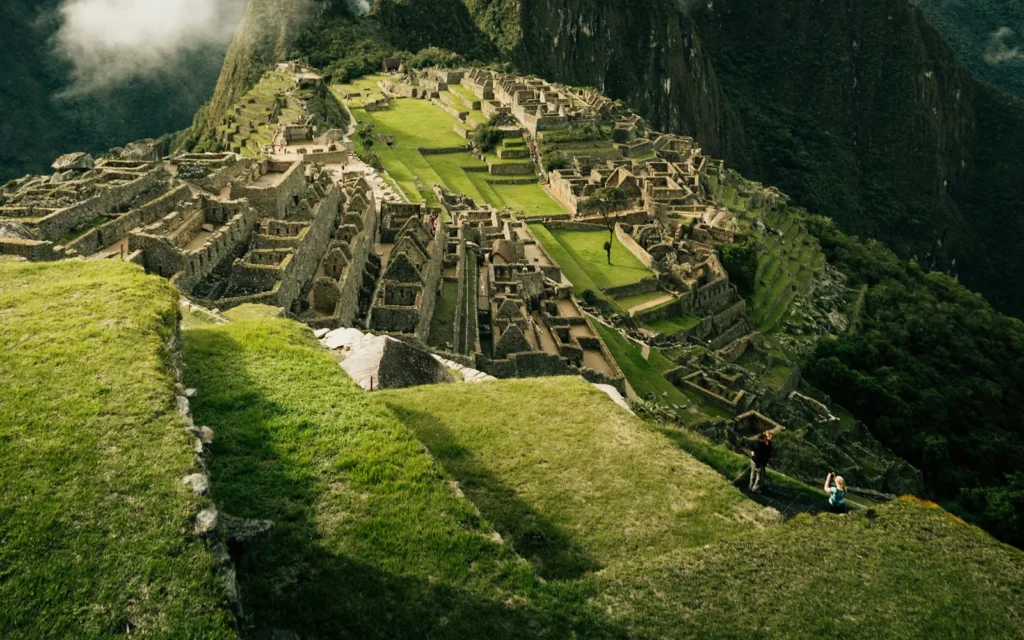
The Inca capital turned colonial city at 3,400 metres, and the essential base for Machu Picchu and the Sacred Valley.
7. Medellin, Colombia
Best months: Dec–Feb · 15–26°C days · some rain (climate data)
The ‘city of eternal spring’, transformed by cable cars and public works into one of the region’s most liveable and creative cities.
8. Valparaiso, Chile
Best months: Oct–Dec · 12–26°C days · dry (climate data)
A hillside port of funiculars, street art and clapboard houses in every colour, an hour from Santiago.
9. Lima, Peru
Best months: Apr–Jun · 17–21°C days · dry (climate data)
The culinary capital of South America — ceviche, Nikkei fusion and several of the world’s fifty best restaurants, on a Pacific cliff top.
10. Oaxaca, Mexico
Best months: Dec–Feb · 7–23°C days · dry (climate data)
Mole, mezcal and Zapotec ruins in a colonial city that is arguably Mexico’s cultural heart.
How to plan a Latin America city trip
Seasons vary hugely with latitude and altitude. Rio and Buenos Aires are at their best in the southern spring and autumn (October–November, March–April), avoiding both summer heat and winter grey. Mexico City and Oaxaca are pleasant year-round thanks to altitude, though the rainy season runs June to September. Cartagena and Havana suit the Caribbean dry season, December to April. Cusco sits at 3,400 metres, so allow two days to acclimatise before any trekking, and expect afternoon rain from December to March.
Frequently Asked Questions
What is the best city in Latin America?
Mexico City for food and culture, Rio for setting, and Buenos Aires for atmosphere — most travellers pick based on which of those matters most.
Which is best for first-time visitors?
Mexico City, Cartagena and Buenos Aires are the easiest — well connected, walkable in parts and set up for visitors.
When is the best time to go?
December to April for the Caribbean coast; October to April for Rio and Buenos Aires; May to September for the Peruvian Andes.
Related Articles
- Best Places to Visit in Latin America
- Most Beautiful Places in the World
- Best Adventure Travel Destinations
Which of these cities actually reward a whole week, and which are two nights?
Only three of them absorb seven days without repeating themselves, and knowing which is which is the difference between a good trip and an expensive commute. Latin American cities are far apart, domestic flights are the only sane way to link most of them, and a week split three ways usually becomes three airports and four half-days.
Cities that hold a full week on their own. Mexico City and Buenos Aires are the two that never run out, because both are dense, walkable in long stretches and layered with museums, markets and neighbourhoods that take days rather than hours. Rio de Janeiro can fill a week, with one caveat that has nothing to do with the sights: several of its best days are weather-dependent, so a week gives you the spare days a long weekend does not.
Cities that are complete in two or three days. Cartagena’s walled town is small enough to walk in an afternoon, so a week there is really a week on the Caribbean coast with the old city as the first two nights. Valparaiso is a day or two of hills and funiculars reached from Santiago rather than a base in its own right. Oaxaca is the classic pairing with Mexico City on a short domestic hop rather than a standalone trip.
Cities that are a base, not a destination. Cusco is the clearest example, and it is the one people underestimate. It is where you acclimatise, where the Sacred Valley and Machu Picchu logistics are arranged, and where altitude, not sightseeing, sets your minimum length of stay. Lima works the other way round: it is the connecting point for almost every internal Peruvian route, so it is usually two or three nights either side of something else rather than the trip itself.
Medellin and Bogota pair naturally because frequent domestic flights link them, which is why a single Colombian week can hold both plus Cartagena. Havana is the outlier, and the constraint there is cash rather than time: read the cash and card position for Cuba before you fix the length of the stay.
The altitude that quietly changes how you plan a Latin American trip
Anything above roughly 2,450 m puts an unacclimatised traveller at risk of altitude illness, and four of the region’s most-visited cities are at or above that line. The CDC Yellow Book states that any unacclimatized traveler proceeding to a sleeping altitude of 2,450 m (8,000 ft) or higher, and sometimes lower, is at risk for altitude illness. That is a sleeping altitude, which is why the trap is the arrival flight rather than the trek.
The elevations, each from the authority for that city:
- Cusco, about 3,350 m (11,000 ft), per the CDC Yellow Book.
- La Paz, about 3,650 m (12,000 ft), per the same source.
- Quito, 2,850 m, per the city’s official visitor portal.
- Bogota, about 2,600 m, per the city government.
- Mexico City, 2,240 m, per the city government, which adds on its own altitude page that the city is above the limit at which some visitors feel symptoms even though many notice nothing.
Two rules do most of the work. The CDC advises that once above 3,000 m (9,800 ft) you ascend at no more than 500 m (1,650 ft) per night in sleeping altitude, with an extra acclimatisation day for every further 1,000 m of sleeping-altitude gain. And it names the practical workaround for exactly the cities in question: in some cases, giving Cusco and La Paz as its examples, travellers can descend to elevations lower than the airport to sleep for one or two nights and then begin the ascent, which may remove the need for medication.
Applied to a real itinerary, that means flying into Cusco and sleeping the first nights lower down in the Sacred Valley rather than in the city, and it means putting Machu Picchu after those nights rather than on day two. Mexico City’s own guidance is milder and more mundane: drink extra water, avoid alcohol and smoking, and avoid strenuous activity on arrival. If you are considering preventive medication, the CDC gives an effective prophylactic dose of acetazolamide as 125 mg every 12 hours starting the day before ascent, which is a conversation for a travel clinic and not a decision to make from a web page.
What official travel advice actually says about each of these cities
The pattern across the region is consistent and specific: opportunistic robbery, drink and food spiking, and forced ATM withdrawals, with the named risks differing by city. The following are the points the UK Foreign, Commonwealth and Development Office makes on its country pages, read on 5 September 2026. Advice changes; check the current page for your destination before you book, and again before you fly.
- Colombia (Bogota, Medellin, Cartagena). The FCDO advises against all but essential travel to parts of the country, and states that pickpocketing, mugging and armed robbery are a problem especially in major cities including Bogota, Medellin and Cali. It records criminals using scopolamine and other drugs administered through food, drinks, cigarettes, aerosols and even paper flyers, and warns that criminals use dating applications and websites to identify foreign nationals travelling alone. On express kidnapping it is specific about the method: criminals often posing as taxi drivers track and select a target, often from around ATMs and often at night, then force the victim to empty their bank account through multiple transfers, or drive them to cash machines and make them withdraw cash.
- Brazil (Rio de Janeiro). The advice is unambiguous on one point: avoid all favelas, including favela tours marketed to tourists and any accommodation, restaurants or bars advertised as being within a favela, and it notes that tourists have been shot after accidentally entering them. Thefts are described as particularly common on public beaches, including arrastoes, where large groups of thieves run through an area of the beach grabbing possessions. It says not to go on to city beaches after dark and not to hail taxis on the street.
- Mexico (Mexico City, Oaxaca). No blanket warning applies to either city, but the FCDO advises against all but essential travel to Acapulco. It notes protests since July 2025 in central and tourist areas of Mexico City, and protests blocking vehicle access to Oaxaca airport, which is the sort of thing that turns a tight connection into a missed flight. At airports it says to use only authorised pre-paid airport taxi services.
- Peru (Lima, Cusco). Street crime is the main theme. It states that tourists, especially those travelling alone, are at risk of express kidnapping, with victims taken hostage and forced to withdraw money from ATMs for their release, usually at night, and it flags criminals posing as taxi operators at Jorge Chavez International Airport in particular. The advice is to use licensed telephone or app-based taxi services rather than hailing in the street, and at the airport to use the official taxi desks outside baggage reclaim. It also notes that train services to Machu Picchu may be suspended because of protests, which is a genuine itinerary risk rather than a background worry.
- Argentina (Buenos Aires). The FCDO names specific areas for vigilance including Palermo, San Telmo, La Boca, Retiro, Florida Street and Avenida de Mayo, and describes the local distraction robbery precisely: thieves take your bags while an accomplice pretends to help remove mustard they have sprayed on you. It also warns of bag snatching by thieves on motorbikes.
- Chile (Valparaiso). Muggings are described as frequent, especially in Santiago and Valparaiso, and increasingly involving weapons. Rental cars are targeted by a tyre-puncture distraction at traffic lights.
- Cuba (Havana). Muggings in Havana and burglaries at properties are recorded, with instances of violent crime, alongside pickpocketing and bag-snatching in the streets of Old Havana and any crowded area. Fuel shortages are described as making it difficult to get petrol or diesel, especially over long distances. The same guidance adds a current infrastructure warning: as a result of Hurricane Melissa in October 2025, infrastructure and services including access to electricity and water remain severely impacted in the east of Cuba. That is the eastern provinces rather than Havana, but it shapes any plan to travel beyond the capital.
What does the US State Department say, and why does it differ from the UK advice?
It draws the map differently, and for a short multi-city trip that is the more useful of the two. The US Department of State grades Mexico state by state and Colombia department by department, so instead of a national mood it gives you a boundary you can check an itinerary against. The levels quoted here were read on 5 September 2026 from the Department’s own travel advisories feed. Levels are revised on no fixed schedule, so open the current advisory for each country before booking.
The headline grades first, because they are not what people assume. Argentina sits at Level 1, Exercise Normal Precautions. Brazil, Chile, Cuba, Mexico, Panama and Peru all sit at Level 2, Exercise Increased Caution. Colombia is the only country on this page above that, at Level 3, Reconsider Travel, for crime, terrorism, civil unrest and kidnapping. A Level 2 is the same grade a great many European countries carry, so the country grade is rarely the thing that should change your plans; the sub-national detail is.
Colombia is the clearest example of why the geography matters. The advisory places three departments at Level 4, Do Not Travel: Arauca, Cauca excluding Popayan, and Norte de Santander, for crime and terrorism. The Colombia-Venezuela border region is separately Level 4 for crime, kidnapping, conflict between armed groups and the risk of detention, with the instruction not to cross into Venezuela because you may be detained by Venezuelan authorities. None of Bogota, Medellin or Cartagena falls inside any of those.
The tell that this is a real restriction rather than boilerplate is what it says about its own staff. US government employees working in Colombia are prohibited from travelling to those Level 4 areas, and are separately prohibited from going to Colombia’s land borders without special authorisation, from using motorcycles, and from using street taxis or any public transport that is not prearranged. That last one is the most portable piece of advice on the whole page: if the embassy will not let its own people flag a cab, book the car.
Mexico reads mild for the two places on most short itineraries. Mexico City is graded Exercise Increased Caution for terrorism and crime, and the advisory states there are no specific travel restrictions on US government employees in Mexico City. The state of Oaxaca carries the same grade, and the advisory is unusually precise about where the restriction does and does not bite: there are no restrictions for Oaxaca City, Monte Alban, Puerto Escondido or Huatulco, while employees may not travel to the Isthmus region bounded by Federal Highway 185D, Federal Highway 190 and the Oaxaca-Chiapas border, which takes in Juchitan de Zaragoza, Salina Cruz and San Blas Atempa. Two nationwide employee rules are worth copying: no travel between cities after dark, and use dispatched vehicles from regulated taxi stands or app-based services rather than waving down a taxi in the street.
Peru contains the single most useful sentence for anyone planning the classic route. The advisory’s Do Not Travel list covers the Colombia-Peru border area in the Loreto Region, the Valley of the Apurimac, Ene and Mantaro Rivers including Vilcabamba, and some areas within the regions of Ayacucho, Cusco, Huancavelica and Junin. A footnote attached to that Cusco entry then states that the city of Cusco and popular tourist sites nearby, like the Sacred Valley, the Inca Trail and Machu Picchu, are not located in the affected area. If you have been told the Inca Trail sits inside a Do Not Travel zone, that footnote is the answer.
Two other Peru details are worth lifting. Demonstrations are described as shutting down local roads, trains and major highways, often without warning or clear information on reopening times, which is the itinerary risk on that route rather than crime. And US government employees are prohibited from driving at night outside cities, apart from named corridors between Lima and Huacho and between Lima and Paracas, which tells you how the embassy rates rural night driving.
Cuba is where the US advisory adds something the money rules do not, and one point is legal rather than practical. It grades the country Exercise Increased Caution for crime and unreliable electrical power, and records that since October 2024 there have been several prolonged nationwide power outages, with scheduled and unscheduled cuts lasting up to 12 hours occurring daily in Havana, and even longer outside the capital. Some large businesses, hotels, hospitals and institutions run generators, but the advisory notes they may have trouble keeping them running through a long outage because fuel availability is inconsistent and scarce.
Its practical instruction is the one to act on: prepare alternative methods to meet your medical needs, and it names the two cases that catch people out, medical devices requiring power and medicines requiring refrigeration. A CPAP machine, an insulin supply or a refrigerated injectable turns a power cut from an inconvenience into a reason not to go without a plan. It also advises keeping phones and battery banks charged and having torches and spare batteries to hand.
The legal point applies only to travellers subject to US jurisdiction, and it is absolute. The advisory states that US law and regulation prohibit travel to, from or within Cuba for tourist activities, that the Office of Foreign Assets Control regulates such travel by all US citizens and residents wherever located and by anyone in the United States regardless of nationality, and that travel to Cuba without an OFAC licence is illegal, with failure to comply exposing a person to penalties and criminal prosecution. Travel falling within one of the twelve categories authorised by a general licence needs no specific licence; other non-tourist travel requires a specific licence from OFAC. If you hold a US passport or are travelling from the United States, settle that question before anything else on this page matters. Everyone else should read it as a reason your American friends may decline the trip.
How to use two advisories without wasting an afternoon. They rarely contradict each other; they answer different questions. The US document tells you where the line is, in departments and states you can match against a booking, and what its own staff are forbidden to do. The UK document tells you how the common crime works, in enough operational detail to change what you do on the street. Read the US one while you are choosing legs and the UK one the week before you fly.
How a two- or three-city Latin American trip actually joins up
Through a small number of hubs, and Panama City is the main one. Tocumen International Airport is branded by its operator as the Hub of the Americas, and it is the reason so many routings between, say, a Colombian city and a Peruvian or Central American one pass through Panama rather than flying direct. No destination, country or passenger count is quoted here: the operator page that carried those figures no longer served them on re-fetch on 5 September 2026, and the operator has been moving its site to a new domain. Check the current route list on the airport operator’s own site. If your itinerary crosses the region rather than staying inside one country, assume a connection and build the day around it.
Lima is the second thing to know about, because the airport itself changed. Jorge Chavez International Airport moved its operations into an entirely new terminal on Sunday 1 June 2025. The operator’s own announcement describes the complete transfer of all air operations on that date, a new terminal three times the size of the old one, capacity raised to 40 million passengers a year, and an investment of over USD 2.4 billion. Anything you were told about the old terminal’s layout, transfer times or where the taxi desks are is now out of date. Allow more time than you think for a first visit and check the operator’s own site for the current arrivals and departures arrangement.
Two-airport cities are the other planning detail. Buenos Aires, Rio de Janeiro and Mexico City each have more than one commercial airport, and a domestic leg does not always leave from the same one your international flight arrived at. Confirm the airport code on every leg before you buy, not after. Crossing a large capital between two airports in traffic can cost more time than the flight itself.
Order the cities so the altitude works with the flying rather than against it. Arriving into a high-altitude city on a long-haul overnight, then taking a domestic flight the same day, is the combination that produces a wasted first 48 hours.
The money trap that catches short visits, and the one country where it is absolute
Cuba is the country where card payment simply stops working, and it is not a bank-by-bank problem. The FCDO’s money guidance states that the Cuban Central Bank announced on 3 June that international cards such as Visa and Mastercard will no longer be accepted in Cuba, with effect from 6 June, and that you are likely to be unable to withdraw cash through ATMs with an international card. Its advice is to bring enough cash to cover your expenses for the entire length of your stay and for an emergency, noting that US dollars and euros are widely accepted.
There is a second rule attached to that one which visitors miss. The same guidance states that you must only exchange money at Cadeca exchange houses, and that it is illegal to exchange money anywhere else, including with any individuals who may offer exchange services. It attaches a consequence: if you are caught making an unauthorised exchange, you could be fined or get a prison sentence. Combined, those facts set the length of a Havana trip: your budget has to be carried in, in cash, and changed only in one official place. The FCDO page gives the central bank announcement as 3 June with effect from 6 June without stating the year, so it is quoted here as the page gives it; confirm the current position before you buy anything.
Elsewhere in the region cards work normally, but the official advice repeatedly points at the ATM as the risk rather than the payment. The FCDO’s Mexico guidance suggests using ATMs during daylight hours inside shops or malls, and both the Colombian and Peruvian pages describe forced withdrawals at cash machines. The practical version is short: draw cash inside a building, during the day, in amounts that make a second visit unnecessary, and keep it out of sight. Everything in this section was read on 5 September 2026; open the current page for your destination before you book and again before you fly.
At a glance
| City | Elevation above sea level, and the source | What that means for a short trip | One point from official advice |
|---|---|---|---|
| La Paz, Bolivia | About 3,650 m (12,000 ft), CDC Yellow Book | Well above the risk threshold. The CDC names it as a case where sleeping lower than the airport for 1 to 2 nights can remove the need for medication | Check current FCDO country advice before booking |
| Cusco, Peru | About 3,350 m (11,000 ft), CDC Yellow Book | Above the threshold. Build in acclimatisation days before any trek and consider sleeping lower first | FCDO notes train services to Machu Picchu may be suspended because of protests |
| Quito, Ecuador | 2,850 m, official Quito visitor portal | Above the 2,450 m threshold. Plan a slow first day | Check current FCDO country advice before booking |
| Bogota, Colombia | About 2,600 m, Bogota city government | Above the threshold. Symptoms are usually mild but real on day one | FCDO records scopolamine drugging through food, drinks and even paper flyers |
| Mexico City | 2,240 m, Mexico City government | Below the CDC threshold but the city’s own guidance says it is above the limit at which some visitors feel it. Avoid alcohol and strenuous activity on day one | Graded Exercise Increased Caution; no US employee travel restrictions apply in the city |
| Lima, Peru | Coastal, at or near sea level | No altitude planning needed, but it is the connection point for internal routes | Airport operations moved to a new terminal on 1 June 2025, so old layout and transfer advice is out of date |
| Rio de Janeiro, Brazil | Coastal, at or near sea level | Several highlights are weather-dependent, so allow spare days | FCDO says avoid all favelas, including tours marketed to tourists |
| Cartagena, Colombia | Coastal, at or near sea level | The walled town is walkable in a day or two | Colombia is graded Level 3, Reconsider Travel; no Level 4 area is near Cartagena |
| Havana, Cuba | Coastal, at or near sea level | Trip length is set by how much cash you can carry in | International Visa and Mastercard no longer accepted; exchange only at Cadeca; US travellers need an OFAC licence |
| Buenos Aires, Argentina | Coastal, at or near sea level | Absorbs a full week; check which of the city’s airports each leg uses | FCDO names Palermo, San Telmo, La Boca, Retiro and Florida Street for vigilance |
| Valparaiso, Chile | Coastal, at or near sea level | A day or two from Santiago rather than a base | FCDO says muggings are frequent especially in Santiago and Valparaiso |
Frequently asked questions
How many days do you need in Cusco before going to Machu Picchu?
Long enough to acclimatise, and the altitude decides it rather than the sightseeing. The CDC Yellow Book puts Cusco at about 3,350 m and says any unacclimatised traveller sleeping at 2,450 m or above is at risk of altitude illness. It also names Cusco specifically as a case where you can sleep lower than the airport for one or two nights before ascending, which in practice means the Sacred Valley. Above 3,000 m it advises moving sleeping altitude by no more than 500 m a day. Treat two nights as a floor and take medical advice on preventive medication.
Which Latin American city is best for a first trip?
Mexico City and Buenos Aires, because both hold a full week without a domestic flight, which removes the single biggest source of wasted time on a short regional trip. Cartagena is the easiest short introduction if you want warmth and a small walkable centre. Cusco is the one to avoid as a first stop, not because of the city but because arriving at altitude on day one costs you the days you came for.
Can you use a credit card in Havana?
No, if it is an international card. FCDO guidance states that the Cuban Central Bank announced on 3 June that international cards such as Visa and Mastercard would no longer be accepted in Cuba with effect from 6 June, and that you are likely to be unable to withdraw cash from ATMs with an international card. Bring cash for the whole stay, note that US dollars and euros are widely accepted, and exchange only at Cadeca exchange houses, since exchanging anywhere else is illegal. Position as read on 5 September 2026.
Do you need to connect through another country to fly between Latin American cities?
Often, yes. Tocumen International Airport in Panama City, branded by its operator as the Hub of the Americas, carries a large share of cross-region itineraries that would otherwise need two long flights. No destination or country count is quoted here, because the operator page that published those figures did not serve them on re-fetch on 5 September 2026; check the current route list on the operator’s own site. Inside Peru, Lima performs the same function for domestic routes, and its operations moved to an entirely new terminal on 1 June 2025, so allow more time than you think on a first visit. Build the connection into the day rather than treating it as dead time, and confirm which airport each leg uses in cities that have more than one.
How safe is it to walk around these cities?
The official advice is consistent about the type of risk rather than the place: opportunistic theft, drink and food spiking, and forced cash withdrawals. The FCDO records armed robbery in major Colombian cities, frequent muggings in Santiago and Valparaiso, distraction robbery in named Buenos Aires districts, and theft on Brazilian public beaches with a firm instruction to avoid all favelas including organised tours. None of that is a reason not to go; all of it is a reason to use booked or app-based transport at night, use ATMs inside buildings during daylight, and leave valuables where you are staying. Check the current page for your destination before travel.
Is Mexico City high enough to make you ill?
It sits at 2,240 m according to the city government, which is below the CDC’s 2,450 m threshold, but the city’s own visitor guidance says it is above the limit at which some people feel symptoms while many notice nothing at all. Its advice for the first day is unglamorous and effective: drink extra water, avoid alcohol and smoking, and avoid strenuous activity. If you are pairing Mexico City with anywhere higher, treat it as a useful staging altitude rather than a full stop.
Is Cusco inside the Do Not Travel area of the US advisory for Peru?
No. The US Department of State advisory for Peru lists Do Not Travel areas that include some areas within the region of Cusco, then attaches a footnote stating that the city of Cusco and popular tourist sites nearby, like the Sacred Valley, the Inca Trail and Machu Picchu, are not located in the affected area. Peru’s overall grade is Level 2, Exercise Increased Caution. What the same advisory does flag for that route is logistics rather than crime: demonstrations shut down local roads, trains and major highways, often without warning or any clear information on when they will reopen. The UK FCDO adds that some train services in the south, including those to and from Machu Picchu, are occasionally suspended or disrupted because of protests. Read as advice, that means building slack around the rail leg and not booking a same-day onward flight. Levels read on 5 September 2026 from the State Department’s travel advisories feed; check the current advisory before you travel.
Do the power cuts in Cuba affect a short visit to Havana?
They can, and the US advisory is specific enough to plan around. It grades Cuba Level 2, Exercise Increased Caution, for crime and unreliable electrical power, and records that since October 2024 there have been several prolonged nationwide outages, with scheduled and unscheduled cuts lasting up to 12 hours occurring daily in Havana and even longer outside the capital. Some large businesses, hotels, hospitals and institutions use generators, but the advisory notes they may have trouble keeping them running through a long outage because fuel availability is inconsistent and scarce. The instruction that matters is to prepare alternative ways to meet your medical needs before you arrive, and it names the two hard cases: medical devices that require power, and medicines that require refrigeration. It also suggests keeping phones and battery banks charged and having torches and spare batteries accessible. Separately, the UK FCDO records that after Hurricane Melissa in October 2025 infrastructure and services including electricity and water remain severely impacted in the east of Cuba, which matters if you plan to travel beyond Havana. Read on 5 September 2026.
Can US citizens travel to Cuba as tourists?
No, and this is a legal rule rather than a safety warning. The US Department of State advisory states that US law and regulation prohibit travel to, from or within Cuba for tourist activities. The Office of Foreign Assets Control regulates travel to, from and within Cuba by persons subject to US jurisdiction, which it defines to include all US citizens and residents wherever they are located and anyone in the United States regardless of nationality. The advisory states that travel to Cuba without an OFAC licence is illegal and that failing to act consistently with the regulations may result in penalties and criminal prosecution. Travel that falls within one of the twelve categories authorised by a general licence does not need a specific licence; other non-tourist travel does. Anyone in that position should settle the licensing question with OFAC before booking. Read on 5 September 2026.
Which Latin American countries carry the highest US travel advisory level?
Of the countries covered on this page, only Colombia sits above Level 2. Read on 5 September 2026 from the State Department’s own advisories feed, Argentina was Level 1, Exercise Normal Precautions; Brazil, Chile, Cuba, Mexico, Panama and Peru were Level 2, Exercise Increased Caution; and Colombia was Level 3, Reconsider Travel, for crime, terrorism, civil unrest and kidnapping. The country grade is the least useful part of the document. What changes an itinerary is the sub-national detail: Colombia’s Level 4 departments are Arauca, Cauca excluding Popayan, and Norte de Santander, plus the Colombia-Venezuela border region, and none of Bogota, Medellin or Cartagena is inside any of them. Check the current advisory for every country on your route, because levels are revised without a fixed schedule.