
Last updated August 27, 2026 · Editorial policy
- Croatia vs Montenegro at a glance
- Coast & scenery
- Cost & crowds
- Towns
- Who should choose which
- Which side of the border should you pick?
- Croatia vs Montenegro FAQ
- Getting there and crossing between the two
- Inland and the national parks: where they really differ
- What's on the plate and in the glass
- Which is better for your trip, Croatia or Montenegro?
Quick answer: Choose Croatia for islands, established tourism and famous towns; choose Montenegro for dramatic bays, value and fewer crowds. Croatia is polished; Montenegro is the rising star.
Croatia vs Montenegro at a glance
| Croatia | Montenegro | |
|---|---|---|
| Best for | Island-hopping, Dubrovnik, polished coast | Dramatic bay, value, fewer crowds |
| Vibe | Established, busy in summer | Up-and-coming, compact, rugged |
| Daily budget (mid-range) | €80–120 | €50–80 |
| Best time | May–Jun, Sep (skip Jul–Aug crush) | May–Jun, Sep |
| Don’t miss | Dubrovnik, Hvar, Plitvice Lakes | Bay of Kotor, Sveti Stefan, Durmitor |
| The catch | Very crowded & pricey in peak | Limited transport; developing infrastructure |
Coast & scenery
Croatia has the Dalmatian coast and hundreds of islands; Montenegro packs stunning fjord-like bays (Kotor) and mountains into a tiny country.
Cost & crowds
Montenegro is cheaper and less crowded; Croatia (especially Dubrovnik) is pricier and busier in summer.
Towns
Croatia’s Dubrovnik and Split are world-famous; Montenegro’s Kotor is a walled gem rivaling them for a fraction of the crowds.
Who should choose which
Islands and iconic towns: Croatia. Dramatic bays, value and fewer crowds: Montenegro. They border each other — easy to combine.
Which side of the border should you pick?
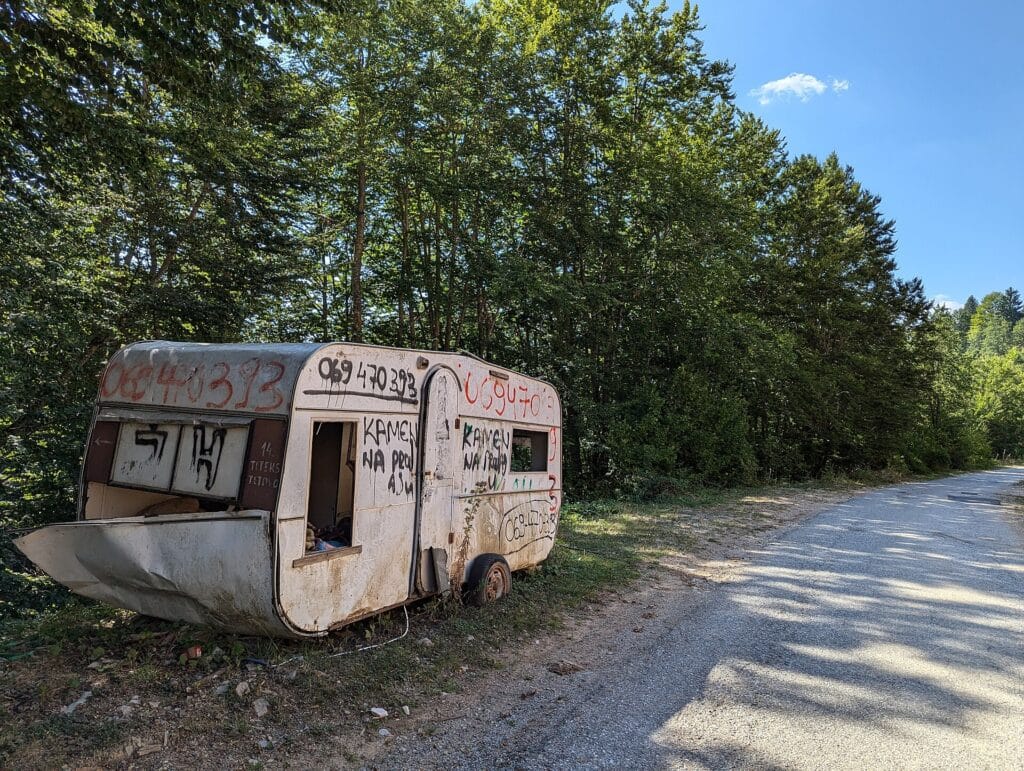
Go to Croatia if you want polished old towns and proper island-hopping off Split and Hvar, and go to Montenegro if you want the same dramatic Adriatic scenery for noticeably less money in a more compact area. The deciding factor is budget versus polish: Montenegro delivers Kotor’s fjord-like bay at a fraction of the Dalmatian price, but Croatia’s infrastructure, ferries and dining are a clear step up.
Three specifics that settle it:
- The walls tell the whole story. Climbing Kotor’s old fortifications is free, while Dubrovnik now charges around €35 to walk its city walls — a fair signal of how the two coasts price almost everything.
- Combining them costs you time. Dubrovnik to Kotor is only about a two-hour drive, but in July and August the Croatia–Montenegro border crossing at Debeli Brijeg can add two to three hours each way, so plan an early start.
- Mind the famous photo spots. Montenegro’s Sveti Stefan islet is a private resort you can’t walk onto; you admire it from the free public beach (loungers run about €50), so don’t expect to wander its lanes the way you can Hvar’s old town.
Croatia vs Montenegro FAQ
Which is cheaper?
Montenegro.
Which has better islands?
Croatia.
Should I visit both?
Yes — they border each other along the Adriatic.
Getting there and crossing between the two
You don’t have to choose blind: the two countries are close enough that many trips do both. Dubrovnik Airport (DBV) is the most-connected gateway in this corner of the Adriatic, while Montenegro splits its traffic between seasonal Tivat (TIV) — a summer airport served roughly April to October by easyJet, Ryanair and British Airways — and year-round Podgorica (TGD), the one to use in winter or shoulder season.
The land hop is the classic move. Dubrovnik to Kotor is about 92 km (57 miles) via the Karasovići–Debeli Brijeg crossing roughly 40 km south of the city. Reckon on 1h45 of actual driving, but the border is the wild card:
- Shoulder season (May, June, Sept, Oct): 15–20 minutes at the line.
- Peak July–August: 30–45 minutes routinely, and over an hour on Saturday mornings.
By bus there are up to 14 daily Dubrovnik–Kotor departures (first around 07:15), scheduled at roughly 2–2.5 hours though traffic can stretch that. The prettier alternative is the seasonal Kompas catamaran from Gruž port (June–September): about 2 hours to Budva, 3 hours to Kotor, tickets roughly €40–60 (passengers only, no cars). Note this is now an external Schengen border running the EU’s Entry/Exit System (EES) on the Croatian side, so allow extra time on busy weekends.
Inland and the national parks: where they really differ
The coast is where the marketing photos come from, but the inland parks are where the two countries split personalities. Croatia plays the polished-water card. Plitvice Lakes is the headliner — 16 terraced lakes linked by boardwalks, UNESCO-listed, and genuinely mobbed in summer, so timed entry is now mandatory (max 300 people per entrance per hour). Pricing is steeply seasonal: €40 peak (June–Sept), €23.50 shoulder, €10 in winter, with a late-entry discount to about €25 after 16:00. Krka is the lower-key alternative, anchored by the 17-cascade Skradinski Buk waterfall (swimming banned since 2021).
Montenegro plays the mountain card — and it’s dramatically cheaper. Durmitor National Park is a UNESCO massif of nearly 50 Dinaric peaks above 2,000 m, 18 glacial lakes, and the famous Black Lake, for a flat €5 entrance fee. Slicing through it is the Tara River Canyon — at up to 1,300 m, the deepest gorge in continental Europe and the country’s premier white-water rafting run.
- Go Croatia inland if you want famous, walkable, photogenic water.
- Go Montenegro inland if you want serious peaks, rafting and a fraction of the ticket price.
What’s on the plate and in the glass
Both kitchens are Adriatic at the coast and hearty in the hills, but the signatures are distinct enough to plan meals around.
Croatia leans Dalmatian-Mediterranean. The dish to seek out is peka — veal, lamb or octopus slow-cooked under an iron bell buried in coals (usually order it hours ahead). Alongside it: crni rižot, the jet-black cuttlefish-ink risotto, and rich beef pašticada. The wine to drink is Plavac Mali, Dalmatia’s powerhouse red — a relative of Zinfandel, high in alcohol and tannin, best from the Pelješac peninsula and the islands of Hvar and Korčula.
Montenegro leans mountain-rustic, and it’s a genuine highlight. The national treasure is Njeguški pršut — prosciutto dry-cured and smoked in the tiny village of Njeguši above the Bay of Kotor, traditionally served with the local cheese. Inland you’ll meet kačamak, a cornmeal-and-potato comfort dish enriched with kajmak (a clotted-cream cheese). The red to order is Vranac — “strong black” — grown on the Zeta Plain near Podgorica and around Lake Skadar, smooth and lush, and the textbook pairing for that Njeguši ham.
- Croatia: seafood-forward, island wines, more polished restaurant scene.
- Montenegro: cured meats, mountain dishes, lake-and-plain reds, lower prices.
Which is better for your trip, Croatia or Montenegro?
For families
Verdict: Croatia is the easier family pick. Its established tourism machine does the hard work for you: frequent ferries link Split, Hvar and Korcula, compact car-free old towns like Trogir are simple to manage with kids, and English-speaking services are everywhere. Montenegro’s developing transport network means more time driving winding roads, which is tougher with young children.
For couples & honeymoons
Verdict: Montenegro, for drama without the crowds. Sunset over the Bay of Kotor or a lounger facing the Sveti Stefan islet feels far more private than peak-season Dubrovnik, and your budget stretches to a nicer room. Pick Croatia instead if the honeymoon dream is hopping between islands like Hvar and Korcula.
For budget travelers
Verdict: Montenegro wins clearly. A mid-range day runs roughly 50-80 euros against Croatia’s 80-120, and the gap shows at the sights: climbing Kotor’s fortress walls costs around 8-15 euros while Dubrovnik’s charge about 40, and Durmitor asks about 5 euros a day where Plitvice peaks at 40. It is the same Adriatic scenery on a noticeably smaller bill.
For hikers & nature lovers
Verdict: Montenegro, by a wide margin. Durmitor’s peaks, the Black Lake and the Tara River Canyon offer real mountain hiking and rafting, with Lake Skadar nearby for birdlife. Croatia’s Plitvice and Krka are spectacular, but they are boardwalk strolls shared with big crowds rather than proper trail days.
Planning the trip? Go deeper with best time to visit Croatia.
You Might Also Love

Written by
John Morrison is the founder and lead travel writer at Packzup. Over the past decade he has explored destinations across Africa, the Americas, Asia, Europe, the Middle East, and Oceania — always self-funded, never on a press trip.
