
Last updated August 27, 2026 · Editorial policy
| At a glance | Slovenia | Croatia |
|---|---|---|
| Daily budget (mid-range) | €70–100 | €80–120 |
| Signature | Lake Bled, Ljubljana, Triglav, Postojna | Dubrovnik, Plitvice, the islands |
| Best months | June–September (hiking) | May–June, September (coast) |
- Slovenia vs Croatia at a glance
- Scenery
- Cost & crowds
- Coast
- Who should choose which
- The honest call before you book
- Slovenia vs Croatia FAQ
- Getting there and getting around: trains, buses, and the now-invisible border
- What you'll actually eat: peka, pršut, potica, and Istrian truffles
- Plitvice vs Triglav: the national-park showdown (fees, hours, what to expect)
- Which is better for your trip, Slovenia or Croatia?
Quick answer: Choose Croatia for the coast and islands; choose Slovenia for alpine lakes, green nature and value. Croatia is the beach trip; Slovenia is the nature gem.
When to go: Slovenia vs Croatia
Measured, not guessed — five years of climate normals (WMO 1991–2020, or ERA5 2019–2023 where unavailable). Months are ranked by how close the average high sits to 25°C, penalised by wet days.
Slovenia
- Best month
- June
- Then expect
- 26.1°C · 11 wet days
- Next best
- August, September
- Wettest month
- May (17 wet days)
Croatia
- Best month
- June
- Then expect
- 28°C · 5 wet days
- Next best
- September, July
- Wettest month
- November (15 wet days)
- Same window — both Slovenia and Croatia are at their best in June.
- Croatia is the drier bet at its peak — 5 wet days vs 11.
- Biggest split is December — Croatia is 7.3°C warmer that month.
Source: climate normals (WMO 1991–2020, or ERA5 2019–2023 where unavailable) via Open-Meteo, CC BY 4.0 — Packzup Travel Climate Dataset (open data).
Slovenia vs Croatia at a glance
| Slovenia | Croatia | |
|---|---|---|
| Best for | Alpine lakes, green, outdoors | Coast, islands, sun |
| Vibe | Calm, tidy, nature-first | Beachy, lively, Mediterranean |
| Daily budget (mid-range) | €70–100 | €80–120 |
| Best time | Jun–Sep (hiking) | May–Jun, Sep (coast) |
| Don’t miss | Lake Bled, Ljubljana, Triglav, Postojna | Dubrovnik, Plitvice, the islands |
| The catch | Tiny coastline, no big beaches | Peak crowds & prices |
Scenery
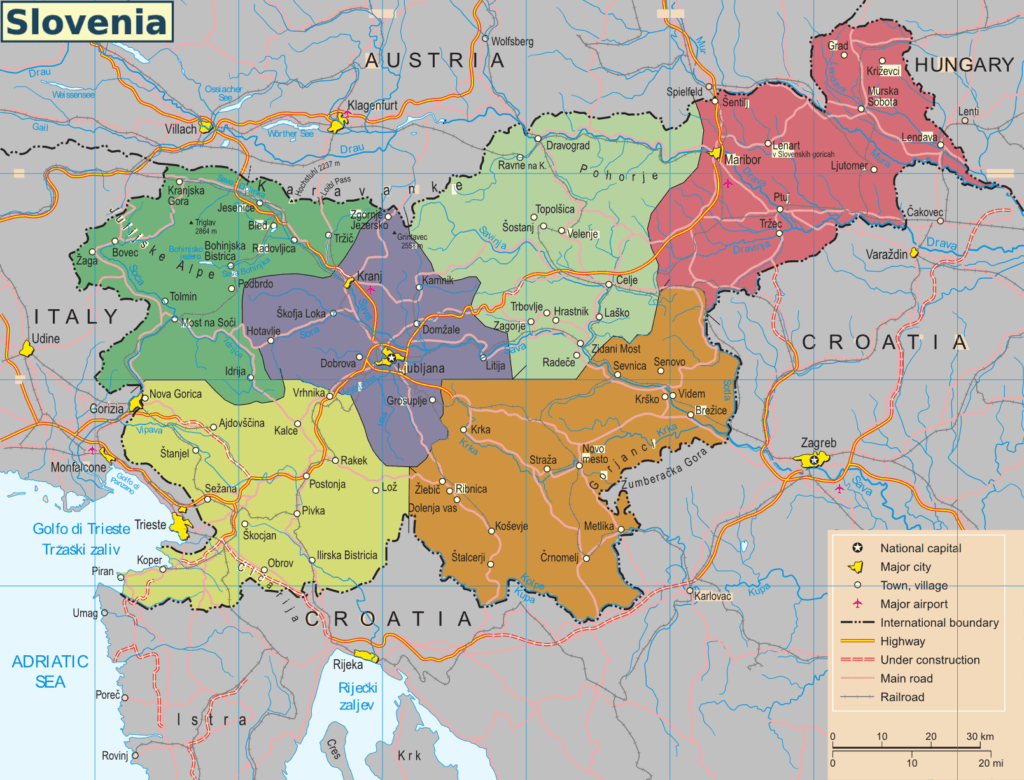
Slovenia wins for green, alpine beauty — Lake Bled, Triglav and the Soca Valley. Croatia wins for the Adriatic coast, islands and walled towns.
Cost & crowds
Slovenia is quieter and good value; Croatia’s coast is busier and pricier in peak summer.
Coast
Croatia has a long, island-studded coast; Slovenia has just a short (but charming) Adriatic strip (Piran).
Who should choose which
Beaches, islands and famous towns: Croatia. Alpine lakes, nature and value: Slovenia. They border each other — a perfect combo.
The honest call before you book
Choose Croatia if your trip revolves around swimming, island-hopping and old walled towns, and choose Slovenia if you want lakes, mountains and a tighter, cheaper itinerary you can do without a single ferry. The real deciding factor is how you’ll get around: Croatia’s coast is a long, ferry-stitched line that eats days, while Slovenia packs Bled, Ljubljana and the Julian Alps into drives under two hours.
What actually separates them on the ground:
- Headline sights cost very differently. Lake Bled itself is free to walk around (Bled Castle is about €11, a pletna boat to the island around €15), whereas Plitvice’s peak-summer ticket hits €40 per adult and books out.
- Flights favour Croatia. Dubrovnik airport serves roughly 75 destinations across 36 airlines including easyJet and Ryanair; Ljubljana’s airport is far thinner, so reaching Slovenia direct from many cities means a connection or a drive from Venice or Zagreb.
- Both use the euro now (Croatia joined in 2023), so there’s no currency hassle running the two together — and since they share a border, the classic move is Ljubljana and Bled first, then south to the Dalmatian coast.
Slovenia vs Croatia FAQ
Which has better nature?
Slovenia — alpine lakes and mountains.
Which has better beaches?
Croatia, with its long coast and islands.
Should I visit both?
Yes — they border each other and pair beautifully.
Getting there and getting around: trains, buses, and the now-invisible border
Here’s the single biggest practical upgrade for combining these two countries: the border has effectively vanished. Since 1 January 2023 Croatia joined the Schengen Area and adopted the euro, so the old land checkpoints between Slovenia and Croatia were abolished and you no longer change money crossing over. Both countries now run on the euro, full stop.
The backbone route is Ljubljana to Zagreb: roughly 2.5 to 3.5 hours by train (some direct, some with a quick change at Dobova), or about 2 hours 50 minutes by bus with near-hourly departures. Train tickets start around $30 if booked ahead.
The catch most first-timers miss: public transit between the two countries’ headline sights is slow and indirect. Getting from Plitvice Lakes to Lake Bled by bus realistically means Plitvice to Zagreb (about 2h15m), Zagreb to Ljubljana (about 2h15m), then Ljubljana to Bled (about 1h15m). Plan a day for it, or rent a car.
- Driving Slovenia: you need an electronic vignette, not a sticker. A 7-day vignette is about 16 euros, a monthly one about 32 euros. Skip it and fines run brutally high.
- Driving Croatia: still the old ticket-and-pay-at-the-exit toll booths (pay in euros or by card); the planned switch to a fully digital free-flow system has been pushed back, so the ticket booths are what you’ll use for now.
- Lake Bled note: there’s no train station at the lake itself; the larger Lesce-Bled station is about 4.5 km out.
What you’ll actually eat: peka, pršut, potica, and Istrian truffles
The food split mirrors the geography. Slovenia leans Alpine and Central European; Croatia leans Mediterranean and Italian-influenced, especially in Istria.
Eat in Slovenia:
- Štruklji rolled dough dumplings, sweet or savoury, the everyday comfort food.
- Potica, the iconic rolled nut cake (walnut and tarragon fillings are the classics, out of some 80 known versions).
- Blejska kremšnita, the Lake Bled cream cake invented at the Park Hotel cafe. A slice runs about 5 to 5.50 euros in town versus roughly 8 euros at lakefront tourist spots.
Eat in Croatia:
- Peka, meat or octopus slow-cooked for hours under a coal-heated dome lid; usually you order it a day ahead.
- Pršut, the dry-cured ham aged up to two years, sliced paper-thin.
- Istrian truffles. The forests around Motovun are the only place outside Italy where the prized winter white truffle grows. Order fuži with truffle sauce (hand-rolled tubular pasta). The famous spot is Restaurant Zigante in Livade, run by the man whose dog dug up a Guinness-record 1.3 kg white truffle in 1999. Istria is also serious wine country (look for Malvazija whites and Teran reds).
Verdict: pick Croatia/Istria for a food-and-wine trip, Slovenia for cozy mountain comfort food and that one perfect cream cake.
Plitvice vs Triglav: the national-park showdown (fees, hours, what to expect)
Both countries hang their scenery on a flagship national park, but they’re completely different experiences and the cost gap is large.
Plitvice Lakes (Croatia) is a ticketed, boardwalk-and-shuttle attraction: 16 terraced turquoise lakes linked by waterfalls, walked on wooden catwalks, with boat and panoramic-train transfers included. It’s stunning but busy and timed-entry, and the price swings hard by season:
- High season (June to September): about 40 euros for an adult day ticket.
- Shoulder (April, May, October): about 23 euros.
- Low season (November to March): about 10 euros.
- Open year-round; kids under 7 free; cheaper two-day tickets and student/group discounts available. Book a timed slot in advance for summer.
Triglav National Park (Slovenia) is the opposite model: a vast Alpine wilderness around Slovenia’s highest peak, wrapping the Bled and Bohinj region, the Vintgar Gorge, and the Soča Valley. General entry is free with no gate ticket at all. You pay only for specific attractions (gorge boardwalks, caves, cable cars), plus parking and camping.
Bottom line: choose Plitvice if you want one jaw-dropping, well-organized water spectacle and don’t mind crowds and a ticket; choose Triglav if you’d rather hike open, free-roaming mountain terrain at your own pace.
Which is better for your trip, Slovenia or Croatia?
For families
Verdict: Croatia wins for families. Istria and the Makarska Riviera are built for kids: calm, shallow pebble-and-concrete bays, seaside promenades in Rovinj and Porec, and an endless supply of family apartments with kitchens that cost far less than hotels. Split and Dubrovnik both have direct summer flights from most of Europe, so transfer times are short. Slovenia is safe and compact, and Lake Bled itself gets pleasantly warm by mid-July, but the swimming season is short, Lake Bohinj stays cool all summer, and rainy alpine days are harder to fill with small children.
For couples & honeymoons
Verdict: Croatia wins for couples and honeymoons. Sunset sailing off Hvar, dinner inside Dubrovnik’s walls, and wine tasting on the Peljesac peninsula give Croatia the more classic honeymoon arc, especially in June or September when the crowds thin. Slovenia’s counterpunch is real, though: a lakeside room at Bled and a night in a Soca Valley boutique farmstay make a superb 3-4 day add-on, since Ljubljana is only about two hours by car from Zagreb.
For budget travelers
Verdict: Slovenia wins for budget travelers. Ljubljana’s hostels, bakeries, and student-priced lunch menus undercut anything on the Dalmatian coast in peak season, when Hvar and Dubrovnik charge Western European prices for rooms and ferries add up fast. Slovenia is small enough to see on one cheap rental-car loop or by bus, with excellent free hiking. The caveat: in May or October, inland Croatia and Istrian guesthouses get cheap too, so shoulder-season travelers can call it a draw.
For hiking & the outdoors
Verdict: Slovenia wins for hiking and the outdoors. Triglav National Park, the Julian Alps, and the emerald Soca Valley pack alpine trails, via ferratas, and white-water rafting into an area you can drive across in two hours, with mountain huts serving hot meals from June to September. Croatia answers with Plitvice Lakes and Paklenica canyon, both excellent day trips, but its karst terrain is exposed and brutally hot in midsummer. If walking is the point of the trip, base yourself in Bovec or Kranjska Gora.
Planning the trip? Go deeper with our Slovenia Travel guide and best time to visit Croatia.
You Might Also Love




Written by
John Morrison is the founder and lead travel writer at Packzup. Over the past decade he has explored destinations across Africa, the Americas, Asia, Europe, the Middle East, and Oceania — always self-funded, never on a press trip.
