
Last updated September 1, 2026 · Editorial policy
Quick verdict: 3 days in Cusco = Machu Picchu day trip + Plaza de Armas + San Pedro Market + Sacred Valley + altitude acclimation. The most iconic Peru pilgrimage in 3 days.
Cusco itineraries by trip length
Still deciding? Compare: Cusco vs La Paz · Cusco vs Lima
The day-by-day plan
Day 1 — Old Town & Acclimatizing
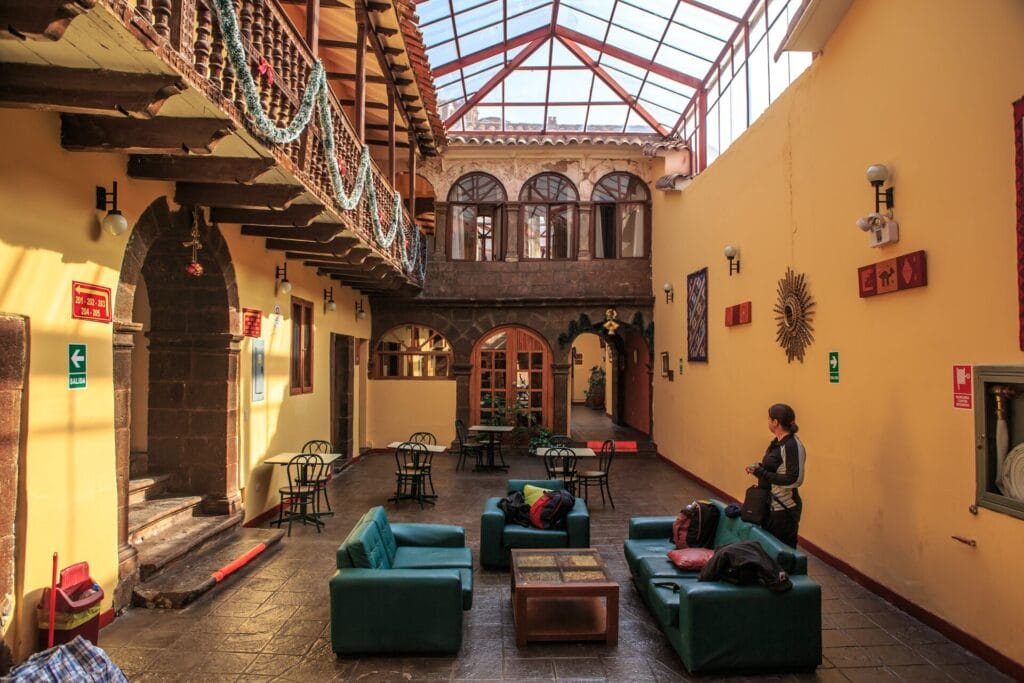
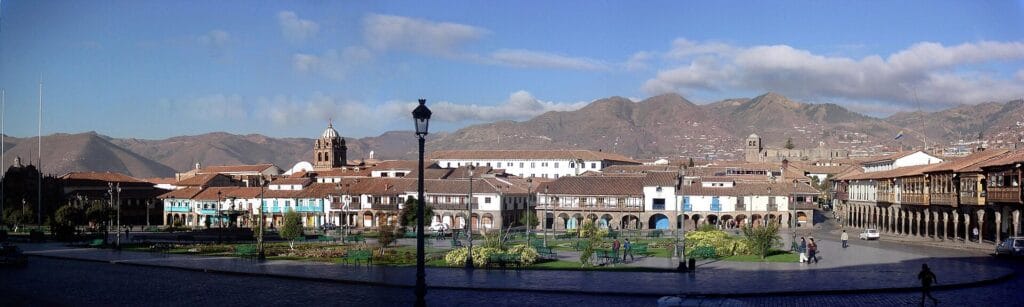
Ease into Cusco’s 3,400m altitude with a slow city day. Start at the Plaza de Armas, then follow Calle Loreto—one of the best-preserved Inca lanes—down to Qorikancha, the Temple of the Sun where Dominican masonry sits atop flawless Inca stonework (entry roughly S/15, about $4). Walk northeast up Hatunrumiyoc past the famous twelve-angled stone, then climb Cuesta San Blas into the San Blas artisan quarter, a 15-minute uphill stroll of cobbled lanes, ceramic studios and coffee terraces. Lunch at the sprawling Mercado Central de San Pedro, a short walk west, where a bowl of caldo de gallina or a fresh-fruit juice runs about S/10–15 (roughly $3–4). Planning note: sip coca tea and go easy on the first day—soroche (altitude sickness) hits hardest in the first 24 hours, so skip the pisco sours until tomorrow.
Day 2 — Sacred Valley Loop
Hire a private driver or join a Sacred Valley tour (about S/120–180, roughly $32–48, plus the S/130/~$35 Boleto Turistico covering these ruins) for a full-day loop northwest of the city. Begin at the hilltop terraces and Sunday artisan market of Pisac, about a 45-minute drive down into the valley. Continue to the circular agricultural terraces of Moray and the cascading salt pans of the Salineras de Maras (the salt terraces charge a separate fee of about S/10, roughly $3). Finish at the towering fortress-temple of Ollantaytambo, a living Inca town with original stone streets and water channels still in use. Try lomo saltado or trout (trucha) at a valley restaurant—around S/30–45 (about $8–12). Planning note: the valley sits about 600m lower than Cusco, so your body acclimatizes better sleeping in Ollantaytambo before Machu Picchu.
Day 3 — Machu Picchu Day Trip
Rise early for the marquee day. From Ollantaytambo station, catch a morning train through the Urubamba gorge to Aguas Calientes—roughly 1 hour 45 minutes on PeruRail or Inca Rail (round-trip fares run about $70–120 depending on service; book weeks ahead in dry season). From town, a 30-minute shuttle bus (about $24 round trip) switchbacks up to the citadel. Your timed entry ticket (around S/152, roughly $40 for a standard circuit, booked in advance) assigns a set circuit; Circuits 1 and 2 deliver the classic postcard views from the upper terraces and Guard House. Allow two to three hours to walk the ruins with a guide. Planning note: bring your passport and reserve a mid-morning slot—the early-morning fog often burns off by then, and afternoon trains give you a relaxed exit back to Cusco.
What to book ahead + practical tips
Compare Cusco tours and tickets →
Helpful Packzup guides
Sleep low first: the acclimatization order most itineraries get backwards
The common mistake is sleeping your first night in Cusco at 3,399 m, the highest point of the trip, right after a flight. A gentler order is to skip Cusco on arrival and transfer straight to the Sacred Valley, where Ollantaytambo sits near 2,792 m and Urubamba near 2,870 m, roughly 500-600 m lower. That gap matters: CDC high-altitude guidance favors climbing high by day but sleeping low, and most travelers report deeper sleep and steadier digestion at valley elevation. A practical reshuffle of this itinerary: land, ride the hour-plus to Ollantaytambo, spend the first one or two nights there visiting Pisac and the Ollantaytambo fortress, then move up to Cusco already part-adjusted for the Plaza de Armas and San Pedro Market. The bonus is logistical, not just physical, because Machu Picchu trains leave from Ollantaytambo, so basing there first puts you on the platform without the 3.5-hour pre-dawn run from Cusco. If you must stay in Cusco first, keep day one flat and slow, and save the steep San Cristobal and Saqsaywaman climbs for day two.
Frequently asked questions
Is 3 days enough for Cusco?
Best Cusco area to stay 3 days?
Cusco 3-day budget?
Day trip from Cusco in 3 days?
Cusco 2026 – what’s new?
Updated 2026. Some links on Packzup are affiliate links.
Best time to visit Cusco (real climate data)
Best months: June, July, August.
Cusco’s warmest month is October (avg 19°C / 66°F), the coolest is July (low 5°C / 40°F). The wettest is January (223 mm) and the driest is June.
Source: Open-Meteo ERA5 climate normals (2019–2023). See the full month-by-month weather →
You Might Also Love



Written by
John Morrison is the founder and lead travel writer at Packzup. Over the past decade he has explored destinations across Africa, the Americas, Asia, Europe, the Middle East, and Oceania — always self-funded, never on a press trip.
Trip prep: before you travel, plan what to wear, check the tap water, sort your mobile data, and see if it is a cash or card country, and skim local etiquette.
