Last updated August 28, 2026 · Editorial policy
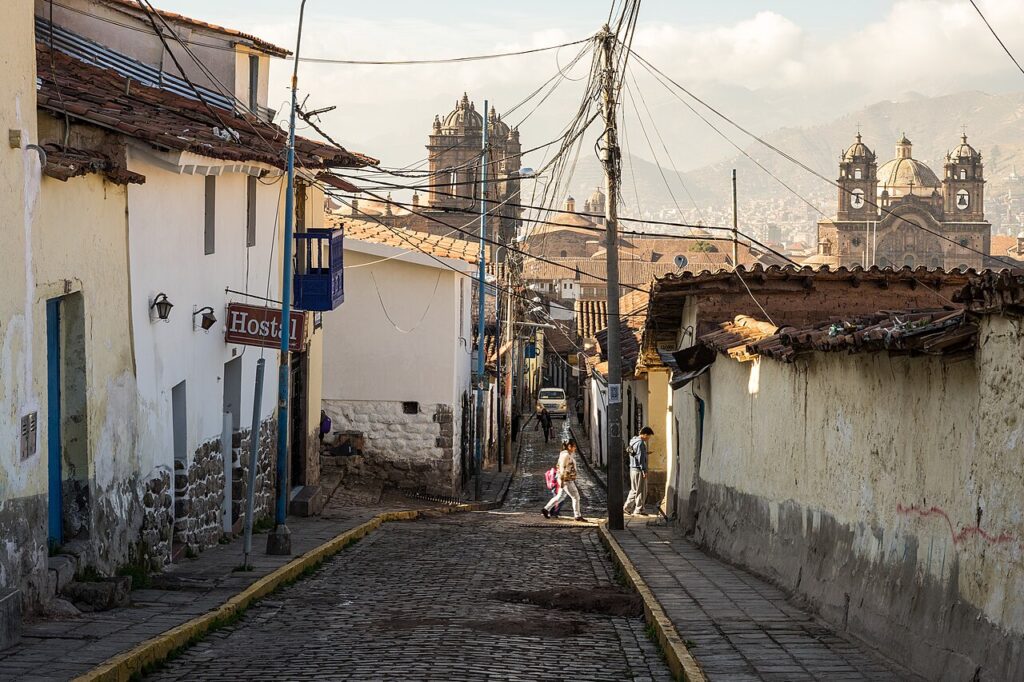
Cusco sits at 3,400 metres above sea level, which means walking is the primary but physically challenging way to get around — the steep, cobblestoned streets at altitude will leave even fit travellers breathless for the first day or two. The historic centre is compact and walkable once you acclimatise. Beyond the city, the Sacred Valley, Machu Picchu, and rainbow mountains require a combination of trains, colectivos (shared taxis), organised tours, and — for Machu Picchu — the iconic train journey. Local transport within the city relies on taxis and colectivos that run fixed routes through the valley.
More: When to visit Cusco · Cusco travel guide
Transport Options:
1. Walking in Cusco Centre
The Plaza de Armas, San Blas neighbourhood, and main market are all within a 15-minute walk of each other — but that walk will feel longer at altitude. The cobblestoned streets are steep and uneven. Take your time for the first 2 days while acclimatising. The walk from Plaza de Armas up to San Blas is the most common challenge — take the taxi up and walk down. Wear sturdy shoes with good grip. The main streets are safe during the day but quieter lanes should be avoided after dark.
2. Taxis
Small taxis are everywhere in Cusco and very cheap — standard fare within the city centre is 5-8 PEN (1.50-2.50 USD). Taxis do not use meters — agree on the fare before getting in. Official taxis have registration numbers displayed on the roof and doors. Your hotel can call trusted taxi services. To the airport: 15-20 PEN. To Sacsayhuamán ruins: 10-15 PEN. Night fares are slightly higher. Never take unmarked taxis — use hotel-recommended services or apps.

3. Colectivos (Shared Vans)
Shared minivans run fixed routes from Cusco through the Sacred Valley to Pisac, Urubamba, Ollantaytambo, and Chinchero. They depart from Calle Puputi and Avenida Grau when full. Cusco to Pisac: 1 hour, 5 PEN. Cusco to Urubamba: 1.5 hours, 10 PEN. Cusco to Ollantaytambo: 2 hours, 15 PEN. They are the cheapest way to reach the Sacred Valley and run frequently throughout the day. Tell the driver your stop as they pass through multiple towns.
4. Trains to Machu Picchu
Two companies operate the train to Aguas Calientes (Machu Picchu town): PeruRail and Inca Rail. Trains depart from Poroy (near Cusco), Urubamba, and Ollantaytambo. Ollantaytambo is the most common departure (1.5 hours to Aguas Calientes). Standard fares: 60-80 USD one-way. The Vistadome class has panoramic windows (90-120 USD). The luxury Hiram Bingham train costs 400+ USD with meals and drinks. Book weeks in advance for peak season (June-August). The train journey through the Sacred Valley is spectacular.

5. Tourist Buses and Tours
Organised tours are the most common way to visit Sacred Valley sites in a single day, or to reach Rainbow Mountain, Humantay Lake, and other day-trip destinations. Sacred Valley full-day tours cost 80-150 PEN. Rainbow Mountain tours cost 100-180 PEN including transport and breakfast. Tours pick up from your hotel at 4-6 AM. Cruz del Sur and Oltursa run comfortable long-distance buses to Puno (6 hours), Lima (22 hours), and Arequipa (10 hours).
6. Inca Trail and Trekking Transport
The classic Inca Trail to Machu Picchu (4 days) starts at KM 82 — reached by train or tour van. Alternative treks (Salkantay, Lares, Choquequirao) start from various points in the Sacred Valley reached by private transport arranged by trekking companies. All treks require licensed guides and advance booking — the Inca Trail has a 500-person daily limit and books out months ahead. Trekking companies handle all logistics including transport to/from trailheads.
Transport Tips for Cusco
Spend your first 2 days in Cusco acclimatising before attempting strenuous activities. Coca tea (mate de coca) helps with altitude symptoms. Book Machu Picchu train tickets and entrance well in advance (2-3 months for peak season). The Boleto Turístico (130 PEN) covers 16 archaeological sites and museums — essential if visiting multiple ruins. The cheapest way to Machu Picchu is colectivo to Ollantaytambo then train to Aguas Calientes. Avoid walking alone in quiet streets after dark. Apps: inDriver works in Cusco for rides.
What is the best way to get around Cusco?
The most practical options are Walking in Cusco Centre and Taxis. The Plaza de Armas, San Blas neighbourhood, and main market are all within a 15-minute walk of each …
Do I need a car in Cusco?
No. Central Cusco is walkable, and cheap combis and taxis cover the rest. Use inDrive or Uber to hail rides, and shared colectivos from Pavitos street for the Sacred Valley. A rental only helps for exploring Maras, Moray and remote valley villages at your own pace.
Is public transport safe in Cusco?
Mostly yes. Daytime combis and colectivos are safe but crowded, so watch for pickpockets and keep bags on your lap. At night skip street taxis and book through inDrive or Uber, or ask your hotel to call a registered taxi.
Related Articles
- 15 Best Things to Do in Cusco, Peru (Real Local Guide)
- 12 Best Things to Do in Cusco
- Where to Stay in Cusco: Best Neighbourhoods for Every Budget
- Best Time to Visit Cusco: Month-by-Month Guide
Frequently Asked Questions
You Might Also Love



Written by
John Morrison is the founder and lead travel writer at Packzup. Over the past decade he has explored destinations across Africa, the Americas, Asia, Europe, the Middle East, and Oceania — always self-funded, never on a press trip.