
Last updated August 28, 2026 · Editorial policy
Cusco itineraries by trip length
Still deciding? Compare: Cusco vs La Paz · Cusco vs Lima
Cusco Itinerary: 5-Day Day-by-Day Travel Plan
Quick answer: Five Cusco days built around altitude sense: acclimatize in the capital, loop the Sacred Valley and sleep in Ollantaytambo, do Machu Picchu right, climb Sacsayhuamán and wander San Blas, then finish at Rainbow Mountain or the Maras salt pans.
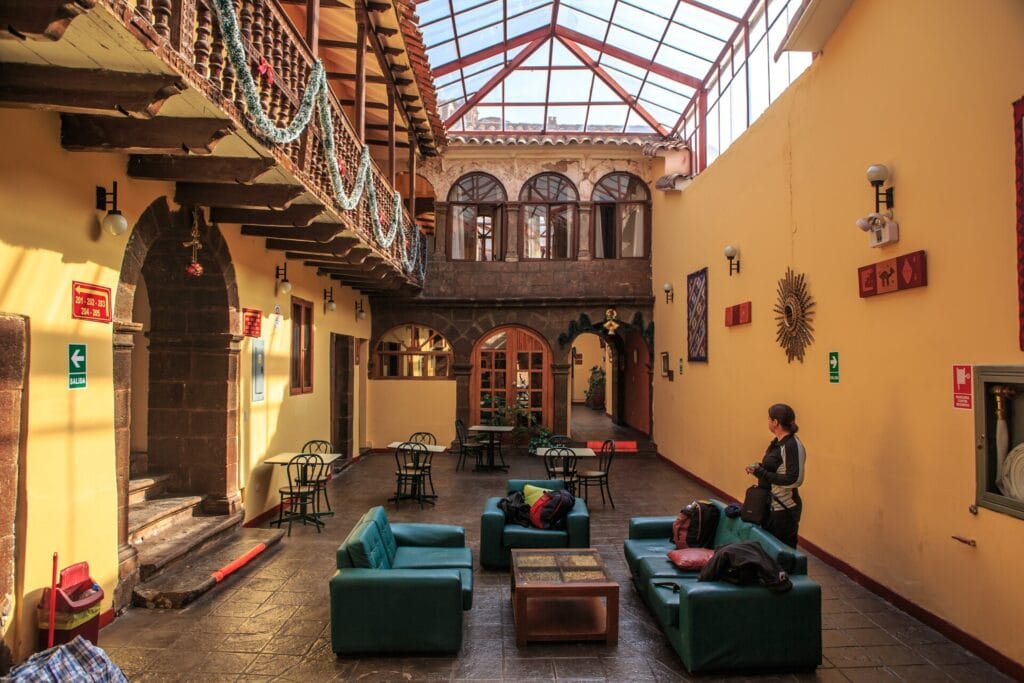
Planning a trip to Cusco? This itinerary is built from a first-time-visitor perspective: hit the icons, eat the best food, and finish with memorable experiences. Each day mixes a major sight, food stops, and downtime.
Cusco Itinerary at a Glance
| Day | Focus |
|---|---|
| Day 1 | Acclimatize in the Capital |
| Day 2 | Sacred Valley Loop |
| Day 3 | Machu Picchu |
| Day 4 | Sacsayhuamán & San Blas |
| Day 5 | Rainbow Mountain or Maras & Moray |
Day-by-Day Itinerary
Day 1 — Acclimatize in the Capital
You’re at 3,400 meters — day one’s only job is acclimatizing. Move slowly, drink coca tea, skip the pisco until tomorrow. Ease around the Plaza de Armas and its two great churches, then visit Qorikancha (about 15–20 soles), the Inca sun temple whose fitted stone walls the conquistadors couldn’t better — they simply built their convent on top, and earthquakes keep proving the Incas right. Browse San Pedro Market for fruit you can’t name and a one-dollar juice. Buy your boleto turístico (130 soles) if you’ll do the ruins circuit, and confirm Machu Picchu logistics tonight. Early alpaca-steak dinner, early bed.
Day 2 — Sacred Valley Loop
Full-day Sacred Valley loop (group tours about $25–40 plus entries, or a private driver roughly $80–100). Start at Pisac: hillside terraces spilling like amphitheater seats down the mountain, with a sprawling handicraft market below for slow shopping and fresh empanadas from the clay ovens. Lunch in Urubamba, then continue to Ollantaytambo — the best surviving Inca town, its lanes and water channels still running on the original 500-year-old grid, with the fortress terraces rearing straight above the plaza (covered by the boleto turístico). Strategic move: sleep in Ollantaytambo tonight instead of returning to Cusco — it’s lower altitude, prettier at dusk, and tomorrow’s Machu Picchu train leaves from right here.
Day 3 — Machu Picchu
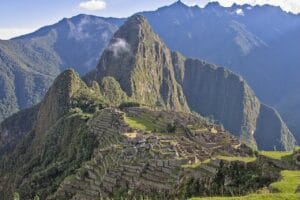
The day. Trains from Ollantaytambo reach Aguas Calientes in about 1.5–2 hours (round trip roughly $110–160; book weeks ahead), then shuttle buses climb to the gate ($24 round trip). Enter Machu Picchu with your timed ticket (about $45–50 — buy well in advance; circuits are enforced, and Huayna Picchu or Machu Picchu Mountain add-ons sell out first). Then: the terraces, the Intihuatana stone, the llamas photobombing the Temple of the Sun — it beats every photo you’ve seen. Hire a licensed guide at the gate (~$50 per group) to make the stones speak. Return to Cusco by evening train, exhausted and insufferably happy.
Day 4 — Sacsayhuamán & San Blas
Cusco’s own ruins morning: walk (or taxi) up to Sacsayhuamán (boleto turístico), where zigzag ramparts are built from stones the size of trucks fitted like putty — the view drops straight down the red roofs of the city. Add nearby Q’enqo’s carved caves if energy allows. Descend into San Blas, the artisan barrio: silversmiths, wood-carvers, balcony cafes and the famous twelve-angled stone in the Hatunrumiyoc wall on the way down. Museum hour: the Museo Inka or the pre-Columbian art museum (MAP) both reward. Tonight, eat the good stuff: a proper Andean tasting (quinoa, trout, yes-you-can guinea pig) or Cusco’s surprisingly serious craft-beer scene.
Day 5 — Rainbow Mountain or Maras & Moray
Grand finale, pick one. Rainbow Mountain (Vinicunca): a 3:30am start, three hours’ drive, and a breath-stealing walk to 5,036 meters where mineral bands stripe the ridge like a painted blanket (tours ~$30–45 including breakfast and entry; only attempt it well-acclimatized — you’ve had four days, you qualify). Softer but sublime: the Moray crop-laboratory rings and the thousand shimmering salt pans of Maras (half-day tours ~$20–35; salt from the family ponds is the best cheap souvenir in Peru). Either returns you to Cusco by evening for a farewell pisco sour above the plaza — toast the Incas; they earned it.
Where to Stay in Cusco
Choose a central neighborhood within walking distance of major sights — you’ll save hours of commute time over 5 days. Book 6-12 weeks ahead for best rates.
Budget Breakdown (5 Days)
Peru is rated Budget-friendly in our Travel Cost Index 2026. Figures are country-level daily ranges per person and exclude international flights.
| Travel style | Per day | Total 5 days |
|---|---|---|
| Budget | $12-25 | $60-125 |
| Mid-range | $45-90 | $225-450 |
| Luxury | $180-350 | $900-1,750 |
Source: Packzup Travel Cost Index 2026 — country-level averages; city and peak-season prices run higher. Excludes international flights.
What to Pack
- Clothing: Pack warm layers for cold Andean nights near 3,400 meters, a rain shell for the November to March wet season, and sturdy grippy shoes for steep cobblestone streets and Inca ruins.
- Tech: Peru uses type A and C plugs at 220 volts, so check dual-voltage on US devices. Download offline maps since signal drops outside Cusco on treks; Claro or Movistar eSIMs are cheap.
- Documents: Many nationalities enter Peru visa-free for tourism, often up to 90 days, but check current rules. Carry your physical passport for Machu Picchu entry, plus copies and insurance covering high altitude.
- Money: Peru uses the sol (PEN). Markets, taxis, and small shops in Cusco run on cash, so carry small bills; cards work in tourist restaurants. ATMs charge fees, and 10 percent tips are appreciated.
- Day bag: High-SPF sunscreen and a hat for intense high-altitude UV, a rain layer, bottled or filtered water since tap water is unsafe, and coca candies for the altitude.
The Routing Mistakes That Wreck a Cusco Trip (and How to Sequence It Right)
The biggest planning error here is altitude. Cusco sits at about 3,400 m, so loading day one with the steep climbs to Sacsayhuaman (roughly 2 km and a 30-45 minute uphill walk above the center, or a short taxi) or the artisan lanes of San Blas (a 15-minute steep walk up from the Plaza de Armas) leaves many visitors flattened. Keep arrival day flat and slow.
Smarter sequencing routes you down before up. Pisac and Ollantaytambo in the Sacred Valley sit lower than the city, around 2,600 to 3,000 m, and even Machu Picchu is lower at about 2,430 m, so spending early nights in the valley acclimatizes you while you sightsee. Save Rainbow Mountain (Vinicunca) at roughly 5,200 m for late in the trip, never the first days; tours leave Cusco around 4 to 5 AM and run 11 to 12 hours, so it eats a full day either way.
- Buy the full Boleto Turistico (S/130, valid 10 days) only if you will hit several of its 16 sites; it covers Sacsayhuaman, Pisac and Ollantaytambo but not Machu Picchu, the Cathedral, or the Qorikancha temple interior, which all need separate tickets.
Skip cramming two valley day-trips into one day; cluster sights by neighbourhood instead and you avoid backtracking up and down the hill.
Frequently Asked Questions
Is 5 days enough for Cusco?
For first-time visitors, 5 days in Cusco covers the main highlights without rushing. If you want to add day trips, slower pace, or hidden gems, plan 2-3 more days.
How much will a 5-day Cusco trip cost?
Using the Budget Breakdown table above, drawn from our Travel Cost Index 2026: Budget $12-25/day ($60-125 for 5 days), Mid-range $45-90/day ($225-450 for 5 days), Luxury $180-350/day ($900-1,750 for 5 days). Country-level averages, excluding international flights.
What’s the best time for this Cusco itinerary?
Shoulder seasons offer the best balance of weather, crowds, and prices for Cusco. See destination-specific best-time guide.
How do I get around Cusco?
No car needed: central Cusco is walkable, taxis and apps like inDrive and Uber are cheap, colectivos run to the Sacred Valley, and PeruRail or Inca Rail trains from Poroy or Ollantaytambo reach Machu Picchu. Self-driving is rarely worth it here.
What should I pack for 5 days in Cusco?
Cusco sits at about 3,400 meters, so pack warm layers: sunny days turn to near-freezing nights in the June to July dry season. Add strong sunscreen, sturdy shoes for steep cobblestones, and a rain shell for November to March.
Should I book hotels in advance?
Book two to three months out for the June to August dry season, and further ahead for Inti Raymi (late June) and Fiestas Patrias (late July), when Cusco hotels genuinely sell out. Shoulder months need far less lead time.
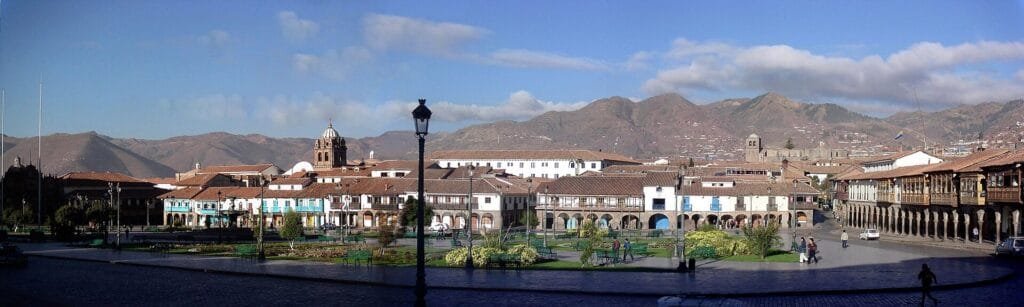
Related Cusco Travel Guides
- Best Things to Do in Cusco
- Where to Stay in Cusco
- Best Food in Cusco
- Best Time to Visit Cusco
Best time to visit Cusco (real climate data)
Best months: June, July, August.
Cusco’s warmest month is October (avg 19°C / 66°F), the coolest is July (low 5°C / 40°F). The wettest is January (223 mm) and the driest is June.
Source: Open-Meteo ERA5 climate normals (2019–2023). See the full month-by-month weather →
You Might Also Love

Written by
Drew Treasury is a contributing travel writer at Packzup, specialising in city culture, food markets, street art, and neighbourhood-level travel.
Trip prep: before you travel, plan what to wear, check the tap water, sort your mobile data, and see if it is a cash or card country, and skim local etiquette.
