
Last updated September 11, 2026 · Editorial policy
- Cost comparison: what you will actually spend
- Food: the old rivalry England keeps losing (mostly)
- Beaches and nature: not remotely close
- Cities and culture: the heavyweight bout
- Weather and when to go
- Getting around and safety, including entry rules for Americans
- Nightlife and vibe
- England or France: the honest verdict
- FAQ
It has been quite a summer to be a football-obsessed nation. With the 2026 World Cup unfolding across the USA, Canada, and Mexico, both England and France have spent the past few weeks glued to screens, arguing in pubs and cafes, and reminding everyone that nobody takes this sport more personally than they do. But this is not a football article, so I will leave the tournament talk right there.
This is a travel comparison, and it is one I have wanted to write for years, because England and France sit barely twenty miles apart at their closest point and still manage to feel like different planets. One gave us the pub, the Sunday roast, and free national museums. The other gave us the boulangerie, the two-hour lunch, and beaches where the water is actually warm. I have paid my own way through both, more than once, and I have opinions. Here is how they stack up in 2026.
| Category | England | France | Winner |
|---|---|---|---|
| Daily budget | $80-130 budget / $180-280 mid | $70-120 budget / $160-260 mid | France |
| Food | Better than its reputation | Still the benchmark | France |
| Beaches/Nature | Cornwall, Lake District | Riviera, Alps, Corsica | France |
| Cities & culture | London plus free museums | Paris plus deep regional cities | Tie |
| Weather | Famously moody | Sunny south, moody north | France |
| Ease of travel | No language barrier, compact | Superb trains, some friction | England |
| Nightlife | Pubs, gigs, proper clubs | Terraces and wine bars | England |
| Value for money | Free museums help | Cheap wine and prix fixe help more | France |
Cost comparison: what you will actually spend
Let me kill the biggest myth first: neither country is cheap. But the shape of the spending is different, and that matters more than the totals.

In England, budget travelers should plan on roughly $80 to $130 a day. London is the wallet-killer: a hostel dorm bed runs $40 to $60 a night, a pint costs $7 to $9 in the center, and even a casual pub meal lands around $18 to $25. Head north to Manchester, Liverpool, or York and those numbers drop by a third. Mid-range travel, meaning a decent three-star hotel, sit-down dinners, and a few paid attractions, works out to $180 to $280 a day. Luxury starts around $450 in London and climbs quickly.
France runs slightly cheaper across the board once you escape Paris. Budget travelers can manage on $70 to $120 a day, helped enormously by the bakery-and-market ecosystem: a fresh baguette sandwich for $6, a genuinely good bottle of supermarket wine for $8. The prix fixe lunch menu remains the single best value trick in European travel, a proper two- or three-course restaurant meal for $18 to $28 that would cost nearly double at dinner. Mid-range sits at $160 to $260 a day, and luxury starts around $400 outside the Riviera in peak summer.
England claws some ground back with its museums. The big national ones in London, from the British Museum to the Tate Modern, are free, full stop. In Paris you will pay $15 to $22 per major museum, and it adds up fast. Even so, day for day, France edges it. And if French prices still sting, see how it fares against its cheaper neighbor in our Spain vs France comparison.
Food: the old rivalry England keeps losing (mostly)
I want to defend England here, and I partly can. British food in 2026 is far better than its reputation. London is one of the best eating cities on earth, the curry culture from Birmingham to the East End is a genuine national treasure, and a proper Sunday roast in a countryside pub, with crispy potatoes and a Yorkshire pudding the size of your head, is one of my favorite meals anywhere. The full English breakfast will carry you until dinner.

But France is France. The everyday floor is just higher. A random village bakery will hand you a croissant better than anything in most other capitals. Cheese counters read like novels. Markets in towns you have never heard of overflow with produce that needs nothing done to it. And eating well does not require money so much as timing: that prix fixe lunch, a picnic of bread, cheese, and wine assembled for $15, an unhurried dinner where nobody rushes you out.
The honest summary: England has brilliant high points and a much improved middle, but France wins on consistency, value, and the sheer everyday pleasure of eating. It is the same verdict I reached, narrowly, in the France vs Italy food fight, and Italy is a far tougher opponent than England.
Beaches and nature: not remotely close
This is the most lopsided category. France has the Mediterranean: Nice, Antibes, the calanques near Cassis, and Corsica, which has some of the clearest water in Europe. It has the Atlantic surf coast around Biarritz and Hossegor, where the sand goes on forever. And it has the Alps, Mont Blanc, the Verdon gorge, and the lavender plateaus of Provence. Sea water in the south hits the mid-70s Fahrenheit in August. You can actually swim without a wetsuit and without regret.
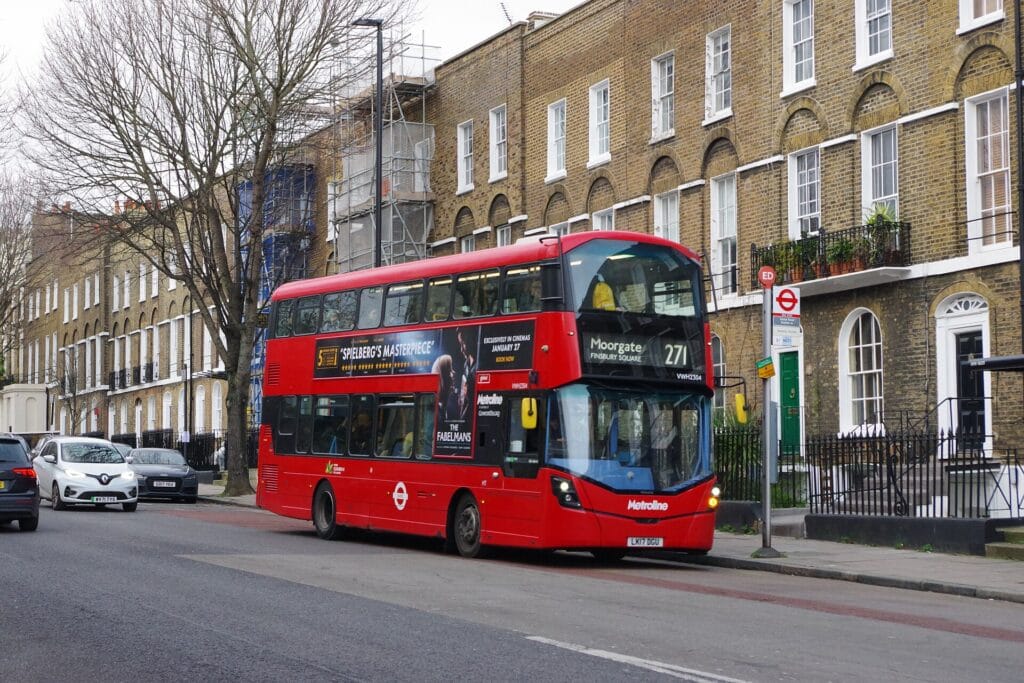
England is beautiful in a different, damper register. Cornwall’s coastline genuinely surprises people, turquoise coves at Porthcurno and Kynance that look Mediterranean right up until you touch the water, which rarely gets past the low 60s. The Lake District is one of my favorite walking regions anywhere, and the white chalk cliffs of the Seven Sisters make an unforgettable day trip from London. It is lovely. It is just not a beach holiday destination in the way France is.
If warm-water coastline is the core of your trip, France wins here without breaking a sweat, though the Atlantic-coast crown gets more interesting in our France vs Portugal matchup.
Cities and culture: the heavyweight bout
London versus Paris is the classic European city argument, and I refuse to pretend there is a clean winner. Paris is more beautiful, and it is not particularly close: the boulevards, the bridges, the way the whole city seems art-directed. London is more alive, more varied, more surprising, a collection of villages that happen to share a tube map, with theater and music scenes Paris cannot match.
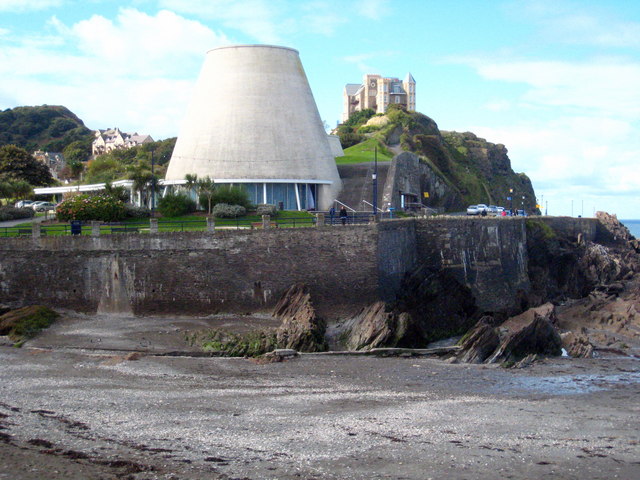
Beyond the capitals, both countries go deep. England gives you York’s medieval walls, Bath’s honey-colored Georgian crescents, Oxford and Cambridge, and the reinvented energy of Manchester and Bristol. France counters with Lyon, arguably its true food capital, the wine cathedral of Bordeaux, half-timbered Strasbourg, and Roman ruins in Arles that predate almost everything in England.
On museums, London’s free entry is a genuine cultural policy triumph, and it changes how you travel: you drop into the National Gallery for forty-five minutes because you can. Paris makes you commit, and charges you for it, but the Louvre and the Musee d’Orsay justify the ticket. I am calling this a tie and I will not be taking questions.
Weather and when to go
Here is the honest version: England’s reputation is earned. Even in July you should pack a rain layer, and a gray week in August is not bad luck, it is a coin flip. The upside is that it rarely gets oppressively hot, which increasingly matters as southern Europe bakes. June through September is the window, with long, gorgeous evenings when the sun does cooperate.

France is really two climates. The north, including Paris and Normandy, behaves much like England, moody and changeable. The southern half is a different world: reliable Mediterranean sun from May to October, hot and crowded in August, and blissful in June and September. Shoulder season in Provence or the Riviera, warm sea, thin crowds, soft light, is about as good as European travel gets.
If your trip depends on sunshine, France gives you a guarantee England simply cannot make.
Getting around and safety, including entry rules for Americans
France has the better trains, and it is not close at the top end. The TGV network turns Paris to Bordeaux into two hours and Paris to Marseille into about three. Book two to eight weeks ahead and fares are reasonable; walk-up prices are brutal. England’s trains reach almost everywhere but are expensive for the distances covered, so the same rule applies: buy advance tickets and avoid Friday evenings. Driving is pleasant in rural France and mildly terrifying in England until you adjust to the left side and to lanes seemingly designed for medieval carts.

Both countries are safe by any global standard. Use normal city sense: pickpockets work the tourist cores of Paris, especially around the Eiffel Tower and on Metro line 1, while London’s signature nuisance is phone-snatching from bikes, so keep yours off the curb edge.
Entry paperwork, for US passport holders, honestly now favors neither. The UK requires an Electronic Travel Authorisation, a quick online application with a small fee, sorted in a day or two, but you must do it before flying. France needs no visa for stays under 90 days, though Europe’s new biometric border checks are rolling out and the ETIAS pre-authorization is on the horizon, so check the current status a few weeks before you travel. The happy news: the Eurostar links London and Paris in about two hours fifteen, and continues toward Brussels and Amsterdam, a corridor we covered in Belgium vs Netherlands, so combining both countries is genuinely easy.
Nightlife and vibe
This one goes to England, and I say that as someone who loves a Paris cafe terrace at dusk. The pub is simply one of civilization’s great inventions: low-stakes, all ages, no dress code, conversation as the main event. Layer on top of that London’s club scene, Manchester’s live-music legacy, and the fact that a random Tuesday gig in Bristol can be the best night of your trip, and England is just a more fun country after 10 p.m.
France does evenings differently, and beautifully: the apero hour, long dinners that dissolve into midnight, wine bars where nobody is in a hurry. Paris has clubs, and the Riviera in summer has glossy, expensive ones. But French nightlife peaks early and elegant, while English nightlife peaks late and loud. Know which one you are, and pick accordingly.
England or France: the honest verdict
For budget travelers: France. London’s free museums are wonderful, but eating and drinking cheaply in England is a grim exercise, while eating cheaply in France is a pleasure. The bakery, the market, and the prix fixe lunch tip the math.
For foodies: France, and it is not a debate. England’s best restaurants can match anyone’s, but France wins breakfast, lunch, dinner, and everything in between, every single day.
For beach lovers: France, by the widest margin in this entire comparison. Warm Mediterranean water versus brave-face swimming in Cornwall is not a fair fight.
For first-timers in Europe: England. No language barrier, familiar customs, a compact country where trains reach everything, and a capital that eases you into international travel. It is the gentler on-ramp, the same reason I sometimes point nervous first-timers away from the trickier picks in France vs Germany.
Overall, if I could only book one flight this year, I would book France. It wins more categories, and the food and coastline gap is real. But England is the country I would rather spend a rainy Tuesday in, and that counts for something too.
FAQ
Is England or France cheaper to visit?
Which is better for a football-fan trip?
Can I visit England and France in one trip?
Do Americans need a visa for England or France?
Planning the trip? Go deeper with best time to visit England and our France Travel guide.
You Might Also Love
More side-by-side comparisons





Written by
John Morrison is the founder and lead travel writer at Packzup. Over the past decade he has explored destinations across Africa, the Americas, Asia, Europe, the Middle East, and Oceania — always self-funded, never on a press trip.
