
Last updated September 10, 2026 · Editorial policy
It is World Cup summer, and both England and Portugal have spent the past few weeks doing what they do best: living and dying by the fortunes of eleven men on a screen. With the 2026 tournament unfolding across the USA, Canada, and Mexico, two of Europe’s most football-obsessed nations have been in the global spotlight all July. But this is not a football article. This is about which of these two countries deserves your actual vacation days, your actual money, and your actual two weeks of freedom.
I am comparing them the way a traveler actually experiences them: what a day costs, what lands on your plate, what the coastline looks like, how the cities feel at street level, what the sky does, how hard it is to get around, and what happens after dark. No sponsorships, no tourism-board gloss. Where England wins, I will say so. Where Portugal embarrasses it, I will say that too. Here is the short version, followed by the long one.
| Category | England | Portugal | Winner |
|---|---|---|---|
| Daily budget | $80–280 for most travelers | $50–180 for most travelers | Portugal |
| Food | Underrated pubs, world-class global dining | Seafood, pastries, absurdly cheap wine | Portugal |
| Beaches/Nature | Gorgeous but cold-water coastline | Algarve cliffs and Atlantic surf | Portugal |
| Cities & culture | London alone justifies the flight | Lisbon and Porto, smaller but lovable | England |
| Weather | Unpredictable, mild, frequently gray | Sunny most of the year | Portugal |
| Ease of travel | No language barrier, dense rail network | Compact, cheap, easy English | England |
| Nightlife | Historic pubs, big-city club scenes | Street parties and late, cheap nights | Tie |
| Value for money | Poor to fair | Among the best in Western Europe | Portugal |
Cost comparison
Let us get the pound out of the way first, because it does most of the damage. England is not outrageously priced by the standards of, say, Switzerland, but the exchange rate means American travelers feel every coffee. Budget travelers can survive England on roughly $80–130 a day: a hostel dorm runs $35–60 depending on the city (London sits at the painful end), supermarket meal deals cost around $5, and many of the country’s greatest museums are genuinely free. A realistic mid-range day — a decent three-star hotel or B&B, pub dinners, a train ride, a pint or two — lands between $180 and $280. Luxury starts around $400 a day and climbs fast in London.
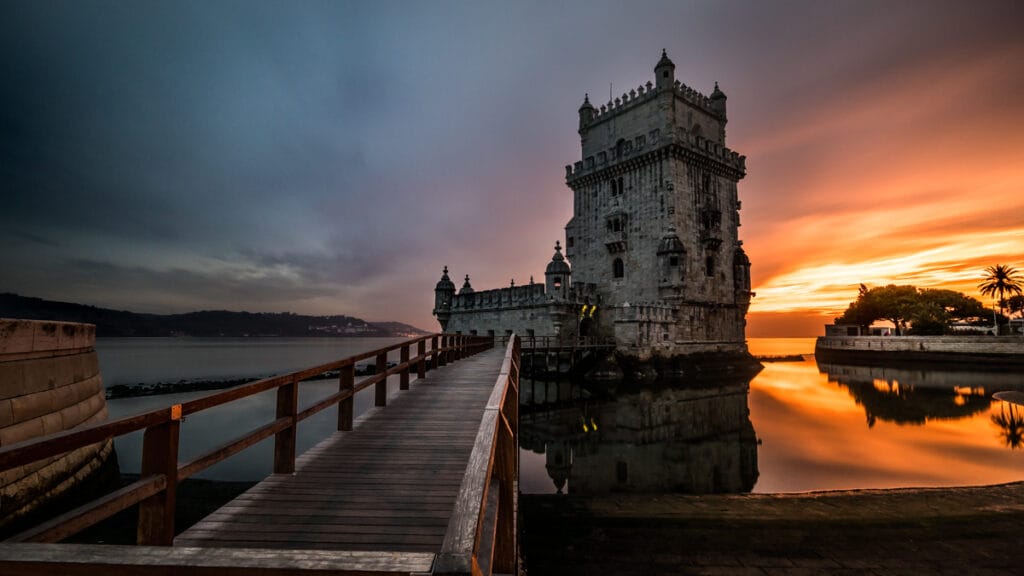
Portugal plays a different sport entirely. Budget travelers do fine on $50–85 a day, with hostel beds at $20–35 and a filling menu do dia lunch for $10–14, sometimes with wine included. Mid-range travel — boutique guesthouses, long seafood dinners, intercity trains — runs about $110–180. Even luxury is merciful: $250–400 a day books the kind of five-star hotel that would cost double in London. Across every tier, Portugal comes out roughly 40 percent cheaper, and the gap widens the longer you stay. It is the same value story we found in our Greece vs Portugal comparison: Portugal simply refuses to be out-valued in Western Europe.
Food
English food deserves a better reputation than it has. A proper Sunday roast in a centuries-old pub, fish and chips eaten out of the paper on a windy seafront, a full English breakfast that ruins you until dinner — these are real pleasures, not ironic ones. And England’s cities serve some of the best Indian, Turkish, and East Asian food outside those countries themselves; London in particular is one of the great eating cities on Earth. The catch is the bill. A memorable dinner in London starts around $40–60 a head before drinks, and even casual meals add up quickly.

Portugal wins this category not with fine dining but with everyday eating. A warm pastel de nata with an espresso costs a couple of dollars. Grilled sardines in summer, a bifana sandwich at a lunch counter, bacalhau prepared a dozen different ways, Porto’s gloriously excessive francesinha, seafood rice, house wine poured without ceremony for $3 a glass — the baseline is high and the prices are low. Portugal is also one of the few countries whose bakery culture can stand next to France’s, a case we made in France vs Portugal. England wins if your budget is large and you want global variety at the top end. For the food you actually eat three times a day, Portugal takes it comfortably.
Beaches & nature
England’s coastline is genuinely beautiful and genuinely cold. Cornwall has a real surf culture and turquoise coves that look Mediterranean in photos, the Seven Sisters chalk cliffs are spectacular, and the Lake District and Yorkshire Dales offer some of the loveliest walking country in Europe. But the sea rarely climbs much past the low 60s Fahrenheit even in August, and a beach day comes with a genuine chance of needing a jacket by 4 p.m. England is a hiking-and-scenery country more than a beach country, and on those terms it is excellent.
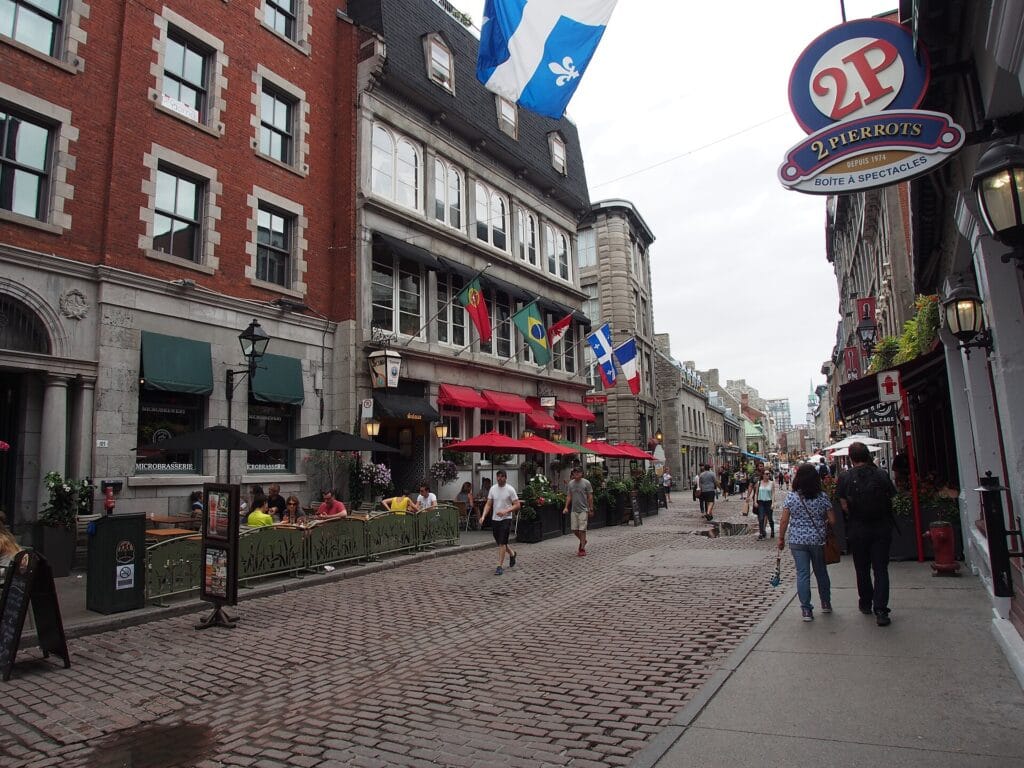
Portugal is a beach country, full stop. The Algarve’s sandstone cliffs and golden coves around Lagos are the postcard, but the wild Costa Vicentina, the surf towns up the western coast, and the monster winter waves of Nazaré give it range far beyond the resorts. Inland you get Sintra’s misty palace forests and the terraced vineyards of the Douro Valley, and if you count Madeira and the Azores, Portugal’s nature portfolio starts to feel unfair. The Atlantic is brisk here too — this is not the Mediterranean — but the sun above it is reliable. Portugal’s coast holds up even against Croatia, which is saying something. Clear win.
Cities & culture
This is England’s category, and it is not particularly close. London is one of the two or three most rewarding cities a traveler can visit: the British Museum, the National Gallery, and the Tate Modern are all free; the West End does theater better than anywhere except Broadway; and every neighborhood from Notting Hill to Shoreditch feels like a different city. Beyond the capital, York is a medieval time capsule, Bath is Georgian elegance built over Roman baths, Oxford and Cambridge trade on a thousand years of scholarship, and Liverpool and Manchester carry the twin religions of music and football. You could spend a month on English cities alone.

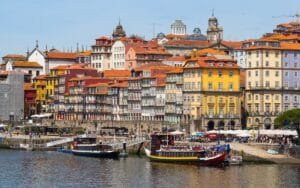
Portugal’s counterargument is charm rather than scale. Lisbon’s Alfama district is a tangle of tiled alleys and viewpoints, Belém holds the country’s great Age of Discovery monuments, and the mournful sound of fado drifting out of a small tavern at night is worth the flight by itself. Porto might be the more lovable city — the Ribeira waterfront, the port wine lodges across the river, the bookshops and the bridges. Coimbra and Évora reward day trips. It is a wonderful urban culture; it is simply competing with a heavyweight. If you want a fairer city fight, see Italy vs Spain. Here, England wins.
Weather & when to go
English weather is a national inside joke for a reason. Summer highs typically sit between 65 and 75°F, rain is possible in any month, and a gray week in July is not bad luck, it is simply July. The upside is that the landscape is green because of it, and when the sun does appear, English parks and beer gardens come close to perfect. Visit between May and September; winter brings short, dark days better suited to pubs and museums than sightseeing.
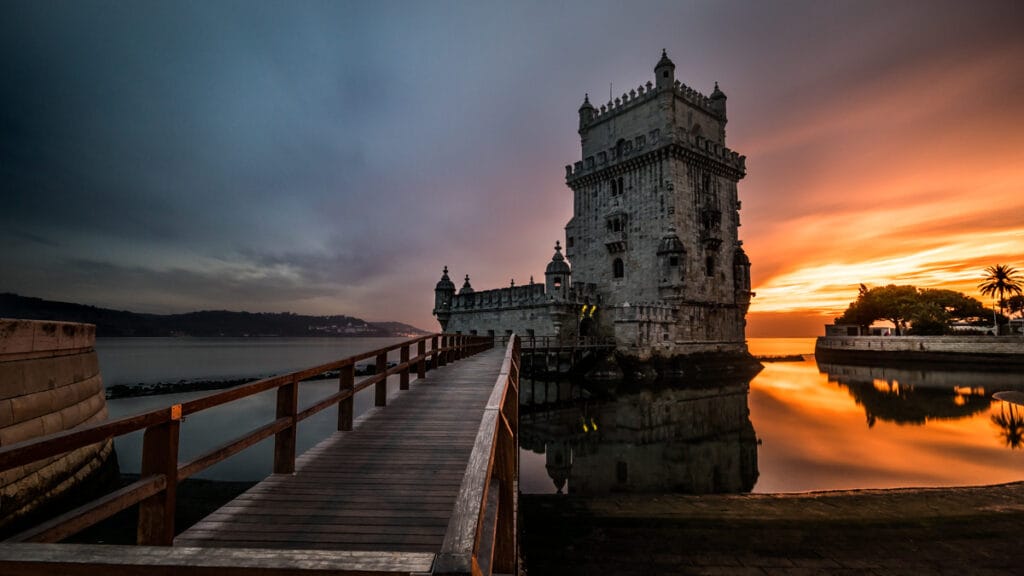
Portugal is one of the sunniest countries in Europe. Lisbon summers run 82–95°F, the Algarve stays bright for most of the year, and even January usually means mild afternoons around 60°F between rainy spells. The sweet spots are May–June and September–October, when the weather is superb and the August crowds — and August prices on the Algarve — have not arrived or have already gone. This category is a rout: Portugal wins, unless moody skies over green hills are specifically the aesthetic you are chasing.
Getting around & safety
England is logistically the easiest destination on Earth for Americans in one obvious way: everything is in English. The rail network is dense and fast, though walk-up fares can be shocking — book advance tickets and prices drop dramatically. London’s Tube and buses take contactless cards directly, no ticket machines required. Driving works if you can handle the left side and the narrow lanes. One honest entry note for US readers: you no longer just show up. The UK now requires an Electronic Travel Authorisation (ETA) — a quick online application with a small fee — before you board your flight. It is routine, but do it in advance and use the official gov.uk site, not a lookalike.
Portugal is nearly as easy. English is widely spoken in cities and tourist areas, trains are cheap and pleasant (Lisbon to Porto takes about three hours), metro rides and rideshares cost a fraction of their London equivalents, and the country is compact enough that nothing is far. US passport holders get 90 visa-free days in any 180 under Schengen rules; the EU’s long-promised ETIAS travel authorisation has been delayed repeatedly, so check its current status before you fly. On safety, both countries are reassuring: Portugal consistently ranks near the top of global peace indexes, and England’s tourist areas are safe with normal city awareness. In both, your main adversary is the pickpocket — on Lisbon’s tram 28 and in London’s crowded stations alike.
Nightlife & vibe
England invented the pub, and the pub remains one of civilization’s best ideas. Low ceilings, centuries of varnish, a fireplace, a hand-pulled ale — nobody else does this. On top of that sit London’s clubs and live-music rooms and the famously energetic student nightlife of Manchester and Leeds. The downsides are cost — a London pint now runs $7–9 — and timing, since plenty of pubs still wind down earlier than visitors expect.
Portugal’s nightlife is looser and later. In Lisbon’s Bairro Alto, hundreds of closet-sized bars spill into the streets and the crowd drifts between them with drinks in hand until well past midnight, before moving downhill toward the riverside clubs. Lagos in summer is a full backpacker party town, while Porto keeps things more relaxed and wine-soaked. Beer costs $2–3, nobody hurries you, and the night genuinely starts at 11 p.m. Calling a winner here depends on who you are: England for atmosphere and music heritage, Portugal for spontaneous, cheap, late fun. I score it a tie and mean it.
England or Portugal: the honest verdict
For budget travelers, Portugal wins and it is not close. Every dollar goes roughly 40 percent further, and the free pleasures — beaches, viewpoints, street life — are better too. For foodies, Portugal again, unless your budget is genuinely deep: everyday eating in Portugal beats everyday eating in England by a wide margin, and only London’s top-end global dining scene reverses that verdict. For beach lovers, Portugal, obviously; England’s coast is for walking, not swimming. For first-time travelers to Europe, I pick England: zero language barrier, iconic sights you have known since childhood, and effortless logistics make it the gentlest possible introduction, cost aside.
If you are forcing me to book one flight tomorrow with my own money, I book Lisbon. Portugal delivers more pleasure per dollar than almost anywhere in Western Europe right now, and its mix of sun, coast, food, and friendliness is very hard to argue with. England is the deeper cultural heavyweight, and everyone should do it once — ideally with a healthy budget and modest weather expectations.
FAQ
Which is better for a football-fan trip?
Is Portugal really that much cheaper than England?
Can I combine England and Portugal in one trip?
Which is better in winter?
Planning the trip? Go deeper with best time to visit England and best time to visit Portugal.
You Might Also Love
More side-by-side comparisons




Written by
John Morrison is the founder and lead travel writer at Packzup. Over the past decade he has explored destinations across Africa, the Americas, Asia, Europe, the Middle East, and Oceania — always self-funded, never on a press trip.
