
Last updated August 22, 2026 · Editorial policy
Faroese cuisine is one of the most distinctive in the world — shaped by 1,200 years of isolation on 18 wind-battered islands in the North Atlantic where nothing grows easily and the ocean provides almost everything. Traditional food preservation techniques (fermentation, wind-drying, smoking, and salting) that most cultures abandoned centuries ago are still central to daily life here. Ræst (fermented) lamb and fish are national staples, not museum pieces. The New Nordic movement has reached the islands, and restaurants like KOKS (two Michelin stars) have reinterpreted these ancient traditions, but the heart of Faroese food remains in the hjallur (drying sheds) behind every village house.
What to Eat:
1. Ræst Kjøt (Fermented Lamb)
The cornerstone of Faroese cuisine — lamb hung in a hjallur (wooden drying shed) for months, where the cold Atlantic wind and natural bacteria ferment and dry the meat. The result is intensely flavoured, with a pungent, complex taste that is an acquired but rewarding experience. Served thinly sliced or boiled with potatoes. Found at traditional restaurants and KOKS for 200-400 DKK. The flavour is unlike anything else — somewhere between prosciutto and aged cheese. Start with a small portion to calibrate your palate.
2. Skerpikjøt (Wind-Dried Mutton)
Mutton dried in the hjallur for a full year until rock-hard, then shaved paper-thin and eaten raw as a snack or appetiser. Less pungent than ræst kjøt but deeply savoury with an almost jerky-like intensity. About 150-250 DKK in restaurants. Traditionally served on rye bread with butter. The year-long drying process concentrates the lamb flavour to its essence. Every Faroese family has their own hjallur and their own opinion on optimal drying time.
3. Fresh Atlantic Salmon and Trout
The Faroe Islands are one of the world’s top salmon producers, and the cold, clean Atlantic waters produce exceptionally rich fish. Restaurants serve fresh salmon seared, smoked, gravlax-style, or raw. About 180-300 DKK for a main course. The local trout from freshwater lakes is equally superb. Áarstova in Tórshavn and Barbara Fish House serve outstanding preparations. The gravlax with dill and mustard sauce is the approachable starting point.
4. Garnatálg (Whale Blubber)
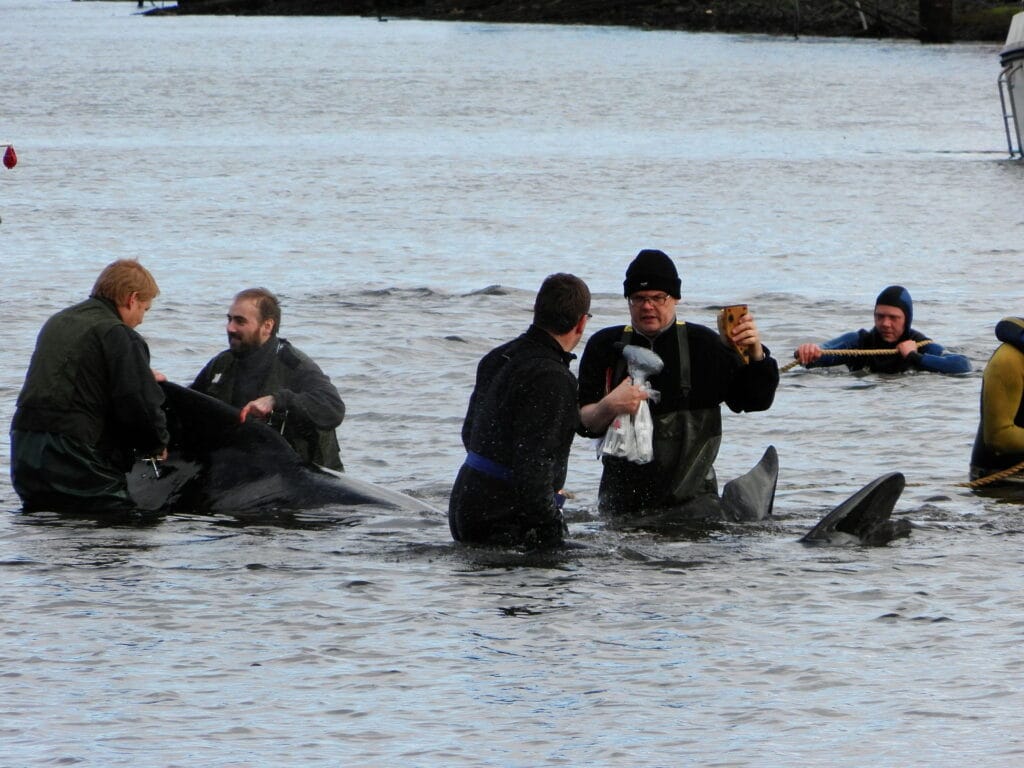
Pilot whale meat and blubber are traditional Faroese foods harvested during the grindadráp (whale drive). The blubber is served sliced with the dried meat, or rendered. While controversial internationally, it remains an important cultural food. Found at traditional restaurants and family gatherings. The flavour is rich and briny. This is a deeply polarising food — understand the cultural context before forming opinions, and respect local customs regardless.
5. Ræstur Fiskur (Fermented Fish)
Wind-dried and fermented fish (usually cod or haddock) prepared the same way as ræst lamb — hung in the hjallur until the fermentation develops complex, pungent flavours. Served boiled with potatoes, tallow, and sometimes a mustard sauce. About 180-280 DKK at restaurants. The fermentation gives the fish a depth that fresh fish cannot achieve. KOKS serves a refined interpretation. For beginners, the less fermented versions are milder.
6. Rye Bread and Butter
Dense, dark Faroese rye bread (rúgbreyð) baked slowly, often for 24 hours, yielding a moist, slightly sweet loaf that pairs with everything from skerpikjøt to smoked salmon. The local butter, from grass-fed sheep and cows, is extraordinary — rich, yellow, and grassy. A bread basket with local butter costs little but delivers enormous flavour. Bakeries in Tórshavn bake fresh daily. The bread keeps for days and is the foundation of most meals.
7. Skúvoy Puffin
Puffin has been a traditional Faroese food for centuries, caught using a fleygingarstong (catching pole) on the sea cliffs. The breast meat is dark, rich, and gamey, typically smoked or pan-fried and served with berries. Increasingly rare on restaurant menus due to declining populations but still found at some traditional establishments. About 250-400 DKK. The flavour is closer to duck than chicken. Approach this dish with awareness of the conservation context.
8. Seyðahøvd (Singed Sheep Head)
A traditional dish where the sheep’s head is singed, boiled, and served halved. The cheeks and tongue are the most prized parts — tender, rich, and deeply flavourful. Not commonly found in tourist restaurants but served at traditional Faroese feasts and by request at some establishments. It represents the nose-to-tail philosophy that sustainability advocates admire. The flavour is excellent if you can look past the presentation.
Eating Tips for Faroe Islands
KOKS (two Michelin stars, relocated from Streymoy) is the Faroe Islands’ flagship restaurant — book months in advance and expect 2,500+ DKK per person. Áarstova in Tórshavn serves traditional food in a beautiful old building. Barbara Fish House is excellent for seafood. Most ingredients are seasonal and weather-dependent, so menus change constantly. The Faroe Islands are expensive — budget 400-600 DKK per day for food. Supermarkets (Miklagarður, FK) stock local products at better prices for self-catering. Alcohol is only sold at the Rúsdrekkasøla Landsins (state alcohol monopoly) store in Tórshavn.
Frequently Asked Questions
What is the must-try food in Faroe Islands?
The most iconic dish is Ræst Kjøt (Fermented Lamb). The cornerstone of Faroese cuisine — lamb hung in a hjallur (wooden drying shed) for months, where the cold Atlantic win…
Is street food safe in Faroe Islands?
Yes. Street food and market stalls are popular with locals and generally safe. Stick to busy stalls with high turnover for the freshest food.
How much does a meal cost in Faroe Islands?
Budget travellers can eat well from street stalls and markets. Sit-down restaurants are moderately priced by international standards.
Related Articles
- Things to Do in Faroe Islands: 12 Experiences You Can’t Miss
- Things to Do in the Faroe Islands: Real Guide
- Where to Stay in Faroe Islands: Best Neighborhoods and Hotels
- Best Time to Visit Faroe Islands: Month-by-Month Guide
You Might Also Love



Written by
John Morrison is the founder and lead travel writer at Packzup. Over the past decade he has explored destinations across Africa, the Americas, Asia, Europe, the Middle East, and Oceania — always self-funded, never on a press trip.
