
Last updated August 22, 2026 · Editorial policy
The Faroe Islands’ 18 islands are connected by an impressive network of tunnels, bridges, and ferries that make the archipelago surprisingly accessible despite its remote location in the North Atlantic. A rental car is by far the best way to explore — distances are short (the longest drive is about 75 minutes), roads are well-maintained, and the freedom to stop at every stunning viewpoint is essential. Public buses connect the main towns, and inter-island ferries and a sub-sea tunnel network mean you can reach most islands without a boat. Helicopter flights between islands are subsidised and remarkably cheap.
Transport Options:
1. Rental Cars
Essential for exploring the Faroe Islands properly. Roads are excellent, well-signposted, and mostly two-lane. Distances are short — Tórshavn to Gjógv is 50 minutes, Tórshavn to Saksun is 40 minutes. Rent from the airport or Tórshavn from 400-700 DKK/day. 4WD is not necessary but advisable in winter. Sub-sea tunnels connect Vágar (airport island), Streymoy, Eysturoy, and Borðoy — tolls are 100 DKK per tunnel passage. Fuel stations are in every main village. Traffic is minimal. Sheep have right of way — they are everywhere on roads.
2. Public Buses (Strandfaraskip Landsins)
The Bygdaleiðir bus network connects towns on Streymoy, Eysturoy, Vágar, and Borðoy. Service is regular on main routes (every 30-60 minutes) but infrequent to remote villages (2-3 times daily). Fares are cheap — most journeys cost 30-60 DKK. Route 100 connects the airport to Tórshavn (1 hour). Buses are clean and reliable. Free Wi-Fi on most routes. Download the Strandfaraskip Landsins app for real-time schedules. Useful if you don’t drive, but limits your flexibility for reaching remote viewpoints and trailheads.

3. Inter-Island Ferries
Strandfaraskip Landsins operates ferries connecting islands without tunnel or bridge access. The Smyril ferry from Gamlarætt to Sandoy runs multiple times daily (25 minutes). The Nólsoy ferry from Tórshavn runs frequently. The Suðuroy ferry from Tórshavn to Tvøroyri takes 2 hours and runs twice daily. Cars can be taken on most ferries — book in advance for Suðuroy in summer. Fares are subsidised and cheap. The ferry rides offer spectacular coastal views and birdwatching opportunities.
4. Helicopter Service (Atlantic Airways)
The Faroe Islands’ most unique transport — subsidised helicopter flights between islands cost just 155 DKK per flight. Routes connect Tórshavn to Vágar, Mykines, Stóra Dímun, Skúvoy, and Froðba. The helicopter carries 9 passengers and flies at low altitude with breathtaking views. Book well in advance — seats sell out fast, especially to Mykines. This is both transport and a scenic experience. Flights are weather-dependent and cancellations are common. The cheapest helicopter flight in the world.
5. Walking and Hiking
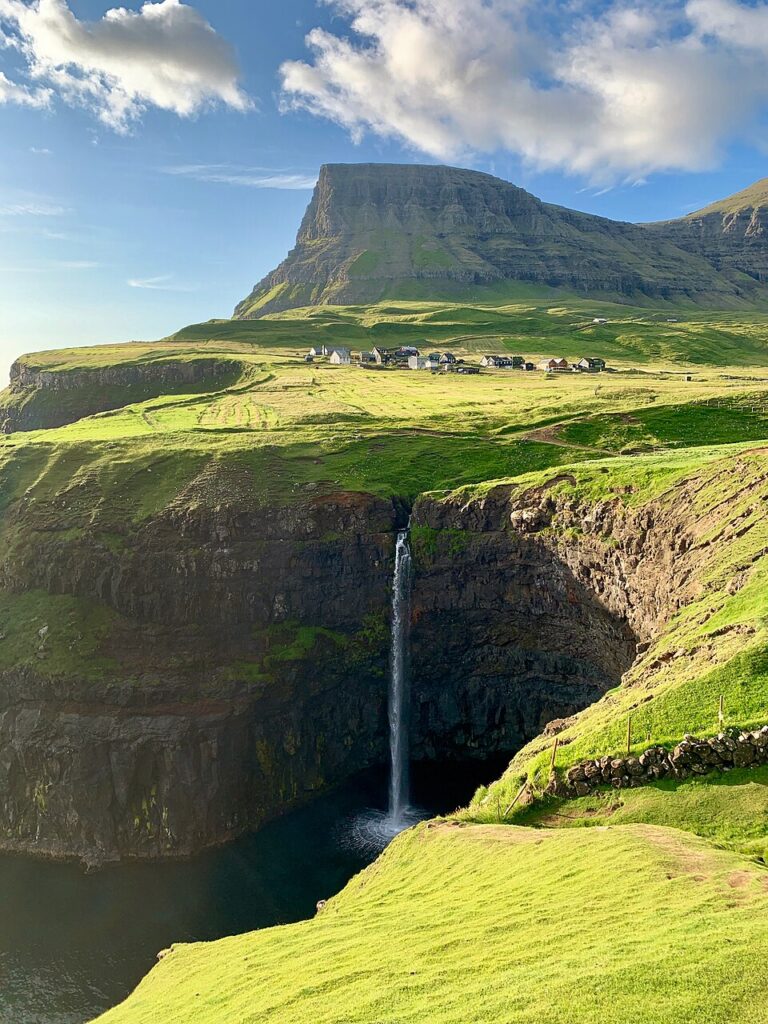
The Faroe Islands are a hiking paradise — well-marked trails connect villages across mountains, along sea cliffs, and to remote headlands. The famous Múlafossur waterfall walk is 30 minutes from Gásadalur. The Slættaratindur summit (882m) is a 2-hour round trip. Trails are marked with cairns and posts. The terrain is challenging — steep, boggy, and weather changes rapidly. Hiking boots, waterproofs, and layers are essential regardless of season. Some trails require a local guide (Mykines puffin trail charges 200 DKK).
6. Cycling
Growing in popularity but challenging due to terrain and weather. The islands are hilly with constant wind — e-bikes make a significant difference. Few dedicated bike lanes exist but traffic is so light that roads are safe for cycling. The tunnel between Vágar and Streymoy has a shared lane for cyclists. Bike rental is available in Tórshavn from 150-300 DKK/day. Best for fit cyclists who enjoy headwinds and hills. The coastal roads offer spectacular riding when weather cooperates.
Transport Tips for Faroe Islands
Rent a car — it is the only way to properly explore the islands. Book the helicopter to Mykines weeks in advance if you want to see puffins (May-August). Weather changes rapidly — always carry waterproof layers. Sub-sea tunnel tolls can be paid at petrol stations or online. The Vágar airport is small and only served by Atlantic Airways and Scandinavian Airlines. Mobile coverage is good on main islands but patchy in remote valleys. Daylight varies hugely — near 24 hours in June, under 6 hours in December. Roads can be icy and foggy in winter.
What is the best way to get around Faroe Islands?
The most practical options are Rental Cars and Public Buses (Strandfaraskip Landsins). Essential for exploring the Faroe Islands properly. Roads are excellent, well-signposted, and mostly…
Do I need a car in Faroe Islands?
It depends on your itinerary. For the main areas, public transport and ride-hailing are sufficient. A car is useful for exploring rural or remote areas.
Is public transport safe in Faroe Islands?
Yes, public transport is generally safe and widely used by locals and tourists alike. Take normal precautions with your belongings, especially in crowded areas.
Related Articles
- Things to Do in Faroe Islands: 12 Experiences You Can’t Miss
- Things to Do in the Faroe Islands: Real Guide
- Where to Stay in Faroe Islands: Best Neighborhoods and Hotels
- Best Time to Visit Faroe Islands: Month-by-Month Guide
Frequently Asked Questions
You Might Also Love


Written by
John Morrison is the founder and lead travel writer at Packzup. Over the past decade he has explored destinations across Africa, the Americas, Asia, Europe, the Middle East, and Oceania — always self-funded, never on a press trip.
