Skip to content
Faroe Islands travel guide

Things to Do in Faroe Islands: 12 Experiences You Can’t Miss

7 min read1,356 wordsUpdated May 2026
Faroe Islands travel guide

The Faroe Islands are 18 volcanic islands in the North Atlantic where grass-roofed villages cling to cliffs, waterfalls plunge directly into the ocean, and sheep outnumber people two to one. This self-governing Danish territory between Iceland and Norway is one of the most visually dramatic places on earth — sheer sea cliffs, constantly shifting weather, and an eerie, otherworldly beauty that makes you feel like you have reached the edge of the world. The infrastructure is surprisingly good, with tunnels connecting islands and a food scene that has put Torshavn on the world culinary map. Come prepared for horizontal rain, fog that appears from nowhere, and landscapes that will ruin every other destination for you.

1. Hike to Mulafossur Waterfall at Gasadalur

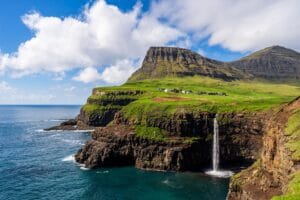
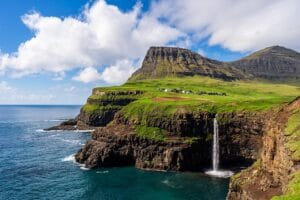
The most photographed spot in the Faroes — a waterfall plunging 30 metres directly off a cliff edge into the Atlantic with the island of Mykines visible across the strait. The short 15-minute walk from the road to the viewpoint is easy, though the cliff edges are unprotected. Until 2004, the village of Gasadalur was only accessible by foot over the mountain — now a tunnel connects it. Go in the morning for the best light. Free access. The village itself has a population of about 10.

2. See the Floating Lake at Sorvagsvatn

Leitisvatn (also called Sorvagsvatn) is the Faroes’ largest lake, and a famous optical illusion makes it appear to float 100 metres above the ocean. The two-hour return hike from the car park crosses moorland to a cliff edge where the lake sits above the sea and the Bosdalafossur waterfall drops from the lake’s outflow. Entry is 200 DKK via a gate with a payment machine. Bring waterproof layers — the weather changes every 20 minutes. The illusion works best from the western viewpoint.

3. Visit the Puffin Colony on Mykines

The westernmost island of the Faroes is home to thousands of Atlantic puffins that nest in burrows along the sea cliffs from May through August. The hike from the ferry landing to the Mykines Holmur lighthouse crosses a narrow bridge over a 30-metre gorge with puffins wheeling around your head. The ferry from Sorvagur costs 100 DKK return and must be booked in advance — it cancels frequently in bad weather. A guide is recommended for 250 DKK.

4. Explore Torshavn, the World’s Smallest Capital

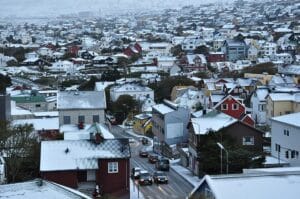
Torshavn’s population of 13,000 makes it one of Europe’s tiniest capitals, but it punches above its weight with the Tinganes headland (site of one of the world’s oldest parliaments, founded in 825 AD), the grass-roofed houses of the old town, and a restaurant scene led by KOKS, which holds two Michelin stars. Wander Gongin street’s colourful wooden houses, visit the Nordic House cultural centre, and stop at Cafe Paname for coffee. The town is walkable in an hour but deserves a full day.

5. Drive to Saksun and Its Hidden Lagoon

The tiny village of Saksun sits at the head of a tidal lagoon surrounded by steep mountains, with a grass-roofed stone church perched above. At low tide, you can walk across the black sand to the ocean outlet; at high tide, the lagoon fills and reflects the mountains. The drive through the valley is dramatic. Free access. The Duvugardar historical farm museum is worth a stop. Check tide times before going — the walk to the beach is only possible at low tide.

6. Hike the Kallur Lighthouse on Kalsoy

The ferry to Kalsoy island and the hike to the Kallur lighthouse at its northern tip is one of the great Faroese adventures. The narrow ridge trail with steep drops on both sides leads to a lone lighthouse on a promontory above 600-metre sea cliffs. The views of the neighbouring islands and the open Atlantic are staggering. The ferry from Klaksvik to Sydradalur runs several times daily for 60 DKK. The hike is 4 kilometres return but exposed — not for those afraid of heights.

7. Take a Boat Tour to Vestmanna Bird Cliffs

Boat tours from the village of Vestmanna navigate narrow sea channels beneath 600-metre vertical cliffs teeming with guillemots, razorbills, fulmars, and kittiwakes during the breeding season (May-August). The boats enter sea caves and approach waterfalls cascading down the cliff face. Tours run about two hours and cost 350 DKK. The scale of the cliffs from sea level is humbling. Dress warmly — the boat spray and Atlantic wind are cold even in summer.

8. Visit the Grass-Roofed Church at Funningur

The church in Funningur village on Eysturoy dates from 1847 and has a traditional Faroese grass roof, whitewashed stone walls, and a setting overlooking the Funningfjordur strait backed by dramatic peaks. It is one of the most photographed churches in the Faroes. Free to visit from the outside; interior visits depend on the caretaker. The village and surrounding area are quintessential Faroese landscape — sheep-grazed hillsides, fog-wrapped peaks, and absolute silence.

9. Cross the Atlantic Ocean Tunnel Between Islands

The Eysturoy Tunnel, opened in 2020, features the world’s first underwater roundabout — a traffic circle 187 metres beneath the ocean floor decorated with a glowing art installation by Faroese artist Trondur Patursson. The tunnel connects Streymoy and Eysturoy under the Sundini strait. Driving through costs a toll of 175 DKK. The roundabout’s blue and green lights illuminating rock walls create a surreal, alien atmosphere.

10. Eat Fermented Food and New Nordic Cuisine

The Faroese food culture is built on wind-dried and fermented preservation — skerpikjot (wind-dried mutton), raest (fermented lamb and fish), and dried fish have been staples for centuries. KOKS restaurant serves a 22-course tasting menu reinterpreting traditional techniques with modern artistry for 2,800 DKK. For casual traditional food, try Aarstova in Torshavn. Barbara Fish House serves excellent fresh seafood. The fermented foods are an acquired taste — start with the dried fish before attempting raest.

11. Photograph the Village of Gjogv

The village of Gjogv on Eysturoy takes its name from a 200-metre sea gorge that serves as a natural harbour. The colourful houses, stone church, and sheep-grazed hillsides around the gorge make it one of the most photogenic villages in the Faroes. A short hike up the hill behind the village offers panoramic views of the surrounding mountains and coastline. The guesthouse serves home-cooked meals. Free to wander. Morning light is best for photos of the gorge.

12. Watch the Cloud Inversions from Mountain Summits

The Faroes’ constantly changing weather creates extraordinary cloud inversions where valleys fill with fog while mountain peaks emerge above into sunshine, creating a sea of clouds. Slattaratindur on Eysturoy at 880 metres is the highest point and the best spot, accessible via a steep two-hour hike. Villingadalsfjall above Vidoy is another reliable viewpoint. The phenomenon is most common in calm weather during autumn and winter mornings. Check the webcams at hagstova.fo before heading out.

Practical Tips for Faroe Islands

Check our full Faroe Islands travel guide for detailed tips on transport, safety, money, and the best time to visit. For food recommendations beyond this list, see our Faroe Islands food guide.

Frequently Asked Questions

What are the top things to do in Faroe Islands?

The must-do experiences include Hike to Mulafossur Waterfall at Gasadalur, See the Floating Lake at Sorvagsvatn, and Drive to Saksun and Its Hidden Lagoon. Faroe Islands also offers incredible food, vibrant neighbourhoods, and easy day trips.

How many days do you need in Faroe Islands?

We recommend at least 3 to 4 days to cover the highlights, though a week lets you explore at a relaxed pace and add day trips.

Is Faroe Islands safe for tourists?

Faroe Islands is generally safe for tourists who take normal precautions. Stay aware of pickpockets in crowded areas and keep valuables secure.

Honest travel guides, monthly. First-hand. No spam.
Browse every page | Travel library | Compare destinations | XML sitemap