
Last updated September 17, 2026 · Editorial policy
It is July 2026, and if you have watched even five minutes of this World Cup summer, you have seen what football means to Germany and the Netherlands — two nations that treat the game as a second religion and repaint entire cities white or orange every tournament. But relax: this is not a football article. This is about which of these two countries deserves your actual vacation days, and having spent real time in both — on trains, in hostels, in beer gardens and brown cafés — I can tell you the answer is less obvious than most people assume.
On paper they look like twins: wealthy neighbors, efficient, beer-loving, bike-friendly, stuffed with museums. In practice they deliver completely different trips. Germany is big, varied, and surprisingly cheap for Western Europe. The Netherlands is small, effortless, and expensive. One rewards two weeks and a rail pass; the other can genuinely be done well in five days. Here is the honest breakdown, with real numbers.
| Category | Germany | Netherlands | Winner |
|---|---|---|---|
| Daily budget | $60–90 budget / $130–200 mid | $75–110 budget / $160–240 mid | Germany |
| Food | Deep regional cooking, beer halls, doner culture | Cheese, herring, superb Indonesian food | Germany |
| Beaches/Nature | Alps, Black Forest, Baltic cliffs | North Sea beaches, tulip fields, flat everything | Germany (beaches: Netherlands) |
| Cities & culture | Berlin, Munich, Hamburg, Dresden — huge variety | Amsterdam, Utrecht, Rotterdam — dense and walkable | Germany |
| Weather | Warmer summers in the south, snowy winters | Mild, windy, changes hourly | Tie |
| Ease of travel | Big country, trains often late | Tiny, punctual, everyone speaks English | Netherlands |
| Nightlife | Berlin. Enough said | Amsterdam bars, brown cafés, King’s Day | Germany |
| Value for money | Excellent almost everywhere | Weak in Amsterdam, fair elsewhere | Germany |
Cost comparison: what you will actually spend
Germany is one of Western Europe’s best-value large countries, and it is not particularly close. Budget travelers can live well on $60–90 a day: hostel dorms run $30–45 in Berlin or Leipzig, a doner kebab or currywurst dinner costs $6–9, supermarket beer is almost insultingly cheap, and regional day tickets keep transport painless. Mid-range travelers should plan on $130–200 a day, which buys a solid three-star hotel ($90–140), sit-down meals with beer, and all the museums you can walk through. Luxury starts around $300–450, and five-star properties in Munich or Hamburg frequently undercut their equivalents in Paris — something I also noticed when weighing France against Germany.
The Netherlands is a different story, and Amsterdam is the reason. Summer hostel dorms in the center run $45–70 — for a bunk bed — and unremarkable hotel rooms routinely cross $200 a night. Realistic budget travel is $75–110 a day, and that assumes supermarket lunches and takeaway dinners. Mid-range means $160–240; luxury starts around $350–500. There is a simple fix: base yourself in Utrecht, Haarlem, or Rotterdam, where prices drop 25–40 percent and Amsterdam is a 20–40 minute train ride away. Even with that trick, though, Germany wins the money category comfortably.
Food: regional depth vs one great trump card
German food gets stereotyped as sausage and cabbage, which badly undersells it. The country has genuine regional depth: spätzle and maultaschen in the Swabian southwest, bratwurst grilled over open flames in Franconia, roast pork and pretzels the size of steering wheels in Bavarian beer halls, smoked fish sandwiches on the Baltic coast, and in Berlin what I would argue is the best doner kebab scene in Europe. The bakeries alone justify the trip — a proper German bakery at 8 a.m. is a life upgrade — and eating cheaply never means eating badly.

Traditional Dutch cuisine is thinner: stroopwafels warm off the iron, raw herring eaten standing up, bitterballen with mustard, and aged Gouda you will think about for months. But the Netherlands hides a trump card — Indonesian food, a legacy of its colonial history. A proper rijsttafel spread in Amsterdam or The Hague, a dozen small dishes crowding the table, is one of Europe’s great meals. Surinamese roti and broodje pom shops in Amsterdam and Rotterdam are the country’s best cheap eat. If your trip revolves around food, Germany simply offers more meals worth planning a day around. If you specifically crave Indonesian and Surinamese cooking, the Netherlands quietly wins.
Beaches & nature: the North Sea vs everything else
Here is the surprise: the Netherlands is a legitimate beach country. The North Sea coast is one long ribbon of wide, dune-backed sand. Zandvoort is 30 minutes from Amsterdam by direct train, Scheveningen sits on the edge of The Hague with a genuine boardwalk-and-beach-club scene, and the Wadden Islands — Texel above all — feel like a slower, saltier parallel country. The water is bracing even in August and the wind never fully stops, but as a beach-day culture, the Dutch coast beats anything Germany offers.

Germany answers with everything else. The Bavarian Alps around Garmisch and Berchtesgaden, the dark ridges of the Black Forest, the sandstone spires of Saxon Switzerland, castle-topped vineyards along the Rhine and Mosel, chalk cliffs on Rügen in the Baltic — this is varied, properly wild landscape you can hike, ski, and road-trip for weeks without repeating yourself. The Netherlands is beautiful in a flat, painterly way, and the spring tulip fields genuinely live up to the photos, but if landscapes are what move you, Germany takes this category easily. And if beaches are the entire point of your trip, be honest with yourself and read our Greece vs Portugal comparison instead — neither of these northern countries competes with the Mediterranean.
Cities & culture: variety vs density
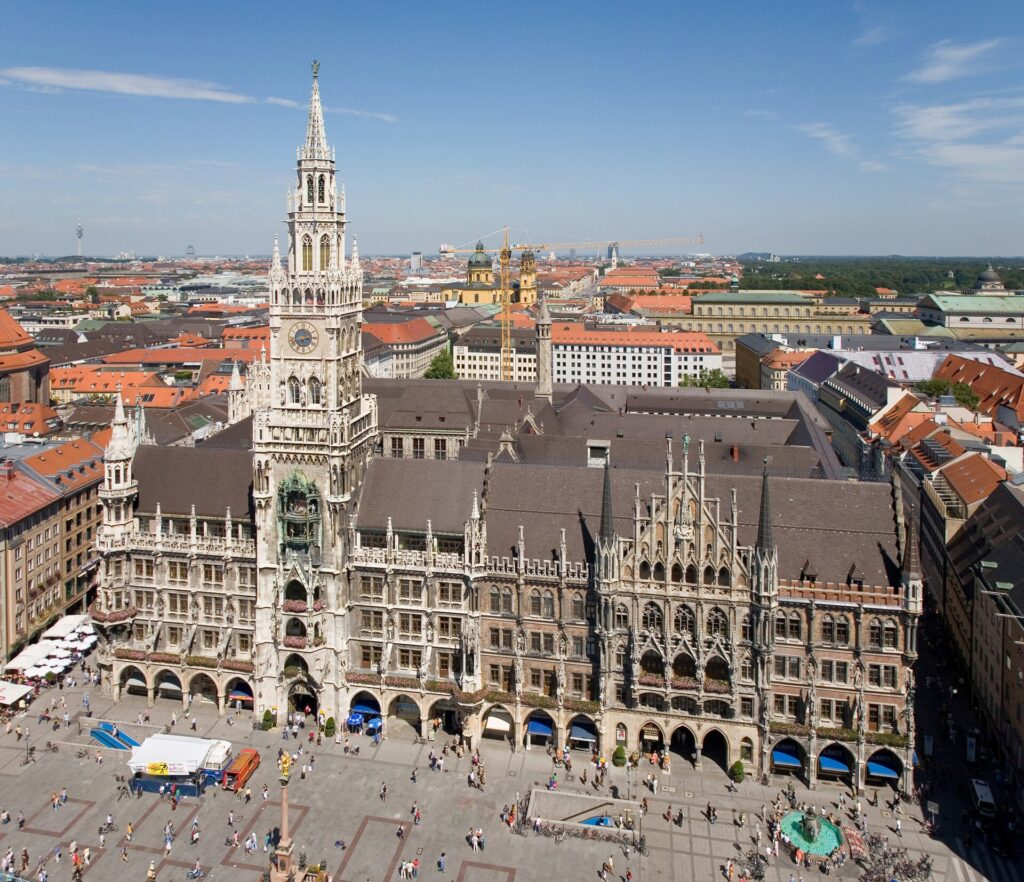
Germany’s greatest travel asset is that its cities refuse to resemble each other. Berlin is scruffy, sprawling, and heavy with twentieth-century history — the Wall remnants, the memorials, Museum Island’s five-museum complex. Munich is its polished opposite: baroque, wealthy, beer-garden-social, with the Alps visible on a clear day. Hamburg has its harbor and a swagger all its own, Cologne has the cathedral, Dresden rebuilt its baroque heart from rubble, and Heidelberg supplies the castle-on-a-hill romance. You could spend two weeks hopping between them and feel like you visited four different countries.

The Netherlands plays a different game: density. Amsterdam’s canal ring is one of the most beautiful urban spaces on earth, and the Rijksmuseum and Van Gogh Museum are world-class back to back. The Anne Frank House is essential and sells out weeks ahead — book the moment your dates firm up. Then the supporting cast: Utrecht with its split-level canal wharves, Delft looking like a Vermeer painting because it was one, Rotterdam’s audacious modern skyline, The Hague’s Mauritshuis with the Girl with a Pearl Earring. Nothing is more than about an hour from anything else. Germany wins on sheer variety, but if you told me you had five days and wanted maximum Europe per step, I would point you Dutch — the same logic that drives our Belgium vs Netherlands matchup.
Weather & when to go
Neither country will win a weather contest, so calibrate expectations. Both sit in that northern European zone where summer means 65–78°F, pleasant and long-lit but never guaranteed dry. The Dutch climate is pure maritime: mild, breezy, and capable of producing four seasons before lunch. Germany’s south gets meaningfully warmer summers — Munich in July can feel genuinely hot — and real snow in winter, which matters if Alps scenery or skiing is on your list.
Timing is where the two diverge. Mid-April is the Netherlands’ moment: tulip season plus King’s Day on April 27, the biggest street party in the country. May, June, and September are the sweet spots for both. December belongs entirely to Germany — its Christmas markets, from Nuremberg to Dresden to hundreds of small-town squares, are the best in the world and turn the gloomiest month into a reason to visit. This July’s World Cup summer has been unusual — both countries’ squares full of screens and jerseys even with the tournament an ocean away in North America — and it is a good reminder that big football months make for lively, crowded bar scenes in both.
Getting around & safety
Dutch logistics are close to cheating. The country is tiny, NS trains run every ten to fifteen minutes between major cities, you tap in with a contactless card, and Amsterdam to Rotterdam takes about 40 minutes. Everyone — genuinely everyone — speaks excellent English. Your main hazard is the bike lane: it is not a sidewalk, and Dutch cyclists take no prisoners. Germany is a far bigger country whose rail network is extensive but, in recent years, honestly unreliable — Deutsche Bahn delays are a running national joke, so build slack around connections. The flip side: regional trains are cheap, and Germany is one of Europe’s great road-trip countries if you rent a car.
Both countries are very safe by any global standard. Standard pickpocket caution applies in Amsterdam’s center and around Berlin’s tourist hubs and U-Bahn, and 112 is the emergency number in both. For US passport holders, entry is simple: no visa needed, both are in the Schengen zone, and you get 90 days within any 180-day period across the whole zone combined. Your passport should be valid at least three months beyond your planned departure — six is safer. One honest heads-up: the EU’s ETIAS travel authorization, an online pre-screening with a small fee, is not in operation yet (the EU dropped its late-2026 target and a 2027 start is now expected), so check the official EU website before you book. The happy consequence of shared Schengen membership: no border checks, and a direct train links Amsterdam and Berlin in roughly six hours, making a two-country trip trivially easy.
Nightlife & vibe
If nightlife is a primary reason you travel, Berlin ends the argument. It remains the club capital of the planet — techno institutions that run from Friday night through Monday morning, infamous door policies included, plus an endless supply of dive bars, late-night doner, and beer gardens for recovery. Hamburg’s Reeperbahn adds a rowdier, saltier option, and Munich’s beer halls are their own kind of nightlife: communal tables, liter mugs, strangers becoming friends by round two.
Amsterdam is more accessible and more compact: brown cafés (the wood-paneled, centuries-old pub equivalent) that I would rank among Europe’s coziest drinking experiences, canal-side terraces in summer, and a solid club scene. Yes, the coffeeshops are real and legal-ish for tourists; also real is that the city government is actively tired of rowdy party tourism and has been campaigning to discourage it, so read the room. Rotterdam has the grittier, more local club energy these days. Give the category to Germany on depth, with the caveat that a great Amsterdam night out is easier to stumble into than a great Berlin one, which requires stamina and sometimes surviving the door.
Germany or Netherlands: the honest verdict
No cop-outs — here is who should book what. Budget travelers: Germany, by a wide margin; your money goes 25–30 percent further and the cheap food is actually good. Foodies: Germany, for regional depth and beer culture — unless Indonesian and Surinamese cooking is your specific obsession, in which case fly to Amsterdam hungry. Beach-and-easy-days travelers: Netherlands; Zandvoort, Scheveningen, and Texel are the better pure coast, no contest. First-timers to Europe with a week or less: Netherlands — it is the single easiest country in Europe to travel, and the compact distances mean zero wasted days.
If you have ten days or more, my real answer is to stop choosing: take four days in the Netherlands, board the direct train, and give Germany six. And if this comparison has you leaning toward warmer, sunnier matchups entirely, our Italy vs Spain breakdown is the southern-Europe version of this exact dilemma.
FAQ
Is Germany or the Netherlands cheaper to visit?
Which is better for a football-fan trip?
Do Americans need a visa for Germany or the Netherlands?
Can I combine Germany and the Netherlands in one trip?
Planning the trip? Go deeper with our Germany Travel guide and best time to visit Netherlands.
You Might Also Love
More side-by-side comparisons





Written by
John Morrison is the founder and lead travel writer at Packzup. Over the past decade he has explored destinations across Africa, the Americas, Asia, Europe, the Middle East, and Oceania — always self-funded, never on a press trip.
