
More: When to visit Mexico · Mexico travel guide
Quick Answer
Mexico’s safety varies dramatically by state, not nationally. Yucatán, Quintana Roo, Mexico City’s central districts, Oaxaca and Baja California Sur host most international tourism and carry low advisory levels; a small number of states carry “do not travel” warnings. Check the state-level advisory for your specific route before travelling.
Millions of people visit Mexico every year without incident, and millions of others avoid it on the strength of national headlines. Both facts are compatible, because safety in Mexico is a state-level question. This page explains how to assess it properly rather than offering a yes or no.
How to Assess Safety in Mexico
1. Safety varies by state, not by country
Mexico is nearly four times the size of France and conditions differ enormously between states. Yucatán has one of the lowest homicide rates in the Americas; a handful of other states carry the strongest possible official warnings. Judging “Mexico” as a single place is the core mistake.
2. Check the state-level advisory first
Both the US State Department and the UK FCDO publish advisories state by state, updated regularly. Read the entry for each state on your route — not the national summary — and re-check close to departure.
3. Yucatán and Quintana Roo
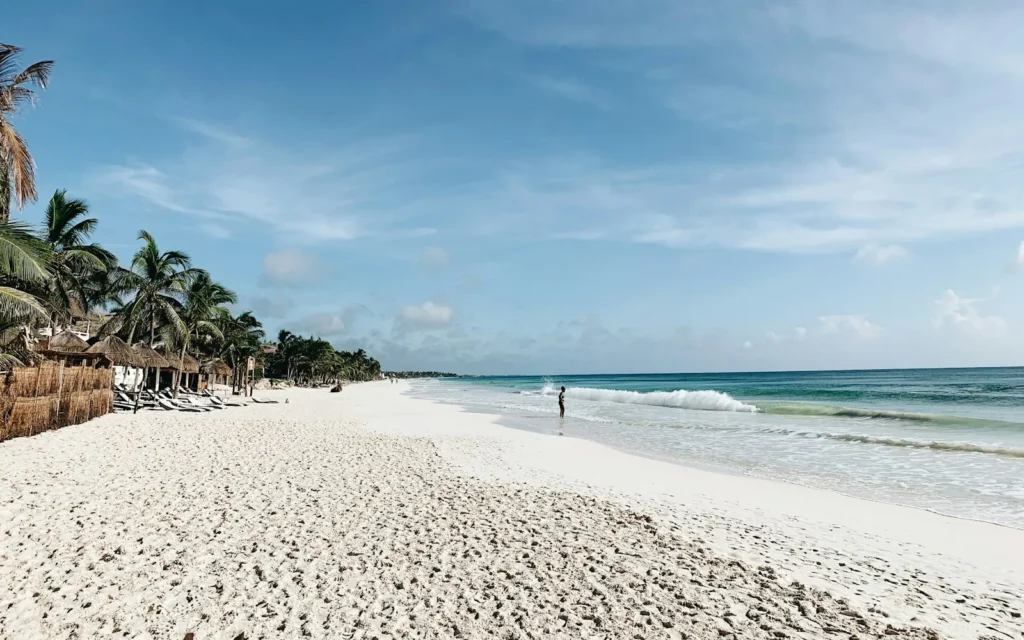
Mérida, Valladolid and the Riviera Maya sit in states that consistently carry the lowest advisory levels and the bulk of international tourism.
4. Mexico City
Central neighbourhoods — Roma, Condesa, Coyoacán, Polanco, Centro Histórico — are heavily visited and generally straightforward. Petty theft, not violence, is the realistic risk for visitors.
5. Oaxaca and San Miguel de Allende
Both are long-established visitor destinations with lower advisory levels than the national average.
6. Baja California Sur
Los Cabos and La Paz differ sharply from Baja California to the north, which carries a higher advisory. The two states are frequently confused.
7. States with the strongest warnings
Several states carry “do not travel” advisories from multiple governments. These are not tourist regions and there is no good reason to route through them — check the current list rather than any fixed list in a guide.
8. Road travel
Use toll roads (cuotas) rather than free roads, travel between towns in daylight, and avoid overnight intercity driving. This is the single most repeated piece of official advice.
9. Taxis and ATMs
Use ride-hailing apps or hotel-arranged taxis rather than hailing on the street, and withdraw cash from ATMs inside banks during opening hours.
10. Everyday precautions
Keep valuables out of sight, drink in moderation, watch your drink, and keep a copy of your passport separate from the original. Standard practice for any large country.
Use official sources, not travel guides — including this one. Advisory levels change and vary by nationality. Check your own government’s current advice (the US State Department, UK FCDO, Global Affairs Canada or Australia’s Smartraveller) for every state on your route, close to your departure date. This page explains how to read those sources; it is not a substitute for them.
The short version
If your trip is Cancún, Tulum, Mérida, Mexico City, Oaxaca or Los Cabos, you are travelling where the overwhelming majority of visitors go, and the sensible precautions are the ones you would take in any large city anywhere. If your route crosses states carrying severe advisories, reconsider the route — there is almost always an alternative. Register with your embassy if that service exists for your nationality, make sure your travel insurance does not void cover in regions your government advises against, and keep someone at home informed of your itinerary.
Frequently Asked Questions
Is Mexico safe for tourists?
In the main tourist regions — Yucatán, Quintana Roo, central Mexico City, Oaxaca, Baja California Sur — yes, with normal precautions. Safety varies sharply by state, so check advisories for your specific route.
Is Cancún and the Riviera Maya safe?
Quintana Roo hosts the bulk of Mexico’s international tourism and carries a comparatively low advisory level. Petty theft is the realistic risk for visitors.
Is it safe to drive in Mexico?
Use toll roads and travel in daylight. Avoiding overnight intercity driving is the most consistent piece of official advice.
Related Articles
You Might Also Love



Good to know: staying healthy abroad starts with the water — see where the tap water is safe to drink, and dodge the classics with travel scams by country.
Checking other destinations? Is Morocco safe? · Is Paris safe? · Is Peru safe? · Is the Philippines safe?
