
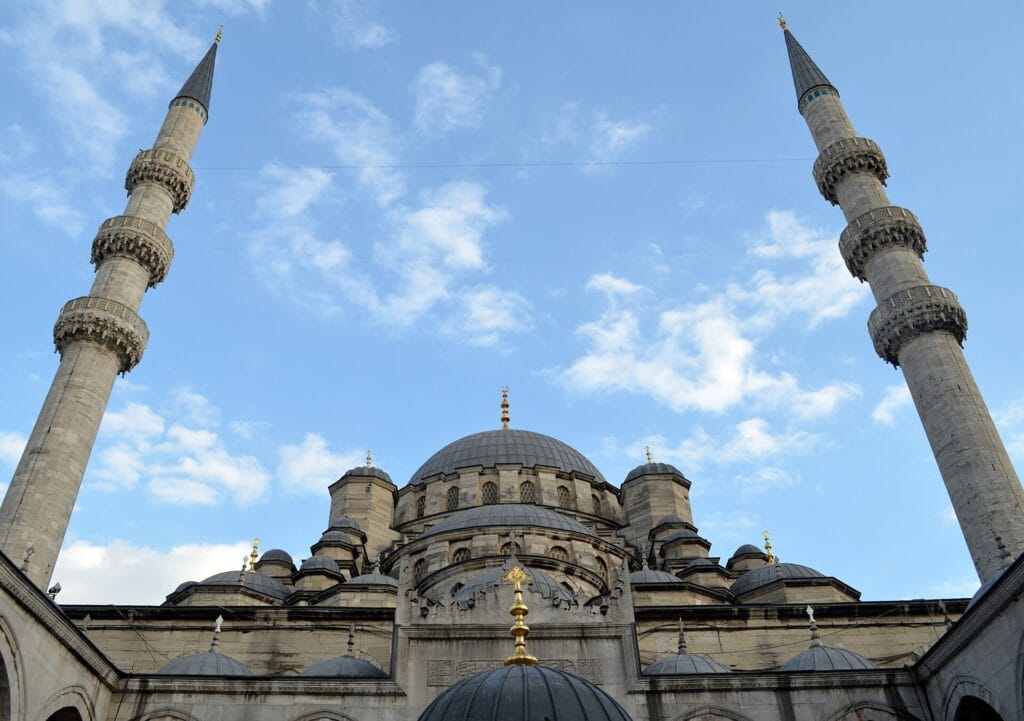
February is the coldest month in Istanbul – about 10°C by day and 4°C at night, and the most likely month for snow – and in 2027 it is also when Ramadan begins, expected around Monday 8 February. That brings mahya, the illuminated messages strung between the minarets of the great mosques, which is one of the best reasons to be in the city at all.
Ramadan in Istanbul
Ramadan is expected to run from about 8 February to 8 March 2027. Istanbul is a secular city and the practical constraint on visitors is light – restaurants, cafes and bars operate normally and alcohol is still served – but the month transforms the historic peninsula after dark:
- Mahya – lit messages hung between the minarets of Sultanahmet, the Suleymaniye and the New Mosque, a tradition dating to the Ottoman period. They are only up during Ramadan.
- The iftar cannon fires at sunset, and Sultanahmet Square fills with open-air iftar tables and food stalls. It is communal, free to walk through and genuinely warm in feeling.
- Traffic is severe in the hour before sunset and the streets briefly empty afterwards. Do not schedule an airport transfer into that window.
- Ramadan drummers walk the neighbourhoods before dawn to wake people for sahur. Charming once; less so if your window faces a narrow street.
- Mosque visiting hours change and the mosques are far busier in the evenings.
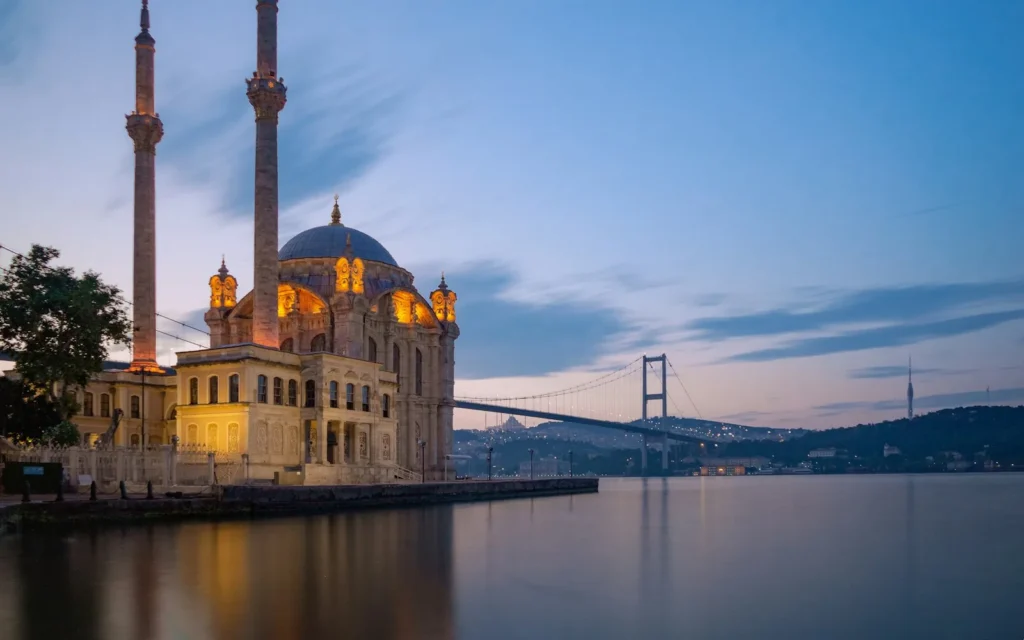
Weather
February averages about 10°C by day and 4°C at night, with roughly 84 mm of rain. It is marginally drier than January and no warmer, and it is the month most likely to produce snow in the city.
The winds matter more than the thermometer. The north-easterly poyraz is cold and dry; the south-westerly lodos is warm, strong, and the reason Bosphorus ferries are suspended on some winter days. Keep a land-based alternative if your plan depends on a crossing.
What February is for
- The mosques at night during Ramadan – the single most distinctive thing about this month.
- Hammams. Cemberlitas, Cagaloglu and Kilic Ali Pasa are exactly right at 10°C and wet.
- Museums. The Archaeological Museums, the Chora, Istanbul Modern, the Pera and the Museum of Innocence all work regardless of weather.
- Covered markets – the Grand Bazaar, the Spice Bazaar and the arasta streets around them.
- Empty monuments. Hagia Sophia, Topkapi and the Basilica Cistern are still at their quietest.
Prices and crowds
At the annual floor with January. Hotel rates across Sultanahmet, Beyoglu and Karakoy are at their lowest, and flights are cheap. Valentine’s weekend is the one exception – it is a popular domestic city break and the Bosphorus-view restaurants book out.
See the Istanbul travel budget.
What to pack
A windproof waterproof coat above all – the wind off the water is what makes Istanbul cold, not the temperature. Add layers, gloves, shoes with grip for wet cobbles and the steep streets of Galata and Balat, and modest clothing for mosques, with a headscarf for women that the major mosques lend at the door. See the Istanbul travel guide.
The February 2027 calendar
- Around Monday 8 February – Ramadan is expected to begin; mahya go up on the great mosques.
- Through Ramadan – iftar cannon at sunset, open-air tables in Sultanahmet, heavy pre-sunset traffic, pre-dawn drummers.
- Sunday 14 February – Sevgililer Gunu; Bosphorus-view restaurants book out.
- Through February – the coldest month and the most likely for snow.
- Any lodos day – Bosphorus ferries may be suspended.
- Sundays – the Grand Bazaar is closed.
- Tuesday 9 March – Ramazan Bayrami begins, closing the fast.
Read alongside
- Istanbul in January – the cheapest month and empty monuments.
- Istanbul in March – Ramazan Bayrami and the first spring.
- Best time to visit Istanbul – all twelve months compared.
- Turkey in February – the country-level view.
- Best Turkish hammams in Istanbul – the right month for them.
- Istanbul travel budget – low-season numbers.
- Things to do in Istanbul – the indoor list.
Frequently asked
When is Ramadan in Istanbul in 2027?
It is expected to run from about 8 February to 8 March 2027, with Ramazan Bayrami from 9 to 11 March. Turkey uses the Diyanet calendar, published in advance, though dates can move by a day.
Does Ramadan affect visiting Istanbul?
Very little in practical terms – restaurants, cafes and bars stay open, alcohol is served and nobody expects visitors to fast. What changes is the atmosphere after dark, and mosque hours around prayer and tarawih.
What is mahya?
Illuminated messages strung between the minarets of Istanbul’s great mosques, hung only during Ramadan and dating to the Ottoman period. Sultanahmet, the Suleymaniye and the New Mosque carry the best of them.
How cold is Istanbul in February?
About 10°C by day and 4°C at night with roughly 84 mm of rain. It is the coldest month and the most likely to bring snow, and the wind makes it feel colder than the numbers suggest.
Is February cheaper than other months?
It is at the annual floor along with January. Hotel rates across the city are at their lowest and flights are cheap; only Valentine’s weekend lifts demand.
Can you go to an iftar in Istanbul?
Yes – Sultanahmet Square hosts large open-air iftar tables during Ramadan that anyone can walk through, and many restaurants serve iftar menus at sunset. It is a communal occasion rather than a private one.
Will the Bosphorus ferries run?
Usually, but the lodos wind suspends them on some winter days. If crossing to the Asian side or reaching the Princes’ Islands matters to your plan, keep a metro or bus alternative in mind.
Is it worth visiting Istanbul in winter?
If you want the city rather than the postcard, yes. The monuments have no queues, the hammams and meyhanes make sense, prices are at their lowest, and during Ramadan the historic peninsula at night is something you cannot see at any other time of year.
You Might Also Love


Written by
John Morrison is the founder and lead travel writer at Packzup. Over the past decade he has explored destinations across Africa, the Americas, Asia, Europe, the Middle East, and Oceania — always self-funded, never on a press trip.
