
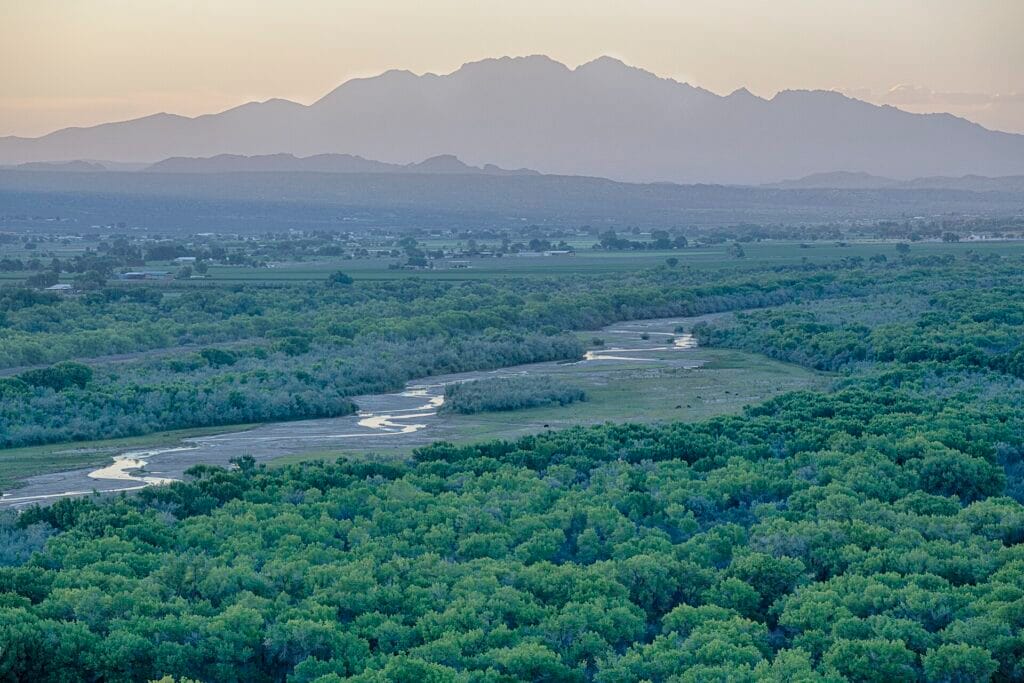
June is when Mexico turns green. The rains arrive across most of the country, the temperature actually drops in the central highlands – Mexico City falls from 28°C in May to about 25°C – and the dusty brown landscape of the dry season becomes lush within a fortnight. It is also the official start of hurricane season on both coasts, and the peak of the sargassum year on the Caribbean.
What the rainy season actually looks like
This is the most misunderstood thing about Mexican travel. The rainy season is not a monsoon and it is not all-day drizzle. In the highlands and most of the interior it means:
- Bright, warm mornings – usually the best weather of the day.
- A heavy thunderstorm in the late afternoon or evening, often spectacular, usually an hour or two.
- Clear evenings afterwards, with the air washed clean and the volcanoes visible from Mexico City in a way they never are in the dry months.
Plan outdoor things before 15:00 and you will barely notice it. Mexico City gets around 130 mm in June, but spread across short intense bursts, not lost days.
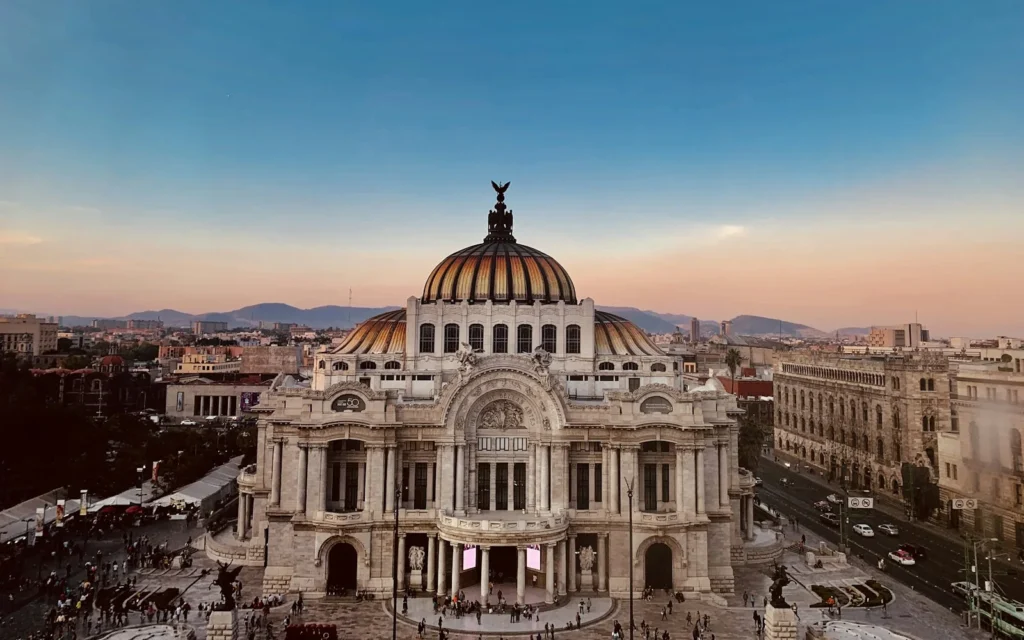
Weather by region
- Mexico City and the central highlands – around 25°C by day and 14°C at night, cooler than May, with roughly 130 mm of rain in afternoon storms. Green, comfortable and underrated.
- Oaxaca and the southern highlands – similar, and transformed: the valleys turn green and the landscape is at its most photogenic.
- The Yucatán and Caribbean – hot and humid at about 30°C, with roughly 140 mm of rain and the season’s worst sargassum.
- The Pacific coast – Puerto Vallarta, Zihuatanejo and the Oaxacan beaches move into their wet season: hot, humid, green and very cheap.
- Baja California – the exception. Baja stays dry and hot, and the Sea of Cortez is excellent for diving and for the mobula ray aggregations.
Hurricane season starts
The Atlantic season runs 1 June to 30 November and the Pacific season from 15 May to 30 November, with activity concentrated between July and October and the peak in September. June is statistically one of the quieter months within the season.
Sensible precautions rather than avoidance: take travel insurance that covers weather disruption, avoid booking the last night of a trip somewhere a storm could strand you, and note that Mexican resorts have well-practised procedures – warnings come days ahead.
Sargassum at its peak
June, July and August are the worst months for sargassum on the Mexican Caribbean. If clear turquoise water is the entire point of the trip, this is the wrong month for Cancún, Playa del Carmen or Tulum’s main beach.
The alternatives are genuine, not consolations: Isla Mujeres, Cozumel and Holbox are usually far cleaner; the cenotes are completely unaffected and are among the best swimming in the world; and the Pacific coast has none at all.
Whale sharks
The whale-shark aggregation off Isla Mujeres and Holbox builds through June towards its July and August peak. Numbers are good and the boats are not yet at full summer capacity, which makes June one of the better months for it.
What June is good for
- The highlands. Mexico City, Oaxaca, Puebla, San Miguel de Allende and Guanajuato are cooler, greener and quieter than in the dry season.
- Price. Both coasts are in low season and discount hard; the interior is cheap throughout.
- Clear mountain views. The washed air after storms gives the year’s best sightlines to the volcanoes.
- Whale sharks and mobula rays, in the Caribbean and the Sea of Cortez respectively.
Prices and crowds
Low, until the very end of the month. Mexican schools break in early July and international summer arrivals follow, so late June is the last quiet stretch before the summer. Coastal resorts are at their cheapest of the year.
See how much a trip to Mexico costs.
What to pack
A light rain shell and quick-drying clothes, sun protection for the mornings, insect repellent – mosquito numbers rise sharply with the rains – and a warm layer for highland evenings, which are genuinely cool at 14°C and 2,240 m. Shoes that cope with a flooded street are more useful than sandals in Mexico City. See the Mexico packing list.
The June 2027 calendar
- Tuesday 1 June – the Atlantic hurricane season officially begins; the Pacific season opened on 15 May.
- Early June – the rains establish across the highlands and the south; the landscape greens within a fortnight.
- Through June – peak sargassum on the Caribbean coast.
- Through June – whale sharks building off Isla Mujeres and Holbox; mobula rays in the Sea of Cortez.
- Through June – sea turtles nesting on both coasts.
- Late June – the last quiet weeks before the Mexican school holidays begin.
Read alongside
- Mexico in May – the hottest and last dry month.
- Mexico in July – the Guelaguetza, and the domestic summer.
- Best time to visit Mexico – all twelve months compared.
- How much a trip to Mexico costs – low-season numbers.
- Things to do in Mexico City – and how to time them around the storms.
- Mexico travel guide – regions, routes and how to combine them.
- Mexico packing list – the rainy-season version.
Frequently asked
Is June a good time to visit Mexico?
For the highlands, yes – cooler, greener and cheaper than the dry season, with rain concentrated in short afternoon storms. For the Caribbean beaches it is the weakest month, because sargassum peaks from June to August.
What is the rainy season like in Mexico?
Bright warm mornings, a heavy thunderstorm in the late afternoon or evening, and clear skies afterwards. Mexico City gets around 130 mm in June, but in short bursts rather than lost days. Plan outdoor activity before 15:00.
Is it cooler in Mexico in June?
In the highlands, yes. Mexico City drops from about 28°C in May to around 25°C in June, because the cloud and rain cut the daytime heat. The coasts stay hot and become more humid.
When is hurricane season in Mexico?
1 June to 30 November on the Atlantic and Caribbean side, and 15 May to 30 November on the Pacific. Activity concentrates between July and October, peaking in September; June is one of the quieter months within it.
How bad is sargassum in June?
It is the start of the worst stretch – June, July and August are the peak. Isla Mujeres, Cozumel and Holbox are usually far cleaner, and the cenotes and the Pacific coast are unaffected.
Can you see whale sharks in June?
Yes. The aggregation off Isla Mujeres and Holbox builds through June towards its July and August peak, with good numbers and fewer boats than in high summer.
Is Mexico cheap in June?
Yes – both coasts are in low season and discount heavily, and the interior is inexpensive throughout. Prices only begin to lift at the very end of the month.
Do I need mosquito repellent in June?
Yes. Mosquito numbers rise sharply once the rains start, particularly in the lowlands, the Yucatán and around the coasts.
You Might Also Love




Written by
John Morrison is the founder and lead travel writer at Packzup. Over the past decade he has explored destinations across Africa, the Americas, Asia, Europe, the Middle East, and Oceania — always self-funded, never on a press trip.
